
Sign up to save your podcasts
Or

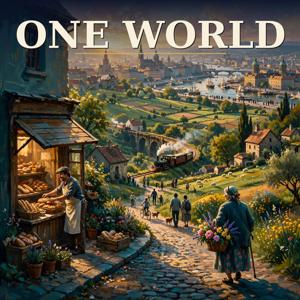


In Rang Gali, the Lane of Colour in Aligarh, Holi has not been played for three years, since grief closed a blue door, a quarrel over a drain divided two houses, and the old colour maker's workshop went dark. Then eleven year old Tara asks why her lane has forgotten how to be happy, and in one spring week of grinding marigold, turmeric and tesu flowers, the lane learns that colour is offered before it is thrown, and that a door once closed was never built to stay that way.
The narration in this episode is AI-assisted; the story is an original work written and produced by our editorial team.
In the village of Noorpur in Punjab, schoolteacher Simran Kaur is married under the great patched canvas tent that sheltered her grandfather's wedding sixty two years before, in five days of raising poles, henna, turmeric and song. When a storm tears across the mustard fields on the third day, the whole village runs to the ropes — and the tent, held by sixty hands and one old woman's singing, teaches everyone what a roof really is. A story about weddings, neighbours, and the red patch that remembers them all.
The narration in this episode is AI-assisted; the story is an original work written and produced by our editorial team.
Audio: MP3, 128 kbps CBR, 44.1 kHz, loudness-normalized to -16 LUFS.
On the last day of Ramadan, Amina Khatun, a garment packing worker in Ashulia, Dhaka, joins the greatest homeward rush of the year — the packed Eid train north to Jamalpur — carrying her family's gifts, her savings for a new kitchen roof, and a red-string parcel entrusted to her by a friend who cannot travel. When the train pulls away while she is holding a stranger's baby on the platform, and an old woman's Eid bundle vanishes in the dark, the whole compartment becomes a travelling village that holds, feeds and carries one another all the way home. A story about the journey home for Eid, and how it is made not by trains but by hands.
The narration in this episode is AI-assisted; the story is an original work written and produced by our editorial team.
Audio: MP3, 128 kbps CBR, 44.1 kHz, loudness-normalized to -16 LUFS.
In the Bundelkhand village of Piprauli, after a thin monsoon and a hard year, a poor family has oil for only one brass lamp on Diwali night — and their twelve-year-old son spills part of even that on the road home. Following his grandmother Savitri's law that a lamp is measured not by its oil but by where you place it, the family carries the lamp out to the shared courtyard, where polished brass plates multiply its flame and neighbours feed it a spoonful at a time until the whole lane is lit from one flame that never goes out. A story about poverty without shame, and how light grows when it is given away.
The narration in this episode is AI-assisted; the story is an original work written and produced by our editorial team.
In Munshiganj, on the bank of the Dhaleshwari River, seventy-nine-year-old Nurul Islam opens a new account book wrapped in red cloth while his wife Anowara Begum lays out the family's red-and-white clothes from her red trunk, and their granddaughter Mitu paints through the night a great white peacock alpana for the lane to walk out and see at sunrise. Before lunch, one New Year morning holds a forgiven debt chosen by its need, a lost child, and a sudden storm. A story about clean pages, open hands, and what beginning again really costs.
The narration in this episode is AI-assisted; the story is an original work written and produced by our editorial team.
Audio: MP3, 128 kbps CBR, 44.1 kHz, loudness-normalized to -16 LUFS.
In Sialkot, Pakistan, master stitcher Haji Muhammad Rafiq and his family race to hand-stitch six thousand training balls for the great world tournament, until monsoon-swollen leather makes a week's balls roll crooked and the courtyard must choose between the deadline and the hidden stitch nobody would ever see. A story of true-rolling balls, a goalkeeper grandson, and honesty where nobody is watching.
The narration in this episode is AI-assisted; the story is an original work written and produced by our editorial team.
Audio: MP3, 128 kbps CBR, 44.1 kHz, loudness-normalized to -16 LUFS.
In Miraj, India, master sitar maker Yusuf and his family spend one patient year growing a single guest sitar from a riverbank gourd and his father's last rested teak, through a monsoon crack honestly mended, until it finds the homecoming player whose hands it was made to forgive. A story of seasons, sympathetic strings, and work done slowly on purpose.
The narration in this episode is AI-assisted; the story is an original work written and produced by our editorial team.
Audio: MP3, 128 kbps CBR, 44.1 kHz, loudness-normalized to -16 LUFS.
In Firozabad, India, the glass bangle makers of one old street share their furnaces when the gas supply is cut in festival week, and a young bride in the bride's chair teaches four generations that a woman may honour the old colour and still choose her own. A story of true glass, shared fire, and the strongest shape in the world, a circle with no end.
The narration in this episode is AI-assisted; the story is an original work written and produced by our editorial team.
Audio: MP3, 128 kbps CBR, 44.1 kHz, loudness-normalized to -16 LUFS.
In Kumartuli, Kolkata, the potters' quarter by the Hooghly River, master clay idol maker Panchanan Pal and his family race to finish the largest goddess they have ever built for the autumn festival, through a fenced riverbank, bitter clay, six days of rain and a crack in the goddess's blessing hand. When the master's own hand begins to tremble before the sacred dawn eye painting, the law of eleven generations must find a new hand, his seventeen year old granddaughter Jui, whose hands knew before her head did.
The narration in this episode is AI-assisted; the story is an original work written and produced by our editorial team.
Audio: MP3, 128 kbps CBR, 44.1 kHz, loudness-normalized to -16 LUFS.
On the Sitakunda shore near Chattogram, where the world's great ships beach to be taken apart, tea seller Nurul Amin has kept the Book of Ships for thirty eight years, one page for every vessel and one line for a man who worked her. When the grand old passenger liner Aurora Meridian comes in on the great tide for her final season, her Greek captain returns to tell her story into the record, a homesick young cutter learns to read his mother's letters on the stall's evening bench, and the whole shore learns what its harbour is worth on the night the sea itself comes visiting.
The narration in this episode is AI-assisted; the story is an original work written and produced by our editorial team.
From the publisher's feed
Life stories from Europe and around the world. One World travels to a different town, village or city in every episode and tells the story of one life — work, family, love, loss and new beginnings…
New episodes weekly.
Some narration on this show is AI-assisted; every story is written and produced by our editorial team.