
Sign up to save your podcasts
Or



On the banks of the Congo River near Mbandaka, Therese Mbuyi makes kwanga — fermented cassava bread wrapped in banana leaves and steamed over a wood fire — with her mother Pauline, who judges the ferment by smell, while her daughter Grace is embarrassed that classmates call it poor people's food. When a new bakery's cheap white loaves draw the town away and Therese nearly closes her riverside kitchen, the baker's generator fails on the weekend of a wedding feast for three hundred guests, and the women must soak, pound, wrap and steam through the night to save the feast — and the bread itself.
The narration in this episode is AI-assisted; the story is an original work written and produced by our editorial team.
In Abuja's Garki district, grill master Ibrahim Danladi has fed the city's night people from his Midnight Corner under a neem tree for thirty years, keeping his late wife Amina's yaji spice book and a slate for customers who cannot pay. When a development letter gives the corner sixty days before the pavement is cleared for a glass plaza, his daughter Aisha answers with a census of midnight, and one storm night — with a stranded wedding party at his fire and a hospital ward waiting for hot food — decides whether the corner goes dark or burns on.
The narration in this episode is AI-assisted; the story is an original work written and produced by our editorial team.
On Acacia Crescent in Durban, retired bus driver Bongani Dlamini kept the street braai fire for years, until a quarrel over a hedge between two neighbours let the fire go cold for three years. When a homecoming, a city-wide power and water shutdown, and a rescued cat arrive in the same week, his granddaughter Zanele delivers twenty two handwritten invitations, and the whole street must carry its coals together through the rain to find its way back to one fire.
The narration in this episode is AI-assisted; the story is an original work written and produced by our editorial team.
In the Casbah of Algiers, grandmother Yemma Zohra Benali has hand-rolled couscous for Friday for sixty years, always cooking for one more than she counts. When a sprained wrist benches her hands just before a family engagement Friday for thirty five guests, her seventeen year old granddaughter Lina, once a believer in the five minute packet, leads a circle of hands to roll, sieve and steam the great mound herself.
The narration in this episode is AI-assisted; the story is an original work written and produced by our editorial team.
In Gondar, Ethiopia, mother Alemitu Bekele rises before dawn to tend her fermenting teff batter and pour injera on the great mitad griddle, while her daughter Hanna learns the spiral pour. Through a long fasting season of rising teff prices and failing power, the family feeds their lane honestly, mixes teff with barley and tells everyone first, and finally joins six households on six griddles to pour more than two hundred injera for a neighbour's wedding feast.
The narration in this episode is AI-assisted; the story is an original work written and produced by our editorial team.
On Palm Crescent in Accra, Ghanaian cook Efua Boateng and her Nigerian neighbour Adaeze Okafor turn a playful argument at a baby naming ceremony into a public jollof contest to repair their street library roof. With equal money, blind judges from other countries, and only enough firewood for one pot, the two rivals light one shared fire, share each others secrets openly, and discover that patience and courage taste best together on one plate.
The narration in this episode is AI-assisted; the story is an original work written and produced by our editorial team.
In the ancient Chouara Tannery of Fez, Morocco, twenty three year old Idris El Fassi works the dye pits under his master, Maalem Abdelkader, turning rough hides into shining leather by poppy, saffron and indigo. Tempted by an export company's fast modern dyes and cash paid by the piece, he pulls four wedding hides from the red dye too early, and when the slippers crack at a wedding in Rabat, he must walk the long road back, from the scraping beams to the vessels again, to restore the yard's good name.
The narration in this episode is AI-assisted; the story is an original work written and produced by our editorial team.
In Zandamela, on the coast of Mozambique, Mestre Venancio Cossa, the last master who can build a great Chopi timbila xylophone alone from tree to tuning, takes on a festival commission for a brand new instrument, with only his impatient sixteen year old last pupil, Tino, to help him. Together they must choose a singing mwenje tree, pair every wooden key with its faithful gourd, refuse a traders money for forty dishonest souvenirs, survive a storm, and tune the final key, so the village can hear its music walk into the future.
The narration in this episode is AI-assisted; the story is an original work written and produced by our editorial team.
In Gugulethu, on the Cape Flats outside Cape Town, the Gugulethu Morning Stars — twenty-eight neighbours conducted by retired teacher Mama Lindi Khumalo — receive an invitation to a friendship festival of community choirs in Lisbon, but must earn every rand of the journey themselves. When a sponsor offers to pay for everything if they leave their home songs behind, the choir must decide what its music is really worth, before earning its way, mending its papers, and carrying home across an ocean as a gift.
The narration in this episode is AI-assisted; the story is an original work written and produced by our editorial team.
In Antsirabe, in the cool highlands of Madagascar, master tin toy maker Solofo Ranaivo turns old cooking oil cans and sardine tins into bright taxis, buses and pousse-pousse carts that roll straight and can be mended for free for life. When cheap plastic cars flood the market and a capital shopkeeper offers a fortune for two hundred plain, fixed-wheel souvenirs, Solofo's family must decide what their craft is really worth — and the answer begins when his eighty-two-year-old father-in-law asks the workshop to rebuild, in tin, the beloved taxi he drove for thirty years, dent for dent and stripe for stripe.
The narration in this episode is AI-assisted; the story is an original work written and produced by our editorial team.
From the publisher's feed
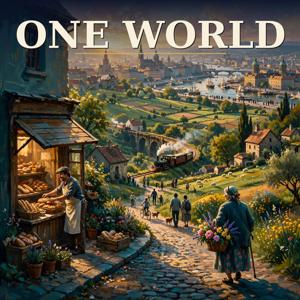
Life stories from Europe and around the world. One World travels to a different town, village or city in every episode and tells the story of one life — work, family, love, loss and new beginnings…
New episodes weekly.
Some narration on this show is AI-assisted; every story is written and produced by our editorial team.