
Sign up to save your podcasts
Or

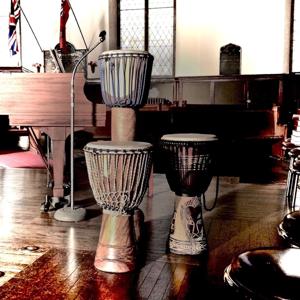


Have you noticed? Even greeting each other can be tricky... should we bow [who first?], shake hands, kiss [one cheek or two? How many times?] Often the things we stumble over in our cross-cultural relationships aren't the big things - but the myriad little things. We are expecting one thing to happen, and something altogether different happens - this is hard for our brains. They can start to pull back, or collect resentments over this expectations that are not met.
This episode explores a variety of cultural differences - and then offers a spiritual practice or mental tool called NAIL [Notice / Accept / Inquire / Learn] to help our brains relax and accept the unexpected.
Support the show
Is your 'me' a 'we'? It's an important question! This episode is the first of two looking at key differences in the ways people from different cultures think, feel, and make decisions - how they act and react. Today we focus on that core question: What does your 'me' look like? An individual? Or a group?
Individualists include most of the people in Europe and North America, but they actually make up a small part of the world's population. Most (over 90%) of the people on the planet are collectivists.This means that, as our country grows, it will be growing largely through collectivists. And if our churches are to grow, they too will likely grow through collectivists - so learning about each other is vitally important.
This episode draws on the work of the late Geert Hofstede, and, once again, the insights of Damber Khadka.
Support the show
This is our second podcast exploring Implicit or Unconscious Bias, the stereotypes ad shortcuts that our brains create to help us. Except it's not always such a big help. Sometimes they're just kind of odd, and sometimes they can even be dangerous. Fortunately many are easier to change than we might expect.
In this second exploration we dig a little deeper, examine a number of biases and how they can impact our relationships. Often we try hard to get rid of all biases - sort of like abstinence in dealing with an addiction. However since they are part of how the brain operates, we explore 'harm reduction' as another approach to dealing with bias.
As part of this episode, the host, Bill Millar will invite you to watch a one-minute video, about, oddly, bicycle safety. [It actually will make sense!] - so if you can, try this first: Test your Awareness: Do the Test
This is also the second episode in our Committed series - where we try to get to the nittiest and grittiest of the nitty-gritty of intercultural living.
Support the show
Why do more people die in hurricanes with female names? Why are so many male CEOs so tall? What's height got to do with being a CEO? Why do bosses give lower performance appraisals to workers who are overweight? Why indeed. . .
This is the first episode in our Committed series, where we are really trying to get to the down and dirty, the very practical parts of intentionally opening ourselves and our communities outward to welcome all - including those with vastly different cultural backgrounds. Each episode will provide you with tools, skills and understandings that can help you exercise those opening-outward muscles!
This is part 1 of a two-part series looking at Implicit or Unconscious Bias, the stereotypes and shortcuts all of our brains create to help us. Well, that's the brain's goal, but sometimes these are clearly not helpful. Fortunately many are easier to change than we might imagine. Part 1 gives a brief intro to Unconscious Bias and part 2 will get into more specifics.
Support the show
In this episode we explore the vital role of vulnerability in opening ourselves to folk with different cultural backgrounds. Humility and giving up control are key factors when a community wants to welcome newcomers – but how do we do that? Perhaps by leading out of our own insufficiency rather than sufficiency?
Much of this episode is based on insights from a conversation with Damber Khadka, a brilliant leader in the Nepali church in Canada. Damber was a key leader and lay minister at Knox Winnipeg. As with many immigrants, his credentials could not be recognized here, so he has needed to redo his theological education. Damber was asked, from his perspective as an immigrant, not raised within the western church, what makes a church intercultural, what is it that is needed if a church here is to fully open itself to folk who are different. His answer may well surprise you!
Support the show
This episode picks up on some of the thoughts of last week's "Rebooting", but in today's we focus specifically on the actual mechanics of how we change. Our brains are hard-wired to resist change, yet and this is so evident on a global scale at this point in the Covid-19 crisis, humans have a remarkable ability to change, to adapt - and to do so quickly. Why can we do it, if not effortlessly, at least effectively, sometimes - yet at other times change can be so difficult?
At this point, we do not know what life will be like after this pandemic, but we can be pretty sure it will be different than life before. The church, which at times has seemed so adventure-adverse has risen to the challenge amazingly, providing new, creative ways for folk to connect and be community together. After this time of sheltering in will, inevitably, come a time of opening out, and we will, at that point either intentionally or by default decide to whom we want to open our faith communities - same old? or all the folk that God might want to invite (even if they have a very different cultural background). This episode provides a base for helping communities navigate through the change process.
Support the show
When our computers stop doing the things we want them to, we reboot the system. How can we reboot our thinking? Our relationships? Our churches? Our brains naturally perceive anything ‘different’ as a potential threat – so how can we help our brains adapt? This episode helps us prepare by understanding how privilege works & how it limits us, as well as what helps people’s minds open out.
This episode was written and produced as the full impact of Covid-19 was just beginning to be felt. As the pandemic has spread across the world, we have seen the most astonishing thing - a near global rebooting. We have shut down our economy, turned off our commuting, reconfigured how we can be church to one another. Inevitably at some point, following these days of sheltering in will give way to a time of opening outwards. When, at last, we take down the shutters from our churches and other places of worship, and we open the doors again - we will decide how far we want to open those doors, to whom do we want to open our faith communities? Same old, or everyone, including those who have different cultural backgrounds? This episode can help us do that with new clarity.
In this episode we will look at the unique patterns of both privilege and entitlement in faith communities, and help our brains find new ways of navigating unfamiliar paths.
Support the show
After these days of shuttered churches, our time of sheltering in, once more will come a time for opening out. It will not be a return to what was, but some kind of new time for churches - we will need to decide how we open out and to whom we want to be open. Same old, or new people, different people, all people?
This is the first in our 'Considering' series. Here we dig a bit deeper, get a bit more into the specifics, the messy and wondrous nitty-gritty of opening our communities of faith to everyone, including those with a very different cultural background.
In this episode we pick up on the theme of Curious 1, exploring what we might look like if we truly did 'open out' - looking, for example, at how a traditional Japanese church in Montreal opened itself to their Filipino and Pakistani neighbours and emerged as a rainbow community.
We look specifically at the different levels of welcome a community might wish to express, from not-welcome to transformational welcome.
This episode was written and produced before the full impact of the Covid-19 pandemic was upon us.
Support the show
Episode recorded before full effect of Covid-19 pandemic
In this episode we continue to explore why faith communities and other groups might want to intentionally open outwards, welcome the new diverse folk who are the new Canada. Today we look specifically at the impact of both the declining birth rate in Canada and the dramatic rise in immigration on the church itself.
Rather than lamenting the declining attendance in our churches as a bad/sad thing, what if we see it as a Divine invitation to a radical new hope, a re-conceptualization of church in Canada? Bill Millar, in this follow-up to Episode 2's exploration of demographic changes and projections, explores pathways to help individuals and churches mobilize hope by opening their hearts, minds and communities to "the strangers", newcomers, those who are now providing our growth as a nation.
Support the show
In this second episode of the "Curious" series, we look at reasons why faith communities (and other groups) might want to consider opening themselves to welcome greater cultural diversity - because Canada itself has changed, and is changing - dramatically. We look at the extraordinary transformation that is going on in the cultural make-up of our land - by looking specifically at census data, and at projections by Statistics Canada of what we are likely to look like in 15-20 years.
Much of this episode focuses on information in the less-than-inspirationally-titled study, by Statistics Canada, called Immigration and Diversity: Population Projections for Canada and its Regions, 2011-2016. Just over 50 years ago something happened that changed the entire direction of Canada - or, rather... stopped happening. Canadians stopped having as many babies - the birth rate dropped below replacement level. Since then our population increase has come primarily through immigration. In a few years almost all of our population increase will come through immigration - and these new folk are coming primarily from Asia and South Asia, plus significant numbers from Africa and the Middle East. This means the racial character of Canada is shifting - and soon, in many urban centres, the so-called 'visible minority' will, in fact, be the majority.
This episode probes into these shifts, and asks what they mean for Canadians, for our identity and character, why they have happened and where they are likely to lead us.
Support the show
From the publisher's feed