
Sign up to save your podcasts
Or

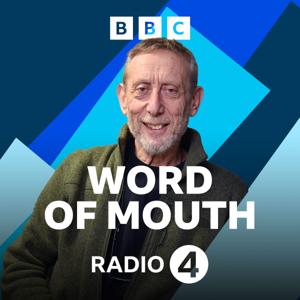

Playwright Sabrina Mahfouz, sitting in for Michael Rosen, talks to producer Tobi Kyeremateng and classicist Professor Katherine Harloe about othering in language: describing people in ways that exclude them and make them seem lesser. Translations of the classics have been politicised in identity terms, for example adding in 'white skin' in where it didn't exist. The current language around 'BAME' and "BIPOC" is contentious, even if people think they are being helpful. The opposite of this is the power of language to include. What are the ways forward from here?
Image copyright : Greg Morrison
Suggestions for further reading from Professor Harloe:
There is much current debate within Classics over the racialised hierarchies based on skin colour and other physical features that existed in the ancient world, about how ideas about Greek and Roman culture have functioned to bolster and uphold White supremacist ideas, past and present. Much, though not all, of this scholarship is being done by woman classicists of colour.
Aimee Hinds, a classicist and art historian, has written essays on “Hercules in White: Classical Reception, Art and Myth” and “Pygmalion, Polychromy and Inclusiveness in Classics’ about the pernicious effects of the Whitewashing of the ancient world in modern artistic traditions, scholarship and educational contexts.
Dr Sarah Derbew’s research concerns the ways in which race and skin colour are represented and theorised in ancient Greek literature and art.
Dr Mai Musié is an expert on the representation of Persians and Ethiopians in ancient Greek novels.
Shelley P. Haley, Edward North Chair of Classics and Professor of Africana Studies at Hamilton College, New York, has been applying Black feminist approaches and critical race theory to study of Classics. Key essays of hers that discuss anti-blackness in classical translations include “Be Not Afraid of the Dark: Critical Race Theory and Classical Studies,” in Prejudice and Christian Beginnings: Investigating Race, Gender and Ethnicity in Early Christian Studies and "Black Feminist Thought and Classics: Re-membering, Re-claiming, Re-empowering" in Feminist Theory and the Classics.
Sabrina Mahfouz is a writer and performer, raised in London and Cairo. She is a Fellow of the Royal Society of Literature (FRSL) and resident writer at Shakespeare’s Globe Theatre. Her most recent theatre show was A History of Water in the Middle East (Royal Court) and her most recent publications as editor include Smashing It: Working Class Artists on Life, Art and Making it Happen (Saqi) and Poems From a Green and Blue Planet (Hachette Children's).
 View all episodes
 By BBC Radio 4

4.7
5151 ratings
Playwright Sabrina Mahfouz, sitting in for Michael Rosen, talks to producer Tobi Kyeremateng and classicist Professor Katherine Harloe about othering in language: describing people in ways that exclude them and make them seem lesser. Translations of the classics have been politicised in identity terms, for example adding in 'white skin' in where it didn't exist. The current language around 'BAME' and "BIPOC" is contentious, even if people think they are being helpful. The opposite of this is the power of language to include. What are the ways forward from here?
Image copyright : Greg Morrison
Suggestions for further reading from Professor Harloe:
There is much current debate within Classics over the racialised hierarchies based on skin colour and other physical features that existed in the ancient world, about how ideas about Greek and Roman culture have functioned to bolster and uphold White supremacist ideas, past and present. Much, though not all, of this scholarship is being done by woman classicists of colour.
Aimee Hinds, a classicist and art historian, has written essays on “Hercules in White: Classical Reception, Art and Myth” and “Pygmalion, Polychromy and Inclusiveness in Classics’ about the pernicious effects of the Whitewashing of the ancient world in modern artistic traditions, scholarship and educational contexts.
Dr Sarah Derbew’s research concerns the ways in which race and skin colour are represented and theorised in ancient Greek literature and art.
Dr Mai Musié is an expert on the representation of Persians and Ethiopians in ancient Greek novels.
Shelley P. Haley, Edward North Chair of Classics and Professor of Africana Studies at Hamilton College, New York, has been applying Black feminist approaches and critical race theory to study of Classics. Key essays of hers that discuss anti-blackness in classical translations include “Be Not Afraid of the Dark: Critical Race Theory and Classical Studies,” in Prejudice and Christian Beginnings: Investigating Race, Gender and Ethnicity in Early Christian Studies and "Black Feminist Thought and Classics: Re-membering, Re-claiming, Re-empowering" in Feminist Theory and the Classics.
Sabrina Mahfouz is a writer and performer, raised in London and Cairo. She is a Fellow of the Royal Society of Literature (FRSL) and resident writer at Shakespeare’s Globe Theatre. Her most recent theatre show was A History of Water in the Middle East (Royal Court) and her most recent publications as editor include Smashing It: Working Class Artists on Life, Art and Making it Happen (Saqi) and Poems From a Green and Blue Planet (Hachette Children's).

7,613 Listeners

887 Listeners

1,050 Listeners

5,478 Listeners

1,802 Listeners

1,759 Listeners

1,035 Listeners

2,088 Listeners

484 Listeners

45 Listeners

261 Listeners
78 Listeners

413 Listeners
298 Listeners

81 Listeners

71 Listeners

829 Listeners

236 Listeners

160 Listeners
74 Listeners

115 Listeners

136 Listeners

3,147 Listeners

733 Listeners
88 Listeners