Sign up to save your podcastsEmail addressPasswordRegisterOrContinue with GoogleAlready have an account? Log in here.
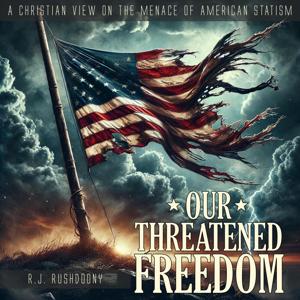
FAQs about Our Threatened Freedom:How many episodes does Our Threatened Freedom have?The podcast currently has 92 episodes available.
April 01, 2026Are We Regulating Ourselves into Tyranny?This passage warns that excessive regulation even over seemingly minor matters like lawn maintenance can erode personal freedom and lead society toward tyranny. Using the example of a proposed 16-page building code in University Park, Texas, the author highlights how fines for weeds, cracks, or unsound chimneys, combined with inspectors’ authority to enter homes at will, could pave the way for ever-expanding governmental control. The critique emphasizes that overregulation shifts citizens’ focus from their own responsibilities to policing each other, creating a culture of compliance rather than liberty. While regulations may produce orderly neighborhoods, the author argues that the cost to freedom is far too high, warning that small, innocuous rules can become a slippery slope toward a dictator-like state.#Overregulation #FreedomVsOrder #SlipperySlope #TyrannyByRules #CivilLiberty #PersonalResponsibility #GovernmentOverreach...more4minPlay
March 25, 2026Are We Using Language to Confuse Ourselves?Are We Using Language To Confuse Ourselves?https://cr101radio.com/podcast/are-we-using-language-to-confuse-ourselves-2In “Are We Using Language to Confuse Ourselves?” Rushdoony warns that statist categories—especially the IRS distinction between “profit” and “nonprofit”—have subtly reshaped Christian and cultural thinking, causing people to mistake tax classifications for reality itself. He argues that these terms obscure what truly matters: productivity versus nonproductivity, noting that families, churches, schools, and libraries—though labeled “nonprofit”—are among the most productive forces in civilization, while civil government, also nonprofit, is often minimally productive at best. By adopting bureaucratic language, society elevates administration over creation, form over substance, and pragmatism over theology, allowing the tax state rather than God’s law to frame how we think. The remedy, Rushdoony insists, is a return to Biblical categories and disciplined thinking that rightly divides truth before God, not the state.#LanguageMatters #BiblicalCategories #AgainstStatism #ProductivityVsProfit #ChristianWorldview #GodsLaw #TruthAndMeaning #CulturalClarity...more4minPlay
March 18, 2026Do You Want a Vegetarian World?This piece critiques the modern animal rights movement and its push toward vegetarianism as a social imperative. While acknowledging the right of vegetarians and animal rights advocates to promote their beliefs, the author warns against coercive tactics that could impose dietary choices on the broader public. Representative Ronald Mottl’s proposed bill to study animal rights is cited as an example of how advocacy could evolve into regulation. The piece notes that appeals to morality like claims that a nonviolent diet ensures world peace are dubious, pointing out India’s history despite widespread vegetarianism. The argument concludes that freedom must include responsibility; when used foolishly or coercively, it undermines itself. #AnimalRights #Vegetarianism #FreedomAndResponsibility #SocialControl #DietaryChoice #IndividualLiberty #NonViolentWorld #Coercion #Regulation #EthicsVsFreedom...more4minPlay
March 11, 2026Are We Robbing Widows?This piece highlights the harsh realities widows face under federal and state property and tax laws. A Missouri widow, unable to operate her late husband’s farm machinery during harvest because it was tied up in his estate, was forced to hire help at additional expense. Laws and regulations, including estate and inheritance taxes, often treat widows as secondary to bureaucratic process, ignoring the years of joint labor they contributed. Even careful legal planning can fail, as tax laws are frequently revised. The author argues that these policies amount to a form of robbing widows, and questions why senior citizen organizations aren’t doing more to advocate for their protection. He calls for legislators to show genuine consideration for widows and orphans, emphasizing that death should be a time of mourning, not bureaucratic exploitation. #ProtectWidows #EstateTaxInjustice #DeathTaxes #PropertyRights #TaxBurden #LegalRedTape #AdvocateForSurvivors #WidowProtection #InheritanceJustice #FairLegislation...more4minPlay
March 04, 2026When is R-pe Not R-pe?A shocking case in New York exposed the failure of justice when a young bank teller was held at knifepoint, her face covered, and raped, yet the judge asked only whether she had seen penetration. When she said no, the criminal was acquitted of first-degree rape and violent robbery, convicted instead of lighter charges of nonviolent robbery and sexual abuse, highlighting a dangerous precedent that vision could determine the severity of a crime. The prosecutor rightly noted that if this were the standard, crimes against blind victims could never be prosecuted, yet the judge ignored this, speculating about hypothetical alternatives like a dildo or hands. This case exemplifies how courts can prioritize the supposed “rights” of criminals over the protection of victims, while civil remedies often fail due to cost or unenforceability. When justice and the law diverge, societal freedom and trust in the legal system are seriously jeopardized. #JusticeDelayed #VictimRights #LegalFail #RapeAwareness #JudicialAccountability #CrimeAndPunishment #LawVsJustice #FreedomAtRisk #ProtectTheInnocent #CourtFailures...more4minPlay
February 25, 2026Does Crime Pay?In California, a con man who stole $9 million through a Ponzi scheme served only three years of a nine-year sentence, essentially paying a year for every $3 million stolen, while his victims lost everything their savings and homes. His incarceration at Boron was described as a “country club” with tennis courts, swimming pools, and dorm-style housing, showing that prisons often fail as a deterrent. Biblical justice, by contrast, emphasizes restitution, requiring the criminal to compensate victims and, if unable, to serve until the debt is paid, with capital punishment for capital crimes. Modern courts rarely enforce this principle; some criminals even stash their gains abroad and enjoy lavish lives after minimal incarceration. When crime pays, morality is undermined, victims suffer, and society as a whole bears the cost, highlighting the urgent need to realign justice with both law and ethical responsibility. #CrimePays #BiblicalJustice #Restitution #VictimRights #CriminalAccountability #SocietyAtRisk #MoralDecay #JusticeSystem #PrisonReform #EthicsInLaw...more4minPlay
February 18, 2026Are We Becoming a Postage Stamp Republic?The U.S. is showing signs of becoming a “postage stamp republic,” a term I first learned as a boy from my stamp collection. Historically, “postage stamp republics” were weak, unstable nations, issuing new stamps frequently to raise money and signaling constant inflation through fluctuating postal rates. Today, the U.S. mirrors that pattern: new stamps appear constantly, often sold more to collectors than used, generating profit for the postal service, while postal rates jumped three times in 1981 alone from 15¢ to 18¢ to 20¢. Beyond stamps, these signs hint at broader issues political instability, inflation, and the gradual erosion of freedom. It’s a wake-up call that something more fundamental than postal rates needs fixing. #PostageStampRepublic #Inflation #PostalRates #EconomicStability #PoliticalInstability #Freedom #USPolitics #FiscalAwareness #GovernmentOversight #HistoryLessons...more4minPlay
February 11, 2026Are We Running Low on Ideas to Spend our Money?Sometimes it seems Washington’s planners compete to find the most absurd ways to spend our money. Take Baltimore’s “Block” of strip joints and adult shops: $338,000 is being spent to make the area more accessible with tree plantings and wheelchair cuts apparently ensuring the physically disabled can comfortably visit porno shops! While satire aside, one wonders if resources couldn’t go toward more practical projects like park benches for the homeless or a museum celebrating disappearing Americana like farm mules or outhouses. Bureaucratic priorities often feel out of touch with common sense, and while humor helps us tolerate the madness, the underlying question remains: are we running out of meaningful ways to invest public funds? #GovernmentSpending #Bureaucracy #WastefulSpending #PublicFunds #WashingtonDC #FiscalResponsibility #Satire #CommunityDevelopment #HUD #Priorities...more4minPlay
February 04, 2026Do You Like Taxation?A Christian View on the Menace of American StatismTaxation touches every aspect of our lives, from income and property to gasoline, entertainment, and even our estates, and yet the burden often feels arbitrary and excessive. While some taxes may be necessary, the scope of modern levies from birth to death reveals a system where the citizen is constantly treated as a revenue source rather than a free individual. The Sixteenth Amendment grants the federal government nearly unlimited authority to tax, and Congress exercises that authority with the consent of voters, making citizens partially responsible for their own over-taxation. As taxation grows alongside government spending, both personal and collective financial discipline become essential; without restraint, we jeopardize our freedom, prosperity, and even the stability of the nation. #Taxation #OverTaxed #IRS #GovernmentSpending #FiscalResponsibility #Liberty #IncomeTax #FinancialFreedom #CitizenResponsibility #EconomicAccountability...more5minPlay
January 28, 2026Are We Over-Licensed and Over-Ticketed?Over-licensing and over-ticketing have become a modern assault on American initiative and freedom. A young entrepreneur with a camera and a pony, providing a wholesome service, faces fines and potential jail simply because he cannot secure 82 separate municipal licenses—licenses that serve the cities’ revenue more than the public good. Meanwhile, real criminals often receive lighter consequences than law-abiding citizens, highlighting a system that targets compliance rather than justice. Excessive licensing and petty ticketing erode trust in civil agencies, limit independence, and punish enterprise, turning ordinary citizens into revenue sources while stifling opportunity. True freedom and initiative are being curtailed under the guise of regulation. #OverLicensed #OverTicketed #CivilLiberty #Entrepreneurship #FreedomUnderThreat #Bureaucracy #AmericanEnterprise #OverRegulation #TaxShakedown #LibertyMatters"...more4minPlay
FAQs about Our Threatened Freedom:How many episodes does Our Threatened Freedom have?The podcast currently has 92 episodes available.