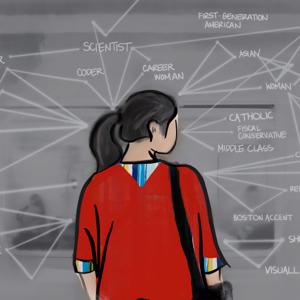
Book-smart or street-smart? Education or experience? We like to think we use objective criteria to make decisions. But what happens when we choose the person first, then use the standard that supports our decision? How might the “pictures in our heads” drive the criteria we choose?
40 years ago, memory researchers showed us that patients with amnesia could form new memories… implicitly. This sparked an ongoing revolution in research on the hidden mind: how it learns, how it influences us, and how it can be measured and changed.
40 years ago, memory researchers showed us that patients with amnesia could form new memories… implicitly. This sparked an ongoing revolution in research on the hidden mind: how it learns, how it influences us, and how it can be measured and changed.
You perform well at work one day, but not the next. One person sees you as “warm”, another as “cold”. Maybe it's you -- but there's another possibility: that a belief in one person’s mind can shape another person’s behavior.
We overvalue the things we own. This is fine when it’s a family keepsake or memento – but how does this influence decisions we make about our homes, investments, and more?
We work out, then pig out. We donate to charity, then indulge in retail therapy. Does this also happen with our good deeds? How can we avoid bringing our moral scorecards to the workplace?
Expectations help us quickly navigate our world. Yet they can also keep us from the simple solutions, talent, and opportunities that are right in front of us.
9 min
About Outsmarting Implicit Bias
From the publisher's feed
Explore the mind’s blindspots with Outsmarting Implicit Bias, an educational media series founded by Harvard psychologist Mahzarin Banaji. Apply insights from the science to make better decisions in…