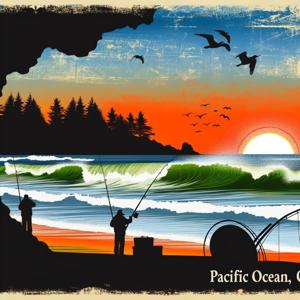
Name’s Artificial Lure, checking in with your coastal fishing rundown for the central and north Oregon Pacific.
We’re sitting on a mellow early-summer pattern. Along the central coast, sunrise comes in around 5:30 a.m., sunset close to 9:00 p.m., giving you a long window to work tide changes. NOAA’s coastal stations show a typical mixed semi‑diurnal tide today: a decent pre‑dawn high, a late‑morning drop, then another push late afternoon into evening. Plan to hit that first light high or the afternoon flood; both have been lining up well with feeding activity.
Weather-wise, expect classic Oregon marine conditions: cool, low to mid‑50s early, bumping into the low 60s if the sun pops through. Morning marine layer and patchy fog, light south to northwest winds early, building to 10–15 knots in the afternoon with a bit of chop outside the bays. Swell has been running modest, but if that north wind kicks up, open coast rock spots will get sporty—pick your footing carefully.
Offshore, the albacore chatter has started to perk up on warm breaks offshore when temps tick over about 58–60°F, but consistent tuna runs are still hit‑and‑miss this early. Inside 40 fathoms, anglers have been doing well on rockfish and lingcod. Recent reports up and down the coast mention full limits of black rockfish with a mix of canaries and a solid showing of lings in the 24–30 inch range. Metal jigs, 3–6 ounces in blue/silver or green/white, and swimbaits on lead heads have been the workhorses. Tip those plastics with a little strip of squid if you want extra scent.
Salmon inside have been scratchy but improving where seasons are open; a few chinook in the teens have been coming on anchovy or herring behind a flasher, run 25–60 feet down. If you’re trolling, think chartreuse or green/glow flashers and matching hoochies or cutplug herring.
Surf and jetty fishing have been steady. Surfperch are still the main show on open beaches, with good numbers of redtails reported on the better structure pockets. Best producers: 2–3 inch sand worms, gulp sandworms, or small clam neck strips on a hi‑low rig with just enough pyramid weight to hold. Cast into the first and second trough during that flooding tide; move until you find a school, then it can turn fast and furious.
In the bays, crabbing has been fair to good on the bigger tides—check regs and recent closures—but the folks soaking chicken legs and fish carcasses in the deeper channels on the outgoing have been hauling decent keeper counts.
Top lure choices right now:
- For rockfish and lingcod: 4–6 inch paddle‑tail swimbaits in black/white, motor oil, or root beer on 2–6 oz heads; metal jigs like crippled herring or similar in 2–5 oz.
- For salmon: chartreuse or purple haze hoochies, spoons in green/glow, and plug‑cut herring or anchovy.
- For perch: small grubs in motor oil/red flake or camo sandworm imitations.
Best natural baits:
- Herring, anchovy, and squid offshore.
- Sand shrimp, clam necks, and mole crabs in the surf and bays.
A couple of hot spots to circle on your mental chart:
First, **Depoe Bay and the nearshore reef line**. Charter skippers out of that tiny harbor have been quietly stacking limits of blacks and a healthy mix of lings on the usual reef edges just outside. If you can get on a boat or launch nearby, work those rocky pinnacles on the flood with jigs tight to bottom.
Second, **Yaquina Bay at Newport**. The jetties and the channel edges have been giving up rockfish, greenling, and some nice lings on swimbaits, plus decent crabbing when the tides line up. On softer days, the South Jetty surf zones have produced solid perch action on sandworms.
Fish smart: watch the swell, mind those sneaker waves on the rocks, and keep an eye on that afternoon wind—what’s calm at daybreak can turn cranky in a hurry.
Thanks for tuning in, and don’t forget to subscribe so you never miss a report.
This has been a quiet please production, for more check out quiet please dot ai.
Great deals on fishing gear https://amzn.to/44gt1Pn