
Sign up to save your podcasts
Or

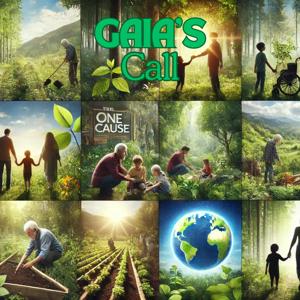

We are living in a time of profound consequence, where the existential crisis of climate change looms larger every day. It is not simply another problem on a long list of human challenges; it is the issue that underpins and exacerbates nearly all others. Social injustices, economic instability, immigration challenges—all are interconnected with the climate crisis. Yet, our political and societal focus often diverts us toward these individual symptoms, ignoring the root of the issue.
Here’s the paradox: the climate crisis itself is not the cause of our troubles. It is the effect—the result of centuries of collective actions. To truly address it, we must understand its origins through a lens I call the “On Purpose Perspective.”
The "On Purpose Perspective": A New Way of Seeing
The On Purpose Perspective asks us to view the climate crisis not simply as a problem to be fixed, but as a profound opportunity to reimagine our place in the world. This perspective stems from three interconnected domains of life:
* Being (our experience of being human).
* Doing (our actions).
* Having (the results of those actions).
The Feedback Loop of Life:In today’s world, most people focus their energy on the doing-having cycle. We act (do) to accumulate more possessions, achievements, or status (have). However, what often gets overlooked in this cycle is being—the foundational state where we connect with purpose, meaning, and our interdependence with all life.
The Role of Being in Climate Change
The climate crisis exists in the domain of having—it is the result of unsustainable actions, many which are labeled as consumerism (doing), which are, in turn, driven by our collective state of being. Our choices reflect how we see ourselves and our relationship to the Earth. When this foundational "being" is shaped by fear, disconnection, and a scarcity mindset, it leads to harmful patterns of consumption and exploitation.
Zak Bates’ Reflection:"It’s like trying to fix a broken branch without realizing the tree’s roots are poisoned," Zak says in one of his early adventures. "If we don’t heal the roots, the tree won’t survive."
Introducing the Eco-Guardian Team
As we embark on this journey together, you’ll be hearing from Zak Bates and his Eco-Guardian Team—an extraordinary group dedicated to protecting the planet and inspiring others to do the same. Zak, a teen zookeeper, is joined by Ra-Kit, a wise and magical cat; Sampson, the loyal and spirited flying dog; Iya, an empathic youth connected to ancient wisdom; Tess, a bold advocate for harmony with nature; and Argos, a visionary thinker from beyond the ordinary (Yes, he’s also a dog but don’t tell him that). Their insights and stories will help us explore what it means to live with purpose and create a regenerative future.
The True Root Cause: Our Collective Being
Our actions (doing) and their results (having) are shaped by our collective being—our shared thoughts, emotions, and beliefs. Unfortunately, for centuries, humanity’s collective being has been dominated by Great Untruths—erroneous beliefs that distort our relationship with the world.
Drawing inspiration from The Coddling of the American Mind by Greg Lukianoff and Jonathan Haidt, we can define a Great Untruth by three criteria:
* Contradicts Ancient Wisdom.
* Contradicts Modern Psychological Research.
* Harms Individuals and Communities.
Let’s explore the Four Great Untruths at the heart of the climate crisis.
The Four Great Untruths
* We Are Separate from Nature
* Contradiction: Indigenous cultures teach interconnectedness, while modern science confirms the interdependence of all life.
* Harm: This belief justifies domination and exploitation, leading to environmental destruction.
* Eco-Guardian Insight: Ra-Kit reminds us, “Everything is connected. When one strand of the web of life is cut, the whole web is weakened.”
* More Is Always Better
* Contradiction: Simplicity and sufficiency have been hallmarks of ancient wisdom, while psychology shows that more possessions do not increase happiness beyond a certain point.
* Harm: Overconsumption depletes finite resources and deepens inequality.
* Eco-Guardian Insight: Sampson quips, “If you always chase more, you never enjoy what you have.”
* The Earth’s Resources Are Infinite
* Contradiction: Ancient wisdom emphasizes balance, and science highlights the rapid depletion of soil, water, and biodiversity.
* Harm: This belief fuels unsustainable practices that jeopardize future generations.
* Eco-Guardian Insight: Iya shares that her people in the Amazon believe every resource taken must be returned in some way.
* Technology Will Save Us
* Contradiction: While wisdom traditions stress responsibility, modern solutions often over-rely on unproven technologies.
* Harm: Delays systemic change and creates overconfidence in quick fixes.
* Eco-Guardian Insight: Tess asks, “What if the best innovation isn’t a machine, but rediscovering how to work with nature?”
The Problem with Problem-Solving
Another wise man, Albert Einstein once said: “We cannot solve our problems with the same kind of thinking we used when we created them.”
Treating the climate crisis as a "problem to solve" keeps us locked in the same mindset that created it—a mindset shaped by the Four Great Untruths. Efforts like banning plastics or planting trees address symptoms, not the root cause. These actions, while necessary, are not enough.
Argos’ Voice:"We’re not here to patch holes in a sinking ship," Argos declares. "We’re here to design a whole new way of sailing."
Where Do We Go From Here?
In the next chapter, we’ll explore the Great Truths—the antidotes to the Great Untruths—and how they can guide us toward a regenerative future. These truths aren’t just principles; they are invitations to rethink, reconnect, and reimagine humanity’s role on Earth.
Our Eco-Conscious Readers
This series is for eco-conscious families and especially for those with young members between the ages of 10 and 25—future Eco-Guardians in training. Together, we’ll uncover ways to reimagine our relationship with nature, challenge harmful beliefs, and take inspired action to create a thriving world.
A Call to Readers
This series invites you to join Zak, Ra-Kit, and the Eco-Guardian Team as they uncover the roots of disconnection and envision a world of collaboration. Together, we’ll learn to step into a new story—one rooted in connection, reciprocity, and purpose.
Let’s not just solve problems. Let’s create the future.
Brad (aka W. Bradford Swift, Eco-Author)
P.S.We’ve explored the root causes of the climate crisis and the Great Untruths that shape our collective actions. But where do these untruths come from? The answer lies in the stories we tell—stories that have divided us from nature, from each other, and even from our own potential.
In the next chapter, Stories That Divide Us, we’ll uncover how cultural narratives like “dominion over nature” have perpetuated harmful beliefs and deepened the Gap. Join Zak, Tess, and the rest of the Eco-Guardian Team as they uncover the power of stories—both to divide and to inspire transformation. Together, we’ll begin rewriting the narratives that shape our future.
 View all episodes
 By Listen to the call of the Earth and take action.
We are living in a time of profound consequence, where the existential crisis of climate change looms larger every day. It is not simply another problem on a long list of human challenges; it is the issue that underpins and exacerbates nearly all others. Social injustices, economic instability, immigration challenges—all are interconnected with the climate crisis. Yet, our political and societal focus often diverts us toward these individual symptoms, ignoring the root of the issue.
Here’s the paradox: the climate crisis itself is not the cause of our troubles. It is the effect—the result of centuries of collective actions. To truly address it, we must understand its origins through a lens I call the “On Purpose Perspective.”
The "On Purpose Perspective": A New Way of Seeing
The On Purpose Perspective asks us to view the climate crisis not simply as a problem to be fixed, but as a profound opportunity to reimagine our place in the world. This perspective stems from three interconnected domains of life:
* Being (our experience of being human).
* Doing (our actions).
* Having (the results of those actions).
The Feedback Loop of Life:In today’s world, most people focus their energy on the doing-having cycle. We act (do) to accumulate more possessions, achievements, or status (have). However, what often gets overlooked in this cycle is being—the foundational state where we connect with purpose, meaning, and our interdependence with all life.
The Role of Being in Climate Change
The climate crisis exists in the domain of having—it is the result of unsustainable actions, many which are labeled as consumerism (doing), which are, in turn, driven by our collective state of being. Our choices reflect how we see ourselves and our relationship to the Earth. When this foundational "being" is shaped by fear, disconnection, and a scarcity mindset, it leads to harmful patterns of consumption and exploitation.
Zak Bates’ Reflection:"It’s like trying to fix a broken branch without realizing the tree’s roots are poisoned," Zak says in one of his early adventures. "If we don’t heal the roots, the tree won’t survive."
Introducing the Eco-Guardian Team
As we embark on this journey together, you’ll be hearing from Zak Bates and his Eco-Guardian Team—an extraordinary group dedicated to protecting the planet and inspiring others to do the same. Zak, a teen zookeeper, is joined by Ra-Kit, a wise and magical cat; Sampson, the loyal and spirited flying dog; Iya, an empathic youth connected to ancient wisdom; Tess, a bold advocate for harmony with nature; and Argos, a visionary thinker from beyond the ordinary (Yes, he’s also a dog but don’t tell him that). Their insights and stories will help us explore what it means to live with purpose and create a regenerative future.
The True Root Cause: Our Collective Being
Our actions (doing) and their results (having) are shaped by our collective being—our shared thoughts, emotions, and beliefs. Unfortunately, for centuries, humanity’s collective being has been dominated by Great Untruths—erroneous beliefs that distort our relationship with the world.
Drawing inspiration from The Coddling of the American Mind by Greg Lukianoff and Jonathan Haidt, we can define a Great Untruth by three criteria:
* Contradicts Ancient Wisdom.
* Contradicts Modern Psychological Research.
* Harms Individuals and Communities.
Let’s explore the Four Great Untruths at the heart of the climate crisis.
The Four Great Untruths
* We Are Separate from Nature
* Contradiction: Indigenous cultures teach interconnectedness, while modern science confirms the interdependence of all life.
* Harm: This belief justifies domination and exploitation, leading to environmental destruction.
* Eco-Guardian Insight: Ra-Kit reminds us, “Everything is connected. When one strand of the web of life is cut, the whole web is weakened.”
* More Is Always Better
* Contradiction: Simplicity and sufficiency have been hallmarks of ancient wisdom, while psychology shows that more possessions do not increase happiness beyond a certain point.
* Harm: Overconsumption depletes finite resources and deepens inequality.
* Eco-Guardian Insight: Sampson quips, “If you always chase more, you never enjoy what you have.”
* The Earth’s Resources Are Infinite
* Contradiction: Ancient wisdom emphasizes balance, and science highlights the rapid depletion of soil, water, and biodiversity.
* Harm: This belief fuels unsustainable practices that jeopardize future generations.
* Eco-Guardian Insight: Iya shares that her people in the Amazon believe every resource taken must be returned in some way.
* Technology Will Save Us
* Contradiction: While wisdom traditions stress responsibility, modern solutions often over-rely on unproven technologies.
* Harm: Delays systemic change and creates overconfidence in quick fixes.
* Eco-Guardian Insight: Tess asks, “What if the best innovation isn’t a machine, but rediscovering how to work with nature?”
The Problem with Problem-Solving
Another wise man, Albert Einstein once said: “We cannot solve our problems with the same kind of thinking we used when we created them.”
Treating the climate crisis as a "problem to solve" keeps us locked in the same mindset that created it—a mindset shaped by the Four Great Untruths. Efforts like banning plastics or planting trees address symptoms, not the root cause. These actions, while necessary, are not enough.
Argos’ Voice:"We’re not here to patch holes in a sinking ship," Argos declares. "We’re here to design a whole new way of sailing."
Where Do We Go From Here?
In the next chapter, we’ll explore the Great Truths—the antidotes to the Great Untruths—and how they can guide us toward a regenerative future. These truths aren’t just principles; they are invitations to rethink, reconnect, and reimagine humanity’s role on Earth.
Our Eco-Conscious Readers
This series is for eco-conscious families and especially for those with young members between the ages of 10 and 25—future Eco-Guardians in training. Together, we’ll uncover ways to reimagine our relationship with nature, challenge harmful beliefs, and take inspired action to create a thriving world.
A Call to Readers
This series invites you to join Zak, Ra-Kit, and the Eco-Guardian Team as they uncover the roots of disconnection and envision a world of collaboration. Together, we’ll learn to step into a new story—one rooted in connection, reciprocity, and purpose.
Let’s not just solve problems. Let’s create the future.
Brad (aka W. Bradford Swift, Eco-Author)
P.S.We’ve explored the root causes of the climate crisis and the Great Untruths that shape our collective actions. But where do these untruths come from? The answer lies in the stories we tell—stories that have divided us from nature, from each other, and even from our own potential.
In the next chapter, Stories That Divide Us, we’ll uncover how cultural narratives like “dominion over nature” have perpetuated harmful beliefs and deepened the Gap. Join Zak, Tess, and the rest of the Eco-Guardian Team as they uncover the power of stories—both to divide and to inspire transformation. Together, we’ll begin rewriting the narratives that shape our future.