
Sign up to save your podcasts
Or

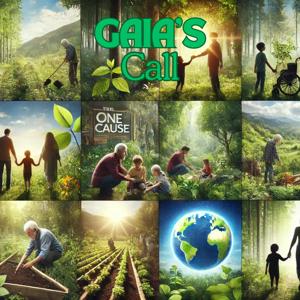


A note before we begin: If you’ve been following the recent conversation here on Substack about AI and authorship, you may be interested to know that I didn’t create this article entirely alone. I worked on it with an AI partner I’ve nicknamed GePeTo. The life being described here is mine. The experiences, convictions and final responsibility for what you’re about to read are mine. But GePeTo helped me ask better questions, explore connections I might otherwise have missed, organize my thinking and, yes, write some of the words. Rather than hide that collaboration—or reduce it to an AI percentage—I want to be transparent about it. In an upcoming Substack post, I’ll take you behind the curtain and show you what our collaboration actually looks like. For now, I simply wanted you to know who was in the room while this article took shape.
In May, I celebrated my 77th birthday with my family, body surfing at Hilton Head Island like a 17-year-old kid. By mid-June, I was experiencing increasing pain and stiffness in my neck and shoulders. By the end of the month, I sometimes found it difficult simply to get into bed, much less sleep once I got there. The pain and stiffness had spread to joints throughout my body, including my fingers. That’s when I remembered experiencing something similar about ten years ago, which I eventually came to understand as an autoimmune-type response—essentially, the body’s immune system becoming confused and attacking its own healthy tissues.
As I reflected on this unexpected and certainly unplanned health challenge—and aren’t most health challenges that way?—I began to recognize just how much physical, psychological, and emotional stress I’d been carrying during the previous several months. Ann and I had moved from the upstairs portion of our home, with its four bedrooms and three baths, into our much smaller one-bedroom, one-bath downstairs apartment so our daughter, son-in-law, and two grandchildren could move into the larger space above us. It was something we chose and something we genuinely wanted, part of our continuing experiment in creating a more interconnected, multigenerational Loving Homestead. It was all great stuff.
And it was also greatly stressful.
During that same period, Ann and I experienced the deaths of two close relatives, losses that brought their own grief while quietly reminding us of something neither of us particularly enjoys being reminded of: in our seventies, we’re not getting any younger. Add to that my writing, Gaia’s Call, coaching, gardening, homestead projects, family responsibilities, and my longstanding tendency to find approximately seventeen interesting things to do with every available hour, and perhaps my body had something to say.
For the past two years, I’ve been writing a great deal about regeneration—regenerating our forests, oceans, soils, communities, and ultimately our relationship with this remarkable living planet we call Earth, Gaia, or Pachamama. But somewhere along the way, life handed me a much more personal question:
What does regeneration mean when the ecosystem needing to be restored is my own life?
That question has been staying with me during these past several weeks, sometimes comfortably and sometimes not so comfortably. Because if I really mean what I say when I write, I am nature. You are nature. We are as inseparably linked to the web of life as the cells of a single body, then I don’t get to exclude this 77-year-old body of mine from the equation simply because it isn’t behaving the way I’d like it to.
And perhaps that’s one of the unexpected gifts hidden inside this difficult time. My health challenge has given me an opportunity to turn the Four Great Truths around and look through them in the other direction. I’ve spent the last couple of years exploring what these truths might mean for humanity’s relationship with Earth, with one another, and with the larger web of life. Now I’m discovering what they might mean for my relationship with myself.
I want to be careful here. I’m not suggesting that the Four Great Truths are some new medical treatment, or that if I simply become sufficiently enlightened my aching joints will magically stop aching. I wish it were that easy. Nor do I want to turn illness into one of those annoyingly tidy life lessons in which everything happens for a reason and we’re supposed to be grateful for it. There have been nights lately when gratitude wasn’t anywhere near the top of my list.
What I am discovering, though, is that these truths give me another way to be with what is happening. Instead of experiencing this health challenge only as something that has gone wrong and needs to be fixed as quickly as possible, I can also become curious about it. What might I learn by listening more carefully? What has my body been trying to tell me that I’ve been too busy to hear? And perhaps most importantly, how might this difficult chapter become part of my continuing experiment in living more consciously and purposefully within the web of life?
Interconnectedness: I Am Nature
The first Great Truth has taken on an entirely different meaning for me lately: I am nature. You are nature. We are as inseparably linked to the web of life as the cells of a single body.
I’ve understood that intellectually for a long time. I’ve experienced it more deeply in the rainforest, working in the garden, sitting beside our creek, and through my lifelong relationships with animals. But it’s one thing to experience interconnectedness while standing among magnificent trees. It’s quite another to remember it at two in the morning when your shoulders hurt, your fingers ache, and you can’t find a comfortable way to lie in bed.
My veterinary background probably influences the way I’m looking at this. As a veterinarian, I learned that the sore leg walking into the examination room was attached to an entire animal (and that animal was attached most often to another animal called owner by a leash). The symptom mattered, of course, but so did the patient carrying it and for sure I was there to treat the pet while also caring for and nuturing the bond that exists so stronger between pets and people. It took me several years in practice to learn this last lesson of interconnectedness.
I’m finding myself returning to that same perspective now as the patient.
One of the things I’ve long appreciated about functional and integrative approaches to health is their emphasis on connections among systems. Rather than seeing my stiff fingers over here, my painful shoulders over there, my disrupted sleep somewhere else, and the stresses and losses of the past several months as completely unrelated events, I’m being invited to become curious about the whole ecosystem. Body, mind, emotions, relationships, nutrition, movement, rest, grief, purpose, environment—perhaps the boundaries between them aren’t nearly as tidy as the labels suggest.
Interconnectedness doesn’t give me an easy answer to what’s happening. In some ways it does something more useful. It gives me better questions.
Instead of asking only, What’s wrong with me?, I’m learning to ask, What’s happening within the whole living system that is me?
Sufficiency: What Is Enough Now?
The next two Great Truths coupled together are giving me the most trouble (and room for growth.)
There is already—and always—enough when we remember how to share.
I love that truth when I’m applying it to our consumer culture and questioning the assumption that more is always better. It’s a little more challenging when I turn it toward myself.
I like doing things. I like writing. I like coaching. I like gardening and working around the Loving Homestead. I like spending time with my family. I like playing pickleball. I like creating Gaia’s Call with Marla. I like learning, exploring, reading, experimenting and dreaming up the next project—preferably before I’ve finished the previous three.
Most of those things bring me joy and purpose. And perhaps that’s precisely why recognizing enough can be so difficult.
My health challenge is asking me a question I might rather avoid: What is enough for this season of my life?
Not what was enough when I was 57. Not even what seemed reasonable when I was body surfing with my family in May. What is enough now?
I’m beginning to see that Sufficiency doesn’t have to mean resignation. Returning to my writing at half speed doesn’t mean I’m half a writer. Doing less around the Loving Homestead doesn’t mean I’ve abandoned the experiment. Coaching fewer people doesn’t diminish the difference I can make with the people I do coach. Perhaps the invitation isn’t to make my life smaller. Perhaps it’s to become more present to the life I’m actually living.
There’s another part of our definition of Sufficiency I’ve been noticing: when we remember how to share. I’ve spent much of my life trying to contribute, help, fix, create and make a difference. But sharing doesn’t mean Brad does everything. Sharing means allowing other people to have the sacred experience of serving another. And that’s where the one-two punch of these two Great Truths hit home the hardest.
Reciprocity: Giving and receiving, in balance, is the law of nature.
I’ve always been pretty comfortable with the giving half of that equation. Receiving, on the other hand? That’s another story, but from these last few challenging weeks, it’s become undeniably true that I still have some work to do there.
For much of my adult life, purpose has been closely associated with contribution. First as a veterinarian, later as a writer and coach, and now through One Cause, Gaia’s Call, my family and the Loving Homestead. I love being useful. I love making a difference.
But healthy ecosystems don’t work in only one direction.
The garden gives us food, but it needs nutrients returned to the soil. Trees produce leaves, and those leaves eventually fall and become part of the soil that nourishes the trees. Life seems to be built around circulation—giving and receiving, activity and rest, growth and renewal.
So I’ve begun asking what reciprocity might look like between me and my own body.
As I said previously, I experienced a similar about ten years ago as the one I’m now experiencing. What I’d forgotten until recently is how I managed to move through the illness and back to health. I did what I’ve done for most of my life. I went searching for a natural and effective way to address it through books. I found, read, and then followed Dr. Amy Myer’s book, The Autoimmune Solution. I’m a little embarassed to confess how long it took me to remember this small detail. Chalk it up to my mental fogginess.
But here’s the biggest challenge of all — letting my wife and other family members care for me, cook the special healthy and healing meals, along with taking on many of the everyday activities that have in the past fallen to me. So, one of the most valuable lesson from Suffiency and Reciprocity is that I don’t have to do everything.
This body has carried me for 77 years. It carried a five-year-old boy chasing after his first dog, a young man through veterinary school, a veterinarian through thousands of appointments, a writer through more books than I once imagined writing, a grandfather crawling around with Logan and Piper, a gardener hauling compost, and, just a few months ago, an apparently delusional 77-year-old who still thought body surfing like a teenager was an entirely reasonable birthday activity.
Perhaps reciprocity now means asking something other than, How quickly can I get this body working properly again so I can get back to my life?
Maybe the better question is:
You’ve carried me a very long way. What do you need from me now?
I’m discovering that receiving rest, care, expertise, nourishment, patience and even an afternoon in which I accomplish absolutely nothing may not be interruptions to living my purpose.
They may be what makes living that purpose sustainable.
Stewardship: Caring for This Little Piece of Earth
And that brings me to Stewardship: We are here to care for the Earth and each other, because we are all one.
I’ve usually heard that sentence with my attention directed outward. Care for the soil. Care for the animals. Care for the forests and oceans. Care for my family, neighbors and community. Care about what kind of world Logan and Piper will inherit.
But if Interconnectedness is really true—if I am nature—there’s a rather obvious member of the web I’ve been leaving off that list.
Me.
That doesn’t mean self-absorption. In fact, I’m beginning to see it almost as the opposite. If I hope to keep writing, coaching, loving my family, tending this little half-acre experiment we call the Loving Homestead and contributing in whatever small way I can to a regenerative future, then caring for the human being doing those things is part of my stewardship.
There’s something wonderfully ironic about that. I’ve been learning regenerative practices for the land around our home: don’t continually extract without replenishing; feed the soil; observe before intervening; work with natural processes rather than constantly fighting them; allow exhausted areas time to recover.
Maybe the caretaker could learn something from the garden.
Regenerating the Regenerator
I don’t know yet where this health journey is taking me. That’s probably one of the harder things for me to admit. I like answers. I like plans. Give me a problem and part of me immediately wants to research it, understand it and start fixing it.
But perhaps this particular moment is asking something different of me.
For quite some time now, part of my morning One Cause practice has included a question I borrowed from my fellow Eco-Guardian Manda Scott:
What is the web of life asking from me today?
I’ve usually imagined that question pointing outward. What can I contribute today? What needs tending? Where can I make a difference?
Lately I’m hearing another possibility.
Perhaps sometimes the web of life is asking me to write. Sometimes it’s asking me to work in the garden, coach someone who is struggling to bring their story into the world, spend time with Ann, or follow Logan and Piper down to the creek and try to see what they see.
And sometimes perhaps the web of life is saying, Brad, you’re part of this too.
Rest.
Receive.
Pay attention.
Heal as you are able.
I am slowly returning now—to my writing, to the Loving Homestead, to Gaia’s Call and even to a limited amount of Write On Purpose Coaching. But I’m trying not to make “getting back to normal” the goal. I’m not convinced the way I was living before this happened is necessarily the way I want to return.
Perhaps I can do less and experience more. Perhaps I can contribute without continually depleting myself. Perhaps I can become as committed to regenerating the regenerator as I have become to regenerating the little patch of Earth outside my door.
I don’t offer any of this as a prescription for whatever you may be going through. Your circumstances may be entirely different from mine. You may be dealing with illness, grief, financial uncertainty, a troubled relationship, concern for someone you love, or simply the exhaustion that can come from being a human being during these extraordinary times. I certainly don’t have a Four-Great-Truth formula that makes those things disappear.
What I can offer is the inquiry that’s helping me.
What might change if, just for a moment, you looked at whatever you’re facing through these four lenses? Where might Interconnectedness reveal a relationship you haven’t noticed? Where might Sufficiency invite you to reconsider what is enough? Where might Reciprocity ask you to receive as well as give? And what—including yourself—might Stewardship be asking you to tend with greater care?
We’re each traveling this miraculous, sometimes bewildering journey called life in our own way. And yet perhaps that’s one of life’s great paradoxes: none of us is traveling it alone. Your story and mine are unfolding within families, communities, ecosystems, and ultimately within the same extraordinary web of life.
I don’t know precisely what comes next for me. I’m learning to be okay with that—or at least a little more okay with it than I was yesterday.
For now, I’m coming back slowly. Purposefully. Listening a little more carefully.
And tomorrow morning, I’ll ask again:
What is the web of life asking from me today?
Then I’ll do my best to listen.
GAIA’S CALL 2.0
Reader-Friendly Podcast Transcript
Guest: Erin
Co-hosts: Brad Swift and Marla Lise
Editor’s note: This transcript has been lightly edited for readability while preserving the substance, sequence, and conversational character of the recorded discussion. Timestamps are retained so readers can follow along with the podcast.
[00:00:03]
Hello, everybody. This is Brad Swift with Gaia’s Call 2.0, and I’m so excited to be here with my co-host today, Marla of the Eco Chapter. And we have a special guest, which we often do, and I’m very excited about that. So excited that I was able, even easily, as it turned out, to get up early in the morning. So you may see It looks kind of like the sun’s coming up. Well, it is kind of coming up here on the North Carolina coast. So, let’s just dive right in, Marla. Introduce our guest, if you would. Yeah. Thanks, everybody, for joining us today. And yes, we have Erin, and I’ve known Erin for a couple of years and, excited to have her on the show. So, Erin is Sydney-based, and she’s a researcher, writer, wife, and mother to three children.
[00:00:51]
She began her career in business working in national account management for Nestle, Unilever and L’Oreal. And then she took a break to raise her children. And then she became aware of the ecological crisis and has pivoted her career to raise awareness of these issues and what we can do about them. She’s the co-creator of Beyond Duality, which is an eight week online course, which goes beyond sustainability as usual to see what we can do to create an ecological future and how we can do that. Erin is also passionate about animal rights, whole food, plant-based eating, and is currently working on a course to raise awareness of the harms of industrial animal agriculture. So I’ve been really lucky to do a couple of courses with Erin. I did her Project Tipping Point course a couple of years ago,
[00:01:36]
and I’ve also done her Healthy Habits Accelerator twice, twice actually. So, so Erin, why don’t you start by Maybe telling us what was the biggest push to get you to pivot from that very corporate career in business to what you’re doing now? Firstly, thanks for having me on the show. I’m really happy to be here with you both. What was the push? I think there was a little bit of emptiness in the work I was doing anyway. So for 10 years I was a bit like, oh, shouldn’t I be doing something more meaningful than selling more Coffee, margarine, tea, fragrance, whatever. Shouldn’t I be doing something more than making... So L’Oreal’s mostly owned by the wealthiest woman in France, like it’s the family.
[00:02:25]
Shouldn’t I be doing something more than making her wealthier? So there was an emptiness in the work that I was doing already. But I think it takes stepping away from that work. And we often say this, like it takes a period of illness, a parental leave break, A sabbatical, any sort of break from the system to be able to see it a bit more clearly. And when I was home with my children, which is busy work, but not very often very mindful work, I had some mental space to see more clearly what was going on. And I was able to read more and learn more about what was happening in the world. And what I was learning, I was not liking very much. So when you talk about what was the thing, what was the moment that made you want to pivot your career? I remember it very clearly. My youngest, who is eight this year, she was three months old.
[00:03:13]
No, she was, I think she was five weeks old. And I was walking up and down my hallway just here, like trying to get her to sleep. I was wearing her. And as I was trying to get her to sleep, I was reading an article published by the New York Times Magazine, I think. And it was titled, The UN Says Climate Genocide is Coming. Actually, it’s worse than that. And it was written by David Wallace-Wells, who’s written The Uninhabitable Earth, which is a Difficult read, but probably important read. And it was written just after the IPCC released the special report into 1.5 degrees of warming in 2018. And it was just, just everything that was coming through. I was like, it’s so much worse than I realized. Like I really thought there was the Paris Agreement that had been signed and governments were doing something, but it was, it was,
[00:03:59]
I was horrified, but I was reading and I was like, you know, like I’d be waiting for the toaster a week later and I’d be like, Like you think about what you did in your head and you’re like, how is everyone just living like normally? Like this is horrifying. And I had another friend who’d passed the article on to me, which instigated me reading it. And she felt the same way. So between us, like we wanted to do something, but we didn’t know what it looked like. And, you know, everyone has these sorts of conversations. How can we be part of the solution? And we never ended up building anything, but it never left me that drive to do something. Sorry, I dabbled in working in carbon offsets, but it didn’t feel meaningful enough. So I’ve just kept trying to find something that ticks that box of this is going to help make a difference.
[00:04:45]
And, you know, there’s only so much one person can do. I don’t know how, you know, the idea that I can make a real difference is probably... If I get stuck on that, I won’t do anything because there’s probably nothing I can do that will make a significant difference. But still, I think the metric is if lots of people were doing this, would it make a difference? Yes. Then I keep going and I try and bring more people along with me so that eventually we hopefully do make that difference that we all aspire to. That was a long-winded way of telling you how I got here. Sorry. That’s good. I think many of us can relate to that path. Yeah. Yeah. Just that, like, I don’t want to, I don’t want to close my eyes to this. I don’t, I want to continue to look at it face on as terrifying as it is and do something
[00:05:35]
about it. Yeah. Yeah. So it seems you’ve done a lot already. I mean, you’ve done like university lectures and you’ve also done like all these courses and I guess your, your latest course is called Beyond Duality. Do you want to tell us about that? Yeah, I’d done a couple of courses. I think I’ve been doing maybe for the last three years. I started with Rebiz, which was like more related to how a business could exist in a non-harmful, regenerative, sustainable way. So that was very business orientated. And from there we did Project Tipping Point, which you’ve done with us. We did that for a couple of years. And then I was like, I was hosting Project Tipping Point calls, which is all about social tipping points and how I can contribute to them and how they can I was wanting to talk about other things on the calls for Project Tipping Point,
[00:06:23]
so I had this desire to talk about imperialism and colonialism and manufactured consent and all of these things that are bigger than the Project Tipping Point course was about. So I had this idea to create the course, like if I was to get hit by a bus tomorrow, Beyond Duality is the course that passes on the knowledge that I’ve acquired in eight years since I read that David Wallace Wells article. So it’s just, it’s the culmination of everything that I’ve learnt and would, you know, if I, those eight years ago, if I could have taken this eight week course, I would have saved myself a lot of work because it’s just, it’s all there in one place and it just takes you on the journey of A lot of stuff. I remember starting my climate journey going, all right, carbon dioxide, let’s go.
[00:07:12]
And then you go, oh, there’s eight other planetary boundaries, damn it. And like we’re transgressing six of them and it’s the seventh being climate. So we’re transgressing seven, but one of them I already knew of. So, oh, no, it’s worse than I thought. It’s not just climate change, it’s biodiversity loss and it’s So then you start to go like it’s bigger and bigger and bigger. And, it’s sort of helping people cut out years and years worth of learning and just get straight to the heart of the problem. Yeah. Yeah. And how have people been reacting to this so far? It sounds like it would terrify quite a lot of people, right? Yeah. So we’ve had like genuinely a couple of hundred people sign up and, far it’s all been very positive,
[00:07:58]
but there is a stage after about the second week where people go, literally people go, does it get more positive? I feel so anxious. Like I really like the course and the resources, but it’s making me feel a bit unsettled. It’s like totally, it gets better from us. So, like there is like a necessarily you have to take people through the world as it is today and how we got here and what that looks like. And then we do it does it gets better. We take people on a journey that is hopefully more positive and more action orientated and solutions based than just highlighting the problem. But I do very carefully never word people’s experiences having enjoyed the course because I don’t think it’s something you enjoy. I think it’s something that might resonate with you or you might find powerful or compelling.
[00:08:47]
But I don’t think it’s something you necessarily enjoy because the subject matter is not an easy one. It’s an important one, but it’s not, you know, it’s not. Oh, has anyone ever used the word? I’m so happy that you’ve got a new hobby or like that sort of tone with you about like being active in this space. No, I’m passionate. I’m so glad you found something you’re passionate about. Like if this is not something you do because it’s like fun and cool, like it’s not playing the guitar, it tends to be a moral imperative that we feel like we have to help because we’re in a state of crisis and chaos. So, this is not playing the guitar as such. This is just something people feel like they want to be a part of the solution and putting themselves forward for. Yeah.
[00:09:32]
I mean, me and Brad both work in this space, so it’s not fun. I mean, you’re definitely doing it, not for s***s and giggles. I’m so glad you found something you’re passionate about. Why aren’t you passionate about it? You should be too. Yeah, exactly. Come and join me. Yeah, I mean, it’s a difficult conversation to have with most people and most people just don’t want to have those difficult conversations and that’s the part that we have to keep pushing for it because otherwise who’s going to have any of these conversations? Sorry, just one thing before you step into Brad. Roger Hallam, you guys know who he is? Founder of Extinction Rebellion and Just Stop Oil and that sort of thing. He cited some research that said like it’s never been a majority of the population
[00:10:17]
that have been changemakers. It’s always a small percent. And it was learning that was like, oh, okay. Like it’s never, everyone’s never going to step up. It’s a certain type of personality that wants to. To do this stuff. And it’s so, you know, that’s just who we are, I guess, those personality types. Sorry, Brad. And I guess that’s also a good thing because, you know, in the social tipping point, they said, what, 25%? That was the University of Pennsylvania, I think, that did this study. And, it’s like, if there’s three of us here right now, we just need one more person. And, you know, like that would become a normal behavior and 25% would be one of us. Yeah. So it kind of makes the big problem kind of small because if you could just talk to three people and that would be, That would be your responsibility. You know, it wouldn’t have to be like you had to change the world.
[00:11:02]
Yeah. Yeah. Yeah, absolutely. I think for myself, the part that’s kind of the counterpoint to the confrontational aspect of this is to balance that with a vision for what you see is possible and how to kind of hone that vision in your current reality to some small degree. You know, one of the things that keeps me inspired and relatively sane in the midst of all this is focusing on
[00:11:48]
My two grandkids who just this past weekend moved right up there. They start waking up any moment, might start hearing some sounds from them. But, you know, Logan’s five and Piper’s three. And all the whatever it takes to give them some hope and future is what keeps me excited about it. And like I said, kind of counterbalance that. You know, the massive confrontation that it can be when we really see how asleep we as a society have been. So I think vision is an important counterbalance to it. Yeah, absolutely. And I do want to mention while I got the podium here.
[00:12:35]
Yeah. My family has been in a massive amount of breakdown since the move. And, much so that we finally looked up the old saying, Mercury is in retrograde if things aren’t going right. And actually, Mercury is in retrograde right now. So I don’t know where you guys are in, but my end, we’re getting some, and that’s not our, I’ll blame it on Mercury. Just wanted to put that in. So I guess with both of you, well, Brad’s grandkids and Erin, you have three kids, right? So I guess,
[00:13:21]
how do we talk to people with parents and educators and carers of the youth and children? A lot of people are now not having children because they say that the world is becoming too scary of a place. So with both of you, how do you I guess with Erin, how do you talk to people who have kids and yourself? How do you navigate this conversation also with you? Yeah. I don’t always do that, actually. I find that People don’t want to know. So I don’t necessarily have conversations with people that are in my life face to face.
[00:14:07]
So I would use a platform like LinkedIn or not so much X anymore, but like that’s where I try and use my voice because it seems to be more received. And, that’s, yeah. And there’d be people that I know in my day to day life that follow me there, but I do find that Like it goes, it’s a real spectrum of, yeah, it’s a big problem, but it’s just not on my radar to, yeah, is it even real? Oh my God, yes, it’s real. You know, like people are obviously taking in different media to me and the bridge to, is that, am I saying it right? The bridge, the gap to bridge, sorry, is too big. It’s so enormous that I can’t bridge it.
[00:14:55]
I think it’s important that you, like I still, so I’m thinking specifically of people I see in my day-to-day life. I still have to have relationships with these people. I can’t exist in, none of us is an island, I can’t exist in isolation. So sometimes you just, you don’t have anyone around you who’s climate focused. I do have climate focused social groups and friends. But, for me, I write articles, which I have on, Substack and I use LinkedIn to try and reach more people because otherwise I would actually feel like I’m banging my head against a brick wall. I think I would have stopped a long time ago if I had to rely on the people in my circle. Yeah. So what I would say to people is if you don’t have anyone around you, try and find your crew.
[00:15:45]
And it could just be like a WhatsApp group. Like I had a WhatsApp group or typing signal or something for a number of years, which was such a savior. Like it was, oh, these people get it. Oh, these people care. And they were sharing information and I was learning from them. And otherwise, so there’s a real in the sociology of or like the research into social tipping points, they say that if you’re not insulated from the dominant culture somehow by a group of like minded people, It would be very easy and often does happen that people fall back into that dominant culture because you don’t have anyone helping you maintain these new values and behaviours and things. So that’s what that signal group did to me for a long time to help me stay in this space. So for other people who don’t have people also interested in keeping
[00:16:33]
the planet habitable around them, see if you can find some because it will make your life easier. Yeah. Well, if you’re looking for communities to join, all three of us have our own communities. We all write articles. I post them on LinkedIn as well. And we just formed a community in Sri Lanka and we have one in Singapore. And Brad has his eco stories and his community in North Carolina as well. So if you guys are looking for Sydney, Singapore, Sri Lanka, North Carolina, we’re all here. Well, most of the world covered. Yeah, exactly. Between us. We’ve got, we’re uncovering an important missing is like,
[00:17:22]
how do you introduce the crisis, even just one segment of it, like, you know, climate change, way that people that So I don’t know if either you have a social gathering where that doesn’t feel threatened to that gathering itself. We’re losing you a little bit, Brad, but I think I can take this one. So in Singapore, I mean, for me, it’s been really hard.
[00:18:16]
Like Erin said, like, you know, banging your head against the wall. That’s definitely been, you know, what I’ve been facing. And actually, when I did the project tipping course that Erin designed a couple of years ago, I was like, oh, my God, this is my tribe. You know, I’m still really good friends with so many people in that space. And that really helped me through that first year in corporate sustainability in Singapore, which I hated. But then I also set up the community because I felt like I needed it. So it’s been one and a half years that we’ve been doing these monthly meetups very informally at an alfresco bar in Singapore. And it’s really based around questions with the poly crisis. So introducing every week, every month, a new topic where people come together in an informal setting,
[00:19:04]
outside of the suit, outside of the like, what do you do? Here’s my name card, business card. Have a drink together, sit down, talk about family and friends, and then talk about, hey, how does creativity solve the polycrisis? Or how does a post-colonial world look like? And just really getting people to share those stories and taking that business corporate suit out of the conversation and really kind of focusing on needs and that this is affecting everybody and building that community around that. Yeah. I’m not sure if that answers your question, Brad. I didn’t really hear you very well. Yeah. Okay. So, I mean, going back to like the sustainability conversation,
[00:19:50]
like when, when I was working as a sustainability manager in 2023, like for me, that was quite strange because I come from a conservation background and, you know, Erin, you talk about this sustainability as usual business as usual. Yeah, sustainability as usual is things we can do that make sure the current system just continues. So, it’s a lot of what we call sustainability, but it really, it doesn’t change anything. So it makes people feel good, like we’re doing something. But actually we’re not doing very much. And, we can continue to do all of the industrial activity that was going
[00:20:38]
to happen anyway, essentially. And as you talk about corporate sustainability, like a lot of corporate sustainability is enabling some of the most harmful activities to continue because there’s a sustainability department, they must be doing something about it. But actually, you know, a lot of the work that they’re doing is ESG reporting and things like that. And ESG reporting is It’s trying to determine the impact of the external environment on the company, not the impact of the company on the external environment. And if you care about the environment, that’s a pretty key difference. Like it’s single materiality. How is the environment affecting The company’s like outlook, financial outlook, risk, all of those things. So, you know,
[00:21:24]
it’s not designed to stop a company from harming the environment or social outcomes or anything like that. It’s literally not designed for that purpose. And there’s a whole heap of other things that would fall under sustainability as usual. It’s like trying to value nature is another way to continue this financialization of everything, commodification of things, putting things like to be able to put... So the financialization of nature is when I heard about this through a book I read called The Value of a Whale and they literally Trying to think about which institution did it. The World Bank, I think. They valued humpback whales at two million US dollars each.
[00:22:13]
And the reason they did that is because when that whale dies, Two reasons, the tourism that the whales can generate from people I presume going to look at them and then when the whale dies they drop to the bottom of the ocean floor and they take a whole heap of carbon with them so now they’re sequestering carbon and you can value the whale because of that. And it’s like, that’s mad. Like, are you joking that’s what we’re doing to these beautiful animals who to them, their life is invaluable? Of course, like our lives are invaluable to us. And like just this idea that we could just put, so someone just pays $2 million and now we can kill the whale? I don’t know. It’s just crazy. So, you know, valuing nature is another one of them.
[00:22:59]
This idea of circular economy, like I’m not saying circular economy is not part of the solution. Obviously, we should be reusing as much as we can, but you can’t do that in a growth-based system. You can’t do that where your energy can’t be recycled. You know, if you’re burning coal, how is that becoming circular? Or if your solar panels have a 25-year lifespan on them. There’s so many elements of the economy that exist today that can’t be circular. Food. How do you make food properly circular? It’s a part of the solution, but it’s not the entire solution. It has to be incorporated into something like degrowth or something like that where it’s working with other elements of the economy to scale back our activity rather than just be thrown in there.
[00:23:46]
And let the growth economy keep going, because that’s what ultimately most businesses want to do, to keep growing. Yeah. I mean, the sad thing is that all the sustainability policies are based on financial models and accounting, which doesn’t work in a natural world. And, you know, they’re just putting band-aids on. And I write a lot about that in my Substack as well. You know, the idea that sustainability is a hoax and ultimately was designed by the financial industry where you’re looking at very linear, infinite growth in a finite planet of finite resources. Yeah. And the sad thing as well is that people in the sustainability industry are also not conservationists and not environmentalists. They’re probably from PR, sales, marketing, a very financial accounting background. And then you’re using these financial human-made models in a natural system where
[00:24:34]
that doesn’t work. And also looking at things very fragmented and very siloed rather than systems thinking and holistic design. You know, cradle to cradle or the cradle to the grave and things like that. I mean, these are things that really, really need to completely be overhauled in order to properly make change. Yeah, yeah. And something I love to remember and remind people of is that there’s no such thing as a sustainable business in an unsustainable system. So it really has to be systemic change. It’s not going to happen at an organizational level. It has to, like, we have to enable people to live good lives without Everyone having to have a corporate job because everyone needing to work in corporate is creating all this activity and production that we don’t need just
[00:25:20]
so everyone can to work. The whole system needs an overhaul and it’s not going to happen just by corporations adopting sustainability metrics. It’s just, it’s not enough. Yeah. And it’s also getting people to start to think of what a better future narrative would look like, right? Like decoupled from monetary gain and financial wealth and stuff and self-consuming. And, I mean, the nice thing was like, Erin actually wrote the endorsement for our book, Dreams of Unwritten Futures, where we’re really trying to get that out into the world that, you know, reciprocity, community, living together in sufficiency and, you know, those kinds of values are still what people want ultimately at the end of the day when you scrape off that suit and the money and the You know, constant rat race. People just want to have, like, you know, nice times to do hobbies,
[00:26:06]
you know, to be passionate about things, to spend time with your kids and your family and read a book under a tree, you know, go to the beach, you know, and stuff like that. There’s this book written by a palliative care nurse and it’s called The Five Regrets of the Dying. And like literally regret number one, might be two, I could be wrong, is that people wish they didn’t work so much because they get on their deathbed. They are on their deathbed. I don’t know how they got there. And they just look back and think, what was I doing? You know, I should have used my time to do something different. I should have spent it with my loved ones. I should have learned guitar. I should have helped make a better future for my grandkids. Any of those things, but they were working because at the time, I guess that’s what they felt like they should be doing.
[00:26:49]
But with the benefit of hindsight, they don’t always feel that way. Yeah. I mean, that’s good that you’ve done Beyond Duality because you said, wait, now you can die in peace. Yeah, if I get hit by a bus, it’s all out there guys. If I get hit by a bus, something’s sus though, right? Touching wood, touch wood. There’s not even any buses around here. There should be more buses around here though. So in the conscious of time, yeah, I guess because our, most of our audience is like, you know, educators and parents and youth and People associated with the next generation, like what kind of advice would you leave our listeners?
[00:27:36]
Oh, good question. I think more people should be curious. I reckon if more people were curious, then they would like delve into more topics and that would make them dive into another topic and then they’d be learning and asking questions and I learned this fact that I just find fascinating is that between 1970 and like 1996, people from the U.S. gained six hours of more free time each week. Do you know what people did with that six hours of more free time each week? They used it to watch TV. You know like there’s a lot there’s just so much of our time goes to Netflix and Amazon Prime and I don’t know like just watching TV and YouTube Shorts
[00:28:24]
and I think if we could take that time and read a book or have a conversation or read the news I just think we could learn more and who knows where that might take you then you know like you I just feel like I’m not saying never watch TV and, you know, have some time out from busy schedules and all that sort of thing, but do it as well as taking the time out to read and learn and converse and, that would be my advice. Right. Yeah. And if you guys are looking for things to read, I mean, author yourself. We’re all kind of addicted to learning and we’re constantly learning new things and putting new stuff out there and trying to rephrase stuff and make it
[00:29:11]
a little bit easier for anyone. So Brad, anything you want to end with? Yeah, I’m just saying to keep on the idea of curiosity, get more curious. About what’s your relationship to the web of life? And, you know, we talk about it as nature, but, you know, I’ve started thinking of it more as the web of life, which includes all this greenery we’re seeing behind here. Get curious about that. Take a walk out in nature and see if you can’t discover something you have not discovered. Yeah.
[00:29:57]
Absolutely. And what can you learn about it? And even just watching it fills you with awe and wonder, like, you know, and that fills you with reverence and wanting to be a part of bigger things. So that’s wonderful advice. There’s a really good book by David Haskell and it’s called The Forest Unseen. He literally draws like a quadrant in the backyard of his house and calls it a mandala and he watches it for a year. And it’s amazing. He managed to write a whole book about this thick, about just this quadrant in the backyard of his house. So the amount of things that went on there, the changing of seasons, the different animals, all the different animals that also came to visit, the different flora and fauna. It’s so amazing. So that’s a really good book to start if you don’t know where to start.
[00:30:43]
Yeah, sounds incredible. Well, thank you very much, Erin, for your time. It was really nice to hear, you know, what you’re doing and to catch up with you again. It’s been a few months. Yeah. And for anyone who wants to join Erin’s course, Beyond Duality, we’ll put the link in the post. Yeah. And I think you have a new season coming up in September, right? Yes. Summer of September is the next one. So, yeah. That’d be a good one to join for anyone who’s keen to learn more. Or I think it’s beyondduality.org. If you want to see the syllabus or brochure or anything like that. Thank you for having me. I’m on LinkedIn. Yeah, I’m on LinkedIn as well. It’s been really fun. Enjoy your day Brad. You’ve got a full day ahead of you now. Thank you.
[00:31:28]
Now you’re up nice and early so you have the whole day. Thank you. Bye guys. Thanks so much. See you later.
Tomorrow, the United States celebrates the 250th anniversary of its independence. Two hundred and fifty years is no small thing. By any measure, it is a remarkable milestone in the life of a nation, especially one born from a bold and imperfect experiment in freedom.
And yet, as I sit here listening to the pounding upstairs from the Loving Homestead renovations the day before this historic July 4th, I find myself strangely unable to simply join the celebration.
Not because I don’t love this country but because I do so very much. I’m so grateful that the forces of life allowed me to be born in Weymouth, MA a little over seventy-seven years ago. I do not take that bit of kismet for granted.
That distinction matters to me. This is not intended as a political article, even though politics is the language many of us have been trained to use when we talk about the state of our nation. Politics matters, of course. Policies matter. Elections matter. Leadership matters. But beneath the politics, there is something deeper:
the stories we live inside, the assumptions we rarely question, the values we embody, and the future we are either consciously creating or unconsciously drifting toward.
Lately, as part of my morning One Cause vow, I’ve begun asking a simple question:
What is the web of life asking from me today?
This morning, that question did not lead me to an answer so much as a deeper inquiry. What does it mean to honor Independence Day when so much in our national life (and consequently our world) feels fractured, fearful, and off course? What does it mean to love a country without pretending it is well? What does it mean to grieve the direction we seem to be heading while still refusing to surrender the possibility of something better?
I don’t feel at home in either of the easy camps. I cannot celebrate blindly, waving a flag as though all is well. But neither do I want to become one more voice shouting into the great national storm, convinced that outrage alone is a contribution. I know people who seem to think patriotism means defending everything America does. I know others who seem to think honesty requires condemning everything America has been. Neither feels whole to me.
A nation, like a family, can be deeply loved and deeply troubled at the same time.
Two hundred and fifty years ago, courageous and complicated people declared independence from a distant king. That declaration was visionary and incomplete, inspiring and flawed, liberating for some while excluding many others. It’s been a work-in-progress ever since.
The American story has always carried both promise and contradiction. Perhaps every human story does. What matters now, at least to me, is not whether we can polish the past until it shines or condemn it until nothing remains. What matters is whether we can tell the truth about where we are and still choose who we are becoming. Let me rephrase that as a question:
Can we tell the truth about where we are and still choose who we are becoming?
And that brings me to the possibility that maybe this particular Independence Day is inviting us into a new kind of declaration—not independence from another nation, but independence from the assumptions that have brought us to this moment.
For starters, let me suggest a few.
* How about independence from the belief that we are separate from one another and from the living Earth.
* Independence from the story that more is always better.
* Independence from the illusion that Earth’s resources are endless and ours to consume without consequence.
* Independence from the hope that technology alone will save us from the deeper transformation we are avoiding.
In the language of One Cause, maybe this is a moment to begin freeing ourselves from the Four Great Untruths and recommitting ourselves to the Four Great Truths:
Interconnectedness,
Sufficiency,
Reciprocity, and
Stewardship.
Not as political slogans. Not as ideology. Not as something to argue about online. But as ways of being we practice in our families, our neighborhoods, our communities, and our relationship with the living world.
When I look at Logan and Piper, this all becomes much less abstract. They don’t wake up asking whether the world is red or blue. They notice worms, flowers, birds, puddles, berries, bugs, and whether the adults around them feel safe and loving. They are learning, every day, what kind of world this is by watching how we live inside it. And I find myself wondering: What version of “normal” are we handing them?
Perhaps a new patriotism is being asked of us now. Not the patriotism of certainty or superiority, but the patriotism of stewardship. The kind that loves a country enough to help it mature. The kind that tells the truth without bitterness. The kind that plants trees, repairs relationships, protects children, tends soil, welcomes neighbors, and asks what freedom is actually for.
Because freedom is not only freedom from.
It is freedom for.
Freedom for compassion. Freedom for responsibility. Freedom for service. Freedom for the long, humble work of becoming better humans, parents, and ancestors. Freedom to participate in the healing of a world that is not separate from us, and never has been.
So tomorrow, I may still watch fireworks though probably just listen to them from the distance as I try to calm my two canine companions. I may still feel gratitude for the many blessings this country has made possible in my own life. And I may also feel sadness, concern, and grief for how far we still have to go.
Both can be true.
Maybe that is what maturity asks of us—to hold love and grief in the same heart without collapsing into denial or despair.
This Independence Day, I’m not sure I can celebrate in the old way. But I can recommit. I can recommit to living as though the web of life is real, sacred, and asking something of me. I can recommit to my family, my community, and this small patch of Earth we call the Loving Homestead. I can recommit to the future Logan and Piper deserve.
And perhaps that is celebration enough.
This weekend, maybe the question is not simply, “What are we free from?” Maybe the deeper question is,
“What are we free to become?”
If this exploration of freedom and independence calls to you I invite you to become a free or paid subscriber. Let’s continue to explore these topics together
Check out Nate's interview of Rob Hopkins at https://drive.google.com/file/d/1lspKl7pjUtz3WQDy9To8qp4-gRBpOTsJ/view?usp=sharing
Over the next few weeks, I’d like to invite you into an exploration of an idea that has been quietly growing in importance for me. It sits at the intersection of my work as an author, my role as a grandfather, my One Cause experiment, my Write On Purpose Coaching practice, and my growing conviction that stories may matter far more than most of us realize.
The idea is called Thrutopia.
Subscribe for the Thrutopia Series
If that word is new to you, don’t worry. A few months ago it was new to me too. In this first article, I don’t want to explain Thrutopia so much as explore why it matters. Why stories matter. Why imagination matters. And why the future we create together may depend upon the stories we choose to tell ourselves and each other.
Let me begin with a simple story.
A few weeks ago, I was spending time outdoors with my grandkids, five-year-old Logan and three-year-old Piper. We were in the backyard where there’s a fantastic playground set up that has been the site for many of our adventures. This day was no exceptions. One moment we were climbing the ropes of a pirate’s ship, the next we were on a spaceship flying to Mars. Then, in the blinking of an eye we were dragon riders. To Logan and Piper, these weren’t merely games. They were possibilities. They were rehearsals for who they might might someday become.
Watching these two beautiful children, I was reminded that long before children learn facts, they learn stories. Long before they understand economics, politics, or climate science, they begin constructing an understanding of how the world works through narrative. Who are the good guys? Who are the bad guys? What happens when challenges arise? Can ordinary people make a difference? Is the future something to fear or something to help create?
One of our favorite shows to watch with Logan and Piper these days is Bluey. On the surface, it’s a delightful animated series about a family of Australian dogs (already a winner in my book). But beneath the humor and playful adventures are stories about imagination, kindness, resilience, creativity, friendship, and the importance of family and community. Episode after episode, children are quietly absorbing messages about what it means to be human—and perhaps just as importantly, adults are too.
Stories answer those questions long before logic does. They help children—and grownups—develop an internal map of reality. They shape what we believe is possible, what we expect from others, and what kind of future we imagine ourselves inhabiting.
What Stories Shaped You?
I’d love to hear from you. What book, movie, television show, teacher, coach, or family story most shaped how you see the world today? Share in the comments.
And then it struck me. Maybe adults aren’t all that different.
Most people assume the future is created by politicians, corporations, technological breakthroughs, and economic forces. Certainly those things matter. But I’m not so sure that’s where the future begins.
I think the future begins in imagination.
One Cause is my ongoing exploration of the deeper narratives shaping humanity’s relationship with nature—and how we can create a regenerative future together.
Before every nation, there was an idea. Before every movement, there was a story. Before every invention, there was someone who imagined something that didn’t yet exist. The Wright brothers imagined human flight. Martin Luther King Jr. imagined a different America. Jane Goodall imagined a different relationship between humans and the natural world. Every meaningful change begins twice: first in imagination and then in reality. Stories are the bridge between those two worlds.
The more I’ve reflected on this, the more I’ve begun to see that many of the challenges we face today are not simply political, environmental, or economic. They are also narrative challenges. We are living amid what many people call the polycrisis—a convergence of climate disruption, political polarization, technological upheaval, economic uncertainty, social fragmentation, and a growing crisis of meaning. Yet beneath all of these challenges lies a deeper question:
What story are we telling ourselves about who we are and where we’re headed?
Because the dominant story many people seem to be living inside right now goes something like this: the world is broken, human beings are the problem (or at least those ‘other’ human beings who don’t agree with me), everything is getting worse, and the future is something to fear.
If we’re honest, much of our entertainment reinforces exactly that narrative. Turn on the television, scroll through streaming services, or browse the bestseller shelves. Dystopian futures are everywhere. Civilizations collapse. Artificial intelligence takes over. The environment falls apart. Communities disintegrate. People betray one another. To be clear, I understand why these stories resonate. I’ve written a few of my own including The Stars Beckon, Babble and Rabble. They often contain important warnings. They can help us see dangers we might otherwise ignore. But warnings alone rarely inspire transformation.
As I recently learned during a Gaia’s Call 2.0 conversation with author Manda Scott, people don’t change simply because they’re frightened. They change when they can imagine something worth moving toward. That insight landed deeply for me because when I look around,
I don’t see a shortage of warnings.
I see a shortage of compelling visions.
I see a shortage of believable pathways toward a future people actually want to inhabit. I see a shortage of stories that tell the truth without surrendering hope.
And perhaps that’s one reason so many people feel stuck. Human beings can endure remarkable hardship when they can see meaning, purpose, and possibility on the other side. Without that, fear easily becomes paralysis. This is where I find myself increasingly drawn to the idea that writers, artists, musicians, filmmakers, teachers, podcasters, and other creatives have a larger role to play than we often realize. Yes, creatives like you and I.
Not because creatives possess all the answers. Lord knows I don’t. The deeper I dive into the polycrisis, the more aware I become of how much I don’t know. But perhaps our role has never been to provide answers. Perhaps our role is to expand what people can imagine.
After all, before we can build a different future, we must first be able to see it.
That realization has been quietly changing how I think about storytelling, about my own fiction, about Gaia’s Call, about One Cause, and even about the conversations I have with Logan and Piper. It has also led me to a fascinating question:
Why is it that so many of our stories about the future seem
trapped between two extremes?
On one side, we find dystopias—stories that warn us where our current path may lead. On the other side, we find utopias—visions of a perfected future that often feel disconnected from the messy reality of getting there. One leaves us frightened. The other can leave us skeptical. Yet it seems to me there ought to be another possibility.
What if there were stories courageous enough to tell the truth about the challenges we face while also helping us imagine realistic pathways toward a world we would actually want our grandchildren to inherit? What if stories could help us move beyond both blind optimism and doom-filled pessimism?
That question led me to discover a growing movement known as Thrutopia. And it may turn out to be one of the most important storytelling movements of our time.
In preparation for next week’s article, I’d like to invite you into a simple experiment.
Pay attention to the stories you encounter over the coming days. The books you read. The movies and television shows you watch. The news you consume. The conversations you have with family and friends. As you do, ask yourself:
What future is this story inviting me into?
Is it inviting me toward fear or possibility? Toward helplessness (as in learned helplessness) or agency? Toward isolation or connection? Toward resignation or participation? You don’t need to judge the answers. Simply notice them. Because once you begin paying attention, you may discover that stories are shaping far more of your worldview than you previously realized. In fact, they may be shaping your expectations of the future itself.
And that brings us to where we’ll begin next week.
We’ll explore Thrutopia—what it is, where it came from, and why an increasing number of writers, thinkers, and changemakers believe it offers something our culture desperately needs right now: stories that tell the truth about where we are while illuminating believable pathways toward where we might yet go.
Until then, pay attention to the stories.
They may be shaping the future more than any of us realize.
If this article sparked something in you, please share it with a fellow reader, writer, teacher, parent, grandparent, or changemaker. Stories spread one conversation at a time.
An Update on Write On Purpose Coaching
Since selling my small animal veterinary practice in 1989, I’ve been on a joyful adventure that has blended two lifelong passions: writing and transformational coaching.
A few years ago, I brought those passions together through Write On Purpose Coaching, helping aspiring and emerging authors move from “one day” to “today.” Then, in late 2024, I took a hiatus from coaching to focus on my own writing—including much of what many of you have been reading here on Substack.
Today, I’m excited to announce that I’m returning to Write On Purpose Coaching.
Over the years, I’ve discovered that most people don’t struggle because they lack talent. They struggle because they lack clarity, confidence, accountability, or simply someone who believes in them before they fully believe in themselves.
That’s why I continue to offer complimentary Creative Clarity Sessions.
Whether you have an idea for a book, a manuscript gathering dust, or a completed draft that’s waiting for its next step, this conversation is designed to help you move forward.
You’ll leave with:
* Greater clarity about your book and the deeper purpose behind it.
* A practical roadmap for what comes next.
* Renewed momentum and confidence to move your writing—and perhaps your life—forward.
One of my clients described me as “the person you want to have your back.” Another said our work together helped her become not only a better writer, but a deeper and more authentic human being.
Those words mean a lot because they capture what Write On Purpose is really about.
Yes, we write books.
But we also author our lives.
And sometimes the very thing standing between us and the book we’re meant to write is a conversation that helps us see what is possible.
If you’ve been carrying a book inside you for months, years, or even decades, consider this your invitation.
The world doesn’t need more unfinished manuscripts hidden away in drawers and hard drives. It needs your story. Your wisdom. Your experience. Your unique voice.
Don’t let your book die within you.
Instead, let’s explore what’s possible together.
To schedule a complimentary Creative Clarity Session, visit:
www.wbradfordswift.com/coach
I’d be honored to have your back and support you on your Write On Purpose journey.
In Part One of this series, we explored how the stories running in our minds shape what we believe is possible. If the narrative we carry says the future is doomed and nothing we do matters, our most likely response will be withdrawal, anxiety, or quiet resignation. But when we step back and notice that those stories are interpretations rather than inevitabilities, we begin to reclaim a small but powerful space of freedom. We can choose which stories we continue feeding and which ones we begin to question.
Follow the series and stay connected
In Part Two, we looked at something equally important: the science of motivation. Research suggests that people rarely change because someone else tells them what they should do. In fact, that approach often creates resistance. What truly motivates people is discovering their own reasons for caring and acting. When we reconnect with something we love—a river we grew up near, a forest trail that shaped our childhood, a garden we tend with our hands—the desire to protect life arises naturally.
What’s one place or relationship that makes you care more deeply about the Earth?
Join the conversation with others exploring this pathTaken together, these two insights point toward something quietly revolutionary. If we change the stories we carry and reconnect with our own motivations for protecting life, the possibility of meaningful action begins to open. But there is still one question that many people understandably ask when they look at the scale of the challenges before us:
What difference could one person—or one family—really make?
This is where one of my favorite metaphors enters the picture.
The architect and systems thinker Buckminster Fuller used the term trimtab to describe a very small device attached to the rudder of a large ship. When the trimtab moves, it creates a small change in pressure that helps turn the much larger rudder. Once the rudder begins to turn, the entire ship slowly changes direction. In other words, a relatively tiny input can help shift a much larger system.
Fuller loved this metaphor because it illustrated how complex systems often change. Transformation does not always begin with massive force. Sometimes it begins with small, well-placed actions that alter the direction of the whole.
Small actions can shift big systems. This might be exactly what someone you love needs to hear.
When I think about the ecological challenges facing our planet, the trimtab metaphor feels especially relevant. Many people assume that only governments, corporations, or global agreements have the power to influence the trajectory of the Earth’s future. Those forces certainly matter, but history repeatedly shows that cultural change often begins elsewhere. It begins with shifts in how ordinary people live, relate, and imagine the world.
Over time, enough of those shifts begin to alter the larger system.
This is where the Four Great Truths of the One Cause framework come into practical focus. These truths are not abstract philosophical ideas; they are descriptions of how living systems actually function. Interconnection reminds us that life operates through relationships. Sufficiency invites us to reconsider the assumption that endless growth is necessary for human flourishing. Reciprocity reveals that life thrives through balanced exchange. And stewardship invites us to live as participants entrusted with care across generations.
When we begin living with these truths in mind, even small choices can become trimtabs for a larger cultural shift.
A family plants a pollinator garden in their yard, and suddenly butterflies and bees return. A group of neighbors organizes a repair café, extending the life of everyday objects. A school plants a small food forest where children learn how soil, water, and sunlight collaborate to create life. Someone chooses to support a local farmer, strengthening both community and ecosystem.
None of these actions, by themselves, solve the climate crisis. But they begin changing the story of how we live on Earth.
In my own life, I see small examples of this almost every day. When Logan and Piper come to visit, we wander through the yard and the small food forest we’ve been nurturing here at the Loving Homestead. What begins as simple curiosity—digging in the soil, noticing worms, watching birds—quietly becomes something deeper. They are not just learning about nature. They are forming relationships with the living world.
Moments like that remind me that transformation rarely begins with grand declarations. It begins with relationships—with soil, water, animals, neighbors, and children who still remember how alive the world is.
What’s one small action you’ve taken—or could take—that helps life flourish where you live?
Leave a comment and reflect
Each of us can participate in this shift in ways both large and small. Some will influence systems at scale. Many of us will contribute more quietly—through how we live, how we relate, and how we care.
In systems language, these are trimtabs.
Small actions that help the larger system turn.
If you feel inspired, begin with something simple. Identify a place or relationship that matters deeply to you. Ask yourself: Why does this matter? What would I like to see flourish here? And what small step could I take?
You don’t need to solve everything.
You only need to begin. Because when enough trimtabs begin to move…
The ship begins to turn.
As we close this three-part series, I want to return to the simple experiment that began it. The stories we tell shape the possibilities we see. When those stories shift—from despair to responsibility, from separation to relationship—we begin to see new paths forward.
In a time when the challenges can feel overwhelming, perhaps the most powerful question we can ask is not:
How do we fix everything?
But rather:
What is one small way I can help life flourish today?
That question may sound modest.
But history suggests…
It is exactly how great turnings begin.
Note: Due to tech issues with our regular recording modality, today’s episode was recorded using Google Meet.
In Part One of this series, we explored something deceptively simple but profoundly important: much of our suffering—and much of our paralysis in the face of global challenges—comes not from the events themselves but from the interpretations we attach to them. If the story running in our minds says the future is doomed (or some similar disempowering story), the most likely result is despair. If the story says nothing we do matters, the most likely result is inaction. These stories we carry around as though they are true quietly shape and limit the possibilities we see.
But changing the story in our minds is only the first step. The next question is just as important—and perhaps even more challenging:
How do we actually change our behavior?
Thanks for reading Unleashed - W. Bradford Swift! This post is public so feel free to share it.
If we’re honest, most of us already know what we “should” be doing in many areas of life. We know we should eat better, move our bodies more often, spend less time staring at screens, and perhaps spend more time caring for the natural world that sustains us. Yet knowing what we should do and actually doing it are often two very different things. Information alone rarely changes behavior. If it did, the internet would have already solved most of humanity’s problems. (And yes, some might say such a wealth of information has only served to make matters worse, but that discussion we’ll save for another day.)
For many years I assumed that motivating people—including myself—worked in a fairly straightforward way. You explain the problem clearly, you explain why it matters, and then you encourage people to do the right thing. In other words, we tell people what they should do and then we try to persuade them that it’s important. Psychologists sometimes call this the “tell and sell” approach. It sounds reasonable enough, but research suggests that it rarely works as well as we think.
In fact, something interesting often happens when people are told what they must do. Instead of becoming motivated, they become resistant. There is a well-documented psychological phenomenon called psychological reactance, which describes our deeply human tendency to push back when we feel our autonomy is threatened. The harder someone insists that we adopt a certain behavior, the more our inner sense of independence starts to protest. Even if we might have agreed with the suggestion originally, the feeling of being pushed can make us want to do the opposite.
Anyone who has raised children—or remembers being a child—recognizes this dynamic immediately. Tell a young person that they absolutely must clean their room right now, and suddenly cleaning their room becomes the last thing they want to do. Adults are not so different. Study after study has shown that people often avoid actions they are strongly told to take, even when those actions align with their own interests.
This insight sits at the heart of a fascinating motivational approach developed by Yale researcher Michael Pantalon in his work on Instant Influence. His research suggests that people are far more likely to change when they hear themselves say why they want to change. In other words, lasting motivation rarely comes from someone else’s arguments. It arises when individuals connect with their own reasons for taking action.
The practical implication of this insight is surprisingly simple but powerful. Instead of asking someone why they should change, ask them why they might want to change. That small shift—from “should” to “might”—makes a remarkable difference. It lowers resistance and respects autonomy. Rather than triggering defensiveness, it invites curiosity and reflection.
From there, a short sequence of questions can help people uncover their own motivations. One might begin by asking, “Why might you want to make this change?” The next question explores readiness: “On a scale from one to ten, how ready do you feel you are to try this?” Then comes a clever twist: “Why didn’t you choose a lower number?” That question nudges the mind toward the reasons change already matters. From there the conversation moves toward imagining the positive outcomes of change, exploring why those outcomes are meaningful, and finally identifying one small next step.
Notice what is happening in this process. No one is being lectured. No one is being pushed. Instead, people are discovering their own motivations, and once those motivations begin to take shape, action often follows naturally.
When I first encountered this research, something clicked immediately in relation to the climate crisis and the broader polycrisis we are navigating today. For decades, much of the environmental conversation has relied heavily on the tell-and-sell approach. Scientists present alarming data. Advocates explain why change is necessary. Leaders urge people to adopt more sustainable behaviors. While these efforts are often well-intentioned and factually correct, they can sometimes trigger the very resistance psychological research predicts.
If psychological reactance is real—and the evidence suggests it is—then some of our attempts to motivate environmental action may unintentionally produce the opposite result. People do not want to feel pushed or shamed into caring for the planet. They want to feel that their actions arise from their own values and their own sense of meaning.
For example, given that my background and training as a veterinarian was science based, it felt natural to talk about and seek out the facts about climate change, but I found that data did little to motivate me or others into action. It wasn’t until Logan (and later Piper) came along that I realized it was time for me to take action to forward the process of creating a regenerative future that would leave them with a planet they would be proud to call their own.
So, what do you deeply care about that might inspire you into action to join the ranks of being an Eco-Guardian-In-Training? Why not leave a comment below?
This insight suggests a different kind of conversation about the Earth. Instead of telling people what they must do to save the planet, we might begin with a much simpler and more human question: “Why might protecting the natural world matter to you?” For one person, the answer might involve their children or grandchildren as it did for me. For another, it might be the beauty of a nearby forest or river. For someone else, it may be the simple desire to live a meaningful life that contributes to something larger than oneself.
Whatever the answer turns out to be, the motivation becomes personal, and personal motivations are powerful.
I was reminded of this recently during a conversation with a friend about the state of the world. We talked about climate disruption, political tensions, and the growing sense that many of our systems are under strain. At one point my friend shrugged and said something I hear fairly often these days: “Honestly, it feels like there’s nothing ordinary people can do.”
In the past I might have responded by offering examples of practical actions—reducing consumption, supporting regenerative agriculture, planting trees, or restoring local ecosystems. Instead, I tried a different approach. I simply asked, “What do you care most about protecting in the world?”
He paused for a moment, thinking. Then he began telling me about a river where he used to fish with his father when he was a boy. That river, it turned out, held some of his most cherished memories. As he spoke, the entire tone of the conversation shifted. We were no longer discussing abstract environmental problems. We were talking about something he loved.
From there, it became much easier to imagine what kinds of actions might help protect places like that river. The motivation didn’t come from my arguments. It came from his memories and his sense of connection.
This approach aligns beautifully with the deeper philosophy behind the One Cause project. The Great Untruths of modern culture have encouraged us to see the Earth primarily as a backdrop for human activity or a warehouse of resources to extract. The Four Great Truths invite a different perspective: that life is interconnected, that sufficiency is possible, that reciprocity with nature sustains abundance, and that humanity’s role is stewardship rather than domination.
Those truths cannot simply be imposed through arguments or ideology. They have to be rediscovered through experience and relationship. When someone reconnects with a river they love, a forest they remember, a garden they tend, or a piece of land they care for, those truths often begin to reveal themselves naturally.
If you’re curious to experiment with this idea yourself, try something simple this week. Choose one small action that might support life in some way—something practical and manageable. Perhaps it involves planting a tree, reducing waste, supporting a local farmer, restoring soil in your garden, or spending time tending a small piece of land. Then ask yourself a few gentle questions. Why might I want to do this? On a scale of one to ten, how ready am I to try it? Why didn’t I choose a lower number? Imagine I did this—what positive outcomes might result? Why are those outcomes important to me? And what might be the smallest next step I could take?
Notice that none of these questions force action. They simply invite reflection. Yet once our own reasons become visible, action often begins to feel less like an obligation and more like a natural expression of who we are.
In the final article of this series, we’ll bring these two insights together. Changing the story in our minds opens the door to possibility. Discovering our own motivations ignites action. Together they can help us become something Buckminster Fuller once described with a beautiful metaphor: trimtabs—small forces capable of helping turn much larger systems. And in a time of planetary transition, the world may need many trimtabs.
P.S. — A New Ecosystem & A New Conversation
By the time this podcast episode airs, Ann and I will be with Logan and Piper for a much-needed—and deeply earned—family beach trip. It will be their first time experiencing an entirely new ecosystem in such an immersive way: the rhythms of the ocean, the pull of the tides, the vastness of something both playful and powerful.
I have a feeling we’ll all be learning something.
Shortly after we return, on Friday, May 29, a new episode of Gaia’s Call 2.0 will go live—one that feels like a natural continuation of everything we’ve been exploring together in this series.
Marla (of the Eco-Chapter) and I will be joined by Manda Scott, host of the Accidental Gods podcast, for a conversation that goes right to the heart of this moment:
* Why are we in this mess?
* What role do our deepest fears and cultural patterns play?
* What can one person actually do?
* And perhaps most importantly—what role does creativity play in shaping what comes next?
Manda speaks powerfully about what she calls “the imagination revolution”—the idea that creativity isn’t optional in times like these… it’s essential. It may, in fact, be the leading edge of change.
And as I watch Logan and Piper encounter the ocean for the first time, I’ll be reminded that imagination begins exactly there—in wonder, in relationship, in direct experience with the living world.
Be one of the first to hear this powerful conversation on imagination, creativity, and the future we’re shaping together.
From the publisher's feed