
Sign up to save your podcasts
Or

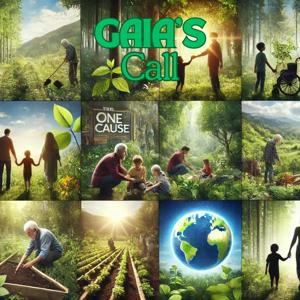


A Letter from the Fog
Dear fellow Ego-Guardians-In-Training,
If I’m being fully transparent, this next part of the journey—moving from vision to action—feels both exhilarating and daunting. I’ve spent months now weaving together the threads of One Cause—laying out the Great Untruths that got us here, and the Great Truths that could guide us home. We’ve imagined a possible new future or at least a framework for one. We’ve planted the seed of a youth movement. And now… we’re standing at the edge.
It’s time to act.
And here’s where I want to pause and speak plainly. Because if I’ve learned anything from my own path—and from the people I coach and write for—it’s this:
Knowing what to do is not the same as being ready to do it.
Truth is, I’ve been circling this very chapter for days…no, weeks. Each time I sat down to write it, I found myself distracted… hesitant… heavy. And slowly I began to realize: this chapter isn’t just about writing about the roadblocks.
I was inside one.
If you relate to this, leave me a comment so I know I’m not alone.
Some days, it’s resignation that grabs hold. “It’s too late,” it whispers when I read the latest climate data or hear yet another political leader dodge the truth.
On other days, it’s confusion. “Where do I even begin?” I ask, even as I sit in a room full of notes and plans.
And more often than I’d like to admit, I feel that slow fog of overwhelm creep in—when the gap between what I want to create and what I can manage feels too wide to cross.
I used to see these feelings as failures. Signs I wasn’t committed enough. Or strong enough. But now I recognize them for what they are:
They’re the friction before the flame. The fog before the light.
And so I want to offer this to you—whoever and wherever you are on the path. If you’ve ever felt stuck… or small… or unsure how to begin—you are not alone.
There’s a reason we don’t leap into action the moment we learn the truth. There’s a kind of grief to face first. A kind of disorientation. We have to come to terms with the fact that the world we thought we lived in is already changing—and that the solutions will almost certainly not come from the systems that caused the harm.
That’s a lot to hold.
So I say this with love and urgency: Let’s hold it together.
Let’s stop pretending that we have to have it all figured out before we move. Because more often than not, it’s the moving that brings the clarity. Do we wait to feel inspired or do we act knowing that it is through action that inspiration is ignited and sustained?
Action is what clears the fog. Action is what unlocks the flow.
One action that could lead to a community inspired would be to join the chat where you can share your challenges as well as your successes.
It doesn’t have to be grand. You don’t need to launch a nonprofit or write a book although you may choose to do either or both. Maybe it starts with planting one native flower in your yard.
Maybe it’s writing a letter to your grandkids—born or not yet born—about the future you dream for them. Maybe it’s just sitting with the discomfort and not allowing yourself to go numb.
That’s still movement.
That’s still sacred.
So yes, this chapter could have been titled “The Five Barriers to Action” and offered tidy bullet points on resignation, complacency, confusion, overwhelm, and hopelessness.
But I’d rather tell you this:
I’m stumbling through these barriers too. And I believe with all my heart that we can meet them—and move through them—together.
We can turn despair into devotion.We can compost confusion into clarity.We can turn stuckness into a seed that breaks open—with just enough light.
Because the truth is, you don’t need perfect clarity to begin. You just need to say yes.
Yes to trying.Yes to caring.Yes to showing up, however you can.
And I’ll be here with you as we take those next steps—toward inspired action, and a future worth regenerating.
With muddy boots and an open heart,Brad
Join a movement in the process of moving forward through the fog and straight on to dawn.
Last November, something cracked open in me.
The U.S. presidential election results had just landed, and like many, I was holding out hope for leadership that might finally meet the moment—leadership that could help steer us away from collapse and toward regeneration. Truthfully, I didn’t hold out a lot of hope that either political parties’ candidates would focus sufficient efforts on our global climate crisis, but I felt pretty confident that at least one of them would make some effort in the right direction. But when the winner was a ‘self-proclaimed climate change denier, I felt a sinking ache in my chest.
Our political leaders aren’t going to save us. In fact, our entire political system that continues to cling to the myths of domination, separation, and control isn’t the answer. We can’t continue to do the same thing over and over and over while expecting different results. I was tired of that insanity.
I recalled a powerful YouTube video I’d watched during one of my Game Changers Intensives. It started with this haunting reframe: “It’s 3:23 in the morning and I’m awake because my great great grandchildren won’t let me sleep. They ask me in dreams, What did you do while the planet was plundered? What did you do while the earth was unraveling?…what did you do once you knew?”
I didn’t have to wonder that far into the future about my great great grandchildren. I wondered and worried what I would say to my grandkids, Logan and Piper. I didn’t know what my answer would be. I just knew I couldn’t keep holding back. I had to do something and it didn’t take a giant leap to know that it would include writing, but not about symptoms—carbon, consumption, corruption—but about causes. Deeper causes. Root causes. And that was the birth of One Cause.
It started as a short Substack series. A weekly space to share hard truths and hopeful visions. But over the months, it grew—into a book-in-progress, a blueprint of Four Great Untruths and Four Great Truths, and maybe, just maybe… a movement.
Not a movement in the marching sense. A movement in the growing sense. A living thing. Organic. Unfolding.
The Moment Between
Right now, we’re in what Joanna Macy would call “The Space Between Worlds.” The Great Unraveling is here. You can feel it. The systems that once held us no longer do. But we are also in the midst of the Great Turning. It will not be led from Washington or Wall Street. It will be led by us—eco-conscious families, community visionaries, regenerative thinkers, and most especially… our youth. Because when I asked myself where the real turning point might come from, the answer was immediate: Our kids, and our grandkids, and their kids…The ones who haven’t yet forgotten what it means to live close to the Earth.
And so, the next seed began to germinate.
Inspired by the Great Turning? Share this article with another eco-conscious soul: a teacher, parent, or young person
Introducing: The Eco-Guardian Youth Project
Out of One Cause, the Eco-Guardian Youth Project (EGYP) is emerging—a multi-phase, multi-generational invitation to reawaken our children’s connection to nature, story, purpose, and the power of their own creative voice. Here’s what it looks like in its early form:
Vision Summary
EGYP is a movement to inspire, awaken, and empower youth ages 10–18 to become joyful, creative stewards of the Earth.It begins with story.It deepens through creative expression.It takes root through community, mentorship, and regenerative training. It’s about equipping a new generation of Eco-Guardians-in-Training (EGITs) with the courage, collaboration, and leadership to protect what they love.
Here’s How I See It Unfolding
Entry Portal: Storyteller to Storymaker
One of the main entry points will be local and online co-creative Storyteller to Storymaker events where kids create a magical eco-story in real time. These will be opportunities for young participants to tap into their purpose-inspired imagination—and glimpse the world they will help shape. They will also learn about and receive a special ‘library card’ to the Eco-Guardian Secret Society Library, a hidden online space filled with eco-fiction, nonfiction, and Earth-honoring wisdom. Access to the secret library is on a Pay-What-You-Will basis, because no child should be left out of this movement by monetary constraints.
Our initial goals for the Secret Library by the end of the first quarter of 2026:
* 500+ digital library cards issued
* 200+ library patrons visiting the library
* 300+ eco-book downloads
Phase 2: The Eco-Author Challenge
In 2026, the plan is to launch our first Eco-Author Challenge where young writers, artists, and eco-storytellers will submit fiction and nonfiction work for possible inclusion in a youth-authored anthology of writing and illustrations. This will be also be the opportunity for participants to learn the fun and joy of cooperative and creative collaboration.
Phase 3: The Eco-Guardian Training Camp (EGTC)
A deeper dive for the kids who want to keep going. Towards the end of 2026 (or earlier if the resources come available) we’ll launch phase 3, the Eco-Guardian Training Camp which will include:
* Monthly eco-missions
* Interactive Zoom workshops
* Peer support & mentorship
* Creative exploration where other family members, teachers, and librarians are invited as allies.
Why This Matters Now
The climate crisis isn’t just about rising seas and escalating temperatures. It’s about rising anxiety. Rising disconnection. Rising loneliness.
Our kids are inheriting a world that feels broken.Let’s give them something else.Let’s give them a place to belong—a circle, a story, and a mission.
How is your family navigating the Great Unraveling? Comment below or join the Chat.
Call for Collaborators & Eco-Conscious Families
Right now, we’re forming the early roots of this vision—and we’d love you to join us.
We’re currently seeking:
* Youth-centered educators
* Artists, writers, and librarians
* Homeschooling families
* Eco-parents and grandparents
* Potential beta-testers
* Founding members of an informal Eco-Conscious Family Advisory Circle
If you’re reading this and feeling the stir of “Yes, I want to help,” reach out.We’re building something beautiful—and your voice is welcome and needed.
Reach out if you’re ready to co-create something regenerative.
“Bring out the secrets of nature for the happiness of humanity.”—Thomas Edison
When you think of a genius, you might picture someone like Thomas Edison—brilliant, prolific, and ruthlessly practical. He held over 1,000 patents, lit up the world with electricity, and helped create entire industries.
And yet, one of his lesser-known quotes reveals something deeper:
“Anything that won’t sell, I don’t want to invent. Sales are proof of utility, and utility is success.”
What if that had been different?
What if Edison had said instead,“Anything that doesn’t serve nature, I won’t invent”?
Or, “I’ll make sure all my inventions serve all of nature.”
What if genius wasn’t just measured in profits—but in regeneration?In healing ecosystems? In protecting future generations?
Rethinking Genius for the Climate Era
We’re not just in a tech revolution. We’re in a values revolution.And it’s asking us to realign our creative brilliance with Earth’s needs.
What does that look like?
Let’s explore how genius unfolds when aligned with the Four Great Truths.
InterconnectednessBuildings designed like trees. Cities modeled after watersheds. Living walls that breathe. Biophilic design is more than beautiful—it’s genius guided by connection.
SufficiencySolar-powered irrigation tools shared across community farms. Open-source tech in the Global South. These are innovations that whisper: “There is enough, if we share.”
ReciprocityRegenerative farming practices. Fungi that form mutualistic partnerships underground. Genius, it turns out, doesn’t dominate the soil—it listens to it.
StewardshipDesigners embracing cradle-to-cradle design ask:“Can this product return to the Earth or be used again endlessly?”From sneakers to smartphones, stewardship is becoming a blueprint.
Eco-Innovation Spotlights
Vinisha Umashankar (India)At just 14, she designed a solar-powered ironing cart—clean, portable, and practical. It replaces charcoal carts used by millions of vendors. She’s been recognized by the Earthshot Prize and spoke at COP26.
Tree-Planting DronesCompanies like Dendra Systems are using drones to reforest areas faster and more precisely than humans can alone. Tech meets trees. Restoration at scale.
Indigenous Climate SolutionsFrom controlled burns to solar-powered fish camps, Indigenous wisdom is guiding new climate adaptations. Ancient intelligence meets modern need.
These aren’t just cool projects. They’re proof:
Real genius is humble, regenerative, and in service to life.
What If… the Next iPhone Healed the Planet?
Let’s stretch our vision.
What if the next iPhone regenerated coral reefs?
What if our “smart homes” grew vegetables and filtered rainwater. Or even better what is our homes separated our ‘gray water’ to use in our garden from the waste water which was then ‘composted’ locally for future use?
What if middle school science fairs became incubators for rewilding the suburbs?
Imagination isn’t a luxury—it’s a tool of survival and ultimately a portal to our thriving in a regenerative future. It’s time to start dreaming forward.
Visioneering Your Own Eco-Genius Project
Here’s your invitation to get started:
* Ask: What breaks your heart about what’s happening to Earth?(Dead coral? Plastic-filled oceans? Birdsongs going silent? The loss of pollinators globally?)
* Imagine: If Nature could whisper an answer, what might she say?(Start with what’s alive near you.)
* Begin: What small, doable project could you begin or continue as a small step to a regenerative future? A backyard pollinator patch? A soil experiment? A letter to your mayor?
For example, one of my ongoing project is transforming my yard that I once had to cut everyone two weeks into a food forest. Here are a few pics of our latest additions/kins.
4. Then tell someone about your mini-eco project. How about including this Gaia’s Call community by leaving a comment in the Chat By the way, the chat feature is available both within the Substack app and on the website.
Redefining Genius
We’ve inherited more than Edison’s brilliance—we’ve inherited his blind spots.
So let’s rewrite the rules.
Not “What will sell?” But “What will serve life?”
Real genius isn’t just clever.It’s caring. It’s regenerative.It grows futures worth living into.
Your Bonus Mini-Mission: Activate Your Inner Visionary
This week, choose one:
* Learn about a young climate innovator like Vinisha.
* Write down 3 “What if…?” ideas for healing the planet.
* Start a journal of nature-inspired ideas (yes, doodles count).
* Share this article with someone who needs a nudge of possibility.
Because the next revolution in innovation won’t come from tech titans.It’ll come from gardeners. Grand-Dudes. Librarians. Artists. You.
P.S. What If Genius Became a Movement?
Behind the scenes, I’ve been nurturing a bold new vision:The Eco-Guardian Youth Project.
It begins with a Secret Library.Leads into a youth writing challenge.And blossoms into an Eco-Guardian Training Camp—a place where young readers, writers, and visionaries gather to reimagine the future.
Think: Hogwarts for Eco-Guardians.
It’s still unfolding—but if your inner genius (or outer mentor) feels called…I’d love to hear from you.
Let’s imagine something beautiful into being—together.
A Heroic Moment
It started with a phone call.
It was a Thursday night. Ann and I had just settled in when Amber, our daughter, called. Their basement was flooding. Justin, her husband, had been called away as a first responder, and she needed help—immediately. “No big deal,” I thought. I packed a bag, grabbed some clothes, and drove up the mountain to their home. I figured I’d help vacuum the water, maybe stay the night.
I had no idea we were stepping into a storm that would soon be named Helene.
By 2 a.m., the power was gone. The vacuum was useless. The water kept rising. Inches of rain kept falling—hour after hour, day after day. We were to learn later that our area received from 13 to over 30 inches of rain. Cell towers went down next, due primarily to the power outages and disruption of the fiber optic lines, and with them, our ability to communicate with anyone. We were cut off. It was just Amber and me, two Eco-Guardians in crisis mode, with two small children—Logan, 3½, and Piper, 1½—and no idea what was coming next.
For five days, we hunkered down. No power. No news. Just each other, and the steady rhythm of responsibility: diapers, food, water, buckets, blankets, calming fears. Was Ann okay? We had no way to know… until Justin managed to reach her days later, confirming she was safe.
That week, I learned something about heroism.
Not the cinematic kind. Not the lone savior kind.
The real kind. Collaborative. Courageous. Committed to care.
What does it mean to be a hero when the world we know is unraveling?When was the last time you felt the pull to rise—not as a savior, but as a steward?
The true superpower of our time isn’t domination. It’s cooperation and collaboration. But what does this look like?
Consider the International Space Station. It took 15 nations—many of them former adversaries—over a decade to build something none could have accomplished alone. Astronaut Ron Garan calls this the Orbital Perspective —the worldview that emerges when you look back at Earth from space and realize we’re all in it together.
And I believe this is the same as the On Purpose Perspective that has inspired the One Cause movement: seeing Earth not as a battlefield, but as a beloved home. A shared miracle…one that we’ve been mistreating and taking for granted, but also one that has amazing healing powers when given the chance.
The Hero, the Genius, the Visionary: They All Live in You
Brian Johnson says, “You are the hero we’ve been waiting for.”And I’d add: the genius? That’s you, too. The visionary? Also you.
You don’t need superpowers. Just purpose.
Joseph Campbell gave us the Hero’s Journey. But our dragons today aren’t fire-breathing monsters. They’re internal illusions:
* The myth that we’re separate from nature.
* The addiction to more is always better.
* The belief that we can innovate our way out of responsibility.
The call to adventure today is to live aligned with the Four Great Truths.
This is more than action. It’s a full-system shift—what Ken Wilber would call a four-quadrant transformation:
* Upper Left: How we see ourselves.
* Lower Left: How we relate to others.
* Upper Right: What we create and build.
* Lower Right: How we organize communities and systems.Here’s a brief overview of the quadrants.
To be a hero now means embracing a worldview that regenerates life, rather than depletes it.
Living the Truths: Real-World Eco-Guardians
Here are four real-world heroes whose work embodies the Four Great Truths:
Interconnectedness → Robin Wall Kimmerer
Botanist and author of Braiding Sweetgrass, Kimmerer weaves science with Indigenous wisdom. She reminds us that plants are not just resources—they are relatives. Her work is a living invitation to reciprocity and reverence.
Sufficiency → Wangari Maathai
Founder of Kenya’s Green Belt Movement, Maathai empowered thousands of women to plant over 50 million trees. Her work was rooted in the belief that there is enough—enough land, enough water, enough life—if we share and care for it.
Reciprocity → Joanna Macy
Through The Work That Reconnects, Macy offers practices for transforming ecological grief into grounded, regenerative action. She helps people see their pain for the world not as weakness—but as love in disguise. ( I realize that Joanna has recently passed away. I’m also sure her work lives on in many of us.)
Stewardship → Boyan Slat and Youth Eco-Leaders
At just 16, Slat launched The Ocean Cleanup. Today, his efforts inspire a generation. Around the world, youth-led permaculture teams, regenerative garden crews, and Earth Listening Circles are reclaiming stewardship as sacred.
Want to spotlight your own local hero?
Click the “Join the Chat” button and share your story. I’ll start with mine: my wife, Ann, who founded the Hendersonville Repair Cafes—teaching people to fix what’s broken instead of tossing it out.
You Are Already on the Path
Here’s the truth: if you’re reading this, you’re already walking your path.
I’m walking mine, too.
* These weekly One Cause articles? That’s part of it.
* My time in the garden, tending to squash and sweet potatoes? That’s part of it. (More coming on my Loving Homestead experiment soon.)
* Hosting Earth Listening Circles and listening deeply to the pain—and promise—of our time? That’s part of it, too.
Want to go deeper? Try journaling with one of these prompts:
* What breaks your heart most about the world right now?
* When have you felt most connected to nature?
* What’s one small act of restoration you’ve already done?
* What’s a dream you have that could help life on Earth thrive?
* Who in your life is already living as a modern-day hero?
* What’s one way you can embody one of the Four Great Truths this week?
Mini-Mission: Your Heroic Step
Choose one act this week. Make it small. Make it soulful. Make it yours. Here are a few suggestions:
* Tend to a part of nature near you—even if it’s a tired houseplant or a patch of sidewalk.
* Share one journaling prompt with someone you care about.
* Post about the Great Truth that’s most alive for you. (Click Here to review the 4 Great Truths.)
* Begin a “hero’s notebook” for wild, regenerative ideas.
Then tell someone. Pass it on. Share it here by clicking the Comment button. That’s how movements begin.
Because the future doesn’t belong to superheroes.It belongs to visionaries in muddy boots, to fierce-hearted families, to old and bold grand-dudes, and to eco-guardians rising in every corner of this turning world.
This is your invitation.To stop waiting. To start creating. To be the cause.
The age of separation is ending. The age of stewardship has begun.
Shall we begin?
A Note for Families and the Young at Heart
Last Friday, I shared some reflections on a new energy law passed by Congress—how it reveals the deeper beliefs shaping our politics, and how we might start building something better from the ground up.
But the real question I’ve been sitting with since then is this: What are we teaching the next generation about freedom, responsibility, and the earth we all share?
That’s why I wrote the following piece—not as a political commentary, but as a walk through the woods with my grandkids and other young Eco-Guardians in training. It’s a conversation I imagine having with Logan when he’s just a little older and starting to wonder how this world works… and how he can help shape it.
It’s written from the heart, in the voice of “Grand-Dude,” with just enough dirt on the boots to keep things grounded in love, wonder, and truth.
Feel free to share it with the kids in your life—or with the child still alive in your own heart.
What If Our Laws Helped the Earth?
A Post-July 4th walk with Grand-Dude
Hey there, kiddo.
Imagine you and I are out for one of our favorite walks through the woods. The sun’s peeking through the trees, birds are singing overhead, and there’s a gentle breeze that smells just a little like pine needles and adventure.
Now, let me ask you something.
What if the rules we made—you know, the big ones, the laws—helped the Earth instead of hurting it? What if every decision grown-ups made about energy, land, and how we live was also a promise to care for nature, for animals, and for kids like you?
What Happened This Week
Well, this week, the grown-ups in charge passed a big new law. It’s all about energy. It might sound good at first—more jobs, more power, more stuff—but here’s the thing: most of that energy will come from digging up fossil fuels like oil and gas.
And fossil fuels? They’re kind of like old buried treasure... but when we burn them, they make the air dirty, hurt animals’ homes, and heat up the planet more than it already is.
So that got me thinking...
The Four Great Untruths (a.k.a. some big misunderstandings)
You see, there are some ideas many adults still believe—ideas that just don’t hold up when you look at the world closely, especially out here in the woods. I call them the Four Great Untruths. Let me tell you what they are, and you tell me if they sound right to you, okay?
* “We’re separate from nature.”That’s like saying a tree doesn’t need the soil, or that we don’t need air or water. Silly, right?
* “More is always better.”Imagine trying to eat 100 cookies in one sitting. You’d probably get a bellyache. The Earth does too.
* “The Earth has endless resources.”Even your flashlight runs out of battery. So does the planet when we take too much.
* “Technology will save us.”Tech is cool—robots, rockets, and all—but we also need love, kindness, and wisdom. You can’t plug that into a charger.
The Four Great Truths (the real treasures)
Now here’s what I believe deep down—and I bet you do too. These are the Four Great Truths. These are the seeds we can plant together for a better world:
* Interconnectedness – We’re all part of one big web of life. Like when a bee helps a flower, and the flower feeds a butterfly, and the butterfly makes us smile.
* Sufficiency – There’s enough for everyone when we share—like pie on Thanksgiving when we each take just what we need.
* Reciprocity – Giving and receiving go together. Like when you give a hug and get one back. Or when you help nature, and nature helps you.
* Stewardship – This is the big one: taking care of the Earth like it’s your pet, your playground, your best friend. Because it is.
Your Mini-Mission: Ready to make some magic?
I’ve got a few little quests for you. Pick one—or all—and make this Independence Day about more than just fireworks.
Draw a “Freedom Flag”Not just stars and stripes. Try trees and rivers, birds and bees. Make it a flag for all life.
Ask your family a big question“What does real freedom mean—for people, animals, and the planet?” You might be surprised by what they say.
Plant somethingA seed. A flower. A tree. Even a dream. And while you're at it, pick up a piece of trash if you see one.
And Remember…
You may be small, but your heart is huge. And your voice matters more than you know.
So let’s walk a little further, hand in hand, and dream together...
Because the future needs you, brave Eco-Guardian.
With love and muddy boots,Your Grand-Dude
Unleashed - W. Bradford Swift is a reader-supported publication. To receive new posts and support my work, consider becoming a free or paid subscriber.
Before the fireworks faded this year and Rascal (my canine companion) had finally calmed down, I found myself caught in the sparks of something else entirely: a clash of narratives surrounding H.R.1, dubbed by some the “Big Beautiful Bill.” I’d heard plenty of heated rhetoric from Democratic leaders condemning the bill as a blatant handout to the wealthy and fossil fuel interests. But then I read a very different take—this time from a thoughtful Trump-supporting acquaintance who spoke glowingly of the bill’s promise for energy independence and economic revival.
So I did what I often do when something doesn’t sit quite right on either side.
I paused. I got quiet. And I chose to look for myself.
Not through the lens of party loyalty. Not through the red vs. blue tribalism that dominates our national conversation. But through the deeper lens of One Cause—a project I’ve been living, writing, and inviting others into since the last election.
Because the truth is, we don’t just need new policies. We need a new foundation for policymaking itself.
A worldview that doesn’t pit us against each other or against the planet we depend on—but one that recognizes our interdependence and shared future.
And this bill? Whether you love it or hate it, it reveals exactly what happens when we legislate from a dysfunctional and unsustainable worldview.
Let’s unpack that.
What Is the “Big Beautiful Bill” Really About?
H.R.1, officially titled the “Lower Energy Costs Act,” is a sweeping piece of legislation aimed at ramping up fossil fuel extraction, deregulating environmental protections, and accelerating the permitting process for energy development—including oil, gas, and mining.
Its supporters frame it as a bold move toward energy independence and economic prosperity. Its critics argue it’s a catastrophic giveaway to fossil fuel corporations, furthering environmental degradation and inequality. From the surface, it’s a political clash like any other.
But let’s go deeper.
What if the real issue isn’t just the bill’s content—but the worldview beneath it?
The Four Great Untruths at Work
As part of One Cause, I’ve identified what I call the Four Great Untruths—core assumptions that quietly shape much of our modern life, including our political systems. They’re not just wrong. They’re dangerously out of alignment with Indigenous wisdom of the ages, modern science, and the living systems we depend on.
Let’s see how each shows up in H.R.1:
1. We Are Separate from Nature
This untruth justifies treating the Earth as a resource pit rather than a living partner. H.R.1 reinforces this by stripping away environmental safeguards and fast-tracking extraction as if the land were inert, disposable, and unfeeling.
2. More Is Always Better
The bill celebrates growth—especially fossil-fueled economic growth—without acknowledging limits or consequences. It promotes more drilling, more mining, more consumption as if expansion were the same as prosperity.
3. The Earth’s Resources Are Infinite
Nowhere does H.R.1 reckon with planetary boundaries. There’s no mention of climate tipping points, ecological degradation, or the cost to future generations. It’s the legislative equivalent of raiding Earth’s savings account with no plan to repay.
4. Technology Will Save Us
The bill leans heavily on innovation and deregulation, assuming that if we just remove enough “red tape,” market forces and tech will fix what’s broken—without needing to rethink the deeper patterns that created the problem in the first place.
This isn’t to demonize those who support the bill. It’s to shine light on the operating system beneath it.
And to ask: what if we chose a different foundation?
The Four Great Truths: A Compass for Regenerative Governance
Now imagine a bill shaped not by domination, scarcity, and short-term thinking—but by life-affirming truths grounded in ancient wisdom, ecological science, and human dignity.
These are the Four Great Truths we explore in One Cause:
1. Interconnectedness
All life is connected. We flourish together or not at all. Policy grounded in this truth would account for the well-being of watersheds, pollinators, ecosystems, and future generations—not just GDP.
2. Sufficiency
There is enough for everyone when we use wisely and share fairly. Rather than hoarding or extraction, sufficiency prioritizes equity, access, and regenerative design.
3. Reciprocity with Nature
We are part of nature’s web, not outside it. True freedom isn’t the right to exploit, but the opportunity to give back. Policy aligned with this truth would build soil, restore forests, and invest in life-giving systems.
4. Humanity as Stewards, Not Masters
We are not rulers over nature, but caretakers within it. Governance rooted in stewardship sees leadership as service—not domination—and future-proofing as sacred responsibility.
These truths aren’t partisan. They’re planetary.
They’re not “left” or “right.” They’re forward.
And we desperately need politics that reflect them.
So What Are We Legislating For?
Maybe that’s the real question this July 4th: Not just what we’re celebrating—but what we’re voting for. Organizing for. Teaching our children about.
Are we defending a system that’s unraveling the very fabric of life?
Or are we willing to co-create a new foundation—one rooted in truth, not ideology?
I don’t know exactly what that next system looks like. But I know this: it won’t emerge from cynicism or despair. It will emerge from bold honesty, radical responsibility, and fierce love—for Earth, for each other, and for all generations to come.
Mini-Mission: Read with New Eyes
This week, take a few minutes to read one piece of legislation—not from outrage or allegiance, but from curiosity.
Then ask yourself:
* What worldview does this reflect?
* Who or what benefits?
* Who or what is left out?
* How would this be different if we legislated from the Four Great Truths?
Then share your reflections. With a friend. On social media. Or even better, with your local representative.
Share Your Dream for a Regenerative FutureClick to add your vision. Your voice matters.
Let’s turn governance into a conversation worth having.
Final Reflection
This isn’t about red vs. blue. It’s about life vs. collapse. Unity vs. division. Possibility vs. business-as-usual.
It’s time we moved from extractive politics to purposeful politics.
And the shift begins not in Washington—but right here.
In our hearts, our homes, our homesteads, our circles of care.
Because the most radical thing we can do right now is believe that a better system is possible.
And then, brick by brick, truth by truth, build it.
Subscribe for Future Purposeful Politics & One Cause Posts. We’re building a new path—together. Join us.
PS: For the Young (and Young at Heart)As I reflected on all of this, I found myself imagining a future walk through the woods with my grandson, Logan. He’s only four now, but I picture him at ten or twelve, asking, “Grand-Dude, what kind of world are we making?”
That image inspired me to craft a companion piece—a version of this message told with curiosity, playfulness, and muddy boots. One for the kids. One for the classrooms. One for the Eco-Guardians in training.
I’ll be sharing it early next week. I hope you’ll read it aloud with a young one in your life—or maybe with the still-young part of your own heart. Stay tuned.
P.S.S.
David Attenborough’s Ocean: The world’s leading natural historian draws on a lifetime of knowledge to reveal how Earth’s vast, interconnected waterways can be restored.
https://www.hulu.com/movie/ocean-with-david-attenborough-1d8f1a4a-72dc-4532-a0e0-d35daa00d3a7
Our current educational model isn’t broken—it’s doing exactly what it was designed to do: prepare children to succeed in a world built on the Four Great Untruths. But what if that’s the problem?
Want more inspiration like this? Subscribe to join a movement reimagining the future—one story, one step, one spark at a time.
Why Traditional Education Needs to Evolve
Let’s start with a hard truth: the dominant model of education is not preparing young people for the world they’re inheriting. It was never designed to. Rooted in the industrial era and shaped by the Four Great Untruths (GUTs), today’s schools often serve as pipelines—not to purpose or wisdom, but to productivity, conformity, and consumerism. These GUTs include:
* We Are Separate from NatureThis untruth underlies much of our educational design—students spend the majority of their time indoors, disconnected from the natural world. It reinforces the illusion that humans are observers of nature, not participants in it.
* More Is Always BetterThe relentless pursuit of grades, test scores, and academic accolades fosters a scarcity mindset and undermines intrinsic motivation, creativity, and well-being. Students become driven to outperform, rather than collaborate and create.
* The Earth’s Resources Are InfiniteMost schools fail to teach ecological literacy—how systems like water, energy, and biodiversity actually function. Without understanding planetary boundaries, students grow up unaware of the ecological crises unfolding around them.
* Technology Will Save UsWhile innovation matters, over-reliance on technological fixes discourages critical thinking and disconnects us from embodied wisdom. True resilience comes not just from knowing how to code, but from knowing how to compost, conserve, and connect.
But what if we flipped the script? What would it look like to educate young people from the foundation of the Four Great Truths (GTs). Let’s imagine such an education system:
* InterconnectednessThis truth teaches that everything is connected. When students learn from ecosystems, they begin to see the invisible threads linking soil to seed, breath to tree, and self to society. Compassion and systems thinking emerge naturally.
* SufficiencyEnough is a powerful concept. In classrooms grounded in sufficiency, the race to 'do more' gives way to depth, presence, and joy. Students learn to work with what they have—creatively and gratefully.
* ReciprocityLearning becomes a mutual exchange. Students are not empty vessels to be filled but co-creators of knowledge. Service learning, peer teaching, and real-world projects model the give-and-take of thriving communities.
* StewardshipPurpose guides education when stewardship is the norm. Students aren't just preparing for jobs—they're preparing to be caretakers of the Earth, each other, and the generations to come. Education becomes not just informative, but transformative.
This kind of education fosters creativity, resilience, and regenerative thinking—not just for surviving the future, but for co-creating it.
What if school helped you solve real-world problems, like saving the planet?
Know a parent, teacher, or changemaker who needs to read this? Let’s spread the vision. Tap to share.
Small-Scale, Experiential Education Models
Fortunately, this reimagining is already happening in pockets around the world.
Forest Schools
Forest schools bring students outdoors in all seasons, engaging with the rhythms of the land. Children explore forests, build shelters, track animals, and learn to care for the Earth through immersion and play. These schools prioritize curiosity, resilience, and hands-on engagement. Learn more at Forest School Association.
Waldorf Education
Founded by Rudolf Steiner, Waldorf education emphasizes imagination, creativity, and the integration of the arts with academics. Children learn through movement, music, handwork, and storytelling. Rooted in rhythms, relationship, and reverence, Waldorf aligns powerfully with the Great Truths by fostering inner development and ecological awareness. Explore further at Waldorf Education - AWSNA.
Project-Based Learning
Project-Based Learning (PBL) allows children to learn by doing—designing, building, questioning, and solving real-world problems. Whether it’s designing a sustainable house or launching a school recycling campaign, students take ownership of their education through inquiry and collaboration. A strong example is High Tech High, which uses PBL to connect learning with life.
Indigenous Models of Education
Many Indigenous communities around the world practice educational models rooted in storytelling, ceremony, and learning from elders. These traditions honor the sacred interconnection of life and emphasize respect, reciprocity, and stewardship. Examples include the Hawaiian "Aloha ʻĀina" (love of the land) programs and the First Nations' "Land as Teacher" approach. Learn more at The Indigenous Education Institute.
“Imagine your school was a garden, and you learned math by measuring plants and science by watching them grow.”
These approaches aren’t perfect—but they offer living blueprints for what’s possible when we educate with nature instead of about it.
What alternative models have you seen—or dreamed of—for educating our youth? I’d love to hear your thoughts below.
The Role of Communities in Education
A regenerative education system can’t rely on schools alone. Communities must be co-creators in the learning journey. When we begin to see education as something that happens not just within classroom walls but across gardens, kitchens, repair shops, and gathering circles, we unlock a deeper potential in our children—and in ourselves.
Intergenerational learning plays a vital role in this. Our elders carry wisdom forged through experience—stories of resilience, skills in growing food, repairing tools, caring for land, and navigating life without reliance on digital shortcuts. When children and teens learn alongside grandparents and mentors, they connect to a lineage of knowledge that no textbook can replicate.
What if we asked:
“What could our grandparents teach that our textbooks can’t?”
Community gardens, repair cafes, and local maker spaces become living classrooms. These are places where curiosity meets utility—where math is used to design a compost bin, where science is discovered in soil health, and where creativity is sparked through shared problem-solving. In these environments, young people learn how to build, repair, grow, and give back—skills essential to a regenerative future.
Emotional resilience, too, is cultivated in community. It comes from knowing you belong—from feeling rooted in a village that celebrates your gifts and supports your struggles. When children grow up surrounded by caring adults, authentic connection, and a shared commitment to the well-being of all, they are better prepared to face uncertainty with courage and compassion.
Together, communities can become ecosystems of learning—where wisdom is shared, creativity is celebrated, and the next generation is raised not just to survive, but to thrive.
Ecological Literacy as a Core Skill
As climate disruption accelerates, ecological literacy isn’t a luxury. It’s a survival skill.
* Understand natural systems—water cycles, soil health, biodiversity.
* Practice Earth skills—growing food, composting, harvesting rainwater.
* Build planetary perspective—seeing oneself as part of, not apart from, the web of life.
I’m learning so much from our Loving Homestead experiment. Both what’s working and what needs work. I’ve learned that at 76, I don’t have the same energy and endurance that I did at 43 when we first moved to the North Carolina mountains. At the same time, I’m so thankful for the health and vitality I enjoy. I’m discovering creating a food forest feeds my soul as much as it will eventually feed my body.
Invitation to Share
As I continue to grow my own emerging food forest, I’ll be sharing photos in this space. I’d love to see how you are living as an Eco-Guardian in your corner of the world.
Whether it’s a community garden, a home compost system, or simply a moment of quiet connection with nature—snap a photo and share it in a Substack Note. Tag it with #EcoGuardian so we can find and celebrate each other’s work.
Here’s how to do it:
* Go to your Substack dashboard.
* Click on “Notes.”
* Start a new Note, upload your image, and add a caption or comment.
* Tag it with #EcoGuardian so we can all see and amplify each other’s acts of care.
Or if that’s a too much of a techy challenge, send me email me with the image(s) attached at [email protected]
Let’s build this movement, one inspired image at a time.
Help grow our visual library of regeneration. Share this post and tag a fellow Eco-Guardian who might contribute a pic too!
Fostering Creativity and Collaboration
From climate change to collapsing ecosystems, today’s problems won’t be solved by memorizing answers. They’ll be solved by imagining better questions.
* Encourage unstructured exploration—mud kitchens, backyard bug hunts, painting with natural dyes, or hours of fort-building in the woods. Unstructured time builds imagination.
* Celebrate collaborative learning—youth-led climate clubs, community art projects, or team challenges that require group problem-solving and cooperation.
* Integrate arts and sciences, myth and math, logic and love—combine storytelling with science experiments, or use theater to explore ecological themes. Let learning engage the whole child.
Reflection and Inspiration
What do you wish school had taught you about nature? What would it look like for your community to become a learning ecosystem? What’s one small step you could take to begin reimagining education where you live?
“Education is not preparation for life. Education is life itself.” — John Dewey
Let’s raise a generation not just ready for the world—but ready to remake it.
Ready to be part of reimagining education and community? Subscribe to follow the journey—and share this if it moved you.
Let’s spark a thousand conversations (and school gardens) from here.
Before the fireworks light up the sky, before the flags wave and the anthems echo, I invite you to take a breath with me. Not a performative one, not a patriotic puff of the chest—but a quiet, thoughtful breath. One that asks: What are we actually celebrating today? And perhaps more importantly: What do we want future generations to celebrate on this day a hundred years from now?
A Meditation with the Mighty Muse
I sat this morning in meditation—seeking clarity, grounding, perspective. I imagined I was in conversation with the Mighty Muse, that deep current of Cosmic Consciousness that has long whispered through the trees, flowed through rivers, and stirred the hearts of those willing to listen.
And I asked:
What might a truly liberated nation look like—one that honors all life, not just human life? What kind of freedom are we shaping with our daily choices, our politics, our parenting, our presence?
What came was not a scolding, but an invitation. A gentle yet firm invitation to reflect, to reconnect, and to re-found what this country—and this world—might become.
The Founding Fathers and the Seeds of Truth (and Untruth)
Let’s give credit where it’s due. Many of the Founders, flawed and limited as they were, did tap into powerful ideas that mirrored what I now call the Four Great Truths (GTs):
* Interconnectedness: Many early communities understood their lives depended on neighbors, land, and local systems.
* Sufficiency: The American Revolution arose partly from frustration with royal excess. Simplicity and sufficiency had value.
* Reciprocity: Self-governance emerged from the belief that rights come with responsibilities.
* Stewardship: In agrarian life, land wasn’t just property—it was partnership.
And yet, these Truths were quickly overshadowed by the Four Great Untruths (GUTs):
* We Are Separate from Nature: Enslavement and land theft were justified by a belief in human superiority.
* More Is Always Better: From manifest destiny to consumer culture, the drive for more became law.
* The Earth’s Resources Are Infinite: Expansion never paused to ask what the land could bear.
* Technology Will Save Us: Even then, there was a seduction in mechanization over mutuality.
So here we are today—our cultural DNA a tangle of contradiction, potential, and peril.
Fossil Fuels: The Hidden Architect of American Power
Let’s fast-forward to 1859. The first commercial oil well in Pennsylvania.
That black liquid energy—so dense, so cheap, so powerful—poured fuel not only into engines but into entire worldviews. We stopped living off Earth’s "daily solar income" and began burning through her stored capital. Fossil fuels gave us highways, high-rises, global trade, industrial food… and the illusion that we were gods of endless growth.
This changed everything. Including our politics.
Cheap energy allowed us to externalize costs—ecological, emotional, and economic. It let us believe that distance erased consequence. And it built a political and economic system where those with access to the most energy (and money) could control the narrative.
Even now, on this holiday, fossil fuels will power most of the fireworks shows, the traffic, the grills, the flights, the mass-produced flags…
So again I ask: What are we really celebrating?
Share Your Thoughts on This Post
A New Declaration: Interdependence, Not Just Independence
Maybe what we need isn’t a revolution, but a re-rooting. A return to the Great Truths:
* Interconnectedness: We’re not above the web of life—we are the web of life. What harms one, harms all.
* Sufficiency: There is enough—if we share wisely, live simply, and create systems rooted in equity.
* Reciprocity: Rights and responsibilities go hand-in-hand. Democracy is not a spectator sport.
* Stewardship: We are caretakers, not kings. Let us govern for the seventh generation.
What might a political system rooted in these truths look like? Perhaps it would:
* Prioritize the well-being of all species, not just human GDP.
* Weigh policy based on long-term ecological health, not quarterly profits.
* Replace extraction with regeneration.
* Treat clean air, water, and soil as rights, not commodities.
Call it Purposeful Politics. Call it Re-Founding America. Call it a dream.
But if we don’t dream differently, we’re destined to keep repeating the same nightmares.
So Where Do We Begin?
We begin by not turning away. By refusing to let cynicism close our hearts. By reclaiming the power of civic imagination.
Let’s talk with our kids—not just about fireworks but about why this land deserves our care. Let’s host intergenerational conversations about real freedom—the kind that includes Earth, the unseen, and the unborn. Let’s redefine patriotism as a love so deep, we’re willing to tell the truth about where we’ve been—and where we must go.
Share This Post with a Friend
Mini-Mission: Redefine Your Freedom
This July 4th, I invite you to:
* Light a candle in gratitude for Earth
* Host a family “What is real freedom?” circle
* Plant something. Literally. In soil.
* Post a photo with the hashtag #EcoGuardian with your vision of freedom for all life
Let’s make this Independence Day about interdependence. Let’s raise a new flag—one that doesn’t divide us by borders, but binds us through belonging.
Share Your Eco-Guardian Action
Final Reflection
What if our greatest patriotic act right now… is to grieve? To grieve the promises we’ve broken, the paths we’ve strayed from, the planet we’ve wounded.
And then, to rise—not in anger, but in awe. In purpose. In One Cause—to become the ancestors future generations will thank.
Let’s become citizens not just of nations—but of Life itself.
P.S. I will be returning to our regular One Cause exploration next week with an in depth look at the role education and community plays in our regenerative future based on the 4 Great Truths.
Unleashed - W. Bradford Swift is a reader-supported publication. To receive new posts and support my work, consider becoming a free or paid subscriber.
Last week, I shared a personal TED talk-style exploring the deeper roots of the climate crisis—not just as an ecological emergency, but as a crisis of belief.
Today, in Part Two, I invite you to turn toward the path of healing and regeneration. This video introduces the Four Great Truths—ancient, enduring principles that offer a new foundation for how we might live, love, and lead forward.
These truths aren’t abstract theories.They’re how life actually works when it’s in right relationship.And they’re the compass behind everything I’m doing with the One Cause Project.
I’ve also decided that now is the right moment to share something even more personal: my Vow to the One Cause Experiment—a declaration I read each morning and evening, and one that defines how I want to live the rest of my life. You’ll find it below this introduction. If it speaks to you, I invite you to sit with it… maybe even speak it aloud or accept my invitation into the One Cause world.
And again, if these videos move you, feel free to share them—or even nominate me to speak on the TED stage using this link.
We need more truth in the world.We need more voices rising not in fear, but in care, courage, and commitment.
Thank you for being one of those voices.
Watch Part Two above.
From the publisher's feed