
Sign up to save your podcasts
Or

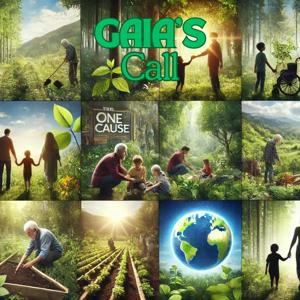


A few weeks ago, Ann and I reopened a conversation that has been quietly circling for years. What if Amber and Justin moved into the upstairs of Loving Homestead… and Ann and I moved downstairs to the ‘mother-in-law’ apartment? Four loving adults. Two extraordinary children. One shared roof. One shared experiment.
It feels beautiful. It feels bold. It feels right. And then—as real life tends to do—a wrinkle surfaced. The local school Logan and Piper would attend has a “poor” rating. That word landed heavily. Of course it did. Parents want the best for their children. We all do.
And I found myself sitting with a deeper, slightly uncomfortable realization: even if the school had a five-star rating… would it actually be preparing them for the world they are growing into?
That question has not left me.
The World Our Children Are Inheriting
We are living in what many are calling a polycrisis or metacrisis—overlapping ecological, political, economic, technological, and spiritual disruptions. Some call it the Great Collapse. Others call it the Great Turning. And others, including myself, see it as something messier and more mysterious—like what happens inside a chrysalis as a caterpillar transforms into a butterfly.
Inside that chrysalis, everything dissolves. Structures break down. It looks like chaos. And yet, imaginal cells begin to organize around a new pattern of being.
Perhaps we are living inside such a chrysalis moment. Perhaps our children are not merely inheriting a mess—perhaps we and they are the imaginal cells of what comes next. Whatever language we use, one thing is clear: the world Logan and Piper will inhabit as adults will not look like the world I grew up in. And probably not even like the world their parents grew up in.
So the real question isn’t, “Is this school highly rated?” The real question is: What prepares children to steward a changing world?
Stewardship Is Not the Same as Success
Most school ratings measure standardized test scores, reading and math proficiency, graduation rates, and college admissions. Important? Yes. Sufficient? Not even close…not for these times that are before us and that our children are inheriting.
Because stewardship requires something deeper.
Stewardship is about how we show up in relationship to the Earth, to community, to uncertainty, and to ourselves. It asks not only, “Can you compete?” but “Can you care?” Not only, “Can you achieve?” but “Can you regenerate?”
In many ways, our dominant educational model is based on and a reflection of the Great Untruths:
* that we are separate from nature,
* that more is always better,
* that Earth’s resources are unlimited, or
* that technology will save us.
* But the world our children are stepping into demand a different set of capacities altogether—ones based in and are a reflection of the four Great Truths.
What Might Actually Prepare Our Children?
As I’ve reflected on this—both as a grandfather and as someone deeply living true to the four Great Truths—a few qualities rise to the top.
Emotional resilience. Not the stiff upper lip of suppression, but the ability to feel deeply without being overwhelmed. To face unsettling realities without collapsing into despair. To experience disappointment without losing direction. In a time of disruption, emotional regulation may be more important than algebra.
Collaborative skills. The future will not be navigated alone. Climate events, economic shifts, technological upheaval—these are collective challenges. Children who can listen, negotiate, co-create, and repair relationships will be far better equipped than lone high-achievers. Stewardship is relational.
Comfort with uncertainty. My generation was largely raised with the promise of predictability: study hard, work hard, retire comfortably. That storyline is fraying. Our children need to become fluent in ambiguity—not paralyzed by not knowing, but energized by exploration. This may be one of the most countercultural capacities of all.
Ecological intimacy. To steward something, you must feel connected to it. If nature is merely scenery or resource, stewardship feels optional. But if children grow up planting, composting, repairing, noticing birds, understanding soil… something shifts. They no longer see themselves as separate from nature. They experience interconnection. And that changes everything.
Entrepreneurial adaptability. Not hustle culture, but creative agency. The ability to see problems as invitations. To start small initiatives. To experiment and pivot. In a rapidly shifting world, adaptability may matter more than institutional credentials.
Inner steadiness. Perhaps the quiet foundation beneath all the others—an anchored sense of self, a moral compass not easily swayed by noise, a capacity to act from values rather than panic. Inner steadiness is cultivated slowly—through modeling, conversation, presence. Not through rankings.
The Deeper Realization
As I’ve wrestled with the school rating question, I’ve had to confront something in myself.
Part of me still wants reassurance—a five-star rating, a clear path, a sense that everything will continue more or less as it has. But another part of me knows that no school—highly rated or not—can single-handedly prepare children for this moment in history.
Education is ecological.
It happens in families, in communities, in gardens, at dinner tables, in moments of failure, in how adults handle disagreement, and in whether we model fear or steadiness.
Recently, I created a miniature hydroponic system out of a plastic take-home container so Logan and Piper could watch seeds sprout in real time. Nothing fancy. Just water, light, and patience. But when those first tiny green shoots emerged, their eyes widened. The miracle of growth became immediate, tangible, intimate.
That, too, is education.
That, too, is stewardship training.
And if Ann and I move downstairs while Amber and Justin move upstairs, something extraordinary becomes possible: four adults consciously shaping a micro-culture—one in which the capacities of stewardship are lived daily, not merely discussed.
A Shift in the Question
Instead of asking, “Is this school good enough?” perhaps the better question is:
How do we, as parents and grandparents, cultivate the qualities that will allow our children to steward whatever world unfolds? School matters. But it is not destiny. Atmosphere may matter more. Alignment among adults may matter more. Modeling resilience may matter more.
Each morning, I renew a vow—to live as if the Four Great Truths are real and trustworthy. To embody interconnectedness, sufficiency, reciprocity, and stewardship—not perfectly, but sincerely. That vow subtly shapes my decisions, my conversations, and the kind of world I’m trying to create within my own home.
Because ultimately, our children are watching far more than they are listening.
The Invitation
I don’t pretend to have the final answer. In fact, one of the most important things our children may learn from us is how to navigate not knowing. But I am increasingly convinced of this:
If we raise children who are emotionally resilient, collaborative, comfortable with uncertainty, ecologically intimate, adaptable, and inwardly steady…
They will be capable of stewarding a world in transition.
Whether the school rating is high or low.Whether the times are calm or turbulent.Whether the future is predictable or entirely new.
And perhaps that is the deeper work before us—not simply protecting our children from a changing world, but preparing them to participate in its regeneration.
P.S. Here are a few pics of what has taken up much of my time (and had me miss publishing a Substack article on Feb. 20th):
In our recent Gaia’s Call 2.0 conversations, Marla and I explored the polycrisis—the overlapping ecological, social, and spiritual challenges shaping our world. In this episode, we go one step deeper, asking a more intimate question: How do we live inside this reality without losing ourselves—or each other?
Drawing from the simple yet profound inquiry “Grieve globally. Thrive locally,” we explore how caring deeply for the world does not have to lead to burnout or despair. Instead, when grounded in the Four Great Truths of One Cause—interconnectedness, sufficiency, reciprocity, and stewardship—we discover a way of living that honors grief while still making room for joy, presence, and meaningful action. This is a conversation especially for eco-conscious families navigating how to stay open-hearted, sane, and hopeful in uncertain times.
The other night, Ann and I were having dinner with Amber and Justin (daughter and son-in-law). The kids were nearby—Logan and Piper laughing, moving, playing the way only young children can, fully inhabiting the moment. It was one of those evenings that feels quietly complete. Nothing spectacular. Nothing missing.
And yet, somewhere between passing food and watching the kids, a familiar question rose up in me.
Is this a moment to say something?To check in with the adults about what they’re seeing… or not seeing… about the world we’re living in?To ask whether they’re aware of the polycrisis—or where they might be in relationship to it?
Just as quickly, another voice answered back.
Don’t ruin this.Don’t turn a good night into a heavy one.Why bring global grief into a room full of local joy?
I noticed myself holding the tension rather than resolving it. And I realized: this wasn’t just a family moment. It was a microcosm of a much larger question many of us are quietly carrying.
To share—or not to share—the reality of the polycrisis with the people we love.And if we do share… when?How?To what end?
I don’t have clean answers. But I’m no longer convinced that not having answers is a failure.
The Question Beneath the Question
On the surface, this looks like a communication dilemma. But underneath it lives something deeper.
We are living through a time of undeniable global grief: ecological unraveling, political instability, widening inequality, accelerating technological disruption, and the quiet erosion of shared meaning. Many of us feel it in our bodies long before we can articulate it.
At the same time, life keeps happening locally. Children grow. Gardens need tending. Meals are shared. Laughter still breaks through.
So the real question becomes:
How do we grieve globally without abandoning the small, sacred forms of thriving that make life worth living?And just as importantly:How do we invite others into this awareness without overwhelming them—or ourselves?
Taking the Question to Community
Rather than answer this alone, I did something that increasingly feels essential in this time: I brought the question to community.
I shared this inquiry—nearly as raw as I’ve written it here—with members of the Home Grown Human community, an online gathering of people already aware of the polycrisis and committed to supporting one another through it. (If you’re curious, I’ll share a link at the end.)
I didn’t ask for advice. I asked for lived wisdom.
What came back wasn’t a single answer—but a constellation of insights that now live inside this piece.
What I Heard (and What Shifted in Me)
One recurring theme was attunement.
Not every truth belongs in every moment. Timing matters. Tone matters. Relationship matters more than content.
Several people shared that when conversations about the polycrisis go wrong, it’s often because of what Jamie Wheal aptly named “therapeutic aggression”—when we speak not because it’s what the other person is ready for, but because we need relief from carrying the truth alone.
That landed hard for me.
It made me ask:Am I sharing to serve the relationship… or to unburden myself?
Another insight that stayed with me: presence is not avoidance.
Laughter, play, ordinary love—these are not denials of reality. Sometimes they are the most honest responses available. Especially with children. Especially when nervous systems are already overloaded.
One community member put it simply: staying connected is more important than being right.
And yet—silence isn’t always care either.
A few people spoke about how sharing, when done gently and incrementally, can actually deepen connection—if it’s rooted in curiosity rather than persuasion, and grounded in evidence rather than opinion. Not to convince, but to invite.
Still others described choosing a third path: placing the “hard information” somewhere accessible—writing, podcasts, Substack essays—and trusting loved ones to engage if and when they’re ready.
That, too, felt like wisdom.
Where This Is Still Hard for Me
There are days when global grief overwhelms me—when the scale of suffering makes local thriving feel insufficient, even indulgent. When playing pickleball, tending soil, or planning the spring garden feels almost naïve in the face of what’s unraveling.
And yet, I’ve come to see something else.
Thriving locally is not a distraction from collapse.It is resistance to the forces that want us frozen, despairing, and disconnected.
When I walk in the woods.When I sit with Logan and Piper.When Ann and I share a quiet meal.When I call a friend for tea instead of doomscrolling.
I’m not turning away from grief—I’m metabolizing it.
This is what “Grieve Globally, Thrive Locally” has begun to mean for me.
Not an answer.A practice.
Releasing the Savior Reflex
One of the most important shifts I’m making as we move into 2026 is releasing a familiar but exhausting pattern: the need—or addiction—to save the world.
I’m not abandoning responsibility.I’m relinquishing grandiosity.
I can still share One Cause here on Substack.I can still participate in the Great Turning amid the Great Simplification.But I no longer need to carry the illusion that it all rests on my shoulders.
This mantra gives me something far more sustainable.
It invites me to pause throughout the day and ask:
* How am I doing with my grieving?
* How am I doing with my thriving?
* Which one needs attention right now?
Sometimes the answer is tears.Sometimes it’s laughter.Sometimes it’s silence.
So… To Share or Not to Share?
Where I’m landing—for now—is this:
There may never be a “perfect” moment.There may always be a shadow when we speak honestly about the world.
The question is not how to avoid that shadow—but how to make sure it doesn’t eclipse love, presence, or belonging.
If we are facing a kind of terminal diagnosis as a civilization, then perhaps the most important questions become:
* How outrageously do I dare to love?
* What do I want my children and grandchildren to remember?
* How do I live in a way that tells the truth without hardening my heart?
And maybe—just maybe—the most powerful form of sharing isn’t explanation at all.
It’s how we show up.How we treat the land.How we speak to neighbors.How we hold joy alongside sorrow.
No footnotes required.
An Open Ending (On Purpose)
I’m leaving this unresolved because I believe it’s meant to be.
So I’ll offer a few guidepost questions—for you, and for me:
* When does sharing deepen connection—and when does it serve something else?
* What signals in your body tell you it’s time to speak… or to listen?
* How might grieving globally strengthen your capacity to thrive locally?
* And who are the people you don’t have to answer this question alone with?
A Note of Gratitude
I want to thank the Home Grown Human community for helping me think, feel, and write more honestly. Their wisdom is woven throughout this piece—not as answers, but as living questions.
If you’re curious about that community, you can find them here: Home Grown Human Skool
And if this essay stirred something in you, I’d genuinely love to hear from you—whether in the comments, the chat, or through sharing it with someone you trust.
This feels like one of those inquiries we’re not meant to resolve quickly.
But perhaps we’re meant to walk it together.
Hello everybody. this is Brad Swift of Gaia’s Call and this is Gaia’s call, but this is 2.0. And as you will notice, it’s not just me, it’s also Marla from the Eco Chapter. Hey Marla.
Hi. How are you?
I’m good. I’m good. And I’m looking forward to this.
And I’m a little trepidatious about it, you know, it’s it is a first, a lot of firsts are coming my way these days. but I’m also excited about it because we’re here. first we’re going to kind of just share our background and how we got connected. also who we’re kind of directing this to, you know, the, the people that we would really like to reach with this.
one of the things that we talked about, and may end up, you know, renaming this at some point, but, certainly a segment of this is called, is. Regeneration with capital GE in, because as you can see, we’re not of exactly the [00:01:00] same generation. I’m a couple years older. So there’s some differences.
And we actually want to, given the, the nature of the world these days and how much we are, pointing to the, in a bad way, the differences. We wanna embrace the differences. So I’m, white skinned. And Marla is brown skinned and I’m a male and she’s a female, and I live in the mountains of North Carolina and we don’t really know where we might find Marla at any time, but right now you are where?
Right now I’m in Singapore.
Right?
The other side of the world from you.
Yes. So right now we are at like nine 40 in the morning here in the North Carolina mountains. And it is what time there?
Those are differences. Now, there’s some things that we share, which is, well, certainly first and top most for me would be [00:02:00] our deep love and compassion for planet.
And all of its, all of its beings. Not just human beings, but all the beings, the plants and animals that we share this planet with. So, and that’s kind of what has connected us. So, let’s just take a, moment or two Marla, and share, from our own memories, how did, we get connected?
Yeah, so hi everyone.
My name is Marla, and yes, I’m all the way over here in Singapore. I am an Earthling. I like to call myself that and I run the eco chapter. And the eco chapter is a ecoliteracy and regenerative storytelling consultancy. and the crazy thing is that me and Brad, we met on Substack, through my company, the eco chapter.
I write a lot. articles that translate science and complex concepts into easier to digest and more accessible, literature. So articles with metaphors, and I sometimes write poetry. just any kind of way to get the science to [00:03:00] be a little bit easier. And so the nice thing was. read my stories.
and it was Brad, so it’s crazy because it was almost exactly a year ago. We met in December, I think 2024. so it’s, yeah, it’s been a journey. Brad, you wanna add anything to, that?
Yeah, I, I had a major, revelation, insight, whatever you want to call it. about two days. After the, USA, elections of a year ago when, they did not go the way I wanted, I did not have a whole lot of hope for either party, directing much attention to the, climate crisis, and the crisis that, you know, the climate crisis is a part of.
But when, president Trump became president, I got really clear there’s something, something that I’ve gotta do. I’ve gotta up my game, so to speak around that. And, The, other piece that was kind of woven in there at the same time, at that [00:04:00] time, I had a, grandson, three and a half, Logan and Piper, one and a half.
So now a year later, four and a half and two and a half. and I, it was on YouTube was where I ran into this thing about. 3:00 AM in the morning and I cannot sleep because my great-great-grandchildren are asking me what did I do? What did I do when I realized the earth was burning and the democracy was falling, and da da die, it goes on beautiful peace.
And it woke me up to like, yeah, what will I tell Logan and Piper as they get older? What did I do? And about that time I was reading, you know, I read, a couple of pieces from Marla and thought, wow, this is a real connection there. And I started writing one cause, which is now written and in revision stages.
And we’ll be released sometime, hopefully in the first quarter, first half of, 2026. [00:05:00] And it’s my take on. what is the fundamental causes of climate change? That climate change is not a cause, it’s the effect of something. And so, that’s, kind of the evolution. And then, I think somewhere in the mix of that, you, expressed an idea about.
Wanting to write a book, a, more positive book of, positive narratives. And given that, one of the things I still do is as a coach. I coach aspiring authors. I was like, I wanna work with this woman. I, wonder how much I’m gonna have to pay her to let me coach her. And you were kind enough to not charge me anything for that.
So, that was another piece of it. So why don’t you say just a little bit about, where that went.
We had our first meeting in December last year, just around Christmas, I think. And I was so stumped that [00:06:00] somebody on the other side of the world wanted to coach me because, well, obviously had read my articles and thought it would be good for me to write a book.
and the crazy thing is like a year later, the book is here. So it’s called Dreams of Unwritten Futures. And this book was actually written by five of us. And, Brad was coaching me and I was editing this book, with a few of my friends. And now, the whole point of it is to have a series of books, and I wanna put it under project called The Better Future Narratives Project, where I found that everything that I was reading in terms of like climate fiction or the news or.
science, a lot of it was doom and gloom and, really a post-apocalyptic, chaos. so then my idea was like, how do we then. better stories into the world where we didn’t have to become zombies and eat people’s faces first, before we, started doing better things. and that’s kind of how the idea was born.
I wrote an article in October, 2024. And that article [00:07:00] became the spine of this book. And so I sent that article to five friends, who wrote, their parts and their Better Future narratives, which then I compiled into this book and we just got it published in October. So, I think, Brad’s pushing me to write something, really helps, because I had so many ideas already, and it was just that little poke to say, Hey, you’re good enough.
Go write. so it’s really exciting. So it’s now I am also writing proposals to bring this, project to schools and, I’m planning like a six months project with kids that they can turn their eco anxiety and feelings of helplessness or depression into more better future narratives and that we can publish more books and, put them out into the world.
because I think a lot of people, when they say better future, they just. immediately of money and cars and material wealth and things. but if you talk to lots of people, they’ll tell you those are not the things that make your future better. Yeah, it’s really [00:08:00] simplicity of things. It’s the connection with people.
It’s the community. It’s a time to read a really good book and have a coffee undisturbed. It’s those quiet moments at the beach or under a tree. usually with nature or with friends, you know? So that’s the whole point of trying to put these imaginations into, people’s worlds where they can think of better future narratives that are not coupled with material wealth and, and consumerism.
Yeah. hopefully kind of change the whole narrative, of a society through through writing.
Yeah. Very good. And yeah, I hear again, I hear some other cross, cross connections there. Out of your book has come a, project, you know, and you’re out to reach young, young people and kids.
And same here with me. I, you know, in my background, I’ve been writing for about 30, oh gosh, 35 plus years. I have about 30, I think one cause will read my 38th book. [00:09:00] But in the last several years, most of my writing has been in the eco fiction or eco fantasy area. So you can see kind of in the background there, see if I can point to ‘em.
These books here are part of the Zach Bates Eco Adventure series. So that was one of the other things is, because of my, I just have such a deep love for Logan and Piper. And a deep love for, kids in general, that’s, you know, those are the generations that we are leaving planet Earth to.
And I’ll be honest, I’m not proud of how my generation, the baby boomer generation is leaving the planet. we, and while we’re still, able to, what can we do to. a trim tab, moved this big spaceship earth in a more positive, direction of truly being connected to, nature itself.
So from one cause has come, and is [00:10:00] emerging the, eco guardian’s, youth project. And again, it includes, you know. and inspiring children to express themselves through writing and through art. and, helping them to get really in touch with their love of nature, before they get so.
Caught up in jagged, you know, adults. We wanna get them early enough to, encourage that natural love for, nature, as, they grow, grow into adulthood itself. So that’s kind of who we’re out to reach. So you wanna say a little bit about our. if somebody’s listening to this, who you could share this with, you know, like that.
Yeah. So we’re trying to reach out to anyone who wants to listen, really anyone that’s interested in the eco crises that are happening all over the world, everywhere. sometimes it can be really lonely and also quite. helplessness and, that you have no idea what’s going on. so I guess we’re [00:11:00] also reaching out to educators that don’t have the ability or the, knowledge to share this information with your students.
send them our way. We’re both teachers, so happy to help with that. Also to the carers of students and children, parents who are too busy working or also don’t have the, knowledge or the know-how about the climate crisis. Now this would be really great for you too, because it’s a way for you to understand a little bit more.
so then you can, kind of comfort your, children and tell them that, you know, with us all working towards this together, it’s all going to be okay. And apart from from the work that we’re doing here on the podcast, I’m also doing as part of the eco chapter, lots of webinars for people who are.
working in either small to medium enterprises or school teachers, and also with people doing, like nonprofit work and organizations. So I do like regenerative consultancy for, those groups of people who like maybe need something a little bit [00:12:00] more in depth or specified to your company or organization as well.
Yeah, for this podcast, like it’s really for the generations, right? That’s why we’re calling it possibly regeneration, from kids who want to come on the show And talk to us about how you feel, you know, about parents who are drowning in, how do I do this because I’m new parent and I’ve never done this before.
Or, teachers who are just hearing stories from your students and, you don’t know what to do. You know, like we’re also very happy to have interviews. with, anyone from around the world. I mean, we’re already in two different continents. Why not? Why stop there,
right? Yeah, for sure. And while right now the, eco Guardian Youth Project is primarily local here in the North Carolina Mountains.
I do an event, in fact, I did two in the past, week called the Story. story maker event where you come together with small groups of children and we actually help them [00:13:00] understand that storytelling is great fun and story making, actually writing and, composing your own stories can be fun.
And so we actually go through and collectively together, create the beginnings of a story and follow that up with the, for those who want to, the eco guardian. writer’s challenge. So all that’s pretty much local right now, but we do want, you know, my, one of my intentions, you know, in 2026 is to find ways to have it be,
Scaled so it can be done not just with me, but other people can do it in their local communities, wherever those local communities are. And I see we have another compadre there in the background.
So this is rha. And another similarity between me and Brad is Brad just got two kittens. Ah,
we do, and, they may be on the show before too long, but right now they’re, acclimating to our own lifestyle here.
Yes, for [00:14:00] sure. So obviously we’re both. animal lovers. My background is a small animal veterinarian before I turn to writing. And, and mine is science
and wildlife conservation.
Yes. And, if I’m not careful, I put my feet in the wrong places. I’ll end up stepping on Rascoe, who’s right at my feet sleeping at the moment.
So, let’s see, what else did we want to share today as this, introduction that, that we haven’t already shared?
I think a few things. If you are a writer, I think the first thing is keep writing because the world needs more stories and more art and put more beautiful, literature into the world.
I think we’re, losing that. if you’re someone who feels like you want to come onto the show, please get in touch with either of us. in. we’ll give you ways to contact us, that’s for sure. and also if you are. wanting to come on the show and just wanting to listen.
I hope you also know that Yeah. are listening and we’re [00:15:00] here. Like, you don’t have to just write to us if you wanna come onto the show, if you want us to talk about something for you, please send us your, your thoughts or your ideas and or your fears or doubts, and we’ll be happy to make a podcast, especially for that for you.
Yes. Yeah. Very good. So, there’s a new word that I’ve come across, We, all know about dystopia. You know, dystopian fiction right now is super popular. I’m not quite sure why it’s become so popular. we’re living in a dystopia, maybe that has part something to do with it. And there’s also the term that most people are familiar with is utopia.
You know, kind of almost kind of airy, magical, you know, land. I was just the other day through a podcast was introduced to which is kind of in the middle area. It’s about how do we, in the face of what we’re dealing with. recreate or regenerate a, life thriving, ecology and, planet and, not, you know, not at a [00:16:00] utopian type way, but, you know, some, very specific ways that we can do that.
And for and I, part of it is changing the narrative, you know, writing stories that, really do speak to, And not in a way, but in a positive way. Changed that narrative. So again, one cause is a big part of, that for me, you know, identifying the four great untruths and the four great truths.
And I’m sure in other podcasts we’ll get into that, you know, in, more depth itself. So, yes. You know, if you are writer, if you have thought about writing on, you know, on, you know, whether it’s, Climate fiction or eco fiction or there’s a number of different, you know, ways of speaking about it. But if that’s something that, you are either doing or you would want to do, we, would love to support you in that as well.
Yeah, and Brad has a, whole library, so once you have your books, we can put it up there. you can also [00:17:00] find dreams of Unwritten Futures in Brad’s library.
Yes. I’m, glad you, mentioned that ‘cause part of the, eco Guardians, Project that we’re working with is the Eco Guardian Secret Society Library that nobody’s supposed to know about except that just spilled the beans.
So I can, you know, blame her for it. But, and again, all of my eco fiction books are. there’s two or three, other books from other authors that I have coached, including book itself. And, there will be a, growing resource of, both fiction and nonfiction and other, you know, pertinent information, to support.
Other, eco guardians in training as I like, refer to it. And the reason I call it Eco Guardians in training is we’re all in training. We’re all continuing to deepen our relationship and our appreciation for, Mother Earth. [00:18:00] So, that’s what it is to be an eco guardian. Thank you for sharing that.
So I think, covered the, basis to begin with. Yeah. And, any, last comments before we kind of sign off and you go to bed and I go into the rest of my day.
I am good. I’m looking forward to our next podcast and, hopefully we get some people writing in to come talk to us.
Yes. Very good. Okay, everybody, we’re signing off from Gaia’s Call slash Regeneration. Take care.
Living Through the Polycrisis - This is part three. Part one is here, and part two is here.
When I think about the future now, I don’t start with graphs or projections. I start with my grandkids, Logan and Piper. And just as importantly, I start with their parents—Amber and Justin—the generation standing in the narrow, demanding passage between what was and what’s coming.
The future stopped being theoretical the moment I held my grandchildren. It took on faces, laughter, scraped knees, curious questions, and a fierce tenderness that refuses abstraction. Whatever the polycrisis is asking of us, it’s no longer an intellectual exercise. It’s personal. It’s relational. It’s generational.
And that changes everything.
What if the polycrisis isn’t only a breakdown to survive, but a rite of passage for humanity itself?
Unleashed - W. Bradford Swift is a reader-supported publication. To receive new posts and support my work, consider becoming a free or paid subscriber.
Every culture that has understood maturation knows this pattern. There is a time of innocence, a time of testing, a time of confusion and fear, and—if the initiation is met rather than avoided—a time of responsibility and belonging. Adolescence is not optional. It arrives whether we’re ready or not. What is optional is whether we meet it consciously.
For most of human history, initiation rites marked the passage from childhood into adulthood. Today, no one is guiding us through that threshold. Instead, the planet itself is doing the initiating. Climate disruption. Ecological loss. Political instability. Technological acceleration. The collapse of old stories that once promised safety and control.
This is not happening because humanity is evil. It’s happening because we outgrew a worldview without growing up beyond it.
Children feel this moment intuitively. Long before they understand carbon cycles or geopolitics, they sense when the adults in the room are anxious, distracted, or pretending. They feel incoherence in their bodies. They notice when reassurance replaces truth, when busyness replaces presence. Logan and Piper don’t need us to explain the polycrisis—but they do need us to become adults they can trust.
And that brings us to the real work of this time.
Not prediction.Not perfection.But character, presence, courage, and care.
When systems fail, character remains. It’s what children learn when they watch how we treat the land, how we speak to neighbors, how we respond to fear, how we handle grief. Presence matters now because nervous systems learn from nervous systems. Calm isn’t something we explain—it’s something we embody. Courage matters because someone has to tell the truth without collapsing into despair. And care matters because care is the original human technology. Long before money, before markets, before machines, there was care.
This is the living heart of One Cause. The Four Great Truths are not abstract principles; they are embodied ways of being that children absorb simply by watching us live.
Collapse, seen through this lens, begins to look less like punishment and more like correction. A simplification. An undoing of excess. A quiet insistence that the experiment of domination has reached its limit. In that undoing, something ancient begins to surface again: community, rhythm, humility, interdependence, love.
Perhaps Earth is not failing us. Perhaps, in her formidable wisdom, she is calling us home.
The Four Great Truths, then, are not just remedies for crisis—they are ancestral gifts. Ways of orienting ourselves that we pass forward not as answers, but as inheritances. Interconnectedness. Sufficiency. Reciprocity. Stewardship. Especially stewardship—no longer as control, but as love across time.
We are the ancestors now.
What do I hope Logan and Piper will remember?
Not that their Grand-Dude wrote books or spoke about crises—but that he showed up. That he paid attention. That he loved fiercely. That he told the truth without bitterness. That he practiced unconditional love as best he could—the kind I see modeled so purely by Rascal and Luna, my canine teachers in unconditional love, presence, and loyalty. That Ann and I faced hard realities without surrendering joy. That we bent without breaking. That we practiced radical hope not as a feeling, but as a set of daily actions.
Ann and I don’t pretend to control anything. But we’ve learned something quieter and more powerful: we influence everything. Through shared meals. Through tending land. Through conversations with neighbors. Through choosing to live the Four Great Truths locally rather than panicking globally or retreating into the old untruths when fear rises.
The emotional journey of this time is not linear. It moves from grief—because grief is the price of love—into fierce love, into responsibility, and finally into a profound, grounded hope. Not the hope that everything will turn out fine, but the hope that how we show up matters, regardless of outcomes.
We may not get to choose the times we live in.But we do have the opportunity to choose how we meet them.
With fear—or with love strong enough to influential the future.
P.S.As I was recording this piece, I realized there was one more thread I wanted to name—because it’s a living expression of everything I’ve written about here.
Over the past few years, Ann and I have been quietly nurturing something called the Eco-Guardian Youth Project. It grew out of the same questions this series is asking: How do we help young people grow up connected to Earth, to community, and to their own sense of purpose—without fear, shame, or despair? And just as importantly: How do we model that way of being ourselves?
The Eco-Guardian Youth Project isn’t a program designed to “fix” kids or save the world. It’s an invitation—for families, grandparents, parents, teachers, and young people—to explore the Four Great Truths together through stories, conversations, creativity, and hands-on connection with the living world. It’s about planting seeds of stewardship, courage, and belonging that can grow across generations.
If this article resonated with you—especially if you’re thinking about children or young people you love—I invite you to take a gentle look.
And if these reflections feel meaningful to you, please consider sharing this piece with someone who might need it right now. That simple act—passing along a story that speaks truth with hope—is one of the quiet ways we influence the future together.
I’d also love to hear from you. Your comments, reflections, questions, or even your doubts matter more than you might think. They help shape this ongoing conversation and remind me (and others) that we’re not walking through this moment alone. Feel free to leave a comment below or join the chat if that feels right for you.
Thank you for being here—and for caring enough to read, reflect, and stay present in these times. 2026 - a banner year for choosing a new regenerative future.
Living Through the Polycrisis — Part Two of a Three-Part One Cause Reflection (Part One is Here.)
Author’s Note: I called an audible over the holidays, feeling like we could all use a break from dealing with this challenging topic—the Polycrisis, here we are in the New Year of 2026 which could, according to many experts, be a make or break year, so let’s dig in.
Once you stop trying to outrun the polycrisis, you start asking a different kind of question: What does a good life look like now?
By “outrun,” I mean all the ways we try—often unconsciously—to escape what we sense is happening around us. Denying the seriousness of it. Minimizing it. Staying so busy we don’t have time to feel it. Doom-scrolling until we’re numb. Freezing in place because the scale of it feels too big to face. Or pinning our hopes on some distant rescue—technological, political, or economic—so we don’t have to change how we live today. All of these are understandable human responses. They’re not moral failures. They’re coping strategies in a world that’s asking more of us than we were prepared for.
But eventually, exhaustion sets in. The running doesn’t work. The distractions lose their power. And in that quiet moment—sometimes gentle, sometimes forced—we begin to wonder whether the real work isn’t escaping the polycrisis at all, but learning how to live inside it with integrity, care, and coherence.
That’s where the Four Great Truths come in.
In One Cause, I describe them as an alternative worldview to the Four Great Untruths that brought us to the brink. But they’re more than ideas. They’re a lived orientation—a different way of standing in the world. Where the old story told us we are separate, that more is always better, that Earth’s resources are limitless, and that technology will save us, the Four Great Truths offer something quieter and sturdier. They remind us that we are interconnected, that sufficiency is possible, that reciprocity is how life actually works, and that stewardship—not domination—is our true role.
This shift isn’t abstract. It doesn’t live in policy papers or distant futures. It shows up in how we live, love, and belong—especially close to home.
Regeneration, I’ve come to see, is relational, local, and embodied. It begins not with grand plans to “save the world,” but with small, grounded choices that restore right relationship—with the land beneath our feet, with the people we share our lives with, and with the future generations who will inherit what we leave behind. That’s why collapse, as frightening as it is, can also function as an invitation. Not to panic, but to maturity. Not just to grieve what’s breaking down, but to grow into what’s being asked of us now.
For Ann and me, the Loving Homestead has become a kind of living laboratory for this inquiry. Not a solutionist fantasy or a claim that we’ve figured anything out, but a place to practice living differently—more attentively, more humbly, more in rhythm with life. It’s where the Four Great Truths stop being concepts and start becoming habits, conversations, and sometimes uncomfortable mirrors. So, let’s spend a few minutes delving into the Four Great Truth a bit more.
Interconnectedness shows up for me most clearly in family and place. Living closer to the land has made it impossible to pretend we’re separate—from soil health, from weather patterns, from the creatures who share this space, or from one another. When I’m gardening with Logan, or watching Piper toddle around the yard with curiosity and wonder, interconnectedness isn’t an idea. It’s a felt sense. Their well-being is bound up with the choices we make now. So is the health of the land that feeds us. Community, too, starts to feel less optional and more essential. Conversations with neighbors, shared concerns, shared meals—these become threads in a larger web we’re re-learning how to tend.
Sufficiency has been one of the more challenging truths to live into, precisely because our culture trained us so well in “more.” More productivity. More output. More efficiency. More stuff. Stepping off that treadmill isn’t dramatic; it’s subtle and ongoing. It looks like asking, again and again, What is enough here? Enough work for today. Enough growth for this season. Enough plans. Enough striving. In our household, sufficiency has meant simplifying, slowing down, and letting go of the quiet guilt that says we should always be doing more. It’s been surprisingly freeing—and surprisingly difficult—to trust that there really is enough when we stop racing past it.
Reciprocity has deepened my relationship with the Earth itself. Gardening, food forests, basement growing through the winter—these aren’t just projects. They’re exchanges. The soil gives, and we give back. We compost. We pay attention. We learn. We fail. We try again. The same is true in human relationships. Reciprocity reminds me that giving and receiving are not opposites. Accepting help, listening deeply, allowing others to contribute—these are as much a part of a regenerative life as offering time, care, and effort in return.
And then there’s Stewardship, which feels increasingly like a calling into elderhood. Not elderhood as age or authority, but as responsibility across time. Caring for what we didn’t create. Making decisions with Logan and Piper in mind, even when they’re not in the room. Supporting Amber and Justin not just as parents, but as partners in navigating an uncertain future. Stewardship reframes the question from “What can I get?” to “What am I here to care for?”—and that shift changes everything.
Living this way hasn’t made life simpler in the sense of being easier. But it has made it clearer. The emotional arc, for me, has moved from sobriety—seeing things as they are—into grounding, a sense of belonging, and moments of quiet joy that feel earned rather than manufactured. Joy that comes not from distraction, but from alignment.
The Great Turning, if it’s real at all, doesn’t begin in conference halls or sweeping declarations. It begins at home. In how we choose to spend our time. In what we grow. In how we speak to one another. In whether we let collapse harden us into fear—or soften us into care.
Living this way doesn’t make us saints or saviors. It makes us something far more needed right now: adults willing to grow up together.
In the final piece of this series, I want to look directly at what this moment asks of us across generations—how we love, guide, and show up for the young ones who are already sensing that the world they’re inheriting will be different from the one we were promised. Because in the end, the question isn’t just how we live through the polycrisis, but who we become while doing so.
In 2026 Let’s Connect Here on Substack
I’ll be moving into my third year publishing on Substack, it has become an important part of my online home. Just one thing that has been missing for me—more direct communication with you, my dear readers/subscribers. So, this year, how about we change that. Here are a couple way: the Comment Button and the Chat Button.
How has this series landed for you? Do you agree that we’re in such a time or not? If so, what ways are you finding to cope with this time?
And most important of all, how may I be of more service to you?
Unleashed - W. Bradford Swift is a reader-supported publication. To receive new posts and support my work, consider becoming a free or paid subscriber.
(Living Through the Polycrisis — Part One)
You’re not imagining it. Something fundamental really is breaking down. And if you’ve been sensing that—feeling it in your body, your conversations, your sleep, your worry for the kids and the future—you’re not weak, pessimistic, or “too negative.” You’re paying attention.
I don’t remember exactly when I first heard the terms metacrisis or polycrisis. It was probably sometime shortly after I began writing One Cause: Breaking Free from the Four Great Untruths—and Embracing the Truths That Will Shape Our Future. That would put it at about a year ago. At the time, they felt like big, academic words—useful, perhaps, but abstract. What changed wasn’t the vocabulary. It was the realization that the climate crisis, as urgent and terrifying as it is, is only the tip of a much larger iceberg.
An important tip. A sharp one. A deadly one. But still not the whole thing.
As I dug deeper—reading, listening, following the threads—the picture widened. Climate collapse is intertwined with biodiversity loss, food and water instability, economic fragility, political polarization, authoritarian drift, technological disruption, and a deep spiritual and cultural exhaustion. These aren’t separate problems stacking up neatly on top of one another. They are interconnected systems unraveling together, amplifying each other, cascading in ways that are hard to predict and even harder to control.
That’s what people mean when they talk about the polycrisis.
The term points to a system-of-systems failure—a convergence of crises so entangled that you can’t fix one without triggering consequences in another. And that, I think, explains why so many people today feel overwhelmed, anxious, numb, frozen, or strangely detached. It’s not because they don’t care. It’s because their nervous systems are trying to process something that doesn’t fit into the tidy problem-solution stories we were taught to expect.
Some people are just now beginning to sense this. Others have known it for years. And many—good, thoughtful people—are choosing, consciously or unconsciously, not to look too closely at all. It feels too confronting. Too destabilizing. Too much. So they freeze, like a deer in the headlights, hoping that if they don’t move, the danger might pass.
I understand that response. I’ve felt it myself.
If you know others who are feeling similarly disoriented, why not share today’s article?
A turning point for me came when a good friend introduced me to Sarah Wilson’s TED Talk, How to Respond to Societal Collapse. Watching it was unsettling—and oddly relieving at the same time. Wilson doesn’t sugarcoat what we’re facing. She lays it out plainly: climate deadlines missed, planetary boundaries breached, AI accelerating toward unknown thresholds, nuclear risk intensifying, democracies eroding, authoritarianism rising. Not as isolated headlines, but as a single, tangled reality.
What struck me most wasn’t just her analysis. It was her honesty about the emotional terrain. She named something I had been feeling but hadn’t fully articulated: that the deepest distress many of us are experiencing doesn’t come from the bad news itself. It comes from the disconnect between what we sense is true and what we’re allowed—or encouraged—to say out loud.
In psychology, that disconnect is called cognitive dissonance. Living in a world that insists everything is basically fine while your gut tells you it’s not creates anxiety, loneliness, and a quiet despair that’s hard to name. But Wilson points to something counterintuitive and deeply important: facing the truth, even when it’s brutal, often brings relief. A strange, grounded relief. A sense of congruence. Of finally being able to breathe honestly.
This insight aligns powerfully with the core of One Cause.
Let’s band together and move through the polycrisis with grace. Subscribe today.
The polycrisis didn’t come out of nowhere. It is the inevitable result of what I’ve come to call the Four Great Untruths—the deep assumptions that have shaped modern culture and driven us to this edge. The belief that we are separate from nature. The belief that more is always better. The belief that Earth’s resources are effectively infinite. And the belief that technology will ultimately save us from the consequences of our own behavior.
When these untruths become normalized—woven into our economics, politics, education, and daily habits—they produce exactly the kind of world we’re now living in. A world that is impressively complex, incredibly productive, and profoundly fragile. A world that runs fast, extracts relentlessly, and leaves very little room for pause, presence, or wisdom.
No wonder so many people feel exhausted and disoriented. No wonder anxiety and burnout are everywhere. Our inner lives are struggling to keep up with a system that no longer makes sense, even on its own terms.
And here’s the paradox that keeps revealing itself to me: naming this reality doesn’t have to lead to despair. In fact, for many of us, it does the opposite. It breaks the spell. It releases us from the exhausting effort of pretending everything is fine. It opens the door to a more honest set of questions.
Not, “How do we fix everything?” But, “How do we live well in the truth of where we are?” I invite you to explore this question with me. Join the chat below.
That question—quiet, unsettling, and strangely hopeful—is what this three-part series will explore. Not as a manifesto. Not as a doomsday chronicle. But as a grounded reflection on what it means to meet this moment with clarity, courage, and care.
In the next piece, we’ll turn toward the Four Great Truths—not as abstract ideals, but as a lived orientation. A way of grounding ourselves, our families, and our communities in something sturdier than denial or panic. And in the final piece, we’ll look at what this moment asks of us across generations—especially in how we love, guide, and show up for the young ones who are already sensing that the world they’re inheriting will be very different from the one we were promised.
For now, let this be enough: you’re not imagining it. You’re not broken for feeling it. And you’re not alone in asking what comes next.
Sometimes, the most hopeful thing we can do is tell the truth—and stay present long enough to see what grows from there.
I’ve been setting up a small growing area in my basement these past few weeks—a little winter haven where I can keep veggies going through the cold months and continue my slow but curious experiment with hydroponics. At first, it was all about the task. Get the shelving in. Set up the lights. Hang the timers. Figure out the water flow. Make it efficient. Make it productive. Get it done. And in the middle of it all, I caught myself doing something I’m not proud of: I started beating myself up for not doing it faster — for not carving out more time, for letting “life” get in the way, for not being more… well… attain-y. It’s funny how quickly old habits creep in—even when we think we’ve moved beyond them.
Then Amber mentioned that when she picked up four-year-old Logan from preschool, one of the first things he said was, “I really like gardening with Grand-Dude.” That one sentence stopped me cold. Just… stopped me. All at once, the whole project shifted. It was no longer about productivity or efficiency or finishing my to-do list. It became a question: How can this be something we do together? Something he remembers? Something Piper can toddle into? Something that grows more than just vegetables?
The Core Distinction: Attainment vs. Attunement
We live in a culture that worships attainment. Do more. Get more. Produce more. Achieve more. Optimize more. Buy more. Follow more. Become more. It’s the air we breathe, and it’s the unspoken scoreboard so many of us learned to keep without ever realizing we were playing a game we didn’t choose. But for all the striving and accumulating and checking boxes, something essential is missing.
Attainment is outer-focused. It measures life in metrics and milestones, productivity and performance. It lives in speed, comparison, and acquisition — and because of that, it constantly reinforces the quiet suspicion that we’re behind, not enough, or failing to keep up.
Attunement, on the other hand, is inner alignment. It’s the quieter, steadier knowing that rises when we listen rather than react, when we connect rather than compete, when we let life shape us rather than trying to conquer it. Attunement shifts the question from “What can I get done?” to “What is life asking of me in this moment?” or “Who am I becoming through this?” Where attainment pushes, attunement invites. Where attainment strives, attunement senses. Where attainment measures, attunement feels. One is louder; the other truer.
Why This Matters Now
We are living in a moment of profound overwhelm — ecological, political, social, and spiritual. Our planetary crisis is not just about carbon, heat, storms, or melting ice; it’s about the worldview that created those problems in the first place. This is exactly what One Cause points to: the Four Great Untruths. The belief that we are separate from nature. The belief that more is always better. The belief that Earth’s resources are infinite. The belief that technology will save us. Attainment culture is simply these untruths made habitual and normalized.
We strive because we’re told there isn’t enough. We compare because we believe we’re separate. We extract because we believe nature exists for us to use. And we wait for a technological miracle because we’ve forgotten how to live in right relationship with Earth. Attainment culture isn’t just stressful—it’s unsustainable. It’s a worldview that inevitably leads to burnout on the personal level and collapse on the planetary level. Attunement, however, is the doorway out.
Attunement = Living the Four Great Truths
This is where the One Cause framework becomes a map—not just for saving the world but for saving our own sanity. Attunement naturally expresses the Four Great Truths that we know are the antidote to the metacrisis.
Interconnectedness reminds us that we are not separate from nature or each other. When we attune, we feel that truth in our bones—whether through gardening with a child or resting a hand on the living trunk of a tree. Sufficiency tells us that there truly is enough when we slow down and reconnect with the rhythms of life. Attunement softens the grasping and the guilt and opens space for gratitude. Reciprocity reminds us that giving and receiving are part of the same sacred loop. Attunement invites us to give in ways that nourish rather than drain. And Stewardship—perhaps the most profound truth—becomes a natural expression of attunement. When we feel connected and grateful and present, caring for Earth stops being a duty and becomes a joy.
Attainment can’t access any of this because it’s too busy pushing. Attunement makes space for the wisdom that’s been waiting for us all along.
The Three Dimensions of Attunement (Health, Growth, Depth)
Attunement isn’t a single practice; it’s a way of being shaped by three interconnected dimensions. There’s the past-oriented dimension of health—healing old patterns, trauma responses, and reactive habits that keep us locked into striving and scarcity. Then there’s the future-oriented dimension of growth—the part of us reaching toward our potential, our next level of integrity, creativity, and purpose. And finally, there’s the present-oriented dimension of depth—the cultivation of attention, presence, character, and the inner stillness that lets us hear life’s quiet instructions.
When we attune across these three dimensions, we become more coherent. More grounded. More wise. More available to the moment. More ourselves.
The Obstacles to Attunement
Of course, attunement is not the path our culture prepares us for. We live in a world engineered for distraction, speed, stimulation, comparison, and consumption. Our attention is constantly hijacked by devices that measure us, algorithms that shape us, and systems that profit when we stay disconnected from ourselves and each other. On top of that, we carry the old echoes of childhood conditioning, unresolved hurts, and habitual coping strategies that keep us in “go” mode even when our souls are quietly begging us to slow down.
This doesn’t make us broken; it makes us human. But it also makes attunement something we must choose on purpose, again and again.
The Basement Garden Realization
This is why the moment with Logan mattered so much. When I heard him say he likes gardening with Grand-Dude, something inside me softened. The basement garden was no longer a task to complete but an invitation to attune—to him, to Piper, to the plants, to the rhythms of nature, and to the deeper truth that life is never asking us to be more productive. Life is asking us to be more present. The project wasn’t about growing vegetables anymore. It was about growing us—our connection, our curiosity, our love for the Earth, and our sense of belonging to something larger than ourselves.
That’s the heart of attunement. It turns projects into rituals, tasks into relationships, and to-do lists into opportunities for connection.
A Simple Invitation
As you move through your day, notice where attainment takes the wheel. Notice the pressure, the tension, the speed. And then ask yourself, gently: What would attunement look like right now? What would it feel like to slow down, to listen, to connect, to become?
Attunement isn’t more work; it’s less. It’s the quiet, sacred pause that allows something wiser to emerge. It’s how regeneration begins—inside us, inside our families, inside our communities, and inside the Earth itself.
Let’s keep listening. Let’s keep attuning. And let’s see what wants to grow next.
NOTE: This article was inspired by a beautiful conversation between Keith Martin Smith and David Areel which can be found at:
or as a podcast at:
It is well worth a listen.
Unleashed - W. Bradford Swift is a reader-supported publication. To receive new posts and support my work, consider becoming a free or paid subscriber.
Thanks for reading Unleashed - W. Bradford Swift! This post is public so feel free to share it.
From the publisher's feed