
Sign up to save your podcasts
Or

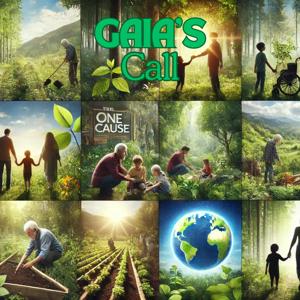

Living Through the Polycrisis — Part Two of a Three-Part One Cause Reflection (Part One is Here.)
Author’s Note: I called an audible over the holidays, feeling like we could all use a break from dealing with this challenging topic—the Polycrisis, here we are in the New Year of 2026 which could, according to many experts, be a make or break year, so let’s dig in.
Once you stop trying to outrun the polycrisis, you start asking a different kind of question: What does a good life look like now?
By “outrun,” I mean all the ways we try—often unconsciously—to escape what we sense is happening around us. Denying the seriousness of it. Minimizing it. Staying so busy we don’t have time to feel it. Doom-scrolling until we’re numb. Freezing in place because the scale of it feels too big to face. Or pinning our hopes on some distant rescue—technological, political, or economic—so we don’t have to change how we live today. All of these are understandable human responses. They’re not moral failures. They’re coping strategies in a world that’s asking more of us than we were prepared for.
But eventually, exhaustion sets in. The running doesn’t work. The distractions lose their power. And in that quiet moment—sometimes gentle, sometimes forced—we begin to wonder whether the real work isn’t escaping the polycrisis at all, but learning how to live inside it with integrity, care, and coherence.
That’s where the Four Great Truths come in.
In One Cause, I describe them as an alternative worldview to the Four Great Untruths that brought us to the brink. But they’re more than ideas. They’re a lived orientation—a different way of standing in the world. Where the old story told us we are separate, that more is always better, that Earth’s resources are limitless, and that technology will save us, the Four Great Truths offer something quieter and sturdier. They remind us that we are interconnected, that sufficiency is possible, that reciprocity is how life actually works, and that stewardship—not domination—is our true role.
This shift isn’t abstract. It doesn’t live in policy papers or distant futures. It shows up in how we live, love, and belong—especially close to home.
Regeneration, I’ve come to see, is relational, local, and embodied. It begins not with grand plans to “save the world,” but with small, grounded choices that restore right relationship—with the land beneath our feet, with the people we share our lives with, and with the future generations who will inherit what we leave behind. That’s why collapse, as frightening as it is, can also function as an invitation. Not to panic, but to maturity. Not just to grieve what’s breaking down, but to grow into what’s being asked of us now.
For Ann and me, the Loving Homestead has become a kind of living laboratory for this inquiry. Not a solutionist fantasy or a claim that we’ve figured anything out, but a place to practice living differently—more attentively, more humbly, more in rhythm with life. It’s where the Four Great Truths stop being concepts and start becoming habits, conversations, and sometimes uncomfortable mirrors. So, let’s spend a few minutes delving into the Four Great Truth a bit more.
Interconnectedness shows up for me most clearly in family and place. Living closer to the land has made it impossible to pretend we’re separate—from soil health, from weather patterns, from the creatures who share this space, or from one another. When I’m gardening with Logan, or watching Piper toddle around the yard with curiosity and wonder, interconnectedness isn’t an idea. It’s a felt sense. Their well-being is bound up with the choices we make now. So is the health of the land that feeds us. Community, too, starts to feel less optional and more essential. Conversations with neighbors, shared concerns, shared meals—these become threads in a larger web we’re re-learning how to tend.
Sufficiency has been one of the more challenging truths to live into, precisely because our culture trained us so well in “more.” More productivity. More output. More efficiency. More stuff. Stepping off that treadmill isn’t dramatic; it’s subtle and ongoing. It looks like asking, again and again, What is enough here? Enough work for today. Enough growth for this season. Enough plans. Enough striving. In our household, sufficiency has meant simplifying, slowing down, and letting go of the quiet guilt that says we should always be doing more. It’s been surprisingly freeing—and surprisingly difficult—to trust that there really is enough when we stop racing past it.
Reciprocity has deepened my relationship with the Earth itself. Gardening, food forests, basement growing through the winter—these aren’t just projects. They’re exchanges. The soil gives, and we give back. We compost. We pay attention. We learn. We fail. We try again. The same is true in human relationships. Reciprocity reminds me that giving and receiving are not opposites. Accepting help, listening deeply, allowing others to contribute—these are as much a part of a regenerative life as offering time, care, and effort in return.
And then there’s Stewardship, which feels increasingly like a calling into elderhood. Not elderhood as age or authority, but as responsibility across time. Caring for what we didn’t create. Making decisions with Logan and Piper in mind, even when they’re not in the room. Supporting Amber and Justin not just as parents, but as partners in navigating an uncertain future. Stewardship reframes the question from “What can I get?” to “What am I here to care for?”—and that shift changes everything.
Living this way hasn’t made life simpler in the sense of being easier. But it has made it clearer. The emotional arc, for me, has moved from sobriety—seeing things as they are—into grounding, a sense of belonging, and moments of quiet joy that feel earned rather than manufactured. Joy that comes not from distraction, but from alignment.
The Great Turning, if it’s real at all, doesn’t begin in conference halls or sweeping declarations. It begins at home. In how we choose to spend our time. In what we grow. In how we speak to one another. In whether we let collapse harden us into fear—or soften us into care.
Living this way doesn’t make us saints or saviors. It makes us something far more needed right now: adults willing to grow up together.
In the final piece of this series, I want to look directly at what this moment asks of us across generations—how we love, guide, and show up for the young ones who are already sensing that the world they’re inheriting will be different from the one we were promised. Because in the end, the question isn’t just how we live through the polycrisis, but who we become while doing so.
In 2026 Let’s Connect Here on Substack
I’ll be moving into my third year publishing on Substack, it has become an important part of my online home. Just one thing that has been missing for me—more direct communication with you, my dear readers/subscribers. So, this year, how about we change that. Here are a couple way: the Comment Button and the Chat Button.
How has this series landed for you? Do you agree that we’re in such a time or not? If so, what ways are you finding to cope with this time?
And most important of all, how may I be of more service to you?
Unleashed - W. Bradford Swift is a reader-supported publication. To receive new posts and support my work, consider becoming a free or paid subscriber.
 View all episodes
 By Listen to the call of the Earth and take action.
Living Through the Polycrisis — Part Two of a Three-Part One Cause Reflection (Part One is Here.)
Author’s Note: I called an audible over the holidays, feeling like we could all use a break from dealing with this challenging topic—the Polycrisis, here we are in the New Year of 2026 which could, according to many experts, be a make or break year, so let’s dig in.
Once you stop trying to outrun the polycrisis, you start asking a different kind of question: What does a good life look like now?
By “outrun,” I mean all the ways we try—often unconsciously—to escape what we sense is happening around us. Denying the seriousness of it. Minimizing it. Staying so busy we don’t have time to feel it. Doom-scrolling until we’re numb. Freezing in place because the scale of it feels too big to face. Or pinning our hopes on some distant rescue—technological, political, or economic—so we don’t have to change how we live today. All of these are understandable human responses. They’re not moral failures. They’re coping strategies in a world that’s asking more of us than we were prepared for.
But eventually, exhaustion sets in. The running doesn’t work. The distractions lose their power. And in that quiet moment—sometimes gentle, sometimes forced—we begin to wonder whether the real work isn’t escaping the polycrisis at all, but learning how to live inside it with integrity, care, and coherence.
That’s where the Four Great Truths come in.
In One Cause, I describe them as an alternative worldview to the Four Great Untruths that brought us to the brink. But they’re more than ideas. They’re a lived orientation—a different way of standing in the world. Where the old story told us we are separate, that more is always better, that Earth’s resources are limitless, and that technology will save us, the Four Great Truths offer something quieter and sturdier. They remind us that we are interconnected, that sufficiency is possible, that reciprocity is how life actually works, and that stewardship—not domination—is our true role.
This shift isn’t abstract. It doesn’t live in policy papers or distant futures. It shows up in how we live, love, and belong—especially close to home.
Regeneration, I’ve come to see, is relational, local, and embodied. It begins not with grand plans to “save the world,” but with small, grounded choices that restore right relationship—with the land beneath our feet, with the people we share our lives with, and with the future generations who will inherit what we leave behind. That’s why collapse, as frightening as it is, can also function as an invitation. Not to panic, but to maturity. Not just to grieve what’s breaking down, but to grow into what’s being asked of us now.
For Ann and me, the Loving Homestead has become a kind of living laboratory for this inquiry. Not a solutionist fantasy or a claim that we’ve figured anything out, but a place to practice living differently—more attentively, more humbly, more in rhythm with life. It’s where the Four Great Truths stop being concepts and start becoming habits, conversations, and sometimes uncomfortable mirrors. So, let’s spend a few minutes delving into the Four Great Truth a bit more.
Interconnectedness shows up for me most clearly in family and place. Living closer to the land has made it impossible to pretend we’re separate—from soil health, from weather patterns, from the creatures who share this space, or from one another. When I’m gardening with Logan, or watching Piper toddle around the yard with curiosity and wonder, interconnectedness isn’t an idea. It’s a felt sense. Their well-being is bound up with the choices we make now. So is the health of the land that feeds us. Community, too, starts to feel less optional and more essential. Conversations with neighbors, shared concerns, shared meals—these become threads in a larger web we’re re-learning how to tend.
Sufficiency has been one of the more challenging truths to live into, precisely because our culture trained us so well in “more.” More productivity. More output. More efficiency. More stuff. Stepping off that treadmill isn’t dramatic; it’s subtle and ongoing. It looks like asking, again and again, What is enough here? Enough work for today. Enough growth for this season. Enough plans. Enough striving. In our household, sufficiency has meant simplifying, slowing down, and letting go of the quiet guilt that says we should always be doing more. It’s been surprisingly freeing—and surprisingly difficult—to trust that there really is enough when we stop racing past it.
Reciprocity has deepened my relationship with the Earth itself. Gardening, food forests, basement growing through the winter—these aren’t just projects. They’re exchanges. The soil gives, and we give back. We compost. We pay attention. We learn. We fail. We try again. The same is true in human relationships. Reciprocity reminds me that giving and receiving are not opposites. Accepting help, listening deeply, allowing others to contribute—these are as much a part of a regenerative life as offering time, care, and effort in return.
And then there’s Stewardship, which feels increasingly like a calling into elderhood. Not elderhood as age or authority, but as responsibility across time. Caring for what we didn’t create. Making decisions with Logan and Piper in mind, even when they’re not in the room. Supporting Amber and Justin not just as parents, but as partners in navigating an uncertain future. Stewardship reframes the question from “What can I get?” to “What am I here to care for?”—and that shift changes everything.
Living this way hasn’t made life simpler in the sense of being easier. But it has made it clearer. The emotional arc, for me, has moved from sobriety—seeing things as they are—into grounding, a sense of belonging, and moments of quiet joy that feel earned rather than manufactured. Joy that comes not from distraction, but from alignment.
The Great Turning, if it’s real at all, doesn’t begin in conference halls or sweeping declarations. It begins at home. In how we choose to spend our time. In what we grow. In how we speak to one another. In whether we let collapse harden us into fear—or soften us into care.
Living this way doesn’t make us saints or saviors. It makes us something far more needed right now: adults willing to grow up together.
In the final piece of this series, I want to look directly at what this moment asks of us across generations—how we love, guide, and show up for the young ones who are already sensing that the world they’re inheriting will be different from the one we were promised. Because in the end, the question isn’t just how we live through the polycrisis, but who we become while doing so.
In 2026 Let’s Connect Here on Substack
I’ll be moving into my third year publishing on Substack, it has become an important part of my online home. Just one thing that has been missing for me—more direct communication with you, my dear readers/subscribers. So, this year, how about we change that. Here are a couple way: the Comment Button and the Chat Button.
How has this series landed for you? Do you agree that we’re in such a time or not? If so, what ways are you finding to cope with this time?
And most important of all, how may I be of more service to you?
Unleashed - W. Bradford Swift is a reader-supported publication. To receive new posts and support my work, consider becoming a free or paid subscriber.