
Sign up to save your podcasts
Or

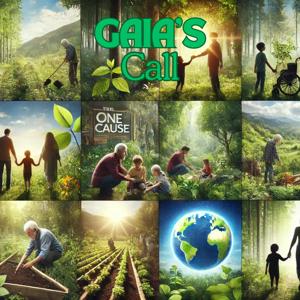


This is something different.
Today, I’m stepping out from behind the keyboard and onto the metaphorical red dot—sharing a short TED-style talk that I hope will stir something deeper than statistics or news headlines ever could.
This first video asks a simple but powerful question:What if climate change isn’t the problem—but a symptom of something upstream?
This talk is a labor of love, distilled from years of writing, reflection, and the One Cause journey. I’ve long dreamed of sharing it on an actual TED stage—but whether or not that happens, I believe this message matters now.
If it resonates with you, please consider sharing it—and if you feel moved, you can even recommend me to TED using this link. I’d be honored.
Next week, I’ll share Part Two—where we shift from crisis to regeneration.
For now, take a breath, and let’s explore what happens when we stop treating symptoms… and start asking better questions.
Watch Part One above, then let me know your thoughts.
A Real-Life Story of Group Flow in Action
In 2017, a small group of young climate activists began meeting in living rooms and local libraries to tackle a question that burned in their hearts: What if we actually treated the climate crisis like the emergency it is? What if we organized with urgency, heart, and purpose?
This was the birth of the Sunrise Movement, a now-national force for climate justice. Their mission? To stop climate change and create millions of good jobs in the process. But their real secret sauce wasn’t just smart organizing or slick messaging. It was flow.
They trained together. Sang together. Sat in circles and listened deeply. They moved not just with purpose, but with rhythm—and when they acted, it often felt electric, like riding a wave together.
And here’s the key: they still are. The movement continues to evolve, drawing in new generations and inspiring local hubs to act in community. From pushing the Green New Deal into the public conversation to supporting climate champions for office, their actions ripple outward—powered by the synergy of shared flow.
“When we sync our minds in pursuit of a higher purpose, we become capable of more than we ever imagined—together.” — inspired by Mihaly Csikszentmihalyi
If this story about collective flow and climate action inspires you, pass it on. Let’s ripple this forward. The world needs more of us moving together.
What Is Group Flow (And Why It Matters Now)?
That’s what we’re exploring today—what happens when a group of people steps beyond coordination and into flow. Because while most movements begin with passion, it’s flow that helps them sustain and scale. And in a time like ours, when the stakes are as high as they’ve ever been—for our climate, our future, and our children—it’s not enough to act. We must learn to act together, with grace, coherence, and power.
When psychologist Mihaly Csikszentmihalyi first described “flow,” he was talking about that deeply immersive state where we lose track of time, feel fully engaged, and operate at our best. Think of a musician lost in the rhythm, or a surfer riding the perfect wave. But what happens when a group reaches that state—when they ride the wave not alone, but as one?
Steven Kotler, one of the leading voices on the science of flow, calls this “group flow.” It’s that magic moment when conversation sparks without friction, ideas build on each other naturally, and action feels effortless and alive. But flow doesn’t appear by accident. It shows up when the conditions are right: shared risk, novelty, full embodiment, and a commitment to being fully present. Sound familiar? It should—because these are also the very qualities the climate crisis is inviting (and requiring) us to embody.
We are, collectively, facing an unprecedented challenge. The risk is enormous. The terrain is unfamiliar. And the future will demand deep presence, creativity, and courage. It’s the perfect—if daunting—set-up for flow, if we’re willing to step into it together.
In many ways, the Earth herself is calling us into flow.
This is where the Four Great Truths of the One Cause movement come alive.
The Four Great Truths—The Pillars of Group Flow
Flow begins with Interconnectedness. When we drop the illusion that we’re separate—from one another or from the Earth—we soften into trust. And trust is the riverbed that flow runs through. We become less concerned with who’s right and more focused on what’s possible.
Flow expands through Sufficiency. When we believe we don’t have enough—time, money, energy—fear tightens our grip. But when we come from a place of “enoughness,” our creativity breathes. Every voice matters. Every gesture counts. Even silence becomes sacred.
Reciprocity nourishes flow. It’s not about give or take—it’s the dance of give and take. Flow blossoms when we feel both seen for what we offer and honored for what we receive. It’s an ecosystem of mutuality.
And finally, Stewardship gives flow direction. When our goal is larger than ourselves—when we’re moving on behalf of life—ego steps back and purpose leads. We’re not jockeying for position. We’re rowing in the same direction, toward a future that’s calling us all.
Of course, we must also be aware of what blocks the current.
Which of these truths speaks loudest to your family or classroom?Join the chat and tell us what keeps you grounded—and what invites flow.
The Four Great Untruths That Disrupt Flow
The Great Untruths we’ve inherited—ideas like “we are separate from nature,” or “more is always better”—act like boulders in the stream. They create eddies of scarcity, comparison, and burnout. A group chasing performance metrics over purpose may work harder, but it rarely flows. A group that believes technology alone will save us may stay busy but disconnected.
Flow, by contrast, is intimate. Embodied. Present. And it thrives not on notifications or spreadsheets, but on breath, ritual, and relationship.
So how do we create this magic in our families, schools, or communities?
How to Create the Conditions for Group Flow
We begin with shared purpose. Not just a goal, but a why that brings light to our eyes. Then we make space for safety—emotional and psychological. People need to know they can speak up, stumble, and be held. We bring in rhythm: opening breaths, closing gratitude, even a favorite song that becomes a cue for connection. We listen—not just to words, but to tone, body language, silence. And we welcome each other’s gifts. Flow loves diversity, when it’s met with respect.
Let me tell you what this looked like for the Green family.
The Green Family in Flow
They started hosting monthly Earth Listening Circles (and you can join one too by clicking the link). The first few were, well… clunky. People talked over each other. The energy felt disjointed. But they kept showing up. Then they added a simple ritual—a candle at the center. They paused before speaking. They listened more deeply.
One night, Emma shared a dream for a school garden. Lucas chimed in with an idea for filming the journey. Daniel remembered a grant program. Sarah offered to coordinate volunteers. Even Nancy and Robert added wisdom from their decades of herbal knowledge.
Suddenly, something shifted. The ideas weren’t just ideas—they were alive. The family was flowing. And what started as a conversation became a full-fledged community project.
They weren’t trying to be perfect. They were being present. And in that presence, flow found them.
So, how might flow find you?
Has your family or community ever had a moment of true flow?We’d love to hear your story below. Let’s learn from each other.
Mini-Mission: Operation Flow Together
Mission Name: Flow Together, Grow TogetherGoal: Invite shared flow into your next gathering
If you’re an eco-guardian in training (or you’re raising one), try this:
Gather your people—family, friends, classmates. Light a candle or take a deep breath together. Then ask: “What’s something you care deeply about right now?”
Let each person share. Then choose one spark to follow. Explore it. Play with it. Don’t try to fix or plan everything—just see where the energy leads.
Flow follows joy. Flow follows trust. Flow follows us, when we let go of control and lean into connection.
Let’s become a current the world can feel.
Want to keep flowing with us? Subscribe now to follow the One Cause journey and receive each new chapter. Let’s grow this movement—one circle, one ripple, one cause at a time.
Coming Next: A Deeper Dive into Education and Community
How do we raise kids who are resilient (even ‘anti-fragile’), creative, and ecologically wise? And what if Zak Bates himself had something to teach us about reimagining school from the ground up?
Let’s find out—together.
A True Story That Sparked a Movement
In 2019, residents of the small French town of Ungersheim made global headlines. Facing the twin threats of climate change and economic instability, the town embarked on a radical experiment: transition to local resilience. With strong leadership and grassroots participation, they transformed their food system to rely on local, organic agriculture, drastically reduced energy usage through solar investment and building retrofits, and built up local employment by emphasizing sustainability and community well-being over GDP growth.
This real-world shift—dubbed "The Happy Degrowth"—became a model for other communities across Europe. At first, the changes seemed modest—planting school gardens, shifting to shared electric transport—but as more people joined in, a tipping point was reached. The town’s entire culture and economy began to orbit around regeneration.
What began with a few citizens pulling weeds and dreaming bigger became an international signal of possibility—a real-life demonstration that resilience doesn’t have to wait for permission. It can begin in a backyard, a school, or a town square—wherever people gather to reimagine what’s possible together.
Ungersheim showed us what it looks like when small groups lead with clarity, courage, and community—and the ripples they set in motion can reach around the world.
What Are Social Tipping Points?
In physics, a tipping point is the critical moment when an object in balance shifts and topples. In society, it’s the moment when a once-fringe idea suddenly becomes mainstream.
According to Damon Centola’s research at the University of Pennsylvania, it takes just 25% of a group adopting a new behavior or belief to create a cascade of change. But it’s not about virality or influencers. It’s about complex contagions—ideas that require reinforcement, credibility, and social proof from multiple connections before they take root.
Unlike a virus, a belief isn’t caught just by seeing it once. We need to see it coming from people we trust. Repeatedly. In different contexts. That’s what builds belief—and tips a society.
“For behaviors that require coordination, credibility, and legitimacy, change needs social reinforcement,” Centola writes. “It needs multiple exposures from multiple sources.”
This is a radical departure from the old myth of the single viral video or lone celebrity activist. Change doesn’t flow from the center out—it radiates from the edges inward, via wide, redundant bridges in our social networks.
The Role of Grassroots Movements
Let’s be honest—big change rarely starts at the top. It usually starts in a school hallway, a community kitchen, or an online comment thread. It starts with people who are fed up, lit up, and willing to step up.
Greta Thunberg didn’t start with a UN speech. She started with a hand-painted sign and a refusal to attend school on Fridays.
Rosa Parks didn’t launch the civil rights movement from a stage. She sat down because she was tired. And tired of giving in.
Grassroots movements work because they are embodied. They’re rooted in place, in pain, in urgency. And because they grow from real relationships, they have staying power.
The Mothers Against Drunk Driving (MADD) movement began in grief, but its impact was seismic. In the 1980s, they changed not only laws but attitudes—because they refused to stop telling their stories and organizing others to act.
And that’s the key:
It’s not just about what you do, it’s about what you inspire others to do, too.
Have you ever stood up for something at school or in your neighborhood and seen others follow your lead? That’s the ripple effect in action.
Early Adopters and the Power of the Edge
One of the most powerful myths we can debunk is that change comes from the most connected, most charismatic, or most credentialed.
Real change often starts on the periphery.
Early adopters are those brave enough to go first—not because they want to be seen, but because they’ve seen something worth believing in. They live on the edge of existing norms, and it’s from that edge that they can see new possibilities most clearly.
In his book, Change: How to Make Big Things Happen, Centola explains how change doesn’t need influencers—it needs reinforcement. Wide bridges, not lone spotlights.
In the climate world, this might look like:
* A small-town mayor starting a composting initiative.
* A family deciding to convert their lawn into a food forest.
* A teacher rewriting the curriculum to include climate justice.
One action. A few followers. Then many. Then a shift.
The first penguin to dive into the water might seem brave—or foolish—but they’re the ones who show the rest it’s safe to follow.
Storytelling as a Catalyst
Facts inform. Stories transform.
Movements thrive when they’re driven by story. Not just numbers, but narratives. Not just stats, but symbols.
Why do we remember The Story of Stuff? Why does Greta’s lone strike stick with us? Because these stories are simple, human, and emotional. They don’t just show us the problem—they invite us to be part of the solution.
While the stories that make up the Zak Bates Eco-Adventure series didn’t really happen, they are based on true life events. I remembered the positive impact fictional stories had on my life growing up, including the Tom Swift Jr. series. The only problem with Tom was he was only interested in techy gadgets while my passion was for animals. So I decided to reach today’s kids who also love animals and want to believe in magic by writing the kinds of stories I would want to read.
“What’s your story? And who needs to hear it?”
Turning Ripples into Waves – The Green Family Responds
Let’s ground this in our One Cause companions:
At first, it was just an idea over dinner—Sarah and Daniel inviting a few neighbors to share a potluck and brainstorm ways to reduce single-use plastics in their community. What began as a casual conversation turned into a community-wide initiative to plant trees, share reusable alternatives, and co-create a local zero-waste week.
Meanwhile, their daughter Emma noticed the mountains of Styrofoam trays in her school cafeteria and decided to speak up. She launched a petition, gathered over 200 signatures, and worked with her principal to pilot a reusable tray program. The cafeteria changed—but so did the conversation among students.
Inspired by his sister, Lucas picked up his camera. He began filming short interviews with ten local families who had made simple yet powerful shifts: composting, biking more, installing rain barrels. He stitched their stories together into a video project called “Ripples of Change,” which their town screened at the library.
And it wasn’t just the younger generation. Nancy and Robert, Emma and Lucas’s grandparents, dusted off memories from their days in the civil rights and environmental justice movements. They shared these stories at the potluck gatherings and in classrooms, reminding everyone that what seems small today can be the start of something far-reaching tomorrow.
Their story is still unfolding. But together, their family became a local tipping point—one ripple at a time.
This is what tipping points look like in real life: tiny shifts in many places that start to line up like dominoes. One by one. Until the momentum becomes irresistible.
What’s your version of the Green Family’s ripple? Share a small action your family is taking—or one you’d love to try—in the community chat.
Reflection & Action
* What’s one small but visible action you could take this week?
* Who are three people in your network who might join you?
* Is there a story or belief you could share to light a spark in someone else?
Which of these questions speaks most to you? We’d love to hear your ripple story in the comments below.
Eco-Guardian Training Camp: Your Mini-Mission
Mission Name: Operation Ripple Effect
Objective: Create a ripple—small, visible, and full of intention—that demonstrates your commitment to a more regenerative world.
Ideas:
* Host a one-hour Earth Listening Circle with friends or classmates.
* Post a 60-second “Why I Care” story on social media.
* Write a letter to a local official or principal about one change you’d like to see.
* Join an existing group—or start your own!
Bonus Challenge: Find three others to ripple with you. That’s your personal 3.5% tipping point.
Remember: You’re not just waiting for change. You are the change.
Thanks for reading One Cause! This post is public, so feel free to share it with other eco-conscious families ready to ripple small actions into big change.
Coming Soon
In our next chapter, we’ll explore Group Flow in Action—and how small circles of committed people (like Earth Listening Circles or virtual gatherings) can unlock regenerative potential far greater than the sum of their parts.
Together, we become the tipping point.
This series is just beginning. Subscribe now so you don’t miss the next One Cause chapter: Group Flow in Action.
Have you ever been so immersed in something you love that time disappeared? Maybe while playing music, sketching a new idea, building something with your hands—or even just wandering in nature, totally focused and free. That feeling of energized ease, where you’re at your best and most creative, has a name.
It’s called Flow.
Psychologist Mihaly Csikszentmihalyi and later peak performance expert Steven Kotler describe Flow as a state of optimal experience—where skill meets challenge, attention becomes laser-focused, and everything else fades away. It’s not just about productivity. It’s about passion, purpose, and possibility.
And for young Eco-Guardians in training, Flow isn’t a luxury. It’s a necessity.
Why Flow Matters Now
Let’s be honest: creating a regenerative future isn’t going to happen by accident. It requires creativity, resilience, and focus in the face of massive challenges. The kind of focus that can feel hard to find in a world full of distractions, burnout, and crisis fatigue. That’s why learning how to access Flow—especially during your most meaningful work—is one of the most powerful skills you can develop.
Flow isn’t just for athletes or artists. It’s for anyone ready to show up fully in their life and take meaningful action. It’s your eco-guardian superpower.
Flow is how young people like Boyan Slat envisioned removing plastic from the oceans and built The Ocean Cleanup. https://theoceancleanup.com/boyan-slat/ It’s how students across the world have launched school-wide zero-waste programs, started regenerative gardens, and turned grief for the planet into focused, inspired action.
The Four Ingredients of Flow (and the Science Behind It)
If you want to enter Flow more often, you’ll need to create the right conditions. Thankfully, research shows there are a few key elements that consistently show up. Steven Kotler, in his books The Rise of Superman and The Art of Impossible, describes Flow as a "state of consciousness where we feel and perform our best." He also identifies 22 flow triggers—conditions that optimize our access to this state.
Here are four foundational ones:
* Clear Goals – You know exactly what you’re trying to accomplish. Goals direct your attention and create a target for your efforts.
* Immediate Feedback – You can tell if you’re on track or need to adjust, creating a tight feedback loop that sustains engagement.
* Challenge-Skill Balance – You're stretching yourself just beyond your current abilities—not too easy, not too hard. This sweet spot ignites curiosity and determination.
* Focused Attention – You’re fully immersed. Distractions fall away. Neurobiologically, this often corresponds to what scientists call "transient hypofrontality"—a temporary down-regulation of the prefrontal cortex, which silences the inner critic and quiets self-doubt.
Kotler writes: “Flow is as close to magic as we get.” It enhances creativity, speeds up learning, and improves well-being. Athletes use it to break records. Innovators use it to solve problems. And young Eco-Guardians can use it to regenerate the future.
For younger readers: Flow is like a river. When you know where you’re headed, and you’re giving your full focus, you can ride the current with power and grace.
What Gets in the Way
Of course, life isn’t always flowing. Stress, self-doubt, and constant pings from our phones can all block us from entering this state. But here’s a secret: even those obstacles can become fuel. When you face a challenge that matters to you—and meet it with courage—you can flip the script.
That’s why so many young changemakers describe the moment they “came alive” as one filled with challenge and purpose. They weren’t waiting for perfect conditions. They showed up. They started. And Flow found them.
And it’s not just young changemakers. I experienced this myself in a deeply personal way. In 2021, I was diagnosed with prostate cancer—a jarring and unexpected moment that shook me to the core. But here’s what I’ve discovered in the four years since (as I now celebrate four years of good health as of June 1, 2025): that diagnosis became a powerful pivot point. It forced me to re-evaluate how I was living. I embraced a primarily plant-based diet, which not only supports my healing but is also gentler on the Earth. I prioritized self-care—especially sleep—and began paying deeper attention to my body’s rhythms.
The result? More Flow. In my writing. In my coaching. In how I show up each day with renewed energy and purpose. That moment of disruption became a gateway to alignment. Sometimes the biggest obstacles carry within them the seeds of our most aligned and fulfilling future.
Flow in Action
Zak, Ra-Kit, and Sampson’s First Eco-Adventure
Near the end of Dominion Over All, just after Zak realizes he and Angus have made a crucial mistake by traveling to New York instead of Brazil, the story hits its darkest moment. But instead of crumbling under the pressure, the Eco-Guardian team rises to meet the challenge—embodying the essence of Flow.
Ra-Kit and Sampson arrive just in time to help Zak course-correct. There's no blame, no time to wallow—only shared focus and purposeful movement. They quickly coordinate, with Ra-Kit using her magical abilities as they ‘warp’ their way to the correct location. Meanwhile, Sampson and Zak maintain their calm under high stakes.
Once in Brazil, obstacles continue to mount: unexpected resistance, time constraints, and the need to move through a riotous mass of disgruntled citizens. And yet, the team persist. Everyone is fully immersed, drawing on their unique strengths. Zak solicit help from the crowd while Ra-Kit makes her way back to the Spiritual Frontier to coordinate a last ditch effort. Sampson continues to provides strength and heart. Even the once-chaotic crowd rallies to help, inspired by the team’s unshakable resolve.
This is Flow in action—not the absence of difficulty, but graceful navigation through it. Each setback sharpens their focus rather than derailing them. They are “in the zone,” individually and together.
But Flow doesn’t just happen in fiction or fantasy. Around the world, real young people are doing the same.
Real-World Flow: Young Eco-Guardians in Action
Uganda: Solar Suitcase Pioneers
In Uganda, students working with the nonprofit We Share Solar experience Flow while building life-changing technology. These students assemble “solar suitcases”—portable, solar-powered kits that provide light and power to off-grid schools and clinics. The process demands concentration, teamwork, and technical skill.
These youth aren’t just following instructions; they’re solving real-world problems. They’re engaged in something meaningful and urgent—providing light to communities that often go dark when the sun sets. The pride and purpose that arise from seeing their work power a classroom or deliver safety during a birth is the essence of Flow.
Learn more: wesharesolar.org
Colombia: Restoring Land, Reclaiming Purpose
Fundación Tierra Grata empowers rural youth in Colombia to bring sustainability and dignity to their communities through eco-sanitation, solar power, and environmental education. In one project, teens apply agroecology and permaculture practices to restore degraded farmland.
They dig compost trenches, build raised beds, plant native species, and teach their neighbors about sustainable practices—all while reconnecting with the land and their own capacity to create change. With every seed planted and every workshop delivered, they’re tapping into purpose-driven Flow.
More on their work: tierragrata.org/
Which story resonated most—Zak’s fictional challenge, the Ugandan solar students, or the Colombian land restorers? Let’s keep the conversation going below.
The Pivot: Flow After Disappointment
Just a few days ago, I submitted a detailed book proposal for One Cause to a publisher I deeply admire. I spent weeks—months—crafting that vision. Less than 24 hours after submitting it, I received a thoughtful but firm rejection. It stung. I felt deflated for a moment, wondering: was it worth all the many hours and the effect?
But then I remembered something I’ve been learning over and over again: in moments like these, we have a choice. I chose to purposefully pivot.
I reread the publisher’s comments. I listened to what they saw clearly. And I got back to writing this very chapter—this one you’re reading now. Because Flow doesn’t always show up in the easy wins. Sometimes, it’s what we find after falling down and deciding to get up anyway.
Thanks for reading One Cause! This post is public, so feel free to share it with anyone curious about how Flow can be a bridge to personal and planetary transformation.
Your Flow Challenge
So what about you?When have you felt fully alive and focused? What project or purpose could pull you into that space again?
Start small:
* Write or draw about your last Flow moment.
* Choose one small project that excites you.
* Eliminate distractions, set a clear goal, and give it your all.
You don’t have to change the world all at once. You just have to begin.
Flow into Community: A 4% Stretch
Here’s the truth: writing these articles is one thing. Inviting you into a shared journey? That’s something else entirely.
Lately, I’ve felt the nudge to create more opportunities for real conversation—with you, the reader. To open the door for this movement to become… well, a movement. And yet, just beneath that impulse lives a fear. The fear that I’ll put out the invitation and no one will show up. Or maybe worse—that people will show up, and I’ll have to lead the dance.
But here's what I know from Flow—and from the science of change: transformation doesn’t require a heroic leap. Just a stretch. Just 4% beyond your comfort zone.
That idea comes from peak performance researchers and thinkers like Brian Johnson, who highlights this principle in The Philosopher’s Notes and in his Optimize +1 wisdom series. It’s also woven through the work of Steven Kotler. Why 4%? Because it’s the optimal edge—enough challenge to grow, not so much that it triggers overwhelm. It’s the edge of Flow itself.
So here’s my 4% stretch: I’m planning a live, virtual conversation space—something like an online Earth Listening Circle, modeled after the one I recently hosted locally that brought together hearts and minds around the themes of One Cause. We’ll create space to reflect, share, and imagine regenerative futures together.
And I’m stretching in other ways too. My wife Ann and I are “right-sizing” our lives—transitioning to the downstairs level of our home, moving from a spacious four-bedroom, three-bath space to a much more compact one-bedroom, one-bath layout. We’re making room—literally—for our daughter, her husband, and our two young grandkids, Logan and Piper. We’re choosing community over convenience, simplicity over space. And yes, it’s definitely more than a 4% stretch… but that’s the nature of living into a new vision.
Now It’s Your Turn
Would you be willing to stretch with me? Not 100%, not even 10%. Just 4%.
Maybe that means:
* RSVPing for this upcoming call.
* Forwarding this article to a friend with a note: "This made me think of you."
* Journaling your next Flow goal.
* Sharing your reflections in the comments.
Whatever your stretch is, let it be real. Let it be yours. And let it move you closer to the world you want to help create.
Because the current is already flowing. We just have to say yes to riding it together.
What’s your 4% stretch right now? I’ll go first in the chat thread—would love to hear from you.
Coming Soon
In our next article, we’ll explore how Flow moves beyond an individual's superpower—and becomes a collective force. We’ll look at what happens when groups of people enter Flow together—especially when united by a shared purpose like healing the Earth. And as part of that next chapter, we’re also exploring a virtual Earth Listening Circle-style gathering later this summer. Think of it as a live experiment in Group Flow: a chance to step into community, share stories, and imagine what’s possible—together. Stay tuned for more details.
Let’s keep flowing forward.
The next article explores Group Flow and info on our first virtual gathering and how you can participate. Subscribe to stay connected—this is how movements begin.
P.S. In an effort to live true to the guiding principles within the Four Great Truths, here are a few photos.
How one simple question about a backyard weed revealed a radical new story—and a path toward regenerative living for eco-conscious families.
What if our culture wasn’t built on conquest, consumption, or control—but on love?
In this special feature from the upcoming One Cause book, we explore the concept of Priya Culture—a regenerative, reverent, and relational way of living. It might just be the key to remembering what the Earth has always known and shared with us…if we’d only been listening.
A Whisper from the Weeds
I never expected a weed to whisper the name of a culture.
But that’s what happened—well, sort of—during a conversation about ground-ivy (aka creeping Charlie), a plant known for its persistence and its tendency to spread in places gardeners might not want it.
I was wondering whether to let it run wild in our future food forest. It wasn’t a strictly botanical question. It was one of relationship. Of invitation.
And then, something clicked. Or maybe it bloomed.
As I reflected on the nature of this tenacious plant—uninvited but not unwelcome—I asked ChatGPT what to make of it. And from that thread of inquiry, a new word emerged:
Priya — Sanskrit for beloved. Dear one. That which is cherished.
Instant resonance. It wasn’t just a pretty word. It felt like the name of something I’d been circling around for quite some time. The kind of culture we could be creating. The kind of future the Earth has always loved.
I took it into meditation. I listened. I remembered.
And what came back was this:
Priya Culture is not something new. It’s something ancient and sacred that’s trying to be remembered.
This article is about that remembering.
What Is Priya Culture?
Priya Culture is a conscious, regenerative way of life rooted in love, reverence, and reciprocity with all beings.
It invites us to live as if the Earth were our beloved—not a commodity, not a resource, not a backdrop—but a sacred partner in the great dance of life.
It asks us not to abandon progress, but to redefine it.
Not to feel guilty, but to walk with grace.
It’s not about perfection. It’s about participation. Alignment. Intimacy.
A Priya Culture is one where we:
* See the sacred in the soil.
* Listen to the wind like it has something to say (because it does).
* Understand that compost is not waste but alchemy.
It’s both mystical and practical. Rooted in the rhythms of nature. Guided by story. Held in community.
Core Values of Priya Culture
* Sacred Interconnection – All beings are woven into a web of mutual belonging.
* Sufficiency as Sacred – Enough is a feast. Simplicity is a form of devotion.
* Reciprocity over Extraction – Giving back sustains the whole.
* Stewardship, Not Ownership – The Earth is not a possession, but a trust.
* Belovedness of All Beings – Every creature and element is kin.
* Intergenerational Wisdom – Children, elders, ancestors, and future ones all have a voice.
* Living by Story and Ritual – We remember who we are through ceremony, through myth.
* Regeneration as Default – Healing is the fruit of right relationship.
Myth: The First Rememberers
(This short myth serves as emotional anchoring—a timeless remembering from a village that could have been ours.)
Long before asphalt covered the ground and clocks governed the day, there was a time when humans and Earth spoke the same language. Not just of words, but of water and wind, fire and seed. In that time, the people lived in circles, not straight lines. They measured time by the moon’s changing face and the migration of birds. And they remembered: all life was kin.
In one such village—nestled where the river bent like a cradle and the trees whispered lullabies into the sky—a child named Amani was born. Her name meant peace, but her arrival stirred a different feeling. She did not cry at birth, nor open her eyes for three days. The midwives were worried. But the village elder, a woman with hair like owl feathers and hands stained with healing herbs, simply smiled.
“She is listening,” the elder said. “She is remembering.”
When Amani finally opened her eyes, the villagers swore they saw a reflection of stars—not just the night sky, but ancient starlight, the kind that shines from the inside out.
As she grew, Amani did not speak much. But animals came to her. Plants leaned toward her. And when she walked barefoot, the earth seemed to hum beneath her feet. While other children played games of chase and pretend, Amani sat by the river with her grandmother, learning the songs of stones.
One day, the rains stopped. The river thinned. The crops failed. The elders gathered to pray, to dance, to plead. Still, no clouds came. The people began to forget. They blamed one another. They turned their backs on the rituals. They spoke of leaving the land.
That night, Amani had a dream. In it, she stood in a desert where nothing grew. A voice, older than time, whispered:
“You have forgotten the Way of Belovedness.”
She woke before dawn, walked to the village square, and lit the ceremonial fire that had not burned in many seasons. Then, in the language of her ancestors—the language of wind and root—she sang.
One by one, the villagers emerged from their homes. They didn’t understand the words, but they felt them. Something stirred.
Elders began to weep. Children sat in stillness. The wind changed.
Rain came that evening—soft, steady, enough to give the roots another chance.
From that day on, Amani taught not through lectures but through presence. She invited others to greet the sunrise, to bless the water before drinking, to speak to the seeds before planting. Slowly, a new way of life—really an ancient one remembered—began to take root.
They called it the Way of the Beloved. Others, later, would name it Priya Culture.
And from that one village, it spread—not as a law or a religion, but as a remembering.
Because something in all of us still knows:
The Earth is beloved. And so are we.
This myth, though fictional, speaks to a deeper truth—a remembering that lives in our bones. May it stir something in you, too.
Reflections and Applications
What if our days were guided not by production schedules and profit margins, but by the seasons, the cycles, and the sacred?
What if the Earth were not our property to use, but our partner to cherish?
This is the invitation of Priya Culture.
In the rhythms of everyday life, the Green family is beginning to discover what it means to live into this way of being—not as a grand gesture, but as a quiet unfolding.
Emma has started naming the trees in their backyard. Lucas is questioning his buying habits. Sarah and Daniel are lighting candles on Fridays and calling it a sacred meal. Nancy and Robert are teaching, writing, repairing, remembering.
Priya Culture isn’t something they’ve “achieved.”It’s something they’re growing into.
And maybe that’s the point:To grow—not toward perfection, but toward belonging. Toward belovedness.
Your Turn: Questions for Reflection
* Where in your life do you already feel the whisper of this culture?
* What would it look like to honor those whispers with your attention, your care, your gratitude?
* What rhythms or rituals are you being called to remember?
You don’t need to start a movement. You are already part of one—if you’re listening. If you’re loving. If you’re remembering.
Priya Culture isn’t a destination. It’s a relationship. A remembering. A way of walking.
Let’s walk it together.
What does Priya Culture stir in you?
Reply in the comments or forward this to someone who’s part of your remembering. 🌿
If this article resonated, consider sharing or subscribing. This movement is made of moments—and you’re one of them.
“We are not creating a utopia. We are remembering a way of living that the Earth has always loved.”
Brad
P.S. Major step forward in sharing One Cause with the rest of the world. After months of working on the 14 points of Berret-Koehler submission guidelines, I finally completed the proposal and sent it flying to them via email. Now comes the next challenging part. Waiting patiently for weeks or months to hear back from them. Meanwhile, I will continue to write the chapters and post them here.
I know I’ve been a bit obsessed with caterpillars and butterflies lately but here’s one more story about them which was written months ago as part of this One Cause series.
Also, don’t miss two new feature being premiered today: one intended to encourage more connection and conversations within this community, and a second one especially designed for young ones being premiered today.
Now, imagine a caterpillar. It spends its days munching leaves, living a life it’s perfectly suited for, never questioning its place in the world. In fact, they develop a voracious appetite. For example, a monarch caterpillar can eat 200 times its weight in milkweed leaves. Some species even gain 20% of their body weight in an hour.
Then one day, something shifts. It stops eating, forms a chrysalis, and begins a transformation so radical that it emerges as a butterfly—a creature almost unrecognizable from what it once was. This process, metamorphosis, isn’t just an extraordinary feat of nature. It’s a powerful metaphor for the moment we find ourselves in as a planet, a people, and a generation.
Right now, the world is in its chrysalis phase. The old ways of thinking, living, and being are breaking down. The stories we’ve relied on for centuries—stories of separation, domination, and consumption—are crumbling under the weight of their consequences. It’s messy. It’s uncomfortable. And it’s absolutely necessary.
A New Story Emerges
For centuries, we’ve lived by a story of separation—a story that says:
“I am me, and you are you. Nature is out there, and we are here. What happens to the Earth doesn’t affect me.”
It’s a story that has allowed us to clear forests, pollute rivers, and fill the skies with carbon without stopping to think about the consequences. But as the world shifts, another story is emerging—a story of connection, of interbeing.
This concept of interbeing is eloquently discussed by Charles Eisenstein, Bayo Akomolafe, and Alnoor Ladha in their trialogue, On the Cusp: A Trialogue About the Shift. They remind us that everything is connected. The air we breathe, the water we drink, the food we eat—it all ties us to the Earth and every other living being on it. For a long time, this idea might have seemed abstract, but now it’s becoming tangible. We see it in the way pollution travels across oceans, in the way climate change affects ecosystems thousands of miles apart, and in the way a single tree can support an entire web of life.
For young readers, think about the last time you planted a seed, recycled a bottle, or simply paused to notice the birds outside your window. Whether you realized it or not, you were practicing interbeing. You were part of the story of connection.
But here’s the thing about stories—they don’t just exist. They’re created, told, and retold. And every single one of us has a role in shaping this new story.
Embracing the Chrysalis
The chrysalis phase of metamorphosis is a messy, mysterious process. Inside that cocoon, the caterpillar essentially dissolves into goo before reforming as a butterfly. It’s a time of profound change, and frankly, it looks a bit chaotic.
Sound familiar?
Our world is experiencing its own chaos. The climate crisis, social inequities, political divides—it can all feel overwhelming. But what if, instead of fearing this mess, we embraced it as part of our transformation? What if we saw it as an opportunity to imagine new possibilities and let go of old ways that no longer serve us?
Eisenstein, Akomolafe, and Ladha suggest that uncertainty isn’t something to solve; it’s something to explore. When we step into the unknown, we open the door to creativity and discovery. For young readers especially, this idea might hit home.
Growing up is its own kind of chrysalis phase. You’re figuring out who you are, what you believe, and how you want to show up in the world. And just like the caterpillar, you don’t have to have it all figured out yet. The beauty of uncertainty is that it allows you to grow into someone you might never have imagined.
Crisis as Catalyst
Here’s the truth: the challenges we face are immense. The planet is warming, species are disappearing, and ecosystems are unraveling. But here’s another truth:
Crises are often the birthplace of transformation.
In nature, a forest fire can look like devastation. But in the ashes, seeds that have waited years for sunlight finally have the chance to grow. Similarly, the crises we face today can clear the way for new ideas, systems, and ways of living. It’s not easy, but it’s possible.
In their trialogue, the three thinkers explore how moments of crisis often ignite transformation. These moments create openings for rebuilding—not just to what was, but to something better. For example, during the pandemic, people around the world discovered just how interconnected we are. Communities rallied together to support one another, and cities saw cleaner air as cars sat idle. These glimpses of change remind us that even in the hardest times, there’s potential for renewal.
Your Role in the Transformation
Now, here’s the exciting part: you’re part of this transformation. Whether you’re 12 or 25, a parent or a grandparent, your actions matter. You don’t have to do everything, but you can do something. And those somethings add up.
Maybe it’s starting a compost bin in your backyard.
Maybe it’s speaking up about climate action at school or organizing a community cleanup. Or maybe it’s simply changing the way you think about your relationship with the Earth.
What do you imagine your transformation might look like? How about sharing it with our community here by leaving a comment below?
New Feature: Every legitimate comment will enter you to win an autograph copy of Rainforest Shaman (book 1 of the Eagle and the Condor series). That’s how much I value hearing from you. You deserve a reward.
The Eco-Guardian Team—Zak, Tess, Iya, and their companions—are navigating this transformation too. They’re learning to challenge old narratives and create new ones, just like you. And the Greens family shows how these ideas can play out in everyday life, from small decisions at home to bigger conversations about the future. Their stories remind us that no matter where you are or what your life looks like, you can be part of this journey.
A Butterfly in the Making
As we wrap up, let’s return to our butterfly. It doesn’t become something new overnight. It takes time, effort, and a willingness to change. But when it emerges, it carries the gift of transformation—not just for itself, but for the world it inhabits.
Our world is on the cusp of something extraordinary. And you? You’re part of that. The choices you make today, the stories you tell, and the actions you take all help shape the world we’ll emerge into.
This isn’t just a story about challenges. It’s a story about possibilities, about hope, and about the beauty of becoming something new. The chrysalis is messy, yes—but oh, the butterfly it holds.
So, what will your role be in this transformation? Let’s find out together.
Introducing: Eco-Guardian Training Camp
I’m excited to share the second new feature that’s been quietly growing behind the scenes—Eco-Guardian Training Camp, a special section written just for our younger readers. These short entries are delivered by members of Zak Bates’s Eco-Guardian Team and are designed to bring the ideas of One Cause to life in ways that are simple, soulful, and practical.
Since these will be part of the book, I thought… why wait? Why not begin sharing them here with you, my Substack family, as they emerge?
Today’s post includes the first new one: a moonlit fireside chat with Iya and Ompa on the power and mystery of transformation. I hope it speaks to your heart—and maybe even the heart of a young reader in your life. If so, please share it with them.
Eco-Guardian Training Camp with Iya, Ompa, Logan, Piper…& You?
The moonlight flickers gently through the canopy as Iya, Listener of the Forest, sits cross-legged near the glowing coals of a jungle fire. Ompa, her father and a respected shaman, adds a pinch of dried leaf to the flames. It crackles—not loudly, but with the sound of something ancient remembering itself.
Iya’s voice softens as she speaks to Logan and Piper, who sit wide-eyed beneath the stars. But the words feel like they’re meant for you, too—like a secret passed along from heart to heart.
“There is a time in every transformation,” she says, “when nothing makes sense. When the old is falling away, and the new has not yet arrived. It’s easy to feel lost then.”
Ompa nods. “The caterpillar does not become the butterfly in a day. Inside the chrysalis, it melts. It dissolves into something unrecognizable—until slowly, something new forms.”
Iya leans in closer.
“If you feel unsure or confused right now, you’re not doing it wrong. You’re doing it right. The world is changing. And you are part of that change.”
Practice for the Path:
* Find a quiet moment this week—maybe before bed or after a walk—and draw your own “chrysalis.”
* Inside it, write or sketch how you’re growing. What old thoughts or habits are melting away? What new ideas are starting to form?
Ompa adds one last ember to the fire. The sparks rise like fireflies.
“Remember, my young friends,” he says, “you are never alone in the chrysalis. We are transforming together.”
P.S. And… please cross your fingers for me. This week I’ll be submitting a massively comprehensive book proposal for One Cause to Berrett-Koehler Publishers—an independent publisher whose mission is to connect people and ideas to create a world that works for all.
More soon… and thank you, as always, for walking this path with me.
With gratitude,Brad(Eco-Author, Grand-Dude, and Co-Creator of One Cause)
Unleashed - W. Bradford Swift & One Cause is for those who know we’re meant to live in deeper harmony with the Earth—and each other. If this vision resonates, subscribe to receive weekly reflections and bold possibilities for our shared future.
Are You Ready to Become a Trimtab in Your Life?
If you’ve ever seen an oil tanker or a massive ship, you might wonder: how does something so immense ever change direction? It turns out, the answer lies in a small, often-overlooked component called a trimtab. A trimtab is a tiny rudder attached to the main rudder of the ship. While small, it plays an outsized role in steering the entire vessel.
By adjusting the trimtab, a tiny hydrodynamic force is created. This force makes it easier for the main rudder to turn, which in turn allows the ship to pivot more effectively. In essence, the trimtab provides leverage, enabling a massive ship to change course with minimal effort. Without it, maneuvering something so large would be nearly impossible.
This little piece of nautical engineering became a life metaphor for one of my greatest heroes, Buckminster Fuller. Fuller was an inventor, visionary, and relentless advocate for systems thinking—seeing how interconnected parts shape the whole. He believed that even the smallest, most intentional actions could create ripples of change far beyond their immediate scope. So much so that he had the word TRIMTAB engraved on his tombstone.
Why? Because Fuller saw the trimtab as a symbol of hope and responsibility. It reminds us that we don’t have to overhaul the entire system singlehandedly to make a difference. By being thoughtful and strategic—by focusing on the points of leverage—we can steer even the most unwieldy systems toward positive change.
Trimtabs in Action
Think about this: Rosa Parks refusing to give up her bus seat might seem like a small action. But that moment became a trimtab, amplifying the civil rights movement and steering the course of history. Greta Thunberg sitting outside the Swedish parliament with a hand-painted sign became a trimtab, catalyzing a global climate strike.
The trimtab isn’t the end goal—it’s the small, strategic action that sets larger changes in motion. And often, we don’t know ahead of time which of our actions will become trimtabs. That’s part of the mystery—and the magic.
But when we act from a place of alignment—with our values, with the Four Great Truths—we increase the likelihood that our ripples become waves.
The idea of a trimtab resonates deeply with the mission of One Cause. Tackling the Climate Crisis might seem overwhelming—it’s a global ship, after all, with the weight of centuries of harmful systems and habits. But what if this movement, this book, and the conversations it sparks could act as a trimtab? What if it’s the small shift that helps humanity pivot toward a more regenerative and sustainable course?
You Could Be a Trimtab
The beauty of the trimtab metaphor is that it’s not reserved for visionaries or global movements. Each of us can be a trimtab in our own way. It might be through a conversation that changes someone’s perspective, a decision to live more sustainably, or even by supporting larger efforts that align with our values.
Here are a few examples of small beginnings that turned into powerful trimtabs:
* In Washington, D.C., what began as one neighborhood compost project grew into the Community Compost Cooperative Network, managing over 50 local sites and processing up to 50 tons of organic waste each month. A tiny shift in one backyard rippled out to a city-wide sustainability model. (Learn more)
* In Queensland, Australia, a few high school students at Emmaus College sparked a change by launching a simple school-wide clothing swap. Their small action expanded into a culture shift around sustainable fashion education among peers. (Read the story)
* What started as a small backyard garden in Des Moines, Iowa, became Sweet Tooth Farm, supplying thousands of pounds of food annually and pioneering a community compost pickup service. A personal project that filled a public need. (Explore more)
* Seed Savers Exchange began when a few everyday gardeners in Iowa shared heirloom seeds with one another. Today, they preserve over 25,000 plant varieties, protecting biodiversity across the country. A humble trade turned into a heritage-preserving powerhouse. (Visit their site)
* Across the UK, teen-led groups like SwopItUp began by organizing clothing swaps in schools. Their efforts blossomed into a national campaign that combines youth leadership with climate awareness. (Check them out)
* In India, a local seed-saving effort among female farmers grew into Vanastree, a collective that now empowers rural women through sustainable agriculture and biodiversity protection. It started with a seed—and a circle of care. (More here)
* Quietly but powerfully, families around the world are switching to credit unions and ethical banks that refuse to fund fossil fuel projects. A small change in where they bank is sending ripples through the financial system. (Find out how)
These may seem small—but they’re placed at points of leverage. They are trimtabs.
As Buckminster Fuller put it:
"Call me trimtab."
Trimtabs in My Own Life
I’ve started to notice a few trimtabs showing up in my own life.
One of them began with a simple choice: inviting my grandson Logan to spend Fridays with us at our home. We call it a daylong playdate with Grand-dude and Grandma. On the surface, it’s just family time. But beneath that, something bigger is forming.
As we spend time in the garden, plant seeds together, and talk about ideas like reciprocity, we’re getting a taste of what life could be like when his whole family moves here to live with us at the Loving Homestead. That weekly rhythm has helped anchor our vision and fuel our resolve.
Another trimtab moment? Hosting our first Earth Listening Circle at Highland Lake Cove. It started with a small group, gathered in nature, listening deeply. But I can already sense it expanding—toward greater connection, community resilience, and a sense of local belonging I hadn’t quite known was missing. That one circle might be the start of something more… or even something transformative.
Truth x Truth x Truth x Truth = Regeneration
The Four Great Truths—Interconnection, Sufficiency, Reciprocity, and Stewardship—aren’t just ideas to ponder. They are powerful levers, especially when practiced together.
They are spiritual and practical trimtabs.
Each time we choose to compost instead of trash, or share instead of hoard, or listen instead of control, we are shifting the direction of the ship.
We don’t have to change everything all at once. But we can change something—with care. And that changes everything.
A Closing Invitation
If the world feels too big to shift, ask yourself:
“Where is my trimtab?”
What’s the small action that, with just the right placement, could help turn the tide?
Take it.Trust it.And if you’re unsure, start by listening.
Nature will guide you.
And you just might find that one small shift was enough to change the course.
P.S.What’s been a trimtab in your life lately? Hit reply and share it with me. I’d love to hear the small steps you’ve taken that became something more.
After all, that’s how movements begin—with small, courageous, purposeful acts. Just like yours.
I slept well last night—which feels like a small miracle these days. (How about you?) I woke with a renewed sense of clarity. It’s time to write the next One Cause article. But not just another installment. This one feels different. More urgent. More personal.
We’ve walked together through the Four Great Truths over the past month. Each one revealing a facet of the deeper story we’re living into:
* Interconnection: Everything is connected. Every action matters.
* Sufficiency: There is enough—when we remember we are enough.
* Reciprocity: Life thrives through give and give.
* Stewardship: We are caretakers, not controllers, of this living Earth.
But what happens when these aren’t just ideas we believe in… but truths we live? Remember, we started with the Be, Do, Have On Purpose Perspective Model. That who we are (which includes our beliefs both individually and collectively) shape what actions we see possible to take, which gives us our results.
So, what happens when we replace the 4 Great Untruths with the 4 Great Truths, and equally important, we move from the head to the heart—to our hands?
Synergy of Truths: A Regenerational Lifestyle
Something powerful happens when these truths converge—not in theory, but in practice.
Synergy starts to amp up our results: Truth x Truth x Truth x Truth doesn’t just equal a better world but a regenerative future.
This synergy leads to what we might call a regenerational lifestyle—a way of being where care replaces consumption, collaboration replaces competition, and purpose becomes as vital as breath. It reshapes how we relate… how we raise children… how we vote, shop, garden, spend time, and tell stories. And most importantly, it calls us home to what matters.
We begin to reclaim our role as imaginal cells—the agents of transformation inside the chrysalis of this collapsing civilization. (More on that metaphor in a future article!)
It’s a lifestyle we’re just beginning to remember. In fact, many haven’t yet been introduced to such a possibility which is why I am encouraging you to share this article/podcast and the One Cause movement with others.
We’re creating a movement to a new regenerative future and way of life so please share this article. It’s a simple action of ‘reciprocity.’
Do the Great Untruths Just Disappear?
Here’s the rub: The Great Untruths don’t vanish overnight. After all, we’re surrounded by a culture shaped by them. So, they linger. They whisper. They try to seduce us back into old patterns:
* “You’re on your own.”
* “More is better.”
* “Take whatever you want.”
* “Control is everything.”
But every time we act from the Great Truths, we weaken the grip of those old myths. We realize that we’re never completely alone but always connected to nature and others. We embrace the truth that we have enough as we learn how to share, and that we’re more mindful of the resources nature is ready to share with us as we grow into being stewards of the earth — Eco-Guardians-in-training.
Earth Listening Circles: From Insight to Action
This is why Earth Listening Circles matter. Not just as events, but as practices.
In fact, your first Circle might be just you. One person. Sitting with the Earth. Listening. Asking, “What would you have me know?”
It reminds me of something my first coach taught me long ago:
Insight + Action = Growth & Development.
That’s what Earth Listening Circles offer: a sacred space to receive insight—from the land, from your heart, from the living world—and then to act on it. And with each action shaped by the Great Truths, a regenerative future begins to emerge.
Living It: Our Story from the Loving Homestead
Here on our little mountain homestead in North Carolina, we’re doing our best to live these truths.
Last week, our grandson Logan came for a full-day adventure with Grand-dude and Grandma. It wasn’t a formal lesson—but as we planted seedlings together, I introduced him to a new word: reciprocity.
He’s four. That’s a big five syllable word, and he got it. With muddy hands and wide eyes, he started to grasp that what we give to the Earth comes back to us in ways both delicious and profound.
Recently during our first Earth Listening Circle, I scouted some wild blackberry canes at Highland Lake Cove. My friend, who owns the land, welcomed me to dig a few up. Those berry plants will soon join the growing food forest we’re cultivating here at home. Reciprocity scores again.
And our larger family dream is coming closer too: Amber, Justin, Logan, and little Piper joining us to co-create an intergenerational haven we’re calling the Loving Homestead.
We’re not doing it perfectly. But we’re doing it together. And that, to me, is what living the Four Great Truths looks like.
Real-Life Ripples: Beyond Our Backyard
Living the Four Great Truths doesn’t require a perfect plan. It just takes a willingness to try. We’re not alone in this. Here are just a few ways others are living into these truths:
* A public school in Oregon transformed its lawn into a pollinator corridor—inviting bees, butterflies, and students to learn side by side.
* A Detroit neighborhood turned a blighted lot into a thriving permaculture garden that feeds dozens of families.
* In Atlanta, a group of teens created a clothing swap and art-for-activism collective, reducing waste and raising awareness.
* A Vermont seed-saving library is reviving ancestral crops and holding workshops on food preservation and land care.
Each one is small. But each one is also seismic because they’re rooted in connection, sufficiency, reciprocity, and care. These aren’t big institutions or governments. They’re people like you. Listening. Acting. Regenerating.
An Invitation Into the Now What
So here we are. You’ve read the truths. You’ve felt their pull. Now comes the invitation: Start small. Choose one. Try it on. Live it this week. Plant it like a seed in your own life and see what grows. Then, come back here and share what the experience was like.
And to further support you, here is a Bonus Assignment: Join an Earth Listening Circles (When I see enough interest, I’ll be facilitating them online, and yes, they work that way as well). Or take a quiet walk with the intention to truly listen. Or talk to your kids about sufficiency.
Every small act becomes a ripple. Every ripple becomes part of the Great Turning. Together, we’re not just imagining a better future. We’re living it.
P.S. A Regenerative Step You Can Take Today
Recently, Ann and I watched Common Ground—a documentary about soil, soul, and the future of farming.
One thing it reminded me: regeneration doesn’t require acres of land. It starts right where you are. (Our own lot for the Loving Homestead is no more than half an acre.)
* Plant herbs in a window box.
* Shop from a regenerative farmer’s market stand.
* Start composting.
* Learn your food’s story.
It all counts. It all heals. And the Earth responds.
Let’s show her we’re listening to her.
Brad (Eco-Guardian-in-training)
From Domination to Stewardship
Back in 2011, when I first began writing Dominion Over All—the eco-fantasy novel that launched the Zak Bates Eco-Adventure series—I opened with two quotes that have stayed with me ever since:
“God said, Let us make man in our image, after our likeness: and let them have dominion over the fish of the sea, and over the fowl of the air, and over the cattle, and over all the earth, and over every creeping thing that creepeth upon the earth.” — Genesis 1:26
That then begged this question:
“But what does ‘dominion’ really mean? It is traditionally interpreted as ‘to subdue’ or ‘to rule over.’ When taken to an extreme, it can include oppression and exploitation. However, an exploited planet Earth does not leave humanity richer. Perhaps there is a deeper, more sustainable aspect of dominion that includes a sense of service to one’s fellow creatures and even a compulsion to protect those who cannot protect themselves.” — The Christian Science Monitor
Now, whether or not you come from a Christian background, the idea of “dominion” as permission to dominate the Earth has been baked into many modern cultures and systems. But what if that interpretation was never the original intention?
The Hebrew word translated as “dominion” in Genesis 1:26 is רָדָה (radah). While often rendered as “rule over,” its usage in scripture is layered. In some passages, radah refers to harsh rule, but in others—like Psalm 72—it reflects compassionate leadership and protective care.
Even more revealing, Genesis 2:15 uses two different Hebrew words—abad and shamar—to describe the human role in Eden: “to work [serve] it and to keep [protect] it.”
So from the very beginning, it seems our role wasn’t to control or exploit the Earth, but to care for it with reverence. To be stewards—not masters.
And that brings us to the Fourth Great Truth.
GT#4: Humanity as Stewards, Not Masters
The Fourth Great Truth tells us that our purpose on Earth is not to dominate nature but to care for it. We are not its overlords—we are its guardians. True leadership, true greatness, is about serving life, not exploiting it.
This directly challenges one of the Four Great Untruths: the myth that “Technology Will Save Us.” Technology is a tool—but it is how we use it, and to what end, that defines its value.
All around the world, we are witnessing a quiet revolution:
* The global rewilding movement is bringing life back to landscapes—reintroducing native species, restoring watersheds, and creating wildlife corridors that reconnect fragmented habitats. These efforts support both biodiversity and climate resilience. Learn more about rewilding here.
* Regenerative farmers are learning to grow food in ways that heal the land—enriching soil, protecting pollinators, increasing biodiversity, and even sequestering carbon. Their practices are a hopeful alternative to the extractive model of industrial agriculture. Explore regenerative farming practices.
* Communities are rising to protect rivers, plant forests, and bring back traditional knowledge in service of renewal. From citizen-led river cleanups to forest guardianship programs led by Indigenous groups, people are rediscovering their place in nature’s web. See stories of grassroots restoration.
And in the realm of imagination, in Dominion Over All, young Zak Bates and his wise, flying dog companion Sampson, alongside the last living magic cat Ra-Kit, learn that being a leader isn’t about controlling others. It’s about protecting what matters—especially those who cannot protect themselves. Their adventures take them deep into the heart of ecosystems in peril, where their courage and humility allow them to serve as bridges between human and animal worlds. They don’t save the world by force. They help it heal through partnership, listening, and love.
And that’s what this truth calls us to now. Not to save the world. But to help it thrive.
What if being a hero wasn’t about saving the world—but about helping it thrive?
That’s a question I hope every reader will carry with them.
Living the Great Truths
Stewardship is not a lofty ideal. It is a daily practice—a way of walking through the world with awareness, humility, and care.
And it starts close to home.
Here are a few small steps we can take:
* Start a compost pile or community garden.
* Support local regenerative farmers who grow food in ways that restore the Earth.
* Choose purchases that give back more than they take—businesses that support reforestation, fair trade, or ocean cleanup.
* Spend time with young people outdoors. Teach them how to care, how to listen to the land, how to feel part of the great web of life.
The Ripple Effect: Even the smallest actions have power. One school that plants pollinator gardens. One family that turns their lawn into habitat. One teenager who organizes a clothing swap instead of buying fast fashion.
It matters. You matter.
The Green Family Weaves It Together
One sunny Saturday in early spring, the Green family gathered in their backyard, gloves on and shovels in hand. Their lawn had once been just grass—but this year, Sarah and Daniel decided it was time for something more. Together with their neighbors, they were building a shared garden. Each raised bed, carefully filled with compost and seedlings, represented a piece of their new story: sufficiency, reciprocity, care.
While her parents worked the soil, Emma knelt beside a patch of wildflowers. She was tracking bees for a school project, marveling at how their tiny wings helped nourish entire ecosystems. “They’re like Earth’s little messengers,” she told her mom. “And we’re their helpers, right?”
Lucas, now sixteen, had just returned from the local thrift store where he’d set up a clothing swap with friends. “It’s kind of wild,” he said. “Turns out you don’t need to buy new stuff to feel good about how you look.”
Later that evening, Nancy and Robert sat on the porch swing, watching their grandchildren play in the dusk. “I think this is what stewardship really means,” Robert said softly. “Not big speeches. Just… how we live, day to day.”
Nancy nodded. “And what we choose to pass on.”
Reflection and Inspiration
Which of these Great Truths resonates most with you? How might you start living it today?
Choose one and begin. Keep a journal. Start a conversation. Or join an Earth Listening Circle in your community.
Because the truth is, you don’t have to save the world. You just have to care for your corner of it.
And that, dear Eco-Guardian, is enough to change everything.
Brad
P. S.
If you are a lover of animals or have a 10-16 year old boy or girl who loves animals and to read, I heartily recommend my own book, Dominion Over All which was inspired by Severn Cullis-Suzuki. In 1992, then just twelve years old, Severn gave a speech at the UN with the same sense of urgency as Greta's speech in 2019.
P.S.S. A Powerful Step You Can Take Today
One of the simplest, most powerful ways to reduce your carbon footprint—and give Mother Earth a fighting chance to recover—is to embrace a more plant-rich diet.
Food production accounts for up to a third of planet-heating emissions. But the good news? Every bite we take is an opportunity to choose differently.
You don’t have to go vegan overnight. Just consider these steps:
* Cut back on beef: Replacing even half of your beef intake with plant proteins can slash your dietary emissions by 20%.
* Try plant-based dairy: Swapping to soy or almond milk can reduce emissions by 8%.
* Shift toward a vegetarian or vegan diet: These options reduce your food-related emissions by 48–69%.
It’s not about perfection. It’s about intention. Every small shift matters.
And when you do it with love—for your health, your family, and your home planet—it becomes more than a diet.
It becomes an act of stewardship.
Learn more about climate-friendly eating here.
There’s a shift unfolding—and it needs your voice, your vision, your care. One Cause is more than a newsletter. It’s a movement. Join us as we remember how to be stewards of the Earth.
Today is Earth Day.
A day that for decades has been about honoring the Earth. About planting trees, cleaning up rivers, hosting school fairs, and pretending for just a moment that we’re all aligned around something so obvious it shouldn’t even need saying: this is our only home. Let’s protect it.
But today, on Earth Day 2025, I find myself not just planting seeds of hope—but fighting to keep the very soil from being sold out beneath our feet.
Because this year, Earth Day arrives just days after a devastating Executive Order was signed by President Trump—an act so sweeping in scope and so cold in its consequences that it may mark a point of no return for life as we know it.
Let’s be clear about what this order does: It declares that unless environmental protections from the past century are explicitly re-approved—one by one—they will simply expire. Gone. Not voted out. Not repealed. Just vanished by default.
Let that sink in: The Endangered Species Act? Sunset. The Marine Mammal Protection Act? Gone. The Migratory Bird Treaty Act? Nullified. The Bald and Golden Eagle Protection Act? History. The very laws that brought the bald eagle, gray wolf, California condor, and hundreds of others back from the brink will disappear into a legal void unless reauthorized by the very agencies now pressured to do the opposite.
This is not deregulation. This is ecological euthanasia.
And while the language of the order speaks of "innovation," "prosperity," and "modernizing energy policy," the result is painfully clear:
Unleash American Energy = Unleash American Extraction.
The Earth is not a warehouse to be looted. It is a living, breathing web of life—and that web is being torn apart at the exact moment we need it most.
I’ll be honest. It’s hard to write and read this today. I’m angry. I’m exhausted. And I’m grieving.
I’m grieving not just for the creatures whose fates hang in the balance, but for my two young grandchildren, Logan and Piper. They are 4 and 2 years old—still small enough to see magic in a butterfly, a bird’s nest, or a whale’s tail. And unless something changes, they may grow up in a world where those wonders are memories of a broken age their grandfather tried—and failed—to protect.
This isn’t policy. This is suicide with a legal signature.
We are living through a metacrisis—a convergence of ecological collapse, economic instability, cultural fragmentation, and spiritual disconnection. But this Executive Order? It accelerates every part of it. It doesn’t just ignore the climate crisis. It pours gasoline on it and strikes a match.
And here’s what’s almost as chilling as the order itself:
Where is the outrage? Why is this not front-page news? Why isn’t every network broadcasting emergency coverage? Why are we not seeing hundreds of thousands of people filling the streets in protest on Earth Day of all days?
Have we already given up? Or have we been hit with so many of these Four Great Untruths-style gut-punches that we no longer recognize when we’re being dealt a fatal blow?
Is this silence fatigue? Or resignation? Or just the dull ache of a collective nervous system that's been overloaded one too many times?
Whatever the cause, the silence is deafening—and dangerous.
So what do we do on Earth Day, when it feels like the Earth itself has been put on death row?
We don’t give up. We sound the alarm. We speak the truth. We refuse to normalize insanity.
Because the moment we go quiet is the moment the looters win.
And even now—especially now—there is power in our refusal.
Let this Earth Day be a turning point. Let it be the day we declare: We will not let our children grow up in a world where puffins and porpoises, wolves and whales, and the very laws that protect them are all extinct.
Call your representatives. Take to the streets. Join or start an Earth Listening Circle. Say what must be said, even if your voice shakes.
Because if there’s still breath in our lungs and love in our hearts, then it’s not too late.
Not yet.
And that, my friends, is the fragile spark of hope I carry today.
Let’s fan it into flame.
—Brad
P.S. If you want to read the Executive Order for yourself, it’s publicly available on the White House website here: https://www.whitehouse.gov/presidential-actions/2025/04/zero-based-regulatory-budgeting-to-unleash-american-energy/
P.S.S. On a happier note, today’s pictures are the Loving Homestead first official act as my son-in-law and I plant three semi-dwarf apple trees. One more step forward in creating a regenerative future for generations now and those yet to be born.
From the publisher's feed