
Sign up to save your podcasts
Or

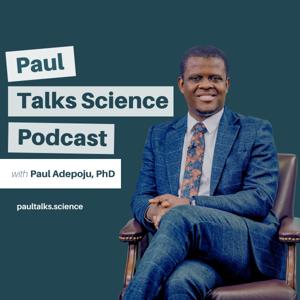


In this punchy Paul Talks Science episode, Africa CDC Director-General Dr Jean Kaseya lays out a game-changing vision: shift the continent from donor dependence to home-grown prevention.
Hear how “Made-in-Africa” vaccines, a new primary-health-care push, and community-powered disease surveillance are rewiring public health—and why partners must align with Africa’s roadmap or step aside.
A quick but eye-opening dive into the future of global health leadership.
When U.S. funds abruptly dried up, Nigerian virologist Prof. Oyewale Tomori saw an unlikely gift: proof that Africa can—and must—stand on its own. In this episode, he tells host Paul Adepoju why the continent is “resource-wasteful, not resource-limited,” skewering billion-naira motorcades and idle PCR labs while village health officers lack even a bicycle.
Linking to Paul’s Global Health Now feature “Mosquito Nets and Geopolitical Bets,” Tomori explains how a halted donor-funded supply chain threatens Nigeria’s malaria gains—yet also exposes the folly of outsourcing prevention to foreign budgets.
His prescription? “Throw away the box and think like a human being,” redirecting local money into basics: community-level surveillance, home-grown bed-net factories, and water sanitation that beats disease before it starts.
From the fine line between hope and optimism to the politics of sustaining reform beyond 2027, Tomori’s candor is a wake-up call for policymakers—and anyone who still believes Africa’s health future depends on external lifelines.
Listen for a bracing master-class in prevention-first public health and a roadmap toward true self-reliance.
While roving the abstracts stand at the World Cancer Congress in Geneva (17‑19 September 2024), Paul Adepoju bumps into Swiss TPH PhD researcher Peace Ayeni and ends up unpacking a jaw‑dropping data set of 4.1 million people living with HIV in South Africa. Her study shows that where you pick up your antiretrovirals—an affluent clinic or an under‑resourced township facility—can tilt the odds of getting a cancer diagnosis.
In this episode, you’ll hear:
How the team probabilistically linked national HIV‑lab records to build the SAM cohort, capturing cancers across the country.
Why “cell counts and bank accounts”—immune status and socio‑economic position—create a double jeopardy for cervical, breast and other common tumours.
The hidden epidemic of under‑diagnosis in poorer wards, and what a more decentralised cancer‑screening model could look like.
A quick nerd‑out on conference poster formats (yes, e‑posters vs. paper still sparks debate!).
Whether you’re a global‑health wonk, an equity advocate or just podcast‑curious, this episode maps the tightrope between biology and inequality with data‑rich clarity—and leaves you asking how many cancers we’re still not counting.
(Recorded on the Congress show floor in Geneva, Switzerland.)
On this World Malaria Day, host Paul Adepoju, PhD sits down with genomicist Dr Jane Carlton, Director of the Johns Hopkins Malaria Research Institute, for a candid look at how—and why—the global malaria map keeps shrinking even amid a sudden funding storm.
From decoding Plasmodium genomes and deploying AI-powered diagnostics to rolling out the first WHO-approved vaccines and engineering “better” mosquitoes, Dr Carlton describes the science that’s turning elimination from dream to deadline. She also unpacks the immediate fallout of U.S. aid cuts—lost bed nets, dwindling rapid tests, and stalled fieldwork—and explains why low- and middle-income countries are scrambling to plug the gap.
Yet optimism prevails: new bio-pesticides, precision medicine, and community-led strategies are accelerating progress, with Egypt and others recently joining the 40-plus malaria-free nations list.
Whether you’re a public-health pro, a global-development watcher, or just curious about the tech and tenacity behind disease eradication, this episode delivers insight, urgency, and hope in equal measure. Tune in, share, and join the push toward a malaria-free world.
Recorded amid the buzz of the last World Cancer Congress in Geneva, this double‑feature episode of Paul Talks Science links global policy rooms to ground‑level clinic corridors—with one shared mission: stop cancer before it starts, and treat it smarter when it does.
In the first half
🗣️ Yannick Romero – Senior Knowledge & Advocacy Manager, Union for International Cancer Control (UICC)
Twenty years of the WHO tobacco treaty in 10 minutes—wins, setbacks, and why a 10 % price hike can slash smoking rates by 5 %.
How e‑cigarettes became Big Tobacco’s Trojan horse, and why Africa is the next battleground.
The playbook for a “smoke‑free generation” and what governments must do now.
In the second half
🗣️ Dr Amaka Lasebikan – Director of Research & Innovation, Nigerian Institute for Cancer Research and Treatment (NICRAT)
Launching a national cancer institute from scratch—and ramping Nigeria’s radiotherapy machines from 2 to 8.
Funding a Cancer Health Fund that covers treatment and transport for patients who need it most.
Using AI and home‑grown genomic research to out‑smart tumours, not just chase them.
Why listen?
You’ll hear prevention and precision medicine in the same breath, data‑driven optimism that cuts through doom‑scroll fatigue, and a crash course on how alliances—across borders, sectors and income levels—are our best shot at a cancer‑free future.
🎧 Hit play for hard numbers, human stories and a roadmap that turns treaties into treatment.
🔔 Follow & rate if you want more science served with equal parts fun and fight.
Africa has achieved a remarkable 40% reduction in maternal deaths since 2000—a significant milestone in global health. Yet paradoxically, the continent still accounts for a staggering 70% of maternal deaths worldwide.
In this episode, Paul Adepoju speaks with Dr. Adeniyi Aderoba, WHO's lead on reproductive and maternal health for Africa, to unpack this complex paradox.
They explore what's driving Africa's maternal mortality crisis, highlight innovative interventions making a difference, and discuss how political will, funding, and community empowerment are shaping the fight to save mothers’ lives.
Tune in to discover why pregnancy in Africa should not be a death sentence and how progress can accelerate even further.
Obesity is often framed as a personal failure—but what if the real culprit lies beyond individual choices? In this eye-opening episode of Paul Talks Science, host Paul Adepoju speaks with Dr. Simon Barquera, President of the World Obesity Federation, about the deeper systems fueling the global obesity epidemic. Exploring insights from the latest World Obesity Atlas, they uncover how ultra-processed foods, powerful industry interests, and failing health systems are driving obesity rates upward—especially in low- and middle-income countries.
From discussing effective strategies like healthy taxes and clear food labeling to highlighting best practices from countries successfully combating obesity, this conversation challenges conventional narratives and offers a bold roadmap for systemic change.
Tune in to discover why obesity prevention demands action beyond personal responsibility—and why changing systems can create healthier lives worldwide.
After a cancer diagnosis, many wonder: What can I do to improve my long-term health? In this episode of Paul Talks Science, I sit down with Dr. Helen Croker, Assistant Director of Research and Policy at the World Cancer Research Fund International, to explore the science behind lifestyle choices and cancer survival.
We dive into the latest research on diet, physical activity, and weight management—and whether these factors can truly influence life after cancer. Dr. Croker shares key findings from systematic reviews on breast and colorectal cancer, revealing what the evidence supports, what remains uncertain, and the gaps in research that still need to be filled.
Plus, we discuss:
✅ The role of exercise in improving quality of life for cancer survivors
✅ Common misconceptions about diet, weight, and cancer recovery
✅ Why there’s a lack of research from low- and middle-income countries
✅ The integrity of cancer research—how reliable is the data we trust?
If you or someone you know has been affected by cancer, this episode is packed with evidence-based insights and practical takeaways to navigate life beyond diagnosis.
🎧 Tune in now to get the facts on lifestyle and cancer survival!
In this episode, we explore Ireland's groundbreaking approach to cancer advocacy through two compelling conversations with leaders from the Irish Cancer Society. CEO Averil Power shares how relentless advocacy led to landmark legislation requiring cancer warnings on alcohol labels, changing Ireland's relationship with alcohol and health.
Suzanne Dowd, Advocacy Officer, reveals another front in the fight: erasing financial stigma against cancer survivors struggling to access insurance and financial services long after recovery. Together, their stories illustrate Ireland's bold steps to protect cancer survivors, tackle stigma, and inspire global action.
In this episode of Paul Talks Science, I speak with Prof. Christian Gilissen, Professor in Genome Bioinformatics and Head of Bioinformatics at Radboud University Medical Center, about the game-changing potential of long-read sequencing in rare disease diagnosis.
We dive into:
🔬 How long-read sequencing works and why it matters
🧬 Its advantages over traditional short-read sequencing
💡 The impact on patient diagnostics and clinical care
💰 The challenges of cost and accessibility
⚖️ Ethical and regulatory considerations
Prof. Gilissen shares insights from his latest research and explains why long-read sequencing could soon become the new standard in genomic medicine.
🎧 Tune in to explore the future of rare disease diagnosis and how cutting-edge science is bringing hope to millions.
📖 Read my article on this topic: "The New Frontier of Genomic Testing for Rare Diseases"
🔔 Follow Paul Talks Science for more deep dives into groundbreaking research, innovations, and the experts shaping the future of medicine.
#Genomics #RareDiseases #LongReadSequencing #GeneticTesting #Bioinformatics #PrecisionMedicine #SciencePodcast #PaulTalksScience
From the publisher's feed