
Sign up to save your podcasts
Or

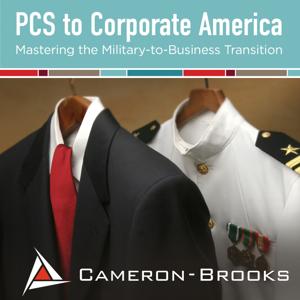


Welcome back! As Transition Coaches, a topic that we often help officers think through as they are making decisions about getting out of the military is short-term thinking versus long-term career thinking. It is completely natural for officers leaving the military to focus and think in the short term. They have a future date in which they are going to exit the military, usually with in the next 12 months or less, and they need a plan. Because of this, there are typically two main issues that tend to drive decision-making in the transition. First, officers now have full autonomy to make a decision about their future and second, officers, at least while in the military, have never had to fully manage their careers or have had full power to make important career decisions.
In this episode, our three Transition Coaches, Joel Junker, Pete Van Epps and Brock Dudley meet to has a discussion about a topic that we discuss often with military officers – short vs. long-term career thinking and decision making.
In the first part of our discussion, Joel sets up the discussion by referencing The Fifth Discipline by Peter Senge. In the book, there is an illustration where Senge describes a person envisioning their future self vs. their current reality. In the gap between where you are and your current reality, there is tension. Tension is good, but working through that tension also takes time, discipline, and resolve. Through the years, we’ve seen countless military officers take this approach to their transition. They take a realistic inventory of where they are today and where they want to be 5-10 years from the transition; then, they build a plan. That plan sets up the tension because it often means you will sacrifice some elements of short-term gain for ultimately achieving your professional goal and achieving your vision.
In the discussion, we were each able to weigh in on critical components of long-term decision-making and created a short, actionable list for military officers who want to align their transition strategy with a focus on their future career vision.
If this is something you are interested in exploring, give us a call. Our company is completely dedicated to helping military officers through a decision making process and career search strategy that is designed to you you reach your goals and dreams.
Pete Van Epps || (210) 874-1519 || [email protected]
If you want to learn more about Cameron-Brooks, you can find more information on your website and our YouTube Channel.
Welcome back! This is the second installment in our Career Field series podcasts. In our first episode (Episode 192), we featured three Cameron-Brooks alumni who explained their careers within the Engineering Management Career field. In this episode, we invited two of our alumni who launched their careers within Manufacturing. After listening to them, you’ll have a better understanding where a post-military career in manufacturing can take your career.
Michael Warwick is a former Army Infantry/AG officer. He attended the August 2017 Career Conference and started his career at Oldcastle Building Envelope, which creates glass products for commercial and residential buildings. He spent 5 years at that company, becoming the Plant Manager of his facility before being promoted to General Manager, covering Texas, Oklahoma, and Louisiana. In that role, he managed all aspects of the business, from production to sales and business development functions. This allowed him to pull different levers to positively affect the profit and loss (P&L) of the overall business. In 2023, he moved to American Bath Group (ABG), a company that produces a myriad of different products that are installed in bathrooms. As a Division Manager, he manages and oversees two different companies within ABG, Swan and Florestone. In this role, he oversees both lines of business, from production, distribution, branding and marketing to new product development.
Brandon Slocum is a former Army Armor officer. He attended the January 2018 Career Conference. He launched his career at Pactiv Evergreen. In the first few years of his career, he watched Pactiv move from a privately held to a publicly traded company. He started as an Operations Unit Manager, managing different teams and lines of product production. From there, he spent some time as an Operations Talent Manager on the Training and Development team, where he traveled to different Pactiv facilities throughout the country to standardize practices across the companies. For the last 4+ years, he’s served as a Plant Manager in two different locations. He started as the Plant Manager in their Chicago facility, leading 275 team members in making packaging material for different high-volume restaurants. Currently, he is leading the Temple, TX facility, leading 550 team members, managing the entire South/Southwest of consumer products for Hefty and Reynolds, as well as products for Costco, Walmart, and Sam’s Clubs.
In this episode, Michael and Brandon answer three key questions: what exactly is manufacturing? What are the common misconceptions people have about starting a career in manufacturing? What are the key competencies that someone must possess to lead a successful post-military career in manufacturing?
I think you’ll find Michael and Brandon’s experiences encouraging and exciting. The interesting thing is when both of these leaders attended the Cameron-Brooks Career Conference, they interviewed with around 10-12 different companies within different industries and across different career fields, including manufacturing. In doing so, they were able to assess different opportunities to find the best opportunity among many. When Michael chose Oldcastle and Brandon chose Pactiv, they made a decision that launched their career with the best fit, and they’ve never looked back. If you are interested in doing that type of career search, reach out to me directly.
Best,
Cameron-Brooks has a 50-year track record of guiding military officers to create a step-by-step plan to learn about their options, connect their military experiences directly to opportunities in corporate America, craft a resume that will stand out to hiring managers, and ultimately launch a successful business career.
Welcome back! This episode continues our Post-Conference Review series. As many of you know, Cameron-Brooks holds five Career Conferences per year. After every Career Conference, we lead a webcast with a few of our most recent alumni to let them share their experience with the Conference and the follow-up interview process. Hear some real JMO transition stories.
We continue to conduct these webcasts because officers continue to provide feedback on these episodes and how helpful they are. Though everyone’s experience through the Cameron-Brooks process differs, our alumni continue to provide valuable insight that will demystify the entire process. In this episode, you will meet:
Mikayla Blaska is an Army Infantry Captain, Ranger qualified, who graduated from Princeton University with a BA in Psychology in 2019. She accepted a position with Motorola Solutions as a Territory Sales Finance Manager.
Kevin Hanigan is an Air Force F-15E Strike Eagle pilot who graduated from Ohio State University with a BS in Electrical and Computer Engineering in 2012. He accepted a position with Liberty Advisory Group as a Principal Consultant.
Gage Wampler is an Army Chemical Captain who graduated from the Virginia Military Academy with a BS in Computer Science in 2019. He accepted a position with Amcor as a Liquid Business Development Account Manager.
We tackled a wide array of topics during these real JMO transition stories and most of the questions came from the group who attended the live webcast.
We finished with a Lighting Round of questions to ensure that all questions were answered. Overall, it was an informative session, and their experience certainly provided a lot of insight into the process.
If you like hearing these real JMO transition stories and are considering what is next for you after the military, give me a call to discuss your options. Often, a short conversation with someone who has seen thousands of officers transition can be helpful in your process. Whether you decide to stay in or get out and regardless of whether you commit to a career in Corporate America, just having a conversation about your future plans and goals can help. If that is you, call me or email me directly to get started.
Best,
Let’s talk about the value of the Cameron-Brooks Preparation Program. The number one feedback comment I hear from Cameron-Brooks Alumni is, “I wish I had started preparing earlier.” Regardless of whether the officer started 12 months or 2 months before interviewing, they all wish they had more time.
Another common feedback comment I hear is, “The transition from the military to a business leadership career and civilian life is more of an adjustment than anticipated.” They are changing career fields, industries, and organizations. They have to adapt and adjust to new cultures, processes, and personality styles.
In this podcast, I make the argument that JMOs need to start gathering information and preparing for the transition as soon as they even consider leaving the military. Just before I wrote this post and recorded the podcast, I spoke to a naval officer who made the decision two years ago to leave the Navy, and he starts terminal leave in a month. I asked him what he had been doing to prepare for a transition. He talked about earning a project management certificate. When I quizzed him further, he had not read any books on business and did not have knowledge of common business concepts like Lean and Six Sigma.
Finally, I asked him how confident he was in his interviewing skills, and he rated himself an 8 on a 10 scale. I asked him about his most significant accomplishment in the Navy, and he struggled to explain it in a way that demonstrated his specific leadership actions. I also asked him about his leadership style; once again, he lacked depth. This is really common; learning how to interview takes time, practice, and feedback.
Too many officers rely on a Skillbridge program to prepare for the transition. When they do this, they miss out on learning about business concepts and applying them in their military jobs. Companies love to hear how officers applied Lean, Six Sigma, coaching, mentoring, and sales models while in the military. It helps them relate what the military officer has done to their environment. The only way to do this is to start preparing well before the transition.
Another major point in the podcast is that the Cameron-Brooks preparation program also has huge benefits for those just considering the transition. There is a misperception that we only work with those who have made the firm decision to get out. We walk beside many officers who are just considering the transition. We enroll them in the preparation program so they can learn about their marketability and options in business. We help them get clarity on their career goals and whether or not a transition makes sense. To take advantage of this, one should contact Cameron-Brooks as soon as they start thinking about the transition.
I close the podcast with an explanation of the Cameron-Brooks preparation program and its benefits. Our program helps officers make good decisions in the transition, interview well in the transition, and hit the ground running in their new careers. It’s hard to argue about the value of the Cameron-Brooks Preparation Program once you understand more about it.
Thank you for listening to the Cameron-Brooks podcast! As you consider your potential transition from the military to the business world, if you’d like to talk about your marketability or how Cameron-Brooks can guide you to launching your career, please contact us directly. Schedule a call here.
Cameron-Brooks has a 50-year track record of guiding military officers to create a step-by-step plan to learn about their options, connect their military experiences directly to opportunities in corporate America, craft a resume that will stand out to hiring managers, and ultimately launch a successful business career.
Harry Truman, the 33rd President of the United States, said, “Not all readers are leaders, but all leaders are readers.”
Therefore, JMOs should read.
Leaders read because they continuously pursue learning and development. They know they never “arrive” and know everything. Additionally, whether they are politicians, business people, military leaders, teachers, or wherever they lead, they know their environment is dynamic. They read to stay sharp, adapt to new challenges, explore new ideas, and understand ideas and views that conflict with their own.
Often when I speak with Junior Military Officers (JMOs) considering the transition, they tell me they have not read much since they left college. I have to admit that I did not read much during my first two years in the military. Fortunately, a new commander implemented a reading program in my third year, and I also started preparing with Cameron-Brooks for my transition. I developed a habit of reading well before the transition that I continue today.
In this podcast, I explain four reasons why JMOs should make a habit of reading before the transition. They are:
My colleague, Brock Dudley, wrote a blog post in February 2024 about the correlation between reading and successful interviewing.
JMOs should read — especially if you are making the transition. I highly recommend developing a reading habit today. If you have not already done so, start with PCS to Corporate America, 4th Ed. The book has a recommended reading list at the back. I wrote a blog post on 5 Books Every JMO Should Read ASAP a few years ago.
In the podcast, I mention Jeff Bezos and Bill Gates’ reading lists. You can find them hyperlinked in their names.
Thank you for listening to the Cameron-Brooks podcast! As you consider your potential transition from the military to the business world, if you’d like to talk about your marketability or how Cameron-Brooks can guide you to launching your career, please contact us directly. Schedule a call here.
Cameron-Brooks has a 50-year track record of guiding military officers to create a step-by-step plan to learn about their options, connect their military experiences directly to opportunities in corporate America, craft a resume that will stand out to hiring managers, and ultimately launch a successful business career.
Welcome back! Today you’re going to get three tips to manage your career after you transition to business. I am glad to introduce you to Kingsley Spiller. He’s a former Army Infantry officer who moved to corporate America in 2016. He spent his time in the Army as a Platoon Leader, Executive Officer, and Battalion Logistics officer and finished up his career with a deployment to Afghanistan. He launched his business career as a District Manager at Aldi. In this episode, you will get a chance to hear Kingsley’s story. Specifically, Kingsley gets into some of the decisions he’s made in his career thus far as it relates to career development and where he sees his career going. If you are still in the military and wondering what it’s like to navigate your career successfully as you get started, this episode is for you!
In this conversation, Kingsley walks through three actions he’s taken to ensure success and growth as a leader at Aldi.
It all starts with getting into the right company. Kingsley interviewed for over 10 companies at his Cameron-Brooks Career Conference. He was able to evaluate different industries, companies and career options to find the best option for him. Not only that but within each of the options, he could evaluate many of the intrinsic values of each of the opportunities in order to select the best among many. This allowed him to get into the right role and use the leadership skills he gained in the military to start strong and make an immediate impact in the organization.
Kingsley said one of the first things he did when he got to Aldi was looking for challenging assignments. He volunteered for hard jobs and took on the work that no one else wanted. This is exactly what corporate America is looking for in the JMOs. We want people who will go the extra mile without being asked and do it with a great attitude. Unbeknownst to Kingsley, this is one of the reasons he was able to rise quickly in his organization, which allowed him to build his brand and be seen as a leader in his organization.
Like most transitions or major changes in life, after the “honeymoon” phase, there is typically a dip. It’s typically not an insurmountable issue or problem. It’s more like the excitement of being recruited has subsided. The newness and novelty of the new thing have passed. This is often where people quit and start over. Kingsley does a great job talking about seeing the picture of his career. He knew that the next chapter of his professional book after the military wasn’t the last chapter! Often, JMOs tend to see the world in the very next step, not realizing that pivot transition phases of life and decisions made in the process will affect future chapters.
Kingsley has done a great job making an immediate impact when he started at Aldi, seeking out the toughest assignments and seeing the big picture regarding managing his career.
If you are wondering about your options as you consider the future, let’s have a quick chat on the phone. We have built a reputation for helping military officers make the move from the military to the business world, and we are standing on over a half-century of experience. If you are interested in launching your career in a leadership role in the world of business, I want to meet with you. Feel free to call or email directly to get started.
If you want to learn more about how we help military officers or your career options, visit www.cameron-brooks.com. You can also hear about other officers’ experiences with Cameron-Brooks.
Best of success,
Pete Van Epps // (210) 874-1519 // [email protected]
Welcome back! We recently wrapped up our January 2024 Career Conference. The primary takeaway from the Conference is that companies remain motivated to pursue JMOs for their important leadership openings, and the prepared candidate will succeed at the Career Conference. Diving deeper, the key takeaways were:
The economy tends to be a question on JMOs’ minds. Specifically, is the economy strong enough to support my transition, and will I find the right job when I exit the military? A fact I love to quote is that Cameron-Brooks has been helping military officers PCS to Corporate America for over half a century, and in all time, we have never canceled a Conference. Not during the “dot-com” recession in the early 2000s, not during the “Sub-prime mortgage recession” in 2008-2009, and not during the “Covid recession” in 2020. Never. Why? Well, just like the military never stops commissioning second lieutenants and ensigns, the business world never stops hiring and promoting leaders. That said, when we are navigating economic headwinds, opportunity heavily favors the prepared. And when you make a military transition with Cameron-brooks, we make sure you are prepared!
Through the years, some of the most prepared candidates I’ve seen at Career Conferences are those who call themselves “voracious readers.” I believe that those people tend to have an advantage over those who don’t read much because they are way better at connecting the dots in an interview. Follow my logic – imagine you are not much of a reader, and you get an interview question like, “Tell me about a time you led your team to reach an important goal or objective.” Well, with no context to the position, company, or industry, you may just throw out an answer with a lot of hope that you’ll hit the target. Now, imagine in your transition preparation, you’ve read or listened to a book on Lean/Six Sigma, operational excellence, project management, finance, data analysis, and team leadership and you get the exact same question. With your knowledge, combined with the context of the position, company, and interest, you’ll tell the right experience in the right way and not only hit the target but nail the bullseye!
In this episode, we feature three of our most recent alumni. It is so impactful to hear them tell their stories because they successfully navigated the interview process, earned offers, selected the best for them and their families, and are preparing to launch their new careers in the business world. In this episode, you’ll hear from
Harry Donahue, Army Civil Affairs, USMA 2015
Austin Weiher, Army Intelligence, USMA 2019
Colin Stringert, Army Infantry, University of Wyoming, 2019
If you are looking for help, let’s talk about making a military transition with Cameron-Brooks! We have a track record of guiding military officers to create a step-by-step plan to learn about their options, connect their military experiences directly to opportunities in corporate America, craft a resume that will stand out to hiring managers, and ultimately launch a successful business career.
If you want to hear more from our alumni, check out our YouTube Channel where you’ll find many officers sharing their experiences with Cameron-Brooks.
Best,
Pete Van Epps // [email protected] // (210) 874-1519
Welcome back!
In this episode, we’re going to talk about why it’s important to get your foot in the door—THEN navigate your career. You’ll meet three Cameron-Brooks alumni who have successfully made the transition to the business world, all have been promoted and navigated their careers wisely. Two of them happen to be married!
We were fortunate enough to have Chazz Hoskins, along with Luke and Marquette Leveque share their experiences with us. This episode was originally intended for them to share their experience in the Engineering Management Career Field. In this episode, Joel and the Panel discuss the misperceptions of Engineering Management, explain what Engineering Management is along with the competencies required to be successful, describe how diversified the work is, and provide the listeners with some sample industries.
However, we felt our alumni were great examples of former junior military officers who made decisions early on in their careers that helped them establish a track record of success, build a skillset, and then make decisions that pivoted closer towards their ideal personal and professional goals.
Chazz made the transition from the Air Force as a Developmental Engineer and launched his career with Lam Research as a Manufacturing Engineer in Silicon Valley. Lam Research makes advanced microchips that are in many familiar products we use every day such as our mobile phones, computing devices, entertainment systems, and even smart cars! He and his wife then decided it was time to move back to Ohio. Chazz navigated his career and now works with Silflex, a division of Lam Research, they’ve bought a home and are living in their dream location. Chris built a skillset and navigated to the ideal location!
Marquette and Luke Leveque were classmates at the Naval Academy, Navy Nuclear Submarine Officers, came through the Cameron-Brooks program in 2018 and attended the April 2018 Career Conference. TOGETHER, they launched their careers at Boston Scientific, a leading medical device company that makes innovative solutions and medical devices to help improve the health of patients around the world.
Marquette began her career in a Process Development Manager role where she led a team of engineers to successfully implement large-scale manufacturing processes for new biopharmaceutical products. She then wanted to be closer to the customer and is now in a marketing role with Boston Scientific. Luke launched his career as an Operations Project Manager where he led a cross-functional team moving new products out of the research and design stage into the manufacturing stage, and ultimately into commercial use. Luke has now shifted into a marketing role on the commercial side of the business leading their laser therapies team. Luke and Marquette navigated their career to the desired roles!
When I meet with junior military officers to discuss their career goals, I ask a lot of questions to get to know them. One of those questions I ask is, “Why are you leaving the military?”. I often get the answer, “For more career control”. Makes sense! In the military, most decisions are made for you. You haven’t necessarily had to make decisions as it pertains to “Career Management”. Your detailer, branch manager, or assignment officer makes it for you. It’s also a specific career path within your MOS. If you deviate from it, you may not be selected for command or make the next rank and will be forced to make the transition out.
For example, you are told when to move, when it is time for a new assignment, which organization, or unit you will join, etc. While this can make life hard for military officers, it does free them from the responsibility of “Career Management”. To some, that may be ideal. For some, it’s not.
In the business world, there are no scholarship contracts, assignments officers, early outs, PCS commitments, ADSOs, or mandatory job changes. Regardless of your company, you are free to switch careers, stay where you are, entertain other opportunities, apply for an open position, or take broadening assignments to be exposed to other aspects of the business. In Corporate America, you are truly at the helm of your career. This a freedom, but it comes with responsibility and can be a double-edged sword.
We’ve studied JMO transitions for a long time. We can say that a successful transition starts with getting off active duty and ends with a strong JMO transitioning from being a leader in the service TO being a leader in business and part of a company’s succession planning process, just like our alumni are doing in this episode. Before you do that, you have to get your foot in the door! They’ve built a skillset, built trust within their organizations, and have pivoted to the ideal!
Cameron-Brooks has been helping military officers move from the military to corporate America for over half a century. We view ourselves as a guide and experts in helping military officers conduct a broad and enriching career search. Even if you aren’t sure, give me a call or send me an email. I’d like to help you explore this path to see if it’s right for you. Even if it’s not, a conversation can help you define your goals and build a plan.
Best of success in your business career! Remember, you’ve got to get in the game to start playing. That’s why it’s important to keep in mind…foot in the door-THEN navigate your Career.
Brock
[email protected] // 210-874-1495
Thank you for listening to the Cameron-Brooks podcast! As you consider your potential transition from the military to the business world, if you’d like to talk about your marketability or how Cameron-Brooks can guide you to launching your career, please contact us directly. Schedule a call here.
Cameron-Brooks has a 50-year track record of guiding military officers to create a step-by-step plan to learn about their options, connect their military experiences directly to opportunities in corporate America, craft a resume that will stand out to hiring managers, and ultimately launch a successful business career.
When I meet with junior military officers JMOs to discuss their career goals, I ask them, “What will make a happy, successful career for you?” I deliberately ask them an open ended question to leave a lot of space on where they can take their answer.
I might hear things like, “Using my technical skills,” “Solving problems and making an impact,” or, “Learning, growing and developing.” However, the number one response I have heard over my 25-year career is, “I want to have meaning and purpose.”
Finding purpose in your post military career is a common concern.
Yes, I agree! Finding meaning and purpose in your post military career are critical to career and life satisfaction. We all want to do work and live a life that matters. We want to know the time and effort we put forth will make a difference in this world.
Yet, over the last year or so, there has become a shift in the response. I now occasionally hear, “I want to do something that I am passionate about.” When I ask them to elaborate, often they describe working in industries where they have hobbies such as, “Crossfit,” “Outdoor activities,” “CrossFit”, “Sports,” and others. Some might say something like, “Working to preserve the environment.”
I see passion as something that we grow into over time. It is similar to love in a relationship. Over time and with experience, it deepens and becomes stronger. The problem when I hear JMOs talking about passion is that they seek something external to give them that meaning. They are looking for CrossFit, the environmental impact, alternative energy, or the outdoors to do it for them. In the end, it won’t satiate them.
I see purpose as something that gives your work meaning. Purpose comes from within you. It is not external. You find meaning from what you give and the joy of using your talents to make an impact. Purpose, or meaning, which I am using interchangeably here, does not come from wearing a uniform, company name, or industry. Those are external. They do support and facilitate it, but they can’t do it; only you, the individual, can. You can do this by leading and developing people, leading change to build an organization, using your talents and growing, and more.
I do not want to hold anyone back from pursuing their dreams. That is not the intent of this podcast or post. Rather, my intent is to make the case that pursuing meaning is more important, and from my perspective, passion and purpose are different.
In this podcast, I tackle the topic of passion and purpose. It’s a lot easier to talk about than write about here. I want to admit that this is MY opinion fully, and I know people will disagree with me. I would love to hear from you. I am not trying to be right, but rather help JMOs understand that finding meaning in work is important and that it will come from inside them and not to look externally for it.
Thank you for listening to the Cameron-Brooks podcast! As you consider your potential transition from the military to the business world, if you’d like to talk about your marketability or how Cameron-Brooks can guide you to launching your career, please contact us directly. Schedule a call here.
Cameron-Brooks has a 50-year track record of guiding military officers to create a step-by-step plan to learn about their options, connect their military experiences directly to opportunities in corporate America, craft a resume that will stand out to hiring managers, and ultimately launch a successful business career.
The DoD launched a pilot program in 2011 called SkillBridge. The intention of the program is to provide service members and spouses with an in-depth and real-world training opportunity as they prepare to move from active duty to post-military employment. Today, the program has grown to almost 3,000 different SkillBridge opportunities.
Cameron-Brooks is one of them! So what is the Cameron-Brooks SkillBridge experience like? It’s the ideal opportunity for high-achieving JMOs that want to transition to a growth position in business.
Cameron-Brooks has been an approved DoD SkillBridge provider since 2022 and many officers have participated in our 12-week, curated training program as they prepare to attend the Cameron-Brooks Career Conference and follow-up interview process.
What can come from a Cameron-Brooks SkillBridge opportunity? Lots more opportunity!
In this episode, I talk to Wyatt Boyd. Wyatt shares his Cameron-Brooks SkillBridge experience in preparation for the January 2023 Career Conference. At the conference, he interviewed with 10 industry-leading companies, and just about every one of them demonstrated a high level of interest in pursuing him for follow-up interviews. Wyatt conducted multiple follow-up interviews and received offers for employment along the way. He ultimately received and accepted an offer with Abiomed, a Johnson and Johnson company. Wyatt describes how he was able to benefit from the Cameron-Brooks SkillBridge program in order to maximize his opportunities, earn multiple offers for employment, and ultimately select the opportunity that best matched his career goals.
So, what does Wyatt attribute to his success? In a phrase:
Wyatt was able to focus on some key areas while on the SkillBridge, including:
If you want to learn more about how to make a successful transition and are interesting in participating in the Cameron-Brooks SkillBridge experience let’s connect. You can reach me directly at [email protected].
If you want to learn more about how we help military officers move from the military to the business work, yo can find a ton of valuable information on our website, YouTube Channel and on LinkedIn.
From the publisher's feed