
Sign up to save your podcasts
Or

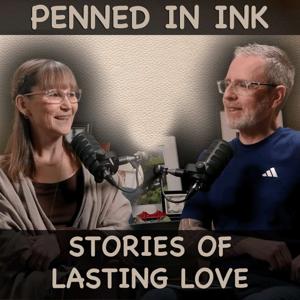


Financial stress in marriage tests more than your budget. Here is what $100K of debt taught ours.
We combined our finances fully after getting married. About 13 years in, with two young daughters and over $100,000 in student loan and car debt, we went scorched earth for about three years. This conversation is less about debt strategy and more about what that season did to us as a couple.
We talk openly about:
- Why you can live paycheck to paycheck at any income when debt takes its cut first
- How to pay off debt together when only one spouse is earning
- What it feels like to be a stay-at-home parent who isn't bringing in money
- How to stop worrying that your spouse resents paying off your student loans
- How to align on spending disagreements and differing priorities
- Why combined finances can lead to a stronger marriage
We also share:
- What cutting expenses looked like during our debt payoff season
- The side hustles that helped us pay off debt faster
- How being debt-free changed the choices we get to make today
If debt is quietly making your decisions for you and your spouse, this one is for you.
Questions we answer in this episode:
- How paying off debt lead to a strong marriage
- Does my husband resent paying off my student loans
- How to pay off student loans on one income
- Is it normal to feel guilty as a stay-at-home mom who doesn't earn money
- Are money disagreements a bad thing in marriage
Pen to Paper, your action step this week:
Name your own version of an extreme season. Pick one recurring expense to cut together for the next 90 days, like a streaming service or dining out, and put every dollar you save toward a named debt or a goal. Keep talking about it the whole way. Are you excited watching the debt go down? Are you missing your favorite show? At the end, sit down together and decide if it was a good experience. Think of it as a test drive for a bigger season.
Mentioned Episode
Balancing Dual Careers: The Other Half | Penned in Ink #4
Money and Marriage: Building Financial Trust in Your Relationship | Penned in Ink #8
Should Debt Be A Dealbreaker When You're Dating? | Penned in Ink #24
Should You Combine Finances After Marriage? | Penned in Ink #25
Chapters
00:00 Financial stress in marriage and how we faced it
04:27 Why we decided to get completely out of debt
06:04 Paying off debt before your kids start wanting things
10:19 Paying off debt together is never a straight line
12:20 How couples compromise when cutting spending
13:24 How we ended up with over $100K in consumer debt
16:48 Why student loan debt feels impossible to escape
17:43 Realizing a debt-free life was actually possible
20:02 Side hustles that helped us pay off debt faster
23:53 Stay-at-home parent vs sole earner on paying off debt
25:54 The real value of a stay-at-home parent
30:00 The career pressure on a single income earner
32:06 Worried your spouse resents paying off your debt
33:58 Earning the money but never spending it on yourself
36:12 Why money disagreements you work through can help your marriage
42:47 Was becoming debt-free worth the sacrifice
45:29 A 90-day money challenge for couples
48:48 Why shared money goals build a stronger marriage
Watch this episode
We film every conversation, so if you would rather see it than hear it, the full video is on YouTube.
Join the Penned in Ink community for free digital guides and occasional updates to help you build your own long-lasting love.
Connect with Us on Instagram
Hi, we are Michael and Melissa Penwell. We are here to share stories of lasting love, real marriage, and the art of commitment. Each episode explores the true work, laughter, and growth that come with a long-term relationship. We discuss real topics and share practical takeaways drawn from both Melissa's work as a licensed counselor and our 30+ years of shared experience. Through candid stories and heartfelt conversations, we explore what it means to write your own love story, one chapter at a time.
Should you combine finances after marriage? Many couples decide by default, not on purpose.
We went all in with shared accounts, and then lived through a season where one of us brought in no income at all. Not once did we have the conversation about whose money paid for what. This is the honest case for combining, including the reasons we think you should not, and what the decision to stay separate is quietly costing couples who never actually made the choice.
We talk openly about:
- What combining finances before marriage can cost you legally
- The power of a shared financial vision in your relationship
- Why wanting to keep control of your own spending is not selfish
- How to keep independence in spending when finances are combined
- How to combine money when one of you earns far more than the other
- When keeping your finances separate is genuinely the right call
- How to tell the difference between tight budgeting and financial control
We also share:
- How to manage "fun money"
- How setting a dollar threshold prevents you from checking in on every purchase
- How to navigate spending priority differences with your partner
- How to talk about money when things are going well, not just when they are not
- What to say when your spouse overspends, without turning it into a personal fight
If you are nearing your wedding date or early in a marriage, and staring at two sets of accounts and quietly wondering whether merging them means giving up your independence, this is the conversation for you.
Fidelity's 2026 Couples and Money Study found that 46% of Gen X couples keep all of their money in joint accounts, but that drops to 32% of millennials and 29% of Gen Z, where fully combined is now the least common of the three approaches. The largest group of millennials, 42%, runs a hybrid of joint and separate accounts instead. We are in that Gen X 46%, and we want to talk honestly about what we think this shift is quietly costing the couples coming after us.
Questions we answer in this episode:
- Should married couples combine finances or keep them separate
- Is it bad to have separate bank accounts when you are married
- How do you combine finances when one spouse makes way more money
- What do you do when your spouse spends money without telling you
- How do you split bills when one person stays home with the kids
Pen to Paper, your action step this week:
Run the full picture test. Sit down separately and see whether each of you can independently write down every account, every debt, and every balance range your spouse holds. If you are fully combined, write down everything you hold together. If you cannot do it, that gap in your knowledge is the assignment. Do not treat the blanks as a failure; treat them as the list of conversations you still owe each other.
If anything in the financial control section of this episode sounded familiar, please reach out to people whose job is to help. The National Domestic Violence Hotline: call 1-800-799-7233, or text START to 88788, or visit thehotline.org.
Mentioned in this episode:
Ramit Sethi, on whether couples should combine finances.
Chapters
00:00 Should you combine finances after marriage
02:39 Why combining money before marriage is a bad idea
03:55 Why couples keep their money separate
11:19 The year one of us had no income
16:55 Our case for fully combining finances
18:05 Why a bigger paycheck does not mean more say
20:10 The importance of "fun money"
24:22 What to do when your money goals do not match
29:24 When keeping money separate is the right call
31:36 What watching a parent's divorce does to you
33:29 Should inherited money stay separate in marriage
35:49 What to do when your spouse overspends
37:09 How to recognize financial abuse in marriage
40:31 Can you list every account your spouse has
42:52 Is your money saying we or saying mine
Watch this episode
We film every conversation, so if you would rather see it than hear it, the full video is on YouTube.
Join the Penned in Ink community for free digital guides and occasional updates to help you build your own long-lasting love.
Connect with Us on Instagram
Hi, we are Michael and Melissa Penwell. We are here to share stories of lasting love, real marriage, and the art of commitment. Each episode explores the true work, laughter, and growth that come with a long-term relationship. We discuss real topics and share practical takeaways drawn from both Melissa's work as a licensed counselor and our 30+ years of shared experience. Through candid stories and heartfelt conversations, we explore what it means to write your own love story, one chapter at a time.
When dating starts to turn toward commitment, everybody asks this simple question: how much debt do you have? And surprisingly, that is one of the least useful questions you can ask someone about their finances, and there are two things that actually predict trouble that are not numbers at all.
When we got engaged, we had student loan debt, no careers, and zero assets. And unlike many younger couples today, we never had a formal money talk. Thirty-one years later, we are on a solid foundation, which either means we got super lucky or it means the debt number was never really the most important thing we learned about each other before getting married. In this conversation, we discuss what recent surveys uncover about money and dating, confess our lack of money talks early in our relationship, and we explore how we do it differently if we were starting over.
What you will hear:
Practical takeaways we share:
Two questions that reveal money character better than just a debt number: what does abundance look like to you, and what does scarcity look like to you
Asking about a purchase regret, and why the answer tells you how someone learns from their past
Assessing risk tolerance by asking: what is the most money you have ever had riding on something uncertain, and how did waiting feel
How to recognize a misalignment you can work on versus a misalignment your partner refuses to discuss
Pen to Paper:
To help you learn more about your partner's money character, start by asking this question: how was money handled in your family when you were growing up? Who paid the bills, who kept track, and was money talked about openly or not at all? What someone watched at home is one of the better predictors of how they will handle money with you.
If you are dating someone seriously, thinking about getting engaged, or sitting on a money conversation you keep putting off, this is the episode you cannot afford to skip.
Chapters
00:00 Is debt a dealbreaker when you're dating?
02:31 What the 2026 dating and money surveys found
03:34 The two red flags that beat credit card debt
06:35 Why most people wait too long to talk about money
08:33 Why merging finances early is the top dating red flag
09:42 The money talk we never had before we married
14:13 What to ask instead of what's your debt number
15:17 Why the direction of someone's debt matters more
16:09 Does your partner see debt as a tool or a trap
17:05 Crypto, sports betting, and reading risk appetite
20:35 Ask about abundance and scarcity to reveal money character
24:13 The purchase regret question and what it reveals
27:55 A risk question that gets past the dollar amount
29:55 Why people hide their numbers from a partner
33:23 Financial secrecy in relationships is a red flag
35:04 Ask how money was handled in their family
38:51 Why the money conversation cannot wait
📊 Sources referenced in this episode
The Harris Poll, Modern Dating Survey, February 2026
2,177 U.S. adults surveyed January 22 to 24, 2026, including roughly 780 singles
Earnest, Debt and Dating Research Report, published February 3, 2026
More than 1,100 people surveyed
Northwestern Mutual, 2026 Planning and Progress Study, conducted by The Harris Poll
JOIN the Penned in Ink Community for Updates
WATCH on YouTube
Connect with Us on Instagram
Thirty-one anniversaries, and not once has anyone else been in the room. People assume that it is because we are private people. That is not really it.
In this episode, we tell the story of the anniversary dinner we could not afford and did not pay for, the 25th anniversary trip that COVID pushed back four years, and the year three trip to the Caribbean, where one dinner conversation set a pattern we have kept for nearly three decades.
Somewhere in the middle of all that, we figured out that the size of the celebration has almost nothing to do with what you get out of it. What matters is whether you interrupt your pattern long enough to actually talk.
What you will hear:
What we share along the way:
Pen to Paper:
Set aside about thirty minutes and ask each other three questions. What was the best week of this year for us and why? What did we let slide that maybe we should not have? What do we want to be true a year from now that is not true today? Two rules make it work: pick a day and time and actually stick to it, and interrupt your pattern. If you always talk over the dinner table, go somewhere else. Take a drive. Find a quiet corner of the library. The new setting does more work than you would think.
We wrote all of this down for you. The Anniversary Vision Discussion is our free guide to the three question conversation, including the two rules that keep it from getting skipped another year. Join our free community for this guide and more.
Come sit with us on a rented couch in the mountains, and we will tell you what 31 years of doing this our own way has taught us.
Chapters
00:00 Anniversary traditions that actually last 31 years
02:16 Why we stopped inviting anyone to our anniversary
03:55 Did we choose privacy or did money choose it
04:42 How we paid for a steakhouse anniversary dinner
06:00 What mystery shopping is and how it works
09:48 Turning a working dinner into a real date
13:39 Why people congratulate you just for staying married
15:03 Longevity is not the same as a happy marriage
15:40 Why a messy year counts the same on the calendar
17:00 How COVID delayed our 25th anniversary trip
19:49 The year three trip that changed our marriage
23:42 The conversation that decided when to have kids
25:23 Why pattern interruption unlocks hard conversations
26:34 The twice a year check in we never skip
29:36 What we never bring into an anniversary talk
30:36 How to start a vision conversation at year five
32:54 How our anniversary celebrations changed over 31 years
34:29 The lean years when anniversaries meant dinner at home
39:07 What a working anniversary trip is really like
42:29 The daily question we asked each other all week
45:13 3 questions to ask on your next anniversary
47:49 Create the space and the connection follows
JOIN the Penned in Ink Community for Updates
WATCH on YouTube
Connect with Us on Instagram
For years, one of us went silent instead of saying the hard thing, and the other one didn't even notice it was happening. That is the problem with unhealthy patterns: they feel normal from the inside.
In this episode, we dig into the difference between an unhealthy pattern, something two committed people can work through together, and a red flag, something bigger that you cannot resolve on your own. We share the patterns that showed up in our own 30+ years, including a season of silence around one of the biggest decisions of our marriage, and how we finally learned to name them out loud.
What we talk about in this episode:
Practical takeaways we share:
This week's Pen to Paper challenge: name your pattern out loud to your partner. Not in the heat of the moment, but during a calm, repaired time, on a walk or over coffee. A pattern you never name is a pattern that keeps repeating.
If you've ever wondered whether the thing that keeps happening in your relationship is fixable or something more, this conversation is for you.
Chapters
00:00 Unhealthy patterns vs red flags in marriage
02:56 What makes a relationship pattern unhealthy
03:45 Why you can't see unhealthy patterns from inside them
05:03 Inked Moments: the silence over having another child
13:06 Small digs and eye rolls that erode respect
15:45 Stonewalling vs taking a beat to process
17:52 Why the I'm sorry but apology never works
20:16 What repair means after an argument
22:40 When a joke lands as disrespect: whose reality wins
28:17 Red flags: control, fear, and a partner not trying
31:06 Why red flags need outside help
31:56 Us versus the problem: the reframe that ended our silence
34:38 How Michael learned to apologize in the moment
37:31 Pen to Paper: name your pattern out loud
41:25 How to spot your own patterns before they take root
Mentioned Episode
Big Decisions & Bigger Bonds: Navigating Life’s Milestones Together
Comfortable Is Not a Warning Sign in Your Marriage
JOIN the Penned in Ink Community for Updates
WATCH on YouTube
Connect with Us on Instagram
We never went on a couples retreat, never read the same marriage book cover to cover, and never sat in therapy together. 30+ years later, we are still here, and we want to be honest about what that path cost us and what it did not.
In this conversation, we walk through the conventional wisdom couples get handed constantly: premarital counseling, marriage books, couples retreats, and proactive couples therapy. We did a little of it, skipped most of it, and had to map our own way on the rest. Melissa recommends a lot of this in her counseling practice, so this one turned into a bit of a "physician heal thyself" episode.
What we talk about in this episode:
Practical takeaways we share:
This week's Pen to Paper challenge: name one investment in your relationship you have been putting off because things feel good enough right now. A book, a hard conversation, a couple whose marriage you admire but have never actually asked about. Take one concrete step this week.
Chapters
0:00 — Can you build a lasting marriage without counseling
02:13 — The marriage advice everyone tells you to follow
04:28 — The premarital counseling we barely did
06:30 — What good premarital counseling should cover
09:10 — How our daughter got it right before her wedding
11:36 — Why you might need a mentor couple
18:35 — Why shared learning beats reading the same book
20:58 — Do you need proactive couples therapy
26:27 — How to find a marriage community without a church
29:43 — The season our marriage fell out of sync
33:20 — What we would each do differently
36:51 — One relationship investment to make this week
40:03 — The habit that keeps a marriage together
Article Mentioned
2026 couples therapy survey: Growing stronger together
JOIN the Penned in Ink Community for Updates
WATCH on YouTube
Connect with Us on Instagram
Nobody tells you when you get married that the version of your spouse you fell in love with is just the first chapter. The people you become across 30 years together are more interesting, more complicated, and honestly, more worth knowing.
In this episode, we get real about what growing old together actually looks like from the inside. This is not a conversation about retirement plans or slowing down gracefully. It is about the conscious choice to build something with your partner that gets stronger over time, not just longer. We share the health scares, the body changes, the first time one of us had to do real caregiving, and the small habits we have built across 30 years that have made us genuinely closer than we were in our 20s.
What we talk about in this episode:
Practical takeaways we share:
This week's Pen to Paper challenge: have one conversation with your partner that you have been putting off about the future. Not a planning meeting. Not logistics. Ask something like, "What do you want our life to look like when we are 55, and what are you most afraid about getting there?" Then listen. Do not fix. Do not minimize. Just be in it together.
If you are in the early years of your marriage and think growing old together is something you will figure out later, this episode is the honest conversation nobody had with us when we were starting out.
Chapters
00:00 – Growing Old Together in Marriage: It Is a Choice
06:46 – The First Time One of Us Really Slowed Down
07:20 – How a Health Scare Changed What We Talk About
12:15 – What Our Daughter's Diagnosis Taught Us About Time
23:38 – Why Physical Intimacy Changes in a Long Marriage
34:32 – How We Started Managing Our Health as a Team
43:08 – How Men and Women Experience Aging Differently
51:24 – The Pen to Paper Challenge: One Conversation About Your Future
54:40 – Closing Thoughts
JOIN the Penned in Ink Community for Updates
WATCH on YouTube
Connect with Us on Instagram
Everyone warns you about the danger of getting "too comfortable" in your marriage. We're here to tell you that is one of the most damaging lies in the relationship conversation right now.
In this episode, we dig into something we've built over 30 years together that we genuinely believe is a superpower: predictability and comfort with your partner. We talk about what safety and being deeply known actually feel like in a long marriage, how routines and daily rhythms create freedom instead of boredom, and why the couples who seem the most "boring" from the outside are often the ones doing it best.
What you'll hear in this conversation:
Practical takeaways we share:
Pen to Paper: Think of one thing your partner reliably does that you have stopped consciously noticing. Write it down, then tell them. Not as a compliment, just as proof that you still see them after all this time. That's the whole assignment.
If you've ever wondered whether being deeply comfortable with your person is something to celebrate or something to fix, this one is for you.
Chapters
00:00 – Is comfort and predictability in marriage actually a problem?
02:21 – What emotional safety in marriage really means
08:59 – How predictability builds trust instead of killing romance
13:57 – How predictability and comfort change over time in marriage
17:42 – How to actually build comfort with your partner
25:06 – How core values make you predictable for your spouse
33:47 – Why couples never reach comfort, and what gets in the way
38:03 – Inked Moment: car crash, 99 miles away
41:09 – What gets unlocked when your marriage feels like home
48:14 – Pen to Paper: how to stop taking your partner for granted
49:38 – Closing Thoughts
JOIN the Penned in Ink Community for Updates
WATCH on YouTube
Connect with Us on Instagram
Most couples think they've had the important conversations before marriage. They probably haven't gone deep enough, and this episode is about what gets missed.
We've been married over 30 years, and looking back there are three areas where we thought we were aligned that we actually weren't, at least not at the level that would have saved us some hard moments down the road. In this conversation, we walk through three critical conversation areas every couple should explore before saying "I do," and we push past the surface-level questions into what we call the question behind the question.
What we cover in this conversation:
Practical takeaways from this conversation:
Pen to Paper action step: Pick one conversation you think you've already had and go deeper. Or try the "what if" conversation: choose something that could happen that you've never actually talked through. What if we can't get pregnant? What if our child has a disability? What if one of us doesn't want to work? If it makes you uncomfortable, that's the one to start with.
If you're planning a future together or know someone who is, this is the conversation worth having before you need it.
Chapters
00:00 – 3 Conversations Every Couple Must Have Before Marriage
02:33 – Conversation 1: Your vision for life and your marriage
04:30 – Career as job vs. passion, and why it matters
06:28 – How you recharge and what that means for your relationship
09:32 – Routine vs. spontaneity, do your styles match?
11:42 – Social media and privacy in marriage
13:40 – Gender roles and expectations before you say "I do"
11:42 – Conversation 2: Family vision and the outer circle
14:42 – Having kids, the questions beyond "do you want them?"
16:34 – How your childhood shapes how you'll parent
22:21 – Setting boundaries with extended family
28:54 – Inked Moment: The diagnosis we weren't prepared for
35:59 – Conversation 3: Money philosophy, not just money management
36:57 – What does money mean to you?
47:44 – Aligning on financial goals for the long term
51:29 – Pen to Paper: The depth test and the what-if conversation
53:40 – Closing Thoughts
JOIN the Penned in Ink Community for Updates
WATCH on YouTube
Connect with Us on Instagram
Nobody told us that finding the right person was just the beginning. The real work starts after the honeymoon phase fades, and most couples are completely unprepared for that shift.
In this episode, we talk honestly about the gap between the ease of early marriage and what it actually takes to build something that lasts. We share a specific moment, about 18 years into our marriage, when Michael came home with a financial idea that quietly changed the trajectory of everything: our money, our communication, our relationship. We also get into how men and women often see their own contributions to a relationship very differently, and why that invisible gap causes so much quiet frustration.
What we cover in this conversation:
Practical takeaways we share:
Pen to Paper action step: Do an effort audit. Write down three intentional things you have done in the last month that showed genuine investment in your relationship. Have your partner do the same. Compare your lists. Not to keep score, but to see each other more clearly.
If you have ever felt like things are fine but something is quietly missing, this conversation is for you.
Chapters
00:00 – Why marriage gets harder after the honeymoon phase
01:00 – What the end of early marriage ease actually feels like
04:25 – Our Inked Moment: the day we realized we were coasting
09:17 – How people change over 30 years and why you have to relearn your partner
15:27 – How men and women see their relationship effort differently
22:09 – Effort is a powerful act of love
22:44 – Grand gestures vs. daily effort in a long-term marriage
25:39 – Small daily rituals that actually strengthen your marriage
31:43 – Maintenance mode vs. growth mindset in your relationship
33:23 – How one change creates momentum across your whole marriage
40:03 – Pen to Paper: the effort audit
42:44 - Closing Thoughts
JOIN the Penned in Ink Community for Updates
WATCH on YouTube
Connect with Us on Instagram
From the publisher's feed