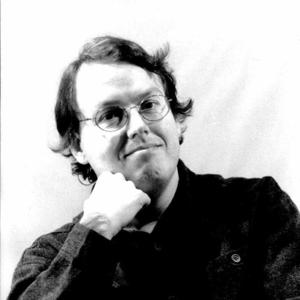
Peter Swinnen

Peter Swinnen

By Peter SwinnenMusic
Download on the App Store

Peter Swinnen episodes

  • Tombeau De Copernicus, for Cello solo
    ©2020 by Peter Swinnen (http://www.peterswinnen.be)
    Performed by Eugen-Bogdan Popa
    Tombeau de Couperin was born out of my interest in the Harmony of Spheres. Originally presented by the ancient Greek philosopher Pythagoras (6th century BC), who calculated that all planets and the sun move in resonant circles around the Earth, it has been refined by Copernicus (On the Revolutions of the Celestial Spheres 1453), Kepler (Harmonies of the World 1619) and Newton (Philosophiæ Naturalis Principe Mathematica 1687), who successively improved the calculations of the elliptical orbits of the planets around the sun. 1687 is also the publication date of Marin Marais' Tombeau de Lully, which gave rise to the basic idea of this piece: an imaginary journey, inspired by Viola da Gamba techniques, where the player's right arm movements are based on the elliptical orbits of planets around their suns, so that the notes represent the positions of the planets at different moments in time, leading us gradually through galaxies further and further away.
    Happy listening.
    Peter Swinnen
    9 min
  • No clouds green, a silence - 5 Haikus for String Quartet
    ©2014 by Peter Swinnen
    Performed by Isasi Quartet
    00:00 - A. Hashin
    No sky
    no earth - but still
    snowflakes fall
    02:20 - B. Basho, Matsuo. (1644-1694)
    Clouds appear
    and bring to men a chance to rest
    from looking at the moon.
    04:43 - C. Akutagawa, Ryunosuke. (1892-1927)
    Green frog,
    Is your body also
    freshly painted?
    06:52 - D. Issa. (1762-1826)
    A giant firefly:
    that way, this way, that way, this -
    and it passes by.
    08:40 - E. Michael R. Collings
    Silence - a strangled
    Telephone has forgotten
    That it should ring
    12 min
  • Dorce 5, for Violin and Cello
    ©1999 by Peter Swinnen
    Performed by Eric Robberecht and Guy Danel
    Dorce is a series of 9 pieces, all using the same three parts, whereas the third part also exists in a transcription for a second Violin. In fact, you can play Dorce as a Solo piece, which gives you four different solo pieces (Dorce I for Violin Solo, Dorce II for Viola Solo, Dorce III for Violoncello Solo, Dorce IV for Violin Solo). You can also play Dorce as a Duett, which gives you four different Duetts (Dorce V for Violin and Violoncello, Dorce VI for Viola and Violoncello, Dorce VII for Violin and Viola, Dorce VIII for two Violins). And, last but not least, you can play Dorce as a classical String Trio (Dorce IX). Each of the three parts remains exactly the same for all nine versions, so that e.g. Dorce I and Dorce III played together gives you Dorce V. Just take into account the exact starting moment of the different parts ( in this specific case: the Violin should start 5 bars later than the Violoncello).
    Good luck
    Brussels, november 27, 1999
    Peter Swinnen
    8 min
  • Dorce 8, for 2 Violins
    ©1999 by Peter Swinnen
    Performed by Gilles Millet and Eric Robberecht
    Dorce is a series of 9 pieces, all using the same three parts, whereas the third part also exists in a transcription for a second Violin. In fact, you can play Dorce as a Solo piece, which gives you four different solo pieces (Dorce I for Violin Solo, Dorce II for Viola Solo, Dorce III for Violoncello Solo, Dorce IV for Violin Solo). You can also play Dorce as a Duett, which gives you four different Duetts (Dorce V for Violin and Violoncello, Dorce VI for Viola and Violoncello, Dorce VII for Violin and Viola, Dorce VIII for two Violins). And, last but not least, you can play Dorce as a classical String Trio (Dorce IX). Each of the three parts remains exactly the same for all nine versions, so that e.g. Dorce I and Dorce III played together gives you Dorce V. Just take into account the exact starting moment of the different parts ( in this specific case: the Violin should start 5 bars later than the Violoncello).
    Good luck
    Brussels, november 27, 1999
    Peter Swinnen
    7 min
  • Hodechtri, for Flute, Clarinet, Violin, Cello, Piano, Percussion and Electronics
    ©2006 by Peter Swinnen
    Live performed by Champ d'Action, cond. J. Bossier
    Recently I discovered which fascinating musical transformations you get if you change the font bitmap of a text and run it through an image synthesizer. For this piece, a sextet for flute, violin, clarinet, cello, piano and percussion, I'm elaborating on this idea and developing some specific manipulations of musical gestures, built on the different idiomatic playing techniques of the instruments.
    Furthermore I'm exploring the vast sound possibilities when two or more instruments influence each others sound through means of electronic manipulations. In the past I've worked many times with the concept of 'extended instruments', where electronics multiply the expressive possibilities of an acoustic instrument, fully controlled by the instrumental player. Here I want to push it further. Sounds will be created by electronically merging several instruments, whereas each individual instrumentalist controls another parameter of the sound, not by a MIDI-controller or so, but through his very own acoustical sound, tracked in real-time by the computer. In short, a computer-based 'extended combined instrument'. Which, of course, will not only be capable of sculpting the time, but also the acoustical space.
    Peter Swinnen
    Brussels, 26-05-2006

    18 min

About Peter Swinnen

From the publisher's feed

Peter Swinnen is a Brussels (Belgium) based composer of Contemporary Classical music. His œuvre consists of works for Orchestra, Ensemble, Chamber Music, Music Theatre, Film, Ballet and Electronics.…