
Sign up to save your podcasts
Or



For most of your working life, the goal is simple: save consistently, live within your means, and build enough wealth to retire comfortably. But after decades of reinforcing those habits, retirement can create an unexpected challenge. The paycheck stops, the mindset doesn’t, and suddenly spending the money you worked so hard to accumulate can feel surprisingly difficult.
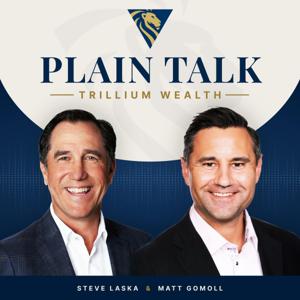
Matt Gomoll and Cherry Laska explain how a comprehensive financial plan can help retirees move from simply protecting their savings to using their wealth intentionally. That begins with understanding how much can safely be spent, then building an income strategy around Social Security, pensions, taxable accounts, traditional IRAs, and Roth IRAs. Where retirement income comes from matters—not only for cash flow today, but also for tax brackets, Medicare premiums, required minimum distributions, and the taxes retirees and their heirs may ultimately pay.
Once the numbers show that the future is secure, the bigger question becomes what the money is actually for. That may mean traveling more, remodeling the house, helping children buy a home, funding a grandchild’s education, supporting charities, or simply creating more experiences with the people you care about. Rather than preserving the largest possible account balance until death, thoughtful planning can help retirees enjoy their wealth, make an impact while they are still here to see it, and leave behind a legacy that reflects their values.
In this episode:
(00:00) Introduction
(00:36) Why spending can be difficult in retirement
(01:45) Using financial planning to create confidence
(04:02) Turning retirement accounts into reliable income
(06:58) Why withdrawal strategy affects taxes and Medicare
(08:00) The long-term problem with a large traditional IRA
(09:38) Using Roth conversions to manage future taxes
(11:26) Traditional vs. Roth IRAs for your heirs
(13:19) Using wealth to make an impact today
(16:22) Gifting to children, grandchildren, and charities
(19:48) Using gifts to teach family values around money
(21:01) What modern wealth management should include
Connect with our hosts
Learn more: https://trillium-wealth.com/
Instagram: https://www.instagram.com/trilliumwealthpod/
LinkedIn: https://www.linkedin.com/company/trilliumwm/
Steve on LinkedIn: https://www.linkedin.com/in/steve-laska-a3bb195/
Matt on LinkedIn: https://www.linkedin.com/in/mattgomoll/
Subscribe and stay in touch
Apple Podcasts: https://podcasts.apple.com/us/podcast/plain-talk/id6790911995
Spotify: https://open.spotify.com/show/033Pt4Dp4irAhZxIjCJUtp
YouTube: https://www.youtube.com/@PlainTalkByTrillium
About Trillium
Trillium is a holistic wealth management company. Whether you’re investing hundreds or millions, we’re about much more than results – we’re about helping you understand where those results came from and why we chose the strategy we did. If you’re tired of the mystery of investing and want to know exactly what’s happening with your money, schedule an appointment today.
Disclosure
Investment advisory services offered through Trillium Wealth, LLC, an SEC Registered Investment Advisor. The content on this channel is for informational and educational purposes only and should not be considered investment, tax, or legal advice, or a recommendation to buy or sell any security. Nothing on this channel constitutes an offer or solicitation to provide investment advisory services in any jurisdiction in which such offer or solicitation would be unlawful or in which Trillium Wealth, LLC are not appropriately registered or exempt from registration. Opinions expressed are as of the date of publication and are subject to change without notice. Past performance is no guarantee of future results. All investments involve risk, including the potential loss of principal. Viewers should consult their own financial, tax, and legal professionals regarding their specific situation before acting on any information provided here.
Stocks and bonds may be the core of a portfolio, but true diversification can extend well beyond the public markets. Alternative investments offer access to strategies, companies, and return streams that behave differently from traditional assets—potentially helping investors smooth out volatility and reduce their dependence on any one part of the market.
Steve Laska and Matt Gomoll break down several of the alternatives they use in portfolio construction, from managed futures and market-neutral strategies to hedged equity, private equity, venture capital, and private credit. They explain how each serves a different purpose: managed futures can pursue trends across global markets, hedged equity can sacrifice some upside for downside protection, and private investments can provide access to companies and lending opportunities that never reach public markets.
But alternatives also come with tradeoffs. Some strategies can lag during strong bull markets, while private investments often require investors to give up liquidity in exchange for access and potential return. Steve and Matt explain why manager selection, diversification, appropriate sizing, and understanding those tradeoffs are critical—and why alternatives should be treated as a deliberate part of portfolio construction rather than an exotic side bet.
In this episode:
(00:00) Introduction
(01:08) Why look beyond stocks and bonds?
(02:20) How managed futures diversify a portfolio
(07:10) How market-neutral strategies work
(09:00) Using hedged equity to protect against downside
(12:30) Matching alternative strategies to the investor
(13:43) Private equity and venture capital
(16:48) Why more companies are staying private
(19:31) Diversifying within private markets
(21:38) Understanding private credit
(24:00) Managing risk in private lending
(25:23) Liquidity and the tradeoffs of private investments
(27:10) How alternatives fit into a complete portfolio
Key Takeaways
Diversification is about more than owning more investments.
Alternative investments have different jobs to do.
Protection usually comes with a tradeoff.
Private markets have become a much larger part of the investment landscape.
Illiquidity is a feature that must be planned for—not necessarily a flaw.
Links
Stripe: https://stripe.com
SpaceX: https://www.spacex.com
Anthropic: https://www.anthropic.com
OpenAI: https://openai.com
Anduril: https://www.anduril.com
Connect with our hosts
Learn more: https://trillium-wealth.com/
Instagram: https://www.instagram.com/trilliumwealthpod/
LinkedIn: https://www.linkedin.com/company/trilliumwm/
Steve on LinkedIn: https://www.linkedin.com/in/steve-laska-a3bb195/
Matt on LinkedIn: https://www.linkedin.com/in/mattgomoll/
Subscribe and stay in touch
Apple Podcasts: https://podcasts.apple.com/us/podcast/plain-talk/id6790911995
Spotify: https://open.spotify.com/show/033Pt4Dp4irAhZxIjCJUtp
YouTube: https://www.youtube.com/@PlainTalkByTrillium
About Trillium
Trillium is a holistic wealth management company. Whether you’re investing hundreds or millions, we’re about much more than results – we’re about helping you understand where those results came from and why we chose the strategy we did. If you’re tired of the mystery of investing and want to know exactly what’s happening with your money, schedule an appointment today.
Disclosure
Investment advisory services offered through Trillium Wealth, LLC, an SEC Registered Investment Advisor. The content on this channel is for informational and educational purposes only and should not be considered investment, tax, or legal advice, or a recommendation to buy or sell any security. Nothing on this channel constitutes an offer or solicitation to provide investment advisory services in any jurisdiction in which such offer or solicitation would be unlawful or in which Trillium Wealth, LLC are not appropriately registered or exempt from registration. Opinions expressed are as of the date of publication and are subject to change without notice. Past performance is no guarantee of future results. All investments involve risk, including the potential loss of principal. Viewers should consult their own financial, tax, and legal professionals regarding their specific situation before acting on any information provided here.
It’s easy to assume that owning several ETFs, mutual funds, or individual stocks means you have a diversified portfolio. But when many of those investments own the same companies—or when a major index becomes increasingly concentrated in a handful of stocks—the reality can look very different.
Steve Laska and Matt Gomoll break down what diversification actually means, from correlation and asset classes to geography, company size, investment style, and sectors. They explain why the S&P 500 can carry more concentration risk than its 500-company label suggests, why bonds still play an important role even after an unusually difficult stretch, and how alternatives such as real estate, managed futures, private markets, and market-neutral strategies can add different sources of risk and return.
True diversification also extends beyond an investment account. Your employer, company stock, home, retirement accounts, and near-term spending needs all contribute to your overall financial exposure. The goal isn’t simply to own more things—it’s to understand what you own, how those pieces behave together, and whether the total portfolio supports the life your money ultimately needs to fund.
In this episode:
(00:00) Introduction
(00:30) What diversification actually means
(02:00) Correlation, fund overlap, and hidden concentration
(04:11) The different layers of portfolio diversification
(08:27) Why fund labels don’t always tell the whole story
(10:44) How concentrated is the S&P 500?
(15:25) Why diversification goes beyond U.S. large-cap stocks
(18:10) Diversification and the timing of retirement
(20:00) Why bonds still belong in a diversified portfolio
(27:26) The case for active management in bonds
(28:29) Where alternatives can fit
(31:33) Looking at diversification across your entire financial life
Key Takeaways
Owning multiple funds does not automatically create diversification.
Diversification has multiple layers.
A broad index can still become concentrated.
Bonds can serve a purpose beyond maximizing returns.
Diversification should be evaluated at the household level.
Connect with our hosts
Learn more: https://trillium-wealth.com/
Instagram: https://www.instagram.com/trilliumwealthpod/
LinkedIn: https://www.linkedin.com/company/trilliumwm/
Steve on LinkedIn: https://www.linkedin.com/in/steve-laska-a3bb195/
Matt on LinkedIn: https://www.linkedin.com/in/mattgomoll/
Subscribe and stay in touch
Apple Podcasts: https://podcasts.apple.com/us/podcast/plain-talk/id6790911995
Spotify: https://open.spotify.com/show/033Pt4Dp4irAhZxIjCJUtp
YouTube: https://www.youtube.com/@PlainTalkByTrillium
About Trillium
Trillium is a holistic wealth management company. Whether you’re investing hundreds or millions, we’re about much more than results – we’re about helping you understand where those results came from and why we chose the strategy we did. If you’re tired of the mystery of investing and want to know exactly what’s happening with your money, schedule an appointment today.
Disclosure
Investment advisory services offered through Trillium Wealth, LLC, an SEC Registered Investment Advisor. The content on this channel is for informational and educational purposes only and should not be considered investment, tax, or legal advice, or a recommendation to buy or sell any security. Nothing on this channel constitutes an offer or solicitation to provide investment advisory services in any jurisdiction in which such offer or solicitation would be unlawful or in which Trillium Wealth, LLC are not appropriately registered or exempt from registration. Opinions expressed are as of the date of publication and are subject to change without notice. Past performance is no guarantee of future results. All investments involve risk, including the potential loss of principal. Viewers should consult their own financial, tax, and legal professionals regarding their specific situation before acting on any information provided here.
Artificial intelligence may feel like software, but the infrastructure behind it is very physical. Training increasingly capable models—and putting those models to work—requires enormous amounts of computing power, electricity, land, and cooling. As demand for AI grows, so does the race to build the data centers capable of supporting it.
Steve Laska and Matt Gomoll look beyond the arguments for and against data centers to examine the trade-offs communities actually face. Electricity prices, grid capacity, water consumption, noise, construction, tax revenue, and job creation all depend heavily on how and where these facilities are built. And while more efficient technology can reduce the resources required for individual AI tasks, lower costs may simply lead to even greater overall usage.
Rather than treating data centers as something communities must either accept or reject, Steve and Matt explore a more practical middle ground. Community benefit agreements, restrictions on water use, protections against rising electricity costs, and guaranteed tax revenue could allow communities to share in the upside of the AI infrastructure boom while limiting its costs.
In this episode:
(00:00) Introduction
(01:09) Why AI needs so many data centers
(03:26) Could data centers raise electricity prices?
(05:54) Why data centers can’t simply move to the desert
(07:39) Will more efficient AI actually reduce energy demand?
(09:00) The environmental costs of data centers
(10:16) The trade-off between water and electricity
(13:50) Why America needs more power generation
(16:38) How communities can protect residents
(18:55) The economic benefits of data center construction
(21:20) Are we at risk of overbuilding?
(22:55) What the dot-com fiber boom can teach us
(25:00) What responsible data center development could look like
Connect with our hosts
Learn more: https://trillium-wealth.com/
Instagram: https://www.instagram.com/trilliumwealthpod/
LinkedIn: https://www.linkedin.com/company/trilliumwm/
Steve on LinkedIn: https://www.linkedin.com/in/steve-laska-a3bb195/
Matt on LinkedIn: https://www.linkedin.com/in/mattgomoll/
Subscribe and stay in touch
Apple Podcasts: https://podcasts.apple.com/us/podcast/plain-talk/id6790911995
Spotify: https://open.spotify.com/show/033Pt4Dp4irAhZxIjCJUtp
YouTube: https://www.youtube.com/@PlainTalkByTrillium
About Trillium
Trillium is a holistic wealth management company. Whether you’re investing hundreds or millions, we’re about much more than results – we’re about helping you understand where those results came from and why we chose the strategy we did. If you’re tired of the mystery of investing and want to know exactly what’s happening with your money, schedule an appointment today.
Disclosure
Investment advisory services offered through Trillium Wealth, LLC, an SEC Registered Investment Advisor. The content on this channel is for informational and educational purposes only and should not be considered investment, tax, or legal advice, or a recommendation to buy or sell any security. Nothing on this channel constitutes an offer or solicitation to provide investment advisory services in any jurisdiction in which such offer or solicitation would be unlawful or in which Trillium Wealth, LLC are not appropriately registered or exempt from registration. Opinions expressed are as of the date of publication and are subject to change without notice. Past performance is no guarantee of future results. All investments involve risk, including the potential loss of principal. Viewers should consult their own financial, tax, and legal professionals regarding their specific situation before acting on any information provided here.
Economic policy can make for compelling headlines, but ultimately markets have a way of testing whether the numbers add up.
This week, Steve Laska and Matt Gomoll examine several major economic developments through that lens, beginning with the proposed $5,000 payments to American adults. They question how a program of that size could be funded without adding substantially to federal borrowing and argue that injecting more money into an economy still dealing with elevated inflation could create additional pressure on prices. They also turn to the escalating trade dispute with Canada, discussing how tariffs affect businesses, consumers, and trade once rates become high enough to discourage transactions altogether.
But the clearest signal may be coming from the bond market. Steve and Matt discuss why Treasury Secretary Scott Bessent's efforts to push down long-term yields have struggled against much larger forces, including federal borrowing, persistent inflation concerns, and growing corporate debt issuance. As long-term Treasury yields rise, those pressures can flow directly into mortgage rates and other borrowing costs—making the bond market an important measure of how investors view the direction of the economy.
In this episode:
(00:00) Introduction
(00:31) The proposed $5,000 checks and the cost of new stimulus
(02:40) How stimulus can contribute to inflation
(05:04) The escalating trade dispute with Canada
(06:44) When tariffs become a barrier to trade
(08:49) What the bond market is telling Scott Bessent
(09:23) Why Treasury buybacks haven't brought yields down
(10:24) How corporate borrowing adds pressure to the bond market
(11:03) Could the Fed help bring long-term rates down?
(12:21) What comes next for rates and the economy
Key Takeaways
Government spending doesn't happen in isolation.
Tariffs can reduce trade rather than simply generate revenue.
Markets can impose their own discipline on economic policy.
Government and corporate borrowers compete for capital.
Higher Treasury yields eventually reach consumers.
Connect with our hosts
Learn more: https://trillium-wealth.com/
Instagram: https://www.instagram.com/trilliumwealthpod/
LinkedIn: https://www.linkedin.com/company/trilliumwm/
Steve on LinkedIn: https://www.linkedin.com/in/steve-laska-a3bb195/
Matt on LinkedIn: https://www.linkedin.com/in/mattgomoll/
Subscribe and stay in touch
Apple Podcasts: https://podcasts.apple.com/us/podcast/plain-talk/id6790911995
Spotify: https://open.spotify.com/show/033Pt4Dp4irAhZxIjCJUtp
YouTube: https://www.youtube.com/@PlainTalkByTrillium
About Trillium
Trillium is a holistic wealth management company. Whether you’re investing hundreds or millions, we’re about much more than results – we’re about helping you understand where those results came from and why we chose the strategy we did. If you’re tired of the mystery of investing and want to know exactly what’s happening with your money, schedule an appointment today.
Disclosure
Investment advisory services offered through Trillium Wealth, LLC, an SEC Registered Investment Advisor. The content on this channel is for informational and educational purposes only and should not be considered investment, tax, or legal advice, or a recommendation to buy or sell any security. Nothing on this channel constitutes an offer or solicitation to provide investment advisory services in any jurisdiction in which such offer or solicitation would be unlawful or in which Trillium Wealth, LLC are not appropriately registered or exempt from registration. Opinions expressed are as of the date of publication and are subject to change without notice. Past performance is no guarantee of future results. All investments involve risk, including the potential loss of principal. Viewers should consult their own financial, tax, and legal professionals regarding their specific situation before acting on any information provided here.
Inflation has come down substantially from its peak, but prices remain high and inflation is still running above the Federal Reserve’s target. Now, the Fed is raising interest rates again. If the economy is still growing and unemployment remains relatively low, why tighten monetary policy now?
Steve Laska and Matt Gomoll break down the reasoning behind the Fed’s latest move and what higher rates could mean for housing, businesses, consumers, stocks, and bonds. They also explore a new complication in the inflation fight: massive spending on AI infrastructure and data centers may continue fueling economic growth even as higher borrowing costs put pressure on smaller businesses and consumers.
The challenge is finding the right balance. Too little tightening could allow inflation to accelerate again, while raising rates too aggressively could unnecessarily weaken the economy. Steve and Matt explain what a successful soft landing might look like—and why even a recession wouldn’t necessarily mean a repeat of 2008.
In this episode:
(00:00) Introduction
(00:48) Why the Fed raised interest rates
(02:19) Why today’s inflation still feels painful
(05:39) What higher rates mean for housing
(08:30) How stocks and bonds reacted to the rate hike
(10:04) Are more rate hikes coming?
(13:39) Why the Fed raises rates gradually
(14:16) Where higher rates will affect the economy
(15:29) How AI spending complicates the inflation fight
(17:25) Why higher rates hit small businesses differently
(18:21) Wages, workers, and AI’s long-term impact on inflation
(20:18) Can the Fed avoid a recession?
(23:33) Why not all recessions are created equal
(24:31) Why the Fed is acting while the economy is still strong
Key Takeaways
The Fed is trying to prevent inflation from becoming a bigger problem.
Higher interest rates affect much more than mortgages.
AI investment could make the Fed’s job more difficult in the short term.
Technology can be inflationary today and deflationary tomorrow.
A soft landing doesn’t require a perfect economy.
Connect with our hosts
Learn more: https://trillium-wealth.com/
Instagram: https://www.instagram.com/trilliumwealthpod/
LinkedIn: https://www.linkedin.com/company/trilliumwm/
Steve on LinkedIn: https://www.linkedin.com/in/steve-laska-a3bb195/
Matt on LinkedIn: https://www.linkedin.com/in/mattgomoll/
Subscribe and stay in touch
Apple Podcasts: https://podcasts.apple.com/us/podcast/plain-talk/id6790911995
Spotify: https://open.spotify.com/show/033Pt4Dp4irAhZxIjCJUtp
YouTube: https://www.youtube.com/@PlainTalkByTrillium
About Trillium
Trillium is a holistic wealth management company. Whether you’re investing hundreds or millions, we’re about much more than results – we’re about helping you understand where those results came from and why we chose the strategy we did. If you’re tired of the mystery of investing and want to know exactly what’s happening with your money, schedule an appointment today.
Disclosure
Investment advisory services offered through Trillium Wealth, LLC, an SEC Registered Investment Advisor. The content on this channel is for informational and educational purposes only and should not be considered investment, tax, or legal advice, or a recommendation to buy or sell any security. Nothing on this channel constitutes an offer or solicitation to provide investment advisory services in any jurisdiction in which such offer or solicitation would be unlawful or in which Trillium Wealth, LLC are not appropriately registered or exempt from registration. Opinions expressed are as of the date of publication and are subject to change without notice. Past performance is no guarantee of future results. All investments involve risk, including the potential loss of principal. Viewers should consult their own financial, tax, and legal professionals regarding their specific situation before acting on any information provided here.
A successful retirement isn’t simply about accumulating enough money. It’s about making smart decisions with that money once you have it—and avoiding mistakes that can be difficult or impossible to undo.
This week, Steve Laska and Matt Gomoll walk through 10 retirement mistakes they regularly see, from neglecting estate planning and claiming Social Security without a broader strategy to holding too much cash and taking only required minimum distributions from retirement accounts. They explain why seemingly conservative decisions can sometimes create larger risks, especially when taxes, inflation, longevity, and future spending needs are considered together.
But some of the biggest retirement mistakes have less to do with maximizing wealth than actually using it. Steve and Matt discuss the danger of working longer than necessary, putting off meaningful experiences, overlooking the value locked in your home, and ultimately dying with money that could have improved your life—or someone else’s—years earlier.
In this episode:
(00:00) Introduction
(00:53) Coordinating your estate plan and beneficiaries
(03:33) Retiring at the wrong age
(05:28) Creating a strategy for retirement spending
(07:57) Preparing for long-term care
(09:23) Holding too much cash and investing too conservatively
(12:11) Why taking only your RMD can create tax problems
(14:35) Building a Social Security claiming strategy
(16:26) Understanding the difference between debt and leverage
(18:54) Dying with too much money
(21:27) Treating your home as a retirement asset
(23:55) Why retirement decisions require a comprehensive plan
Key Takeaways
Your estate plan and beneficiary designations need to work together.
Retiring too late can be a mistake, too.
Minimizing this year’s tax bill isn’t necessarily the same as minimizing lifetime taxes.
Playing it safe can create risks of its own.
Retirement wealth is meant to support your life—not simply survive you.
Connect with our hosts
Learn more: https://trillium-wealth.com/
Instagram: https://www.instagram.com/trilliumwealthpod/
LinkedIn: https://www.linkedin.com/company/trilliumwm/
Steve on LinkedIn: https://www.linkedin.com/in/steve-laska-a3bb195/
Matt on LinkedIn: https://www.linkedin.com/in/mattgomoll/
Subscribe and stay in touch
Apple Podcasts: https://podcasts.apple.com/us/podcast/plain-talk/id6790911995
Spotify: https://open.spotify.com/show/033Pt4Dp4irAhZxIjCJUtp
YouTube: https://www.youtube.com/@PlainTalkByTrillium
About Trillium
Trillium is a holistic wealth management company. Whether you’re investing hundreds or millions, we’re about much more than results – we’re about helping you understand where those results came from and why we chose the strategy we did. If you’re tired of the mystery of investing and want to know exactly what’s happening with your money, schedule an appointment today.
Disclosure
Investment advisory services offered through Trillium Wealth, LLC, an SEC Registered Investment Advisor. The content on this channel is for informational and educational purposes only and should not be considered investment, tax, or legal advice, or a recommendation to buy or sell any security. Nothing on this channel constitutes an offer or solicitation to provide investment advisory services in any jurisdiction in which such offer or solicitation would be unlawful or in which Trillium Wealth, LLC are not appropriately registered or exempt from registration. Opinions expressed are as of the date of publication and are subject to change without notice. Past performance is no guarantee of future results. All investments involve risk, including the potential loss of principal. Viewers should consult their own financial, tax, and legal professionals regarding their specific situation before acting on any information provided here.
Changing how the government borrows money may help manage its interest bill. But what does it accomplish if the government keeps spending more than it collects?
This week, Steve Laska and Matt Gomoll examine the Treasury Department’s plan to buy back longer-term securities and replace some of them with shorter-term debt. They explain why this changes the composition of the debt rather than eliminating it, how corporate bond issuance competes for investor capital, and why inflation, economic growth, and market demand all influence long-term Treasury yields.
The conversation then turns to the underlying fiscal problem. Temporary interventions may relieve pressure, but they do not resolve the imbalance between government spending and revenue. Steve and Matt discuss the difficulty of planning beyond the next election, what taxpayers have received for decades of borrowing, and why addressing the debt will likely require some combination of stronger growth, spending restraint, and additional revenue.
In this episode:
(00:00) Introduction
(00:30) Why the $40 trillion milestone matters
(02:38) What Treasury buybacks actually accomplish
(04:36) Who owns U.S. government debt
(06:25) Why Treasuries compete with corporate bonds
(08:57) What drives long-term bond yields
(11:24) How investors reacted to the buyback announcement
(13:51) The missed opportunity to borrow long term at lower rates
(16:21) Treating the symptoms instead of the fiscal problem
(20:04) How election cycles discourage long-term planning
(22:58) What taxpayers received for decades of borrowing
(26:18) Can the United States grow or inflate its way out of debt?
(28:44) What to watch when Treasury buybacks begin
Key Takeaways
Refinancing debt does not eliminate it.
Treasury yields reflect investors’ choices and expectations.
Shorter-term borrowing creates a future refinancing decision.
Lasting progress requires addressing recurring deficits.
There is no known debt number that automatically triggers a crisis.
Connect with our hosts
Learn more: https://trillium-wealth.com/
Instagram: https://www.instagram.com/trilliumwealthpod/
LinkedIn: https://www.linkedin.com/company/trilliumwm/
Steve on LinkedIn: https://www.linkedin.com/in/steve-laska-a3bb195/
Matt on LinkedIn: https://www.linkedin.com/in/mattgomoll/
Subscribe and stay in touch
Apple Podcasts: https://podcasts.apple.com/us/podcast/plain-talk/id6790911995
Spotify: https://open.spotify.com/show/033Pt4Dp4irAhZxIjCJUtp
YouTube: https://www.youtube.com/@PlainTalkByTrillium
About Trillium
Trillium is a holistic wealth management company. Whether you’re investing hundreds or millions, we’re about much more than results – we’re about helping you understand where those results came from and why we chose the strategy we did. If you’re tired of the mystery of investing and want to know exactly what’s happening with your money, schedule an appointment today.
Disclosure
Investment advisory services offered through Trillium Wealth, LLC, an SEC Registered Investment Advisor. The content on this channel is for informational and educational purposes only and should not be considered investment, tax, or legal advice, or a recommendation to buy or sell any security. Nothing on this channel constitutes an offer or solicitation to provide investment advisory services in any jurisdiction in which such offer or solicitation would be unlawful or in which Trillium Wealth, LLC are not appropriately registered or exempt from registration. Opinions expressed are as of the date of publication and are subject to change without notice. Past performance is no guarantee of future results. All investments involve risk, including the potential loss of principal. Viewers should consult their own financial, tax, and legal professionals regarding their specific situation before acting on any information provided here.
Every dollar you save for tomorrow is a dollar you can’t use today—and every dollar you spend today is a dollar that can’t compound for the future. For families trying to save for retirement while paying for kids, housing, education, vacations, and everything else life brings, finding the right balance can be difficult.
Steve Laska and Matt Gomoll explain why retirement saving doesn’t have to be an all-or-nothing decision. Starting early can create flexibility later, and during higher-expense years, temporarily reducing retirement contributions may be a perfectly reasonable trade-off. The key is understanding what you can afford to change, protecting priorities such as an employer match, and knowing how today’s choices affect tomorrow’s goals.
That same thinking applies later in life. Once your retirement plan is sufficiently funded, continuing to accumulate more may not always be the best use of every additional dollar. Helping your children, investing in family businesses, creating experiences, or simply spending more on the people and things you value can all be worthwhile uses of money. A good financial plan helps turn those choices from sources of anxiety into intentional decisions about the life you actually want to live.
In this episode:
(00:00) Introduction
(00:35) The tension between retirement and family priorities
(02:15) Why starting early creates flexibility later
(03:28) Adjusting retirement contributions during expensive years
(05:49) Matt’s experience temporarily saving less for retirement
(07:30) Knowing when your retirement is sufficiently funded
(09:13) Deciding what to do when you have more than enough
(10:05) Understanding and accepting financial trade-offs
(11:42) Investing in your family and creating memories
(14:40) Aligning your spending with what you actually value
(16:23) Why intentional financial decisions create confidence
Key Takeaways
Retirement saving doesn’t have to remain constant throughout your life.
Starting early gives you more flexibility later.
Protect the most valuable retirement benefits first.
A financial plan can tell you when “enough” really is enough.
Intentional spending matters as much as intentional saving.
Links
Plain Talk 023: Why You Should Give Your Money Away Before You Die: https://www.youtube.com/watch?v=Fv6063_rsyg
Connect with our hosts
Learn more: https://trillium-wealth.com/
Instagram: https://www.instagram.com/trilliumwealthpod/
LinkedIn: https://www.linkedin.com/company/trilliumwm/
Steve on LinkedIn: https://www.linkedin.com/in/steve-laska-a3bb195/
Matt on LinkedIn: https://www.linkedin.com/in/mattgomoll/
Subscribe and stay in touch
Apple Podcasts: https://podcasts.apple.com/us/podcast/plain-talk/id6790911995
Spotify: https://open.spotify.com/show/033Pt4Dp4irAhZxIjCJUtp
YouTube: https://www.youtube.com/@PlainTalkByTrillium
About Trillium
Trillium is a holistic wealth management company. Whether you’re investing hundreds or millions, we’re about much more than results – we’re about helping you understand where those results came from and why we chose the strategy we did. If you’re tired of the mystery of investing and want to know exactly what’s happening with your money, schedule an appointment today.
Disclosure
Investment advisory services offered through Trillium Wealth, LLC, an SEC Registered Investment Advisor. The content on this channel is for informational and educational purposes only and should not be considered investment, tax, or legal advice, or a recommendation to buy or sell any security. Nothing on this channel constitutes an offer or solicitation to provide investment advisory services in any jurisdiction in which such offer or solicitation would be unlawful or in which Trillium Wealth, LLC are not appropriately registered or exempt from registration. Opinions expressed are as of the date of publication and are subject to change without notice. Past performance is no guarantee of future results. All investments involve risk, including the potential loss of principal. Viewers should consult their own financial, tax, and legal professionals regarding their specific situation before acting on any information provided here.
Once you’ve accumulated enough wealth to meet your own needs, the question changes from how to build it to how to use it. And if supporting your family, church, community, or favorite charities is part of the plan, how you give can make a meaningful difference.
Steve Laska and Matt Gomoll explain why the goal should come first and the tax strategy second. They break down common misconceptions around the annual gift tax exclusion, explain when paying tuition or medical expenses directly can make sense, and show how gifting appreciated stock can potentially reduce the tax burden when assets move to family members in lower tax brackets.
For charitable giving, Steve and Matt explore ways to make each dollar go further through appreciated assets, donor-advised funds, and qualified charitable distributions from retirement accounts. The larger lesson is about using wealth intentionally—not simply accumulating as much as possible, but putting it to work for the people, organizations, and values that matter to you while you’re still here to see the impact.
In this episode:
(00:00) Introduction
(01:11) Start with purpose, not the tax deduction
(02:33) Understanding the annual gift tax exclusion
(05:05) Paying tuition and medical expenses directly
(05:54) Gifting appreciated stock to family members
(07:28) Why waiting for a step-up in basis isn’t always the answer
(08:00) Giving to charities while you can see the impact
(10:03) Donating appreciated stock instead of cash
(11:14) How donor-advised funds work
(12:30) Using wealth to reflect your values
(13:33) Qualified charitable distributions from retirement accounts
(16:16) Using QCDs to satisfy required minimum distributions
Key Takeaways
Start with what you want your money to accomplish.
The annual gift tax exclusion is often misunderstood.
The asset you give can matter as much as the amount.
Charitable giving can be structured around both tax timing and long-term goals.
Retirement accounts can be powerful charitable-giving tools.
Connect with our hosts
Learn more: https://trillium-wealth.com/
Instagram: https://www.instagram.com/trilliumwealthpod/
LinkedIn: https://www.linkedin.com/company/trilliumwm/
Steve on LinkedIn: https://www.linkedin.com/in/steve-laska-a3bb195/
Matt on LinkedIn: https://www.linkedin.com/in/mattgomoll/
Subscribe and stay in touch
Apple Podcasts: https://podcasts.apple.com/us/podcast/plain-talk/id6790911995
Spotify: https://open.spotify.com/show/033Pt4Dp4irAhZxIjCJUtp
YouTube: https://www.youtube.com/@PlainTalkByTrillium
About Trillium
Trillium is a holistic wealth management company. Whether you’re investing hundreds or millions, we’re about much more than results – we’re about helping you understand where those results came from and why we chose the strategy we did. If you’re tired of the mystery of investing and want to know exactly what’s happening with your money, schedule an appointment today.
Disclosure
Investment advisory services offered through Trillium Wealth, LLC, an SEC Registered Investment Advisor. The content on this channel is for informational and educational purposes only and should not be considered investment, tax, or legal advice, or a recommendation to buy or sell any security. Nothing on this channel constitutes an offer or solicitation to provide investment advisory services in any jurisdiction in which such offer or solicitation would be unlawful or in which Trillium Wealth, LLC are not appropriately registered or exempt from registration. Opinions expressed are as of the date of publication and are subject to change without notice. Past performance is no guarantee of future results. All investments involve risk, including the potential loss of principal. Viewers should consult their own financial, tax, and legal professionals regarding their specific situation before acting on any information provided here.
From the publisher's feed