Plains Folk

Plains Folk

By Prairie PublicSociety & Culture
Download on the App Store

Plains Folk episodes

  • Hunter’s Dilemma
    It is a yellow dawn on the northern plains as I settle into a sunny place for some reading. My head pivots frequently, from the hazy rays streaming through corn raised by farmers of perilous tenure and destined for markets on shaky footings, to the yellowed manuscript pages on the table before me. Through them I enter the mind of William C. Hunter, as he contemplates the past and future of agriculture.
    5 min
  • Wolf Hunters
    Coyotes, known in the nineteenth and early twentieth centuries as “prairie wolves,” were considered merely a nuisance in the days of the overland trails. As agricultural settlement dug into prairies, however, farm folk redefined prairie wolves as a menace. Organized community wolf hunts were social affairs with a hostile purpose: eradication of a perceived pest. At the same time, people retained a curiosity and odd affection for the prairie wolves, often attempting to keep them as pets.
    5 min
  • Prairie Wolves
    It can be confusing to read, in documents of early prairie settlement, references to “prairie wolves.” The creature of note is no more a wolf than a prairie dog is a dog or a prairie chicken is a chicken. Canis latrans , known in parts south as the coyote, was christened the prairie wolf by early travelers on the overland trails, who first encountered it on the prairies.
    5 min
  • The Cows Came Home
    One day in October 1907, a herd of milk cows belonging to townspeople in Pembina broke into a pasture that belonged to a farmer named Jim Kneeshaw. “The town herd got into solitary confinement in Kneeshaw’s pasture on Wednesday,” the local editor remarked drolly, “because they seemed to like Jim Kneeshaw’s young timothy better than other feed. The matter was finally fixed up between Messrs Kneeshaw and Mr. Allen the herder -- and the cows came home as usual at night.”
    5 min
  • The Town Herd
    “The large amount of grain that has been seeded near town will necessitate the herding of stock now running at large,” announced the Dickinson Press in 1883. “Mr. S. Burnside proposes starting a town herd and will herd all stock at the low rate of $1.00 per head per week.” Well into the middle of the twentieth century, prairie townspeople kept milking cows at their residences. They had fresh milk, but at the cost of some public nuisance and personal trouble. To take care of the problem, there
    5 min
  • Ice Age
    Climate change is a subject I hesitate to introduce, for fear of igniting disputes between political partisans debating anthropogenic climate change--that is, change caused by human actions--and what ought to be done about it. I am a historian, so that is not what I do. It is historical climate change that I propose to introduce to the discussion, here, and abroad, among the historical scholars of the Great Plains.
    5 min
  • Gopher Tails in the Collection Plate
    A couple of weeks ago I detailed that scandalous episode in the history of the Flickertail State, the great gopher-tail fraud case of Ransom County, 1900, which had to be settled by the state supreme court. The court’s opinion hinged on the funding provisions of state law authorizing counties to pay bounties for gopher tails.
    5 min
  • The Problem with a Colorful History
    The most prominent historian in the history of African Americans in the American West is Dr. Quintard Taylor, of the University of Washington. He is a revered--some might even say formidable--scholar. He is the empressario of the go-to website on black history in America, which is called Black Past .
    5 min
  • Southern Dinners and Plantation Melodies
    The Second Baptist Church, Bismarck, North Dakota, organized in 1917 to serve the African-American residents of the city, some of whom previously had attended the predominantly white First Methodist Episcopal Church--now known as McCabe United Methodist Church.
    5 min
  • The Gopher-Bounty Frauds
    On October 17, 1900, the supreme court of North Dakota upheld the conviction of one Robert H. Stewart, a resident of Sargent County, for “having fraudulently obtained money from Sargent county by means of a false, forged, and fictitious instrument. . . . This is one of a series of offenses,” writes the court, “which appear to have been committed in that county by various persons, and which are known as the ‘gopher-bounty frauds.’”

    5 min

About Plains Folk

From the publisher's feed

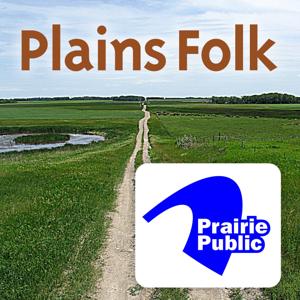
Plains Folk is a commentary devoted to life on the great plains of North Dakota. Written by Tom Isern of West Fargo, North Dakota, and read in newspapers across the region for years, Plains Folk…

More shows like Plains Folk

Marketplace by Marketplace

Marketplace

8,751 Listeners

Sawbones: A Marital Tour of Misguided Medicine by Justin McElroy, Dr. Sydnee McElroy

Sawbones: A Marital Tour of Misguided Medicine

14,816 Listeners

Pod Save America by Pod Save America

Pod Save America

87,101 Listeners

Up First from NPR by NPR

Up First from NPR

56,434 Listeners

Dakota Datebook by Prairie Public

Dakota Datebook

17 Listeners

Natural North Dakota by Prairie Public

Natural North Dakota

19 Listeners

Short Wave by NPR

Short Wave

6,584 Listeners