
Sign up to save your podcasts
Or

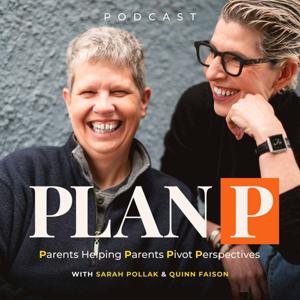


In this heartfelt final episode of Plan P, hosts Sarah and Quinn delve into the intricate world of parenting, exploring the challenges and triumphs that come with raising children. They emphasize the power of vulnerability, sharing personal stories and insights on how embracing openness can strengthen relationships with our kids. Join them as they discuss the importance of giving grace to both ourselves and our children, and the lifelong journey of uncovering and discovering who we truly are. Tune in for an inspiring conversation that encourages parents to lead with love and authenticity.
Sarah’s list of Podcasts. With a reminder:
Change takes time, patience, maybe listening to thousands of podcasts ans then practice, practice, practice.
Hidden Brain is always interesting and relevant IMHO to the work that we do at Plan P.
https://podcasts.apple.com/us/podcast/hidden-brain/id1028908750
Everyone knows but it bears repeating and TED Talks Daily are only 15-20 minutes, in case you have a short commute to work or the kid's school.
https://podcasts.apple.com/us/podcast/ted-talks-daily/id160904630
Not all apply to parenting but more than a few do, and they all can be reminders, we have choices.
https://podcasts.apple.com/us/podcast/choiceology-with-katy-milkman/id1337886873
Parents basically hoping to life coach their kids eh? So. Not all of these sre completely relevant, but a lot can be applied to parenting because they’re about relationships and leadership. Nuf said?
https://podcasts.apple.com/us/podcast/the-art-of-coaching/id1438273764
Not a parenting podcast. A business pod. Surprisingly on point often… maybe because a lot of negotiation is involved in parenting, particularly in the adolescent years!
https://podcasts.apple.com/us/podcast/negotiate-anything/id1101679010
Dr. Adam is on it.
https://podcasts.apple.com/us/podcast/superpsyched-with-dr-adam-dorsay/id1512883587
Dr. Brad also knows his stuff.
https://podcasts.apple.com/us/podcast/finding-you-by-dr-brad-reedy/id1157223571
Eldra Jackson Jr. is a great man with a great podcast. Listen to all of them. This episode's guest reminds us that our kids have a different perspective, and that is ok.
https://open.spotify.com/episode/70J20VuckxOA4K0eEQMnc4
Not just because she’s my sister in law; for parents of children who have had losses.
https://podcasts.apple.com/us/podcast/are-we-there-yet/id1670848182
Good stuff, Nedra Glover Tawaab wrote the book: Set Boundaries, Find Peace (it might be the only way to get there honestly, and it is hard work, which is why we are here for you!)
https://podcasts.apple.com/us/podcast/you-need-to-hear-this-with-nedra-tawwab/id1686288228
For a minute CMC, the amazing folks behind Invitation to Change (which we highly suggest you check out for free groups if your child is challenged with substances) , did a podcast:
https://podcasts.apple.com/us/podcast/rethinking-rock-bottom/id1709509368
And, last but not least, this episode of The Moth by an honest, humble mother, with a happy ending, and her personal story of getting there. All of the episodes are stories, they're all good, they are all heartfelt and entertaining and true and told by people without scripts.
https://themoth.org/podcast/right-here-right-now
Considering options for under 18 when you’re feeling overwhelmed? We're still here.
Schedule a free session with us if you’re feeling honest plus brave. You can get through this, and you deserve support!
Mahatma Gandhi on detachment:
“Detachment is not indifference. It is the prerequisite for effective involvement. Often what we think is best for others is distorted by our attachments to our opinions. We want people to be happy in the way we think they should be happy. It is only when we want nothing for ourselves that we are able to see clearly into the others needs and understand how to serve them.”
Summary
In this episode of Plan P, we delve into the concept of 'covering' as defined by legal scholar Kenji Yoshino, exploring how individuals downplay their outsider attributes to fit in and feel comfortable. They share personal stories and discuss the implications of socioeconomic class on identity, particularly among youth. The conversation highlights the generational differences in understanding class and privilege, the complexities of authenticity, and the ongoing journey of uncovering one's true self. The hosts emphasize the importance of supporting children in their identity exploration and the role of parents in this process.
References
“We all contain multitudes” – Walt Whitman
“Ollie in between” – Jess Callans
Listen to Kenji Yoshino:
On Hidden Brain: Dropping the Mask
https://podcasts.apple.com/us/podcast/hidden-brain/id1028908750?i=1000697475525
or
Takeaways
Sound Bites
Summary
In this episode of the Plan P podcast, we delve into the complexities of parenting adolescents and teens, discussing the unique challenges that arise during this stage of development. We explore the importance of allowing children to face adversity as a means of growth, the individual differences in coping mechanisms, and the critical role of communication in fostering independence. The conversation emphasizes the need for balance between guidance and freedom, the significance of setting boundaries, and the value of patience and understanding in the parenting journey.
Takeaways
Parenting teens is often considered the hardest stage.
Adversity is essential for growth and learning.
Each child has unique coping mechanisms.
Communication is key to understanding teens.
Fostering independence helps build responsibility.
Balancing guidance and freedom is crucial.
Setting boundaries is important for development.
Parents should allow children to learn from experiences.
Patience is necessary as change takes time.
Understanding the individual needs of each child is vital.
Summary
In this episode of Plan P, we delve into the concept of spectrums as it relates to parenting, particularly in the context of adolescents. We discuss the complexities of neurodiversity, mental health, identity, and the fluidity of emotions. The conversation emphasizes the importance of understanding that everyone is on various spectrums, whether it be related to gender, functionality, or grief. The hosts also touch on the role of community and belonging, as well as the challenges parents face in navigating their children's identities and emotions. The episode concludes with a practical exercise for listeners to identify where they are on their own personal spectrums.
References
Kinsey Scale
Netflix documentary “Will and Harper”
Ted talk by Chloe Hayden
Tangle article by Hunter Casperson “The Genetic Optimization of Life”
Harry Goodall “Learning to Heal”
Takeaways
We're all layered and complex, especially during adolescence.
Everything is on a spectrum, including emotions and identities.
A diagnosis can provide clarity and understanding.
Chasing pain can lead to more pain for both parents and children.
Community can provide support and belonging for those on various spectrums.
Grief is a spectrum that can manifest in many ways.
Understanding personal spectrums can help in parenting.
Expectations can create pressure on both parents and children.
Identifying where we are on our spectrums can lead to personal growth.
Summary
In this episode of Plan P, we explore the transformative power of simple words like 'please' and 'thank you' in parenting, emphasizing the importance of genuine communication and emotional space. We discuss how these words can foster respect and trust between parents and teenagers, and how creating space for adolescents to express themselves is crucial for their development. The conversation also highlights the significance of authenticity in building relationships and offers practical exercises for parents to strengthen their connections with their children.
Takeaways
The words 'please' and 'thank you' can transform communication.
Genuine gratitude acknowledges the individuality of teenagers.
Creating emotional and physical space is essential for adolescents.
Parenting involves a process of letting go and allowing independence.
Respecting teenagers means giving them space to express themselves.
Authenticity in communication fosters trust in relationships.
Acknowledging feelings helps teenagers feel seen and heard.
Practicing gratitude can enhance family dynamics.
Building trust is about being imperfect and authentic.
Summary
In this episode of the Plan P podcast, we delve into the complexities surrounding education, particularly the role of college in today's society. We talk about the historical significance of college as a pathway to success and upward mobility, while also addressing the changing perceptions of education and the increasing financial burden of college tuition. The conversation explores alternative paths such as gap years and non-traditional education, emphasizing the importance of allowing children to make their own choices and the need for parents to navigate their expectations. Ultimately, the episode highlights the value of continuous learning and personal growth, regardless of the educational path chosen.
In this episode, we explore the complex dynamics of parenting during adolescence, focusing on the tension between fostering independence and maintaining connection with our children, and how very challenging it can be as parents to find our place, and find balance. We discuss the importance of clear communication, the role of compassion, and the need for parents to reflect on their own emotional needs. The conversation emphasizes the significance of setting boundaries while allowing children to grow into autonomous individuals, and the necessity of understanding and navigating the challenges that arise during this developmental stage.
Honorable Mentions:
Takeaways
Summary
In this episode of Plan P, hosts we explore the myths and misconceptions surrounding parenting teens. We discuss the pressure parents feel to conform to societal expectations, the importance of honesty and vulnerability in relationships, and the need for open communication with children. The conversation emphasizes that parenting is not about having all the right answers but about being real and connecting with teens on a deeper level.
Mentioned in the Podcast
MSG story was on the “This American Life” podcast episode “668:the Long Fuse”
Takeaways
Parents often believe myths that can lead to unnecessary pressure.
The idea that 'breast is best' can create feelings of shame.
What is considered 'best' in parenting can vary by individual circumstances.
Headlines can oversimplify complex parenting issues.
Honesty and vulnerability can strengthen parent-child relationships.
Parents should focus on understanding their child's emotions.
It's important to ask questions rather than make assumptions about children.
Connection and communication are key in parenting teens.
Parenting is a journey of learning and unlearning.
Change in parenting practices takes time and effort.
Summary
In this episode of the Plan P podcast, hosts Quinn and Sarah welcome family therapist Susan Caso, who shares her insights on nurturing family relationships, particularly with teens. The conversation explores the importance of emotional connection, effective communication, and the challenges of parenting in the digital age. Susan emphasizes the need for parents to balance authority with vulnerability, acceptance, and the significance of being present in their children's lives. The discussion also touches on the impact of social media on youth and the necessity for parents to model healthy behaviors and self-care. In this conversation, Susan Caso discusses the complexities of parenting, emphasizing the importance of self-reflection, emotional transparency, and building trust with children. She shares her personal experiences with parental anxiety and the need to create a calm environment for children to thrive. The dialogue explores the significance of mistakes in learning, the necessity of open communication, and the balance between vulnerability and emotional safety in parent-child relationships. Susan offers practical advice for parents to navigate their roles and foster deeper connections with their children.
takeaways
titles
Sound Bites
Keywords
family therapy, parenting, teen relationships, social media, emotional connection, communication, acceptance, vulnerability, family dynamics, mental health, parenting, self-reflection, emotional transparency, parental anxiety, building trust, communication, mistakes, emotional safety, listening, vulnerability
Summary
In this episode of Plan P, we explore the intricate dynamics between parents and their adolescents, emphasizing the importance of self-connection as a foundation for healthy relationships. We discuss the impact of trauma, the role of vulnerability, and the necessity of finding quiet moments for self-reflection. The conversation highlights the significance of modeling behavior and the interconnectedness of self and community, ultimately encouraging listeners to practice gratitude over worry.
Other podcasts We mentioned
Inside circle – Eldra Jackson
Super psyched – Michal Dorcey
Positive Practices (plan p’s 48th Episode)
Power of the Pause (Plan P podcast episode 40)
Takeaways
The most important connection is the one with ourselves.
Self-awareness is crucial in parenting.
Lists can distract us from connecting with ourselves.
Vulnerability is key to building strong relationships.
Finding quiet moments is essential for self-reflection.
Modeling behavior is important for children.
Connection requires understanding our own needs first.
Practicing gratitude can shift our perspective.
Trauma can impact our parenting style.
We are all part of a larger community.
Keywords
parenting, self-connection, vulnerability, trauma, gratitude, emotional response, relationships, adolescence, communication, mindfulness
From the publisher's feed