#plugintodevin - Your Mark on the World with Devin Thorpe

#plugintodevin - Your Mark on the World with Devin Thorpe

By Devin D. ThorpeSociety & Culture
Download on the App Store

#plugintodevin - Your Mark on the World with Devin Thorpe episodes

  • #366: Aviation Entrepreneur Joins Breast Cancer Battle
    Read the full Forbes article and watch the interview here: http://onforb.es/1KtIgrv.
    Subscribe to this podcast on iTunes by clicking here: http://bit.ly/ymotwitunes or on Stitcher by clicking here: http://bit.ly/ymotwstitcher.
    Wheels Up is a membership-based private aviation enterprise founded by Kenny Dichter, a successful entrepreneur. Recognizing the suffering that so many families experience due to breast cancer, Dichter is using a clever campaign to bring more money to the cause.
    [Jump to page 2 to watch the live interview.]
    Dichter explains, “As we all know, breast cancer affects one in eight women in America and that unfortunately means it touches all of us. Statistically, we all know someone’s mother, wife, sister, aunt, cousin or friend who will be diagnosed.”
    Wheels Up has launched a program around a pink plane from the Wheels Up fleet to serve as the centerpiece of the campaign to raise funds to fight breast cancer. The program is in partnership with Textron Aviation; they join other notable companies fighting breast cancer, including the NFL, Avon and Estée Lauder.
    Read the full Forbes article and watch the interview here: http://onforb.es/1KtIgrv.
    Please consider whether a friend or colleague might benefit from this piece and, if so, share it.

    17 min
  • #365: Former Haitian PM Works For Social Impact In Two Ways
    Read the full Forbes article and watch the interview here: http://onforb.es/1KrpcKu.
    Subscribe to this podcast on iTunes by clicking here: http://bit.ly/ymotwitunes or on Stitcher by clicking here: http://bit.ly/ymotwstitcher.
    Former Haitian Prime Minister Laurent Lamothe recently announced the formation of a foundation named in honor of his father, The Dr. Louis G. Lamothe Foundation. The Foundation will fight social injustice in Haiti and complement the work he is already doing through LSL World Initiative.
    “The Dr. Louis G Lamothe Foundation is an organization that aims to carry on my father’s work as a socially responsible activist in the fight for an inclusive and united Haitian society,” Lamothe said. “Decades of poverty, squalor, violence, economic insecurity and dictatorship have ravaged our country. As a result, Haiti is one of the poorest countries in the Western Hemisphere with a limited capacity to respond to the effects of political and social instability and natural crises. This Foundation is essential and long overdue as it will focus on providing the Haitian people with opportunities to transform their own country – something my father believed in and fought for.”
    Lamothe is also a social entrepreneur and impact investor who leads the LSL World Initiative, which works to arrange innovative financial resources for developing countries around the world. The Foundation will give Lamothe another tool for helping the people of his homeland.
    He told me, “I started LSLWI to provide solutions for innovative financing based on my personal experience in the private sector as well as former Prime Minister of Haiti where I had to a do a lot with little, and innovative financing helped a great deal.”
    Read the full Forbes article and watch the interview here: http://onforb.es/1KrpcKu.
    Please consider whether a friend or colleague might benefit from this piece and, if so, share it.
    22 min
  • #364: Experts Comment, Offer Tips For Investment Crowdfunding Under New Regs
    Read the full Forbes article and watch the interview here: http://onforb.es/20XvUiL.
    Subscribe to this podcast on iTunes by clicking here: http://bit.ly/ymotwitunes or on Stitcher by clicking here: http://bit.ly/ymotwstitcher.
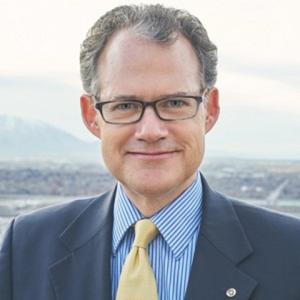
    Last fall, the SEC issued long-awaited rules for investment crowdfunding. FINRA also issued its rules. The new rules become effective on May 17, 2016. It’s time for entrepreneurs to start thinking seriously about whether and how to take advantage of the them. I’ve invited three experts to comment and offer suggestions.
    Richard Swart, CSO of NextGen Crowdfunding, notes that “Regulation Crowdfunding is far from perfect – but it will allow the first inning of retail equity crowdfunding to begin. Expect legislative changes soon, but at least we now have opportunity for local and community oriented crowdfund investing.”
    “The single biggest misconception about Regulation Crowdfunding is that is is somehow an alternative to Venture Capital,” he adds. “Regulation CF will function at the seed round – or as an alternative to debt. Rapidly scaling high-growth potential technology firms are unlikely to use it.”
    “Congress made one huge mistake,” he says, referring to the fact that unlike Title IV of the JOBS Act, the new rules issued under Title III don’t allow for entrepreneurs to “test the waters” or solicit expressions of interest in an offering prior to conducting a full offering.
    Read the full Forbes article and watch the interview here: http://onforb.es/20XvUiL.
    Please consider whether a friend or colleague might benefit from this piece and, if so, share it.
    28 min
  • #363: These Entrepreneurs Are Counting On You To Help Them Change The World
    Read the full GoodCrowdinfo article and watch the interview here: http://bit.ly/20nREDX
    Subscribe to this podcast on iTunes by clicking here: http://bit.ly/ymotwitunes or on Stitcher by clicking here: http://bit.ly/ymotwstitcher.
    What if a fashion brand spent its advertising budget on solving social problems? David Eros and Atila Uri, founders of ch8se, believe that the answer to the question is that such a brand could change the world. The key, they say, is for you to choose ch8se.
    David explains, “ch8se wants to fight some of the most pressing social and environmental problems, such as deforestation, child hunger, unemployment, low education rates and lack of access to clean water, with our primary focus being on the developing countries, where the need for help is the most pronounced. Considering the monstrosity of these problems, we have no illusions of being able to solve any of them, we just want to provide people with a new way of contributing to a global solution.”
    Atila notes, “We are basically trying to create a novel structure in the fashion industry that isn’t just a sustainable, environmentally friendly enterprise, but one that will have and active role in reversing the harm that our global consumer economy has made to the planet. We want to do it in a way that is really transparent, and more intuitive than most of the current solutions on the market.”
    He explains how they are working toward this objective. “We developed an ethically sourced, high-quality product line that supports various causes without an increased price compared to the rest of the premium fashion brands in the industry. This way ch8se enables its customers to contribute to a better world without any additional costs, simply by opting for a ch8se product instead of the product of a traditional fashion brand.” The key step, he says, was to virtually eliminate the advertising budget.
    Read the full GoodCrowdinfo article and watch the interview here: http://bit.ly/20nREDX.
    Please consider whether a friend or colleague might benefit from this piece and, if so, share it.

    21 min
  • #362: Wealth Managers, Start Paying Attention To Social Impact
    Read the full Forbes article and watch the interview here: http://onforb.es/20Pk225.
    Subscribe to this podcast on iTunes by clicking here: http://bit.ly/ymotwitunes or on Stitcher by clicking here: http://bit.ly/ymotwstitcher.
    Each year, Capgemini, in partnership with RBC Wealth Management, conducts a formal survey of high net-worth individuals (HNWIs) and shares the data publicly. One of the striking features of the report in recent years, is the increasing interest among wealthy individuals regarding social impact.
    David Wilson, head of the strategic analysis group for Capgemini’s financial services strategic business unit gave me three highlights for consideration. If you are a wealth manager, pay attention!
    Be Aware: Social impact (defined as “an investment of time, money and/or expertise with the goal of generating positive social impact, which may or may not have a financial benefit”) is highly important to High Net Worth Individuals (HNWIs). However despite their interest in driving social impact, HNWIs do not have a single preferred source to help them navigate the complexities involved. Currently they are getting advice from two distinct groups: their family and friends, and their wealth managers, and many are receiving no advice at all.
    Acknowledge the Opportunity: HNWIs are seeking more advice on social impact overall, and wealth managers are the most sought after professional source of advice. HNWIs are looking to their wealth managers for support in setting clear social impact goals, determining which investments are the most appropriate in their area of interest, structuring their investments, and measuring the impact of their social impact efforts.
    Prepare: Embedding social impact discussions into the overall wealth management approach and making tactical investments to build out their social impact offering will help firms to better meet the opportunity. Several challenges will need to be overcome, such as a lack of clarity on social impact definition and goals, inconsistent or unqualified sources of advice with inadequate levels of expertise, lack of specialized products and solutions, and lack of standard metrics.
    Read the full Forbes article and watch the interview here: http://onforb.es/20Pk225.
    Please consider whether a friend or colleague might benefit from this piece and, if so, share it.

    18 min
  • #361: Three Keys To Healthcare Investing For Impact
    Read the full GoodCrowdinfo article and watch the interview here: http://bit.ly/1KZ0wna.
    Subscribe to this podcast on iTunes by clicking here: http://bit.ly/ymotwitunes or on Stitcher by clicking here: http://bit.ly/ymotwstitcher.
    Dave Chase, Managing Partner of Healthfundr, an investment crowdfunding site for healthcare companies is well positioned to offer insights for investing in the industry for impact. He’s provided three keys for investors, employers and the healthcare companies and their patients:
    Problems breed opportunity: As Peter Diamandis famously said, “the world’s greatest problems are also the world’s greatest business opportunities.” Studying the ongoing collateral damage from wasting over $1 trillion every year (just in the U.S) makes it clear that healthcare’s status quo is the greatest immediate threat to the American Dream. The great news is that the solutions to fix the mess have all been created, proven and modestly scaled, they just haven’t all been brought together. The companies driving that transformation represent a tremendous investing opportunity. Thus, we believe it’s a false choice to think that the proper investing strategy in healthcare requires a trade-off between impact and financial returns.
    We can radically reduce costs: I’ve studied the leading employers and unions that recognize that employers are pouring more than enough money to fund a great benefits package and a comfortable require. Unfortunately, accepting the status quo of how we purchase healthcare ensures we get neither. There is now a blueprint for how to do it in a way that thrills both employers and employees/union members. While delivering great benefits, organizations are spending 30-50% less per capita on health benefits. The dollars that would have otherwise been squandered on healthcare are funding great (non-healthcare) benefits, company R&D and community benefit.
    Improving conditions for healthcare providers improves outcomes for patients: I’d encourage you to look at the leaders of the Quadruple Aim movement. Unfortunately, more than half of doctors and nurses are showing signs of burnout and doctors have the highest rate of suicide due to how healthcare is operating. This is bad for the clinicians as well as the patients they treat. Fortunately, the leading organizations recognize that optimizing the care team experience naturally leads to a better patient experience. When that happens, health outcomes follow as the patient and care team truly work as a team to achieve the optimal outcome. That, in turn, leads to lower healthcare costs. It’s happened so frequently and in so many different settings, it’s indisputable that it can be done well.
    Read the full GoodCrowdinfo article and watch the interview here: http://bit.ly/1KZ0wna.
    Please consider whether a friend or colleague might benefit from this piece and, if so, share it.
    21 min
  • #360: This Software Reduces Soft Costs For Solar Installations
    Read the full Forbes article and watch the interview here: http://onforb.es/20KpDGP.
    Subscribe to this podcast on iTunes by clicking here: http://bit.ly/ymotwitunes or on Stitcher by clicking here: http://bit.ly/ymotwstitcher.
    According to an NREL report, about half the cost of a residential solar installation is non-hardware soft costs. Reducing those costs is the mission of Sighten, a software tool set for solar installers.
    [Jump to page 2 to watch the live interview.]
    Co-Founder and CEO, Conlan O’Leary explains, “To date, most solar companies and financing providers have had to use horizontal software like Microsoft Excel or had to build software of their own. Those approaches were ultimately too unwieldy, inefficient and not scalable.”
    “As the solar market has become more competitive and profit margins have been squeezed, the industry has recognized that significant efficiency gains are needed. Recent years have seen a growing focus on reducing soft costs, but only marginal progress has been made,” he adds.
    O’Leary says Sighten is on a mission to reduce the soft costs. The company’s software platform provides a “comprehensive solution,” he says, to manage the solar project lifecycle from CRM to design, proposals and asset management.
    The impact of the software could potentially reduce consumer costs, O’Leary says. “Solar installers and developers now have access to advanced tools across sales and project management that will drive greater sales effectiveness and significant gains in operational efficiency, taking ents per watt out of virtually every step in the solar lifecycle.”
    Read the full Forbes article and watch the interview here: http://onforb.es/20KpDGP.
    Please consider whether a friend or colleague might benefit from this piece and, if so, share it.
    17 min
  • #359: Leader Engages Men To Improve Gender Diversity
    Read the full Your Mark on the World article and watch the interview here: http://bit.ly/1KYQ3Im.
    Subscribe to this podcast on iTunes by clicking here: http://bit.ly/ymotwitunes or on Stitcher by clicking here: http://bit.ly/ymotwstitcher.
    Janet Salazar, CEO and Co-Founder of Impact Leadership 21, says “women are marginalized” not only by men who actively oppress women, but in effect, by the men who fail to show up in their defense. She identifies the problem as including the “lack of engagement from men in leadership and influential positions to accelerate gender diversity and women’s equal representation at the top level across sectors.”
    Janet was introduced to me by Vince Molinari, the CEO of Gate Global Impact, our sponsor.
    “Men are part of the solution. Men are critical in accelerating women’s leadership and achieving gender equality at the top leadership,” she added.
    Janet is working to engage more men in the discussion. “I created ‘Conversations with Men,’ a forum to engage men in leadership and influential position on issues of women’s leadership, breaking down barriers of collaboration in the workplace, board room, decision making table,” she says.
    She is optimistic about a future with greater gender diversity. “When men and women in leadership roles in societies understand each other and work collaboratively, the economic impact of harnessing women’s contribution at all levels is going to benefit millions of people and open unlimited channels of opportunities for more inclusive, sustainable and thriving economies and societies,” she concludes.
    Read the full Your Mark on the World article and watch the interview here: http://bit.ly/1KYQ3Im.
    Please consider whether a friend or colleague might benefit from this piece and, if so, share it.
    24 min
  • #358: Impact Investing's Answer to #BlackLivesMatter
    Read the full Forbes article and watch the interview here: http://onforb.es/20FsXmG.
    subscribe to this podcast on iTunes by clicking here: http://bit.ly/ymotwitunes or on Stitcher by clicking here: http://bit.ly/ymotwstitcher.
    It seems that hardly a day passes without headlines about unarmed black men being killed by police in our country. If there isn’t a new case, we’re trying an old one either in court or in the media.
    [Jump to page 2 to watch the live interview.]
    Ben Hecht, the CEO of Living Cities, a nonprofit group that makes and facilitates impact investments in cities around the country, including my own here in Salt Lake City, explains the broader problem:
    US cities are places of great opportunity, hope, change, resilience and energy. Unfortunately, they are also places of great inequality. Home to more than 80% of the population, cities reflect the incredible income, wealth and educational disparities between rich and poor, white and people of color. These disparities not only threaten to hold back the economic prosperity of the nation but threaten our democracy.
    Hecht’s colleague, Eileen Neely, Director of Capital Innovation, heads up the Pay for Success program efforts for Living Cities.
    Neely says, “We need to blend all types of money–government, philanthropic and private sector capital–together to address growing social disparities and economic inequality in the United States.”
    Pay for Success programs focus on paying for results rather than activities and typically are oriented toward prevention rather than remediation. Salt Lake County Mayor Ben McAdams has likened it to building guardrails at the top of the cliff rather than operating a hospital at the bottom.
    Neely explains further, “While preventative programs that tackle issues like youth recidivism and chronic homelessness can make a real difference, these programs lack the funding needed to reach all the populations that need them. We need to attract private capital to help expand and scale programs that work.”
    Read the full Forbes article and watch the interview here: http://onforb.es/20FsXmG.
    Please consider whether a friend or colleague might benefit from this piece and, if so, share it.
    27 min
  • #357:REDF Works To Employ The Unemployable
    Read the full Forbes article and watch the interview here: http://onforb.es/20vvGiD.
    Subscribe to this podcast on iTunes by clicking here: http://bit.ly/ymotwitunes or on Stitcher by clicking here: http://bit.ly/ymotwstitcher.
    Katelyn Dalton was a homeless addict. She considered herself to be “unemployable.”
    [Jump to page 2 to watch the live interview.]
    She says she was hurt and frustrated when she was rejected by prospective employers who rejected her application even when they said they were hiring. She boasts, “ I overcame it with self-perseverance and the support of social enterprises giving me the support and tools necessary to be successful.”
    The social enterprises she mentions were supported by REDF, a nonprofit that supports social enterprises that employ the “unemployable.” Founded in 1997 by KKR’s George Roberts, the organization is led today by Carla Javits.
    Dalton explains what it felt like to re-enter the workforce. “When I finally learned that I had the ability to be successful, I was worth it and I had value, I was able to put my 100 percent into my life and therefore become a star in the workplace.”
    Javits exults, “Katelyn’s experience reflects exactly what REDF aspires to do for tens of thousands of people – demonstrating the power that a job can have in transforming the life of an individual and making it possible for them to contribute in a positive way to their family, while also improving their community.”
    REDF works to replicate Dalton’s experience. Economic mobility, the process of moving up the socioeconomic ladder, is much more difficult in the U.S. than most of us appreciate. A surprising 43 percent of children born into poverty will remain poor over their entire lifetimes, according to REDF.
    Read the full Forbes article and watch the interview here: http://onforb.es/20vvGiD.
    Please consider whether a friend or colleague might benefit from this piece and, if so, share it.
    27 min

About #plugintodevin - Your Mark on the World with Devin Thorpe

From the publisher's feed

Host Devin Thorpe, candidate for Utah's 3rd Congressional District, interviews guests to discuss social issues that impact Utahns. Paid for by Friends of Devin Thorpe.