
Sign up to save your podcasts
Or

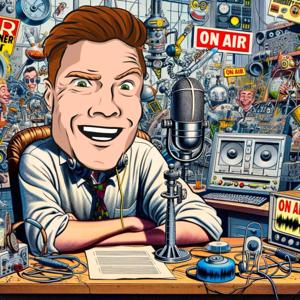


I keep seeing people say: "A podcast was always meant to be audio only." That's not true!
In October 2005, Steve Jobs demoed video podcasts on stage at an Apple keynote. He showed them as a native media type on the new iMac and the new iPod Video. He even name-dropped Tiki Bar TV, a video podcast made in an apartment in Vancouver. This was just 4 months after Apple had introduced the "podcasts."
Video podcasts were browsable side by side with audio in iTunes. Shows like Tiki Bar TV, Rocketboom, and Diggnation built massive audiences years before YouTube became the default home for video.
The belief that "podcasts = audio only" is mostly an artifact of Apple neglecting video in its Podcasts app from roughly 2012 to 2025. Now, in 2026 Apple is bringing video back to Apple Podcasts in iOS 26.4.
Click here to watch a video of this episode.
Links:
There was a great thread from John Spurlock on the Podcast Index server on Mastodon. He listed all podcast hosts that support the new HLS video standard in Apple Podcasts.
Transistor.fm is on the list (we have two shows on Apple Podcasts using HLS), but Kevin Finn and Dave Jones were wondering why we hadn't put HLS into the tag in those feeds.
Initially, the HLS manifest wasn't in the alternateEnclosure tag (it's still a manual process for us to build these currently). But our intention going forward is that if you're hosting an HLS video on Transistor, we'll automatically add those HLS manifest URLs into the tag in your RSS feed.
I just enabled HLS video in the alternateEnclosure tag for the most recent episodes of Stephen Robles' shows first (Primary Technology and Movies on the Side).
I just tested it on Fountain.fm, and it works great. 👍
Timestamps
0:00 — John Spurlock's Podcast Index thread on Mastodon
0:20 — Kevin Finn's question about the alternate enclosure tag
0:34 — What we did with Stephen Robles' shows
0:47 — Transistor's full video distribution plan (YouTube, Spotify, Apple, HLS)
1:10 — Live demo: HLS manifest in the alternate enclosure tag, playing in Fountain
Relevant links
I'm still hearing too many folks in the podcast industry say: "Nobody is watching these video podcasts," or "video podcasts are too expensive to create."
But the reality I'm seeing is:
I think this is the new normal.
Peter Mansbridge is proof. His show "The Bridge" is pulling in 150,000 YouTube views per episode. Bad lighting. Cheap cameras. Three people on a Zoom call. No production crew, no editor, no studio.
And... he's not sacrificing his audio audience either: 1,600+ reviews on Apple Podcasts, 673+ on Spotify.
He records once, uploads the same video/audio recording to every platform, and reaches his audience "wherever they get their podcasts."
The podcast industry keeps debating whether video is "real podcasting" or too expensive to produce. Meanwhile, creators are just recording their Zoom calls, uploading to YouTube, and audiences are showing up.
On LinkedIn, Paul Riismandel commented:
"The thing I've observed – and it's totally just human nature – is that it's challenging to understand the audience's new consumption behaviors and preferences when it doesn't match one's own. But the podcast audience is broader, more diverse, and younger than a decade ago. I received so much pushback three years ago when we first observed YouTube becoming the most preferred podcast platform. Today we're seeing that the smart TV is on the verge of being the 2nd most used device for podcasts in North America and elsewhere. Yet, I get presented with a lot of skepticism when I share that view with folks in the industry, despite having three separate studies all point in that direction. The primary objection I hear is that someone just can't wrap their head around watching podcasts in TV because they don't do it (and likely don't know someone who does)."At Transistor, we'll be moving to this model: creators will upload their video file, and we handle the rest (syndicate to YouTube, encode to HLS for Apple Podcasts, distribute via RSS to Pocket Casts, Overcast, and every open podcast app).
Creators and audiences want to consume podcast-like content on YouTube (still unclear if they want video content on Spotify/Apple). Much of that is due to YouTube's algorithm and distribution muscle. Regardless, that's the reality on the field right now.
Links:
Welcome to Podcast Pulse — a show from Justin Jackson, co-founder of Transistor.fm, dedicated to honest, unfiltered thinking about the podcast industry.
Where is podcasting headed? What's the future of RSS, audio, and video podcasting? Justin wanted a place to process these questions out loud, and this is it.
Whether you work in the podcast industry, create your own show, or just love listening, you'll find something here worth chewing on. Expect candid reflections on trends, technology, and what's really happening in the podcast space right now.
Available as both audio and video on Apple Podcasts, Spotify, YouTube, and wherever video podcasts are supported.
Subscribe to follow along.
If you're starting a podcast in 2024, you don't need to start a video podcast. Instead, I recommend you start with an audio podcast.
Why? Getting started with audio is simple: a microphone and a phone, tablet, or laptop are all you need. Conversely, video requires a lot of equipment (DSLR camera, lighting, capture card, mixer, microphone, computer).
Doing all of that setup is a distraction from what you should be focusing on when you're starting a podcast, which is answering the question: "Can I create compelling content that attracts an audience week after week or episode after episode?"
Transistor makes it easy to start a podcast. Read our guide:
https://transistor.fm/how-to-start-a-podcast/?via=industry-news
Video is having its moment right now, but I think that most new podcasters should start with an audio podcast.
In the beginning, a new podcaster needs to find their voice, practice, and learn what makes an episode compelling. Video adds a whole layer of production complexity that distracts from that aim.
Plus, appearing on video adds a lot of pressure to worry about your appearance. With audio, you can just hit record and focus on your content.
Read the full blog post
In this episode, Justin Jackson (Transistor) and Matt Stauffer (The Laravel Podcast with Taylor Otwell) discuss strategies for podcast growth. Justin shared a variety of marketing tactics to help Matt grow his podcast audience.
I. Setting the Stage: Introducing Matt Stauffer and the Laravel Podcast
In the first part of our conversation, we introduced Matt Stauffer, co-owner of Titan and host of the Laravel Podcast. Matt shared his background and the success of the Laravel Podcast, which has gained a dedicated following over the years. We explored the potential for growth with the Laravel community and the opportunities to leverage their existing social followings.
II. The Power of High-Profile Guests and Engaging Episode Titles
One key takeaway from our discussion was the impact of high-profile guests on podcast growth. Matt and Justin discussed the episode featuring Taylor Otwell, the creator of Laravel, which became their most popular episode. Justin stressed the importance of including the name of influential guests in the episode titles.
III. Optimizing Podcast Packaging and Metadata
Next, we delved into the significance of podcast packaging and metadata in increasing discoverability. Justin explained the benefits of including faces in episode artwork, as faces tend to convert better and improve search engine optimization (SEO). We discussed the concept of "people tags" in podcast RSS feeds, which allow for better organization and searchability of episodes featuring specific individuals.
IV. Leveraging Social Media and Crowdsourcing
To expand your podcast's reach, social media can be a powerful tool. Matt and Justin explored various social media platforms, such as Instagram Reels, TikTok, and YouTube Shorts, and how creating short video snippets and compelling trailers can attract new listeners. They also discussed the value of harnessing your existing community and encouraging them to share your podcast with their network, creating a word-of-mouth effect.
V. Recognizing Your Community and Fostering Relationships
Matt shared his desire to maintain the authenticity of the podcast and avoid turning it into a sales pitch. Justin emphasized the importance of recognizing and appreciating your community, whether through personal shoutouts at the end of episodes or involving listeners in creating video clips and promos. By nurturing these relationships, podcasters can build goodwill and encourage further engagement.
I'm curious what you think!
Links and sources:
Transistor Podcast Hosting sponsored this episode. They're the best place to host multiple podcasts all in one place. Get 14 days free.
In 2020, when podcasting was at its peak boom, Spotify signed a three-year exclusivity deal with Joe Rogan, thought to be worth $200 million.
That deal expires sometime near the end of 2023, and Spotify's CEO, Daniel Ek, is under pressure.
In her piece for the Verge, Ariel Shapiro says:
"Rogan is still the best bet the company has ever made. He remains the top podcaster in the world, and it’s not close."But on the other hand, Daniel Ek is under a lot of pressure to pull back Spotify's investment in podcasting. During Spotify's April earnings call, the CEO admitted he'd overpaid and over-spent on podcasts. At that time, they also reported a net loss of $248 million and admitted the podcasting business wasn't yet profitable.
That said, it's very likely that Spotify wants to renew its deal with Joe Rogan.
In her article, Ariel Shapiro comments:
"If he walks or (less likely) if Spotify chose not to renew, it would be another massive blow to the company’s podcasting editorial operation."Another interesting question is whether or not there's another platform with the desire and financial capacity to license the Joe Rogan Experience.
For example, I believe it's unlikely that Apple Podcasts would make a deal; I don't think they have the temperament to work with Rogan. Plus, they've invested little in producing or licensing podcast content in-house: Bloomberg reports they've only spent about $10 million.
I believe there are only three contenders that might be interested: SiriusXM, Amazon, and YouTube.
First up, SiriusXM. They've made huge investments in personalities before—look at Howard Stern's massive deal. But would they stretch their budget even further for Rogan? It's possible but seems unlikely.
Then we have Amazon. With deep pockets and a growing interest in podcasting demonstrated by their acquisition of Wondery, they could be serious contenders if they double down on their audio investments.
And lastly, YouTube. Rogan's clips thrive on the platform, and while they haven't paid for exclusivity in the past, the potential ad revenue for both parties could be too tempting to ignore.
I'm skeptical that any of these platforms are as eager to spend hundreds of millions of dollars securing Joe Rogan. These big players jumped into podcasting because it was the hot new thing; and after Spotify's splashy $1 billion dollar investment, there was a lot of pressure to follow suit.
But now Spotify seems to be hitting the brakes, and now we're seeing other companies pull back their investment as well.
In her article, Shapiro also mentions that Rogan could return to being independent. I know other analysts who disagree with me, but I think that would mean far less money than he's getting from Spotify.
My bet: Joe Rogan wants to stay with Spotify, and CEO Daniel Ek wants to keep him.
I'm curious what you think!
Links and sources:
Transistor Podcast Hosting sponsored this episode. They're the best place to host multiple podcasts all in one place. Get 14 days free.
There's no shortage of podcast-listening apps for Android and iOS users. But have you ever wondered which app listeners use most? Let's dive into the data and find out.
Podcast hosting companies have the unique advantage of tracking listener data. Every time a podcast episode is downloaded, it's tagged to a specific application, giving us insights into user preferences.
The Data from Transistor:
At Transistor, the data reveals some interesting trends:
Buzzsprout's Insights:
Over at Buzzsprout, the trends are somewhat similar, albeit with slightly different percentages:
Why Does This Matter?
The battle for podcast market share is intense. Platforms like Apple Podcasts, Spotify, and Google are all vying for the top spot. Apple, with its 2 billion active devices, has a significant advantage. Meanwhile, Spotify, a major competitor in the music industry, is heavily investing in podcasts to boost its user base.
However, the real game-changer might be Google's pivoting from Google Podcasts to YouTube Music. While Google Podcasts only holds a 2-3% market share, YouTube boasts a staggering 2.7 billion active users. Many podcasters are already uploading video content to YouTube, and studies suggest that it might be the top platform for podcast consumption. In fact, research from The Morning Consult and Cumulus Media indicates a strong preference for YouTube over other platforms.
As Google transitions from Google Podcasts to YouTube Music, it will be intriguing to see if they can capture a larger share of the podcast market. YouTube's plans to integrate traditional podcast RSS feeds into YouTube Music could further shake up the rankings.
In Conclusion:
The podcasting world is ever-evolving, and it's fascinating to see how different platforms stack up against each other. Whether you're a fan of Apple, Spotify, or even the underrated Pocket Casts, there's no denying the impact of these platforms on the podcasting landscape.
I'm curious what you think!
Links and sources:
Transistor Podcast Hosting sponsored this episode. They're the best place to host multiple podcasts all in one place. Get 14 days free.
With all of the excitement around artificial intelligence, many podcasters are asking:
"Can you use an AI voice generator to create a podcast episode?"
I wanted to put that question to the test, so I generated audio with a few popular AI voice tools.
The first experiment I ran was a bot that a local college kid put together. I prompted it to "create a podcast episode for a podcast about extreme rollerblading. Talk about the rollerblading scene in Stony Plain, Alberta," (which is my hometown).
Using only a 30-second clip of my voice he found on YouTube, he was able to generate AI audio content that sounds very much like me. What's most surprising to me is how the AI synthesized not only my voice but also my cadence, my pauses, and my tone.
However, I'm still unsure that a longer episode using this AI voice would be entertaining. That's really the question podcasters (and aspiring AI entrepreneurs) are asking: can you generate compelling long-form AI audio content?
The first AI podcast experiment I saw was from the folks at podcast.ai. Using AI voices, they generated an interview between Joe Rogan and Steve Jobs.
To my ear, it sounds stilted; while it's a good demo of how far this AI voice generation has come, it's still not at the place where it makes for compelling entertainment.
Another interesting experiment was from the Mind Meets Machine podcast. In this case, there's a human co-host (Rob) and an AI co-host (Ruby).
What these AI podcast experiments are missing is, ironically, human connection. There's something about hearing somebody in your earphones revealing deeply human moments that's hard to replicate with AI.
Another popular clip was an AI version of Bill Gates and Socrates.
Again, most of these AI clips don't sound natural; they're not quite there yet when it comes to producing something that I think could be entertaining, especially in a way that would have a podcast listener coming back episode after episode.
As a part of this experiment, I also tried some of the popular AI voice generators on the market: Genny and Play.ht. Here's a sample of each:
Can you use an AI voice generator to generate a compelling podcast?
Currently, the verdict is clear: AI voice generation isn't going to displace human hosts. Why? Because when we tune into podcasts, we seek more than just content. We're not looking for mundane, run-of-the-mill audio. We want authentic, gripping stories that resonate with our emotions, offering human connection, drama, and depth.
While AI voice generators have made strides, they still lack that genuine human touch. The nuances, the warmth, the imperfections – they're all absent.
I'm curious what you think!
Transistor Podcast Hosting sponsored this episode. They're the best place to host multiple podcasts all in one place. Get 14 days free.