
Sign up to save your podcasts
Or

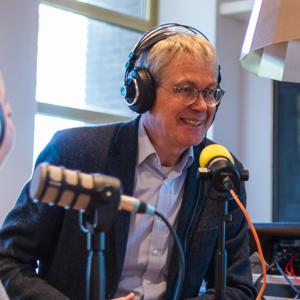


How should software engineering education adapt when LLMs can generate code in seconds? Prof. Alexander Serebrenik and Dr. Lina Ochoa of TU Eindhoven join Iman Mossavat, host of Deep Dives with Iman, to examine how large language models are reshaping software engineering and education. We cover: how models optimise for user satisfaction and why verification remains essential; the shifting skillset for engineers (from rote coding to oversight, orchestration, and prompt decomposition); real quality risks such as hallucinations and increased technical debt when generated code is used without enough scrutiny; and the structural effects as model providers gain influence. Practical conclusions: keep humans in the loop, teach verification and system thinking, and redesign assessments to preserve core understanding. Listen for a measured discussion relevant to educators, engineers, and policy makers.
Artificial Intelligence on Radio4Brainport.org
Host Iman Mossavat welcomes Dr. Benjamin Paaßen, Junior Professor for Knowledge Representation and Machine Learning at Bielefeld University and researcher at the Educational Technology Lab at DFKI. Together, they examine the growing debate around using large language models (LLMs) as substitutes for human participants in psychological and educational research. Dr. Paaßen shares why replacing human input with machine responses risks producing misleading results, especially when subtle linguistic shifts reveal critical differences between human and AI reasoning. He stresses that while LLMs can be useful in narrow, text-based tasks validated against large sets of human data, they cannot replicate the depth of human cognition. The discussion highlights the limits of AI in research settings, the dangers of overestimating machine intelligence, and the importance of maintaining rigorous standards when integrating these tools into scientific work.
Radio 4 Brainport, Eindhoven
I heard many people complain about the poor sound quality of DAB+. Dennis van Benthem of Orban, the makers of the OPTIMOD, claim that DAB can sound great even at 48 kbit/s . But it would be a mistake to feed sound processed for FM into a digital encoder.
On AM and FM, radio stations may want to sound loud. It even increases coverage. The boomy sound of radio DJ voices on FM seems to have become fashionable. But we live in a digital age. Do we need processing on DAB+ or on AAC-encoded internet streams?
Thnaks Dennis for going into the technical details.
photo credits to Chantal Mateboer
Jean-Paul Linnartz @ Radio4brainport.org
In this heartfelt episode, Meagin van der Westhuizen sits down with Andrea Agudelo to explore the Homewards program—an inclusive social initiative in Eindhoven designed to help newcomers and long-time residents alike feel truly connected to their city.
Andrea shares her personal journey as a foreigner and her passion for creating spaces where people can meet, share, and build community beyond structured interactions.
From discovering cozy coffee spots to forming lasting friendships, Homewards offers more than just information—it offers warmth, fun, and a sense of belonging. Whether you're new to Eindhoven or simply looking to reconnect, this episode will inspire you to take that first step toward community.
🔗 Registration is extended till September 12th.
Iman Mossavat speaks with Jakub Zavrel, CEO and founder of Zeta Alpha, about how AI can enhance enterprise search and knowledge management. Zavrel explains that large language models are limited unless connected to company-specific data, and that retrieval-augmented generation (RAG) systems, fine-tuned to organizational domains, improve accuracy and trust. He emphasizes the importance of data engineering, benchmarks, and secure access control, and reflects on the evolving landscape of open versus proprietary models. The conversation also touches on broader issues such as AI regulation, societal impacts, workforce augmentation, and the long-term vision of empowering organizations through AI-driven institutional memory.
TU/e Rector Magnificus Silvia Lenaerts kicked off the new academic year with an opening speech.
A panel discussed the question: ‘What conditions must the Hague create to enable innovation clusters like Brainport to thrive and strengthen European competitiveness?’ Participants included Eindhoven mayor and former Minister of Finance Jeroen Dijsselbloem, Sophie in 't Veld (from 2004 to 2024 Member of the European Parliament), start-up advisor and Lightyear founder Lex Hoefsloot, and researcher Maaike Okano-Heijmans, program head of Geopolitics of Technology and Digitization at the Clingendael Institute.
This year, TU Eindhoven invited Dutch Minister of Defense Ruben Brekelmans, who sketched a world not of closer cooperation, but of strategic rivalry: "Imperalism is back almost everywhere, including in Europe. In 2030 Putin wants to be ready for a large scale confrontation with NATO. In short, the Netherlands is not at war today.
But we’re not living fully in peace, either.
We’re living in the grey zone between war and peace. Russia is testing our readiness and studying our preparedness. This is not only with hard military power, as we all know, it is already conducting hybrid attacks in Europe, such as cyber-attacks and sabotage operations."
According to the minister, innovation and new technologies make the difference for our own security.
"That’s why the region of Eindhoven is crucial to our security. Nowadays, we often talk about Defence expenditures, but it is better to talk about Defence investments. Our Defence budgets should not only be an investment in our security, but also in our economy, innovation, technology and our scientific qualities. We need to create more reciprocal opportunities – stimulating science and the economy, foster innovation, employment and entrepreneurship in this region, and incorporate insights and innovation into all areas of Defence operations."
His talk was interrupted several times by pro-Palestine activities. TUe and the minister offered to handle a couple of questions after the presentation, provided that he could finish his talk first. As activities continued to interrupt the talk, police intervene
On Tea-Talk, Karishma and Supriya speak with Andrew Funk and Toby Plüss at PSV Stadium in Eindhoven during their incredible journey, The Great Walk Europe.
Having already walked across Austria and Germany, they’re now in the Netherlands, with Belgium and Spain still ahead. Their mission: over 850 km, more than 20 marathons, and 1 million steps to raise awareness and funds for people experiencing homelessness. Their message is clear: No one should have to sleep on the streets.
Discover their story, the challenges so far, and how you can join them for a stage to make a difference, one step at a time.
Iman Mossavat speaks with Professor Daniel Cremers, Director of the Munich Center for Machine Learning, Professor at the Technical University of Munich, and one of Germany's most distinguished AI researchers. Cremers is a recipient of the Gottfried Wilhelm Leibniz Prize and the 2024 ECCV Koenderink Test of Time Award.
They discuss the groundbreaking work his team carried out in protein structure prediction back in 2016, years before AlphaFold made headlines. Although this work was presented at NeurIPS 2016, the flagship machine learning conference, in front of thousands of researchers, it was largely overlooked in subsequent citations.
Beyond the science, Cremers reflects on the tension between academia and Big Tech, the challenges of recognition in a fast-moving field, and what it means to pursue meaningful work in AI today.
Join Iman Mossavat on the Radio 4 Brainport podcast, "Deep Dives with Iman." This episode features Professor Sepp Hochreiter, a pioneer renowned for his foundational AI work, including Long Short-Term Memory (LSTM) and identifying vanishing gradients. Discover his journey, AI breakthroughs, and the future of large models.
The discussion covers LSTM's evolution, its widespread use in devices and applications from Amazon Alexa, to Android for text completion and speech, before the rise of Transformers. Hear about the new XLSTM, an enhanced version matching Transformer performance while being significantly faster and more energy-efficient for deployment (inference), especially for long contexts. Learn how XLSTM-based models like TiRex, the King of Time, lead in time series predictions, beating competitors from major companies and representing a European innovation. Professor Hochreiter also shares insights on AI's industrialization, focusing on specialized, smaller models for machinery and production processes. XLSTM is open source and suited for smaller devices, making it accessible for companies and academic institutions.
In this episode of Deep Dives with Iman, host Iman Mossavat speaks with Dr. Tina Nikoukhah, Director of Research at GetReal Security and recipient of the L’Oréal-UNESCO Young Talent Award. A specialist in media forensics, Tina discusses the increasing sophistication of synthetic media and the blurring of the line between what is real and what appears to be. She describes how GetReal uncovers the "hidden fingerprints" left by image and video processing, and how techniques like watermarking and C2PA, a kind of "nutrition label" for content, help track manipulation. Passive analysis methods and metadata inspection offer further insight into content authenticity. Tina emphasizes the foundational role of mathematics and signal processing in the field, as well as the broader challenge of building public awareness. Rather than labeling content as simply real or fake, Tina stresses the importance of transparency and trust in today's digital media landscape.
From the publisher's feed

4 Listeners