
Sign up to save your podcasts
Or

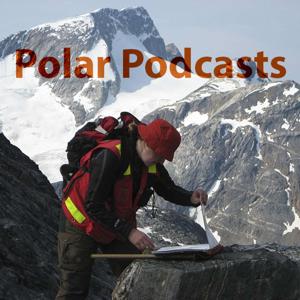


In this episode we hear from Niels Henriksen, known to many as Oscar, Emeritus senior scientist with the Geological Survey of Denmark and Greenland, starting as a student with the Geological Survey of Greenland, only six years after the survey was established in 1946.
Welcome to Polar Podcasts, where you’ll hear stories from geologists who’ve spent their careers, their lives, exploring and studying the remarkable and remote geology of Greenland. Why did they become fascinated with Greenland? What were the problems and the discoveries that drove them? And what was it like working in these remote places, where few people venture, even now?
Welcome to Polar Podcasts, where you’ll hear stories from geologists who’ve spent their careers, their lives, exploring and studying the remarkable and remote geology of Greenland. Why did they become fascinated with Greenland? What were the problems and the discoveries that drove them? And what was it like working in these remote places, where few people venture, even now?
Allen Nutman, Professor of Geology at the University of Wollongong, spent his first field season in Greenland as a nineteen-year old student assistant with Exeter University and the Geological Survey of Greenland in the 1970s, the beginning of a career devoted to mapping Greenland’s geology and particularly focused on some of the oldest rocks in the world:
Allen’s research is grounded in detailed geological mapping – an endeavor that, despite huge technological advances over the decades, still requires time and commitment to walking over a lot of ground and studying the rocks in detail. More than forty years later, he is still passionate about making geological maps.
Polar Podcasts goes to air on August 4. Tune in and subscribe to hear Allen Nutman and other career Greenland geologists talk about their experiences working in Greenland over the decades.
Welcome to Polar Podcasts, where you’ll hear stories from geologists who’ve spent their careers, their lives, exploring and studying the remarkable and remote geology of Greenland. Why did they become fascinated with Greenland? What were the problems and the discoveries that drove them? And what was it like working in these remote places, where few people venture, even now?
Agnete Steenfelt – emeritus senior scientist at the Geological Survey of Denmark and Greenland, where she has spent her career – was one of few female field geologists employed at the Geological Survey of Greenland in the early 1970s. With European interest in nuclear power generation, she was led a program of radiometric surveying applied to uranium exploration in east Greenland.
With her passion for geochemistry, Agnete was instrumental in introducing modern geochemical sampling and mapping to Greenland as a whole – a program that would grow to decades of work and tens of thousands of samples covering almost the entirety of Greenland, and resulting in geochemical maps on a continental scale that revealed the hidden nature of large-scale mineral enrichments in different parts of Greenland.
Polar Podcasts goes to air on August 4. Tune in and subscribe to hear Agnete Steenfelt and other career Greenland geologists talk about their experiences working in Greenland over the decades.
Welcome to Polar Podcasts, where you’ll hear stories from geologists who’ve spent their careers, their lives, exploring and studying the remarkable and remote geology of Greenland. Why did they become fascinated with Greenland? What were the problems and the discoveries that drove them? And what was it like working in these remote places, where few people venture, even now?
Bjørn Thomassen – emeritus senior scientist at the Geological Survey of Denmark and Greenland – is a mineral prospector who has spent 42 summers exploring Greenland. Starting out as a field assistant for the Geological Survey of Greenland in 1964, he soon realized that his passion lay in mineral exploration and he became a junior exploration geologist for Nordiskemineselskab – the Nordic Mining Company, later working as a mine geologist at the Black Angel – Maamorilik lead-zinc mine in central west Greenland, and later still returning to the Geological Survey where he worked for many years exploring and documenting mineral occurrences in some of the remotest parts of Greenland.
Bjørn was involved in the discovery of numerous mineral occurrences throughout Greenland, including the discovery in 1970 of Flammefjeld – a large porphyry molybdenum deposit in east Greenland, still undrilled after all this time.
Polar Podcasts goes to air on August 4. Tune in and subscribe to hear Bjørn Thomassen and other career Greenland geologists talk about their experiences working in Greenland over the decades.
Welcome to Polar Podcasts, where you’ll hear stories from geologists who’ve spent their careers, their lives, exploring and studying the remarkable and remote geology of Greenland. Why did they become fascinated with Greenland? What were the problems and the discoveries that drove them? And what was it like working in these remote places, where few people venture, even now?
Kent Brooks – emeritus Professor at the Geological Museum in Copenhagen – first travelled to east Greenland in 1965 – the beginning of what was to be an adventurous, more than fifty-year career focused on understanding the geology of magmatic rocks of east Greenland.
On one of Kent’s earliest expeditions, he was involved in the discovery of a crashed American naval aircraft and he relates his involvement in the decades long saga of the recovery of the airmen who perished on board.
Much of Kent’s research has focused on the textbook geology of the Skaergaard Intrusion – a layered gabbro intrusion, research into which has been fundamental in understanding the way in which magmas form and differentiate in the Earth, also becoming involved in exploration that led to the earliest drilling of the Intrusion and the discovery of gold. Kent has also published extensively on the nature of rifting in east Greenland and of the Earth’s mantle beneath Greenland.
Polar Podcasts goes to air on August 4. Tune in and subscribe to hear Kent Brooks and other career Greenland geologists talk about their experiences working in Greenland over the decades.
Welcome to Polar Podcasts, where you’ll hear stories from geologists who’ve spent their careers, their lives, exploring and studying the remarkable and remote geology of Greenland. Why did they become fascinated with Greenland? What were the problems and the discoveries that drove them? And what was it like working in these remote places, where few people venture, even now?
Brian Upton – emeritus Professor of Geology at the University of Edinburgh – started working in South Greenland in 1955 and continues to publish research on its unique geology to this day.
Inspired by early work on the emerging theory of plate tectonics while at Caltech in the 1960s, he was involved in testing the model in remote eastern and western North Greenland.
Over the decades Brian worked in many parts of Greenland, together with the Geological Survey of Greenland. But throughout his career he has continued to return to the unique alkaline rocks of South Greenland, which remain his passion to this day.
Polar Podcasts goes to air on August 4. Tune in and subscribe to hear Brian Upton and other career Greenland geologists talk about their experiences working in Greenland over the decades.
Welcome to Polar Podcasts, where you’ll hear stories from geologists who’ve spent their careers, their lives, exploring and studying the remarkable and remote geology of Greenland. Why did they become fascinated with Greenland? What were the problems and the discoveries that drove them? And what was it like working in these remote places, where few people venture, even now?
Niels Henriksen – known to many as Oscar – is emeritus senior scientist at the Geological Survey of Denmark and Greenland where he has almost seventy years experience working with the geology of Greenland. Starting out as a student at the University of Copenhagen, Niels had his first – and almost his last – field season in Greenland in 1952 with the Greenland Geological Survey, established only six years earlier.
Over his career, Niels led the operation of large field programs throughout Greenland, including in some of its remotest parts, such as the Caledonian Fold belt of Northeast Greenland, and northernmost Greenland, where no one lives and where there is no infrastructure along a stretch of more than 1000 km of coastline bordering the ice-filled Arctic Ocean.
Niels was instrumental in publication of numerous important maps and bulletins for the Survey, including the 1.2,5 million scale map of Greenland and the 1:1 million scale map of the east Greenland Caledonides, and popular science books including the Geological History of Greenland.
Polar Podcasts goes to air on August 4. Tune in and subscribe to hear Niels Henriksen and other career Greenland geologists talk about their experiences working in Greenland over the decades.
From the publisher's feed