
Sign up to save your podcasts
Or

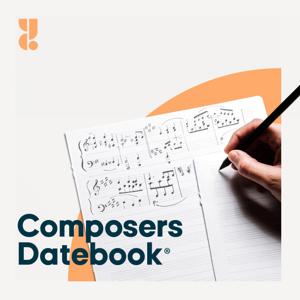

An invitation-only audience attended a historic Bruckner concert in Munich on today’s date in 1932. On the first half of the program, Siegmund von Hausegger conducted Bruckner’s Symphony No. 9, using the posthumous edition prepared by Bruckner’s pupil, Ferdinand Löwe, which contained many edits and alterations. For the second half, Bruckner’s Ninth was performed again — this time as the composer had written it, following the Bruckner’s unpublished manuscript score.
During his lifetime and after his death, Bruckner’s most devoted pupils, Löwe and the Schalk brothers, Josef and Franz, cut and altered his scores to better match the expectations of contemporary audiences, trying to make Bruckner sound more like Wagner — flashier and more dramatic.
The 1932 Munich concert began a five-year debate whether the original or altered Bruckner was preferable. Then in 1937, Germany’s Nazi government announced it would fund a new Bruckner edition based on the composer’s original manuscripts. Like everything else in Nazi Germany, symphonies were viewed through racially tinted lenses. Löwe had Jewish ancestry, and so what began as a musicological project to honor the Austrian composer’s original intentions was appropriated by the Nazis as a crusade to “liberate” Bruckner from what they called “non-Ayran” tampering.
Anton Bruckner (1824-1896): Symphony No. 9; Minnesota Orchestra; Stanislaw Skrowaczewski, cond.; Reference 81
 View all episodes
 By American Public Media

4.7
176176 ratings
An invitation-only audience attended a historic Bruckner concert in Munich on today’s date in 1932. On the first half of the program, Siegmund von Hausegger conducted Bruckner’s Symphony No. 9, using the posthumous edition prepared by Bruckner’s pupil, Ferdinand Löwe, which contained many edits and alterations. For the second half, Bruckner’s Ninth was performed again — this time as the composer had written it, following the Bruckner’s unpublished manuscript score.
During his lifetime and after his death, Bruckner’s most devoted pupils, Löwe and the Schalk brothers, Josef and Franz, cut and altered his scores to better match the expectations of contemporary audiences, trying to make Bruckner sound more like Wagner — flashier and more dramatic.
The 1932 Munich concert began a five-year debate whether the original or altered Bruckner was preferable. Then in 1937, Germany’s Nazi government announced it would fund a new Bruckner edition based on the composer’s original manuscripts. Like everything else in Nazi Germany, symphonies were viewed through racially tinted lenses. Löwe had Jewish ancestry, and so what began as a musicological project to honor the Austrian composer’s original intentions was appropriated by the Nazis as a crusade to “liberate” Bruckner from what they called “non-Ayran” tampering.
Anton Bruckner (1824-1896): Symphony No. 9; Minnesota Orchestra; Stanislaw Skrowaczewski, cond.; Reference 81

6,776 Listeners

38,874 Listeners

8,769 Listeners

9,215 Listeners
5,776 Listeners

930 Listeners

1,389 Listeners

1,288 Listeners
3,155 Listeners

1,975 Listeners
523 Listeners
183 Listeners

13,766 Listeners

3,080 Listeners

248 Listeners
28,114 Listeners

431 Listeners

5,469 Listeners
2,195 Listeners

14,150 Listeners

6,416 Listeners
2,513 Listeners

4,841 Listeners

575 Listeners
243 Listeners