
Sign up to save your podcasts
Or

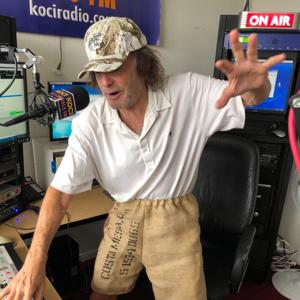


“This man that you’re listening to, The Poorman, Jim, is the creator and the host of Loveline and I am so honored to be speaking with you. Well, the issue at hand with what you dealt with and what exists is that when you work for a company, it has been decided by somebody that whatever you do and whatever you create belongs to the company while you’re working for them. So Loveline basically is the property of the company that you worked for and you created that. That was yours. You built it. You thought of it. You hosted it, and you made it great. And the court said, well screw you, they own it because you created it while you worked for them.” — Mark Thompson (Radio Personality, DJ, formerly of The Mark & Brian Show)
“It’s fascinating because who knew that twenty five years later comic books were going to be relevant and important, and particularly to our cultural zeitgeist of what’s going on out there.”
—Alexander Gray (Producer, Director, Writer)
“Well, I was the lead, or the trombone section leader, and it was pretty tight back there as the game was nearing the end. The band had gone down to field level for our traditional postgame concert, which we thought was gonna be a victory rally, and it was pretty tight in there. And so once once the clock went down to zero, it just sort of loosened up. I backed up into the end zone, and Kevin Moen just ran right through me.” — Gary Tyrrell (Stanford Trombone Player, Cal Football’s The Play, 1982)
“A little bit of fame started to happen. We started to get, you know, popular in different places like, you know, like Seattle and Detroit and Miami and Dallas. And there were cities around, and we were playing and going and, and doing all this stuff. And there was a new sound on the radio. Radio stations didn’t really know what to do with it.”
— Jamie James (The Kingbees, Lead Singer, Guitarist, Founding Member)
“Me and my friend Billy golfed at Westlake last week at Westlake Golf Course. And when I took him by the bridge, it’s kinda trippy going by there. Every time I go out to Westlake, I gotta go say hi to the firefighters that rescued me.”
— Matthew Thomas (Founder of Positive-Matters.Org)
“[On the NFL embracing the tradition] They like that we celebrate the last player. You know, we try and make him equal to feeling like he’s equal to the first player selected. So, you know, we give him gifts and parties and the Lowsman Trophy. And so we celebrate Kobee, I think, better than the first guy, but definitely better than the next to last guy. But that was my Dad’s idea.” — Melanie Salata-Fitch, Mr. Irrelevant Announcer
“My first film was Halls of Anger (1970), and it was about a racial high school issue. You know, they bus white kids to a black school and stuff like that.” — DeWayne Jessie (Otis Day and The Knights)
“I’m still an altar boy. Actually, I wasn’t an altar boy when I was little. I just kind of evolved into one as an adult.” — Joe Escalante (The Vandals)
“You know, it’s just kind of a well, a dream come true and why I got into doing this in the first place. Growing up in New York, I was just a huge music fan, and this is always what I wanted to be a part of.” — Mark Linett (Grammy Award-winning Record Producer and Audio Engineer)
“[What is the best generation of horror in your opinion?] Well, the eighties and nineties is what I love. You know, whenever I’m watching movies, eighties and nineties. Whenever I wanna study filmmaking and work on my own filmmaking endeavors, they’re all gonna be based on eighties and nineties, not doing anything in present time.” — Kyle Thompson (Special FX Artist, Midnight Studios FX)
From the publisher's feed
Tune in as Poorman interviews influential figures from music, sports, government, and more on Poorman's Morning Rush radio show.