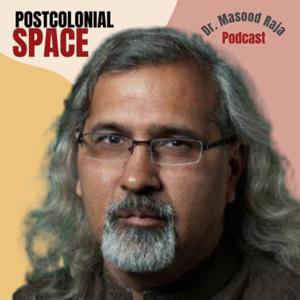
Postcolonial Space

Postcolonial Space

By Dr. Masood RajaEducation
Download on the App Store

Postcolonial Space episodes

  • S2E7: What are Microaggressions and How to Avoid them
    What are Microaggressions and How to Avoid them?| Workplace Microaggressions|Fix Your Office Climate In this video I briefly discuss workplace microaggressions within the context of academia and try to answer the question as to what are microaggressions and how to avoid them. This knwoledge is necessary to fix your office climate and to make it more humane and just and safe. I rely on the research published by Dr. Myron R. Anderson, and Kathryn S. Young, Ph.D. Please do take a look at their book: "Fix Your Climate" https://amzn.to/2Z2fzwB
    15 min
  • S2E6: Fatima Mernissi on Women Rights in Islam| Islamic History and Women
    This is a brief introduction to Fatima Mernissi's book "Women and Islam: An Historical and Theological Enquiry." I find this book to be one of the most significant works about women's rights in the Muslim world. View a talk by Fatima Mernissi here: https://youtu.be/eyZ1HlX1lxkNadvi, Akram. "Al-Muhaddithat.: (https://archive.org/details/AlMuhaddi...)
    20 min
  • S2E2: Book Discussions: The Dragon Can't Dance By Earl Lovelace| Caribbean Writers| Postcolonialism
    Summary and Analysis: The Dragon Can't Dance By Earl Lovelace| Caribbean Writers| Postcolonialism Earl Lovelace’s The Dragon Can’t Dance is one of the finest Postcolonial novels set in the postcolonial Trinidad. Lovelace, in my opinion, is a chronicler of the Afro-Trinidadian culture and traditions, just as V. S. Naipual, another Trinidadian author, mostly represents the Indo-Trinidadian aspects of postcolonial Trinidad and Tobago’s national cultures. "The Dragon Can’t Dance" is set in the Calvary Hill, an urban slum  and revolves around the lives of several Afro-Trinidadian characters with a special focus on Aldrick, the artist who plays the dragon in the annual Carnival tradition of Trinidad.  The Novel: https://amzn.to/39p7eGWFurther Reading: Raja, Masood. “We is All People: The Marginalized East-Indian and the Economy of Difference in Lovelace’sThe Dragon Can’t Dance." [https://postcolonial.net/wp-content/uploads/2019/03/We-Is-All-People.pdf] Cohen, Hella Bloom. "The clothing economy of Earl Lovelace's The Dragon Can't Dance." [https://www.researchgate.net/publication/275419983_The_clothing_economy_of_Earl_Lovelace's_The_Dragon_Can't_Dance]

    14 min
  • S2E1: How to Resist Becoming Part of an Oppressive System
    In this episode I discuss the struggle against oppressive and ideological systems, especially in trying not to become part of the system. I use my experience as a military officer and as an academic to explore these issues.  
    Further Reading: James C. Scott. "Anarchist Calisthenics" https://harpers.org/archive/2012/12/anarchist-calisthenics/
    28 min
  • S1E80: Some Takeaways from Online Teaching During COVID 19 in 2020
    Some Takeaways from Online Teaching During COVID 19 
    In this episode  I share some of the lessons learned while teaching online during the COVID 19 pandemic. Please feel free to share the teaching strategies that worked for you. In my case my campus closed in march and we had to stay home and teach from home. I used my YouTube channel as a resource and also live-streamed my lectures. I think we all should mostly stay home and maintain social distancing to make sure everybody is safe. In my case, I stayed home for the first whole month and used the time ti prepare and deliver my lectures while my wife perfected the art of gluten free baking:)
    10 min

About Postcolonial Space

From the publisher's feed

Dr. Masood Raja offers conversations on postcolonial studies, critical pedagogy, and politics. New episodes every week!! Website: masoodraja.com