
Sign up to save your podcasts
Or

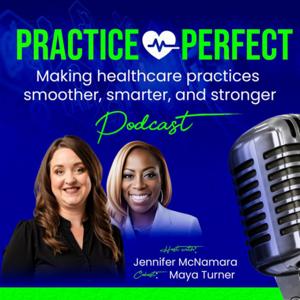


Change at work is inevitable. New leadership, new processes, new technology, new expectations—and sometimes an entirely new organization. But how we respond to that change can say a lot about us as professionals.
In this episode of Practice Perfect, Jennifer McNamara and Maya Turner get into the soft skills that can make or break your professional growth.
They discuss why organizational change can feel uncomfortable, why discomfort does not automatically mean a decision is wrong, and how employees and leaders can navigate change without allowing emotion to drive their decisions.
Jennifer and Maya also break down an important distinction: project management vs. micromanagement. Accountability, deadlines, checkpoints, and expectations are not necessarily micromanagement. The difference often comes down to trust.
The conversation also turns to professional communication and social media. You can disagree. You can raise concerns. You can challenge a decision. And when there are legitimate concerns involving compliance, fraud, harassment, safety, or unethical conduct, those concerns should be reported through the appropriate channels.
But disagreement does not require destroying someone else's dignity.
In this episode, Jennifer and Maya discuss:
• Adapting to organizational change without reacting emotionally
• Why soft skills matter at every level of your career
• Maintaining professional relationships even when you disagree
• Project management vs. micromanagement
• Trust, accountability, and expectations in the workplace
• Communicating concerns professionally
• Knowing the difference between a personality conflict and a legitimate compliance concern
• The AAPC Code of Ethics and professional conduct
• Why your social media presence matters professionally
• How online comments can follow you into future employment, leadership, and even expert witness work
• The importance of mentors when navigating difficult professional situations
One of the biggest takeaways from this conversation:
You can disagree with someone without attacking who they are.
Instead of, “This person clearly doesn't know how to code,” consider, “I disagree with this coding interpretation.”
Instead of, “They're a terrible leader,” consider, “I have concerns about this leadership decision.”
Professionalism doesn't mean never disagreeing. It means knowing how to disagree without losing your integrity in the process.
🎙️ Practice Perfect Podcast
Hosted by Jennifer McNamara with co-host Maya Turner
Practice Perfect brings real conversations about medical coding, compliance, leadership, revenue cycle, professional development, and the realities of working in healthcare.
Resources Mentioned:
AAPC Code of Ethics — Review AAPC's ethical principles, including integrity, respect, commitment, competence, fairness, and responsibility.
Learn more about Healthcare Inspired and our education programs at HealthcareInspiredLLC.com.
The elephant in the room is here — and waiting until January is not a strategy. 🐘
In this episode of the Practice Perfect Podcast, hosts Jennifer McNamara (Healthcare Inspired) and Maya Turner (Turner Expert Solutions) break down the CMS 2027 Proposed Rule and what it means for physicians, ASCs, and multi-specialty practices — right now, not next year.
🔑 What we cover:
• The projected ~45% Medicare revenue decrease when the conversion factor cut and expiring temporary increase stack together
• Why CMS is treating every non-E&M service as a "secondary procedure" — and what that does to bundled reimbursement
• How to run your 12-month revenue baseline and identify your high-dollar procedure exposure
• The 60-day comment period: how to make your voice count with CMS
• Where AI helps (and where it absolutely does NOT replace certified coders and compliance experts)
• The OBGYN global package overhaul — new prenatal risk coding and Medicaid trimester considerations
• Payer contract renewals and December-to-January care overlap
🎬 Plus — Lights, Camera, Healthcare! We're breaking down The Devil Wears Prada 2 and the leadership lessons hiding in plain sight.
✅ Action items: Pull your Medicare baseline. Audit your OBGYN workflows. Submit comments during the CMS window. And whatever you do — protect your coding, compliance, and education budgets.
🎤 Coming up: Maya Turner presents on Independent Dispute Resolution (IDR) at the AMBA Association conference.
👥 About your hosts:
Jennifer McNamara — Founder of Healthcare Inspired, specializing in revenue cycle optimization, compliance, and provider education.
Maya Turner — Founder of Turner Expert Solutions, coding, billing, and IDR subject-matter expert.
Subscribe for more practical, no-fluff healthcare operations education from Healthcare Inspired and Turner Expert Solutions.
The revenue cycle is undergoing its most significant transformation in a generation. AI-driven automation, evolving payer behavior, workforce shifts, and mounting compliance demands are redefining what it means to lead in orthopedic and musculoskeletal practices, ASCs, and health systems.
In this episode from the Bone & Joint Summit 2026, we bring together Sandy Giangreco Brown and Sonal Patel—respected voices in healthcare revenue cycle, compliance, and leadership—to explore how today's leaders can modernize operations, build resilient teams, and drive sustainable revenue performance without losing sight of the people, providers, and patients at the center of it all.
Our guests discuss the real challenges orthopedic leaders face: modifier accuracy and coding complexity, prior authorization bottlenecks, ASC expansion strategy, implant vendor negotiation, provider education, and how to bring AI into your practice the right way. Most importantly, they explore how leaders can support their teams through change, foster psychological safety, invest in career growth, and turn frontline staff into champions of transformation.
Whether you're running a practice, ASC, or health system, this conversation will reshape how you think about revenue cycle leadership in 2026 and beyond.
Guests: Sandy Giangreco Brown & Sonal Patel
From: Bone & Joint Summit 2026
Hosted by: Healthcare Inspired | Remote Healthcare Consulting & Education
Why do patients feel blindsided by medical bills even when they receive good faith estimates? Why can't healthcare workers confidently explain why care costs what it does? And why does talking about money create so much fear in healthcare?
In this episode, Jennifer McNamara (Healthcare Inspired) sits down with Elizabeth Johnson, CEO of MedicoCX, to tackle one of healthcare's biggest challenges: how to communicate honestly about costs without eroding trust.
They explore:
✓ Why chargemasters and allowables confuse patients (and what to do about it)
✓ How every healthcare worker needs basic revenue cycle literacy—not just billing staff
✓ The real reason the No Surprises Act hasn't solved surprise bills
✓ How physicians can navigate insurance requirements without gaming the system
✓ Why AI in healthcare communication is creating new trust problems
✓ Young adults and medical debt: an emerging crisis
✓ How to place staff in roles where they actually succeed
✓ Why employer investment in education pays dividends
This conversation reveals that financial transparency isn't a billing problem—it's a leadership and communication problem. When everyone from front office to clinical staff understands the revenue cycle, patients feel more prepared, less betrayed, and more likely to trust your practice.
Perfect for practice leaders, revenue cycle professionals, clinical staff, and anyone working to improve patient experience and practice performance.
Elizabeth Johnson — CEO of MedicoCX, serving 600+ community-based providers across 50 states. Passionate about medication access, healthcare advocacy, and building organizational competency around patient financial communication.
📍 Connect with Elizabeth: https://www.linkedin.com/in/ej-biologics/
Attend the Healthcare Advocate Summit (September, Vegas) to connect with like-minded healthcare professionals focused on patient advocacy, financial transparency, and healthcare transformation.
📌 Learn More: https://www.healthcareadvocatesummit.com/
Healthcare Inspired helps medical practices, hospitals, and ambulatory surgery centers optimize operations and strengthen performance through practical consulting, education, and professional development.
Listen now and discover how better communication creates better patient outcomes and healthier practice finances.
What does it take to build a financially resilient orthopedic practice in today's healthcare environment?
In this panel discussion from the 2026 Bone & Joint Summit, Jennifer McNamara is joined by Preston Alexander, Shannon Cameron, and Maya Turner to discuss the financial, operational, and leadership strategies that help orthopedic and musculoskeletal organizations thrive despite increasing reimbursement pressures.
The conversation explores how meaningful analytics, payer strategy, operational excellence, and collaboration can transform data into better business decisions while keeping patient care at the center of every decision.
Whether you're an executive, practice administrator, revenue cycle leader, coder, auditor, or physician leader, this episode offers practical insights you can immediately apply to strengthen your organization.
Jennifer McNamara
CEO & Founder, Healthcare Inspired LLC
Preston Alexander
Founder & CEO, Forward Slash Health
Shannon Cameron
Chief Operating Officer, Harvard Medical Faculty Physicians
Maya Turner
Founder & CEO, Turner Expert Consulting Services
Learn more about Healthcare Inspired LLC:
https://healthcareinspiredllc.com
Listen to more episodes of the Practice Perfect Podcast for conversations on revenue cycle management, compliance, coding, leadership, and healthcare innovation.
Follow Jennifer on LinkedIn for weekly insights on:
Subscribe to Practice Perfect so you never miss conversations with healthcare leaders who are helping practices improve performance, strengthen compliance, and build organizations designed for long-term success.
In This EpisodeMeet the PanelKey TakeawaysWho Should Listen?ResourcesConnect With Jennifer McNamara
The countdown to October 1 has already begun.
In this episode of the Practice Perfect Podcast, Jennifer McNamara and Maya Turner discuss why healthcare organizations shouldn't wait until implementation day to prepare for the FY2027 ICD-10-CM diagnosis code updates.
From documentation changes and coding revisions to compliance risks and provider education, this conversation focuses on practical steps every organization can take now to ensure a smooth transition. Whether you're a coder, auditor, provider, CDI specialist, or revenue cycle leader, this episode will help you prepare your team before the annual code update takes effect.
Jennifer and Maya also share implementation strategies, common pitfalls they see during ICD-10 transitions, and recommendations for educating providers before October Why early preparation matters for ICD-10 implementationarrives.
Jennifer McNamara, CCS, CPC, CDEO, CRC, CPMA, COSC, CGSC, COPC, CPCI
CEO & Founder, Healthcare Inspired LLC
Jennifer is a nationally recognized healthcare consultant, educator, author, and speaker with more than 20 years of experience in medical coding, auditing, compliance, documentation improvement, and revenue cycle management. She is passionate about helping healthcare organizations improve compliance while simplifying complex coding and regulatory changes.
Maya Turner, CPC, CPCO, CPMA, CPC-I, CFPC, CRC
Director of Auditing, Healthcare Inspired LLC
Maya is a nationally recognized coding, auditing, and compliance expert with more than 30 years of healthcare experience. As an AAPC Approved Instructor, consultant, and national speaker, she specializes in coding compliance, audit methodology, provider education, quality assurance, and operational excellence. Maya is known for translating complex coding guidance into practical strategies healthcare professionals can apply immediately.
🌐 Healthcare Inspired LLC: https://healthcareinspiredllc.com
🎙️ Practice Perfect Podcast
📅 Bone & Joint Summit 2026: July 16–17, 2026
Follow Healthcare Inspired LLC for educational resources, webinars, podcasts, and industry updates designed to help healthcare organizations improve compliance, strengthen documentation, and optimize revenue cycle performance.
If you enjoyed this episode, subscribe, leave a review, and share it with a colleague. Together, we can stay ahead of the changes—and ahead of the challenges.
Jennifer McNamara and Maya Turner dive deep into the Office of Inspector General's (OIG) February 2024 guidance on Medicare Advantage compliance, focusing on network adequacy and access to care. This episode unpacks the hidden compliance risks that medical practices and Medicare Advantage organizations face, exploring the tension between gatekeeping policies, utilization management, and patients' right to timely access to medically necessary care. The hosts discuss systemic failures in prior authorization processes, outdated policies, and the role of artificial intelligence in claims processing—offering practical insights for healthcare practices navigating these complex regulations.
Network Adequacy & Access to Care
Provider Education & Communication Gaps
Utilization Management & Prior Authorization Issues
Policy Review & Compliance Risks
Automation vs. Augmentation in Claims Processing
Contract Negotiations & Fighting Back
OIG Oversight Areas (Preview of Future Episodes)
Topics for Future Episodes: Risk adjustment methodologies, quality of care oversight, and deeper analysis of OIG regulatory framework for Medicare Advantage organizations
Upcoming Events:
In this episode, Jennifer and Maya unpack the “Mean Girl Effect” at work — the subtle, strategic behaviors that create confusion, undermine credibility, and erode psychological safety without ever appearing overtly aggressive.
From social exclusion and information control to polite denial and professional gaslighting, they explore how toxic dynamics operate beneath the surface — and why high-performing, ethical professionals are often the most impacted.
You’ll learn:
What the Mean Girl Effect actually looks like in real workplaces
The psychology behind gaslighting and why it escalates near accountability
How subtle manipulation destabilizes confidence and increases stress
Why your nervous system reacts before your logic does
Practical strategies to protect your clarity, credibility, and mental health
In the Eye on Healthcare Business segment, Jennifer and Maya provide a deep dive into the OIG’s updated Medicare Advantage Compliance Program Guidance — including key risk areas such as risk adjustment, marketing and enrollment, vendor oversight, and documentation expectations. They also discuss what increased enforcement activity from Attorneys General means for healthcare organizations today.
This episode is about naming patterns, protecting integrity, and understanding how culture, compliance, and credibility intersect.
OIG Medicare Advantage Industry Segment-Specific Compliance Program Guidance:
🔗 https://oig.hhs.gov/compliance/ma-icpg/
Do your days in the practice feel… the same?
Same problems.
Same conversations.
Same frustrations—just on repeat.
In this episode, we’re talking about The Groundhog Day Effect—that feeling of reliving the same challenges over and over, even though you’re working hard and staying busy.
This isn’t about motivation.
It’s about awareness, leadership, and breaking patterns that quietly keep practices stuck.
If you’ve ever thought, “Why does it feel like nothing is changing?” — this episode is for you.
The Groundhog Day Effect happens when:
Problems repeat because systems never change
Goals reset every year but behaviors stay the same
Teams feel busy but not aligned
Growth feels stalled despite effort
This episode dives into why this happens and—more importantly—how to break the cycle.
Why repetition is often a system issue—not a people issue
How leadership patterns create recurring outcomes
The difference between activity and progress
Why unresolved problems keep showing up in new forms
How clarity and intentional goals disrupt the cycle
The role staff support plays in creating real change
Why awareness is the first step toward momentum
How to stop “resetting” and start evolving
If your team keeps:
Struggling with the same issues
Revisiting the same conversations
Feeling frustrated or disengaged
This episode will help you see where the loop is happening—and how to lead your way out of it.
Change doesn’t come from doing more.
It comes from doing things differently.
Ask yourself this week:
“What keeps repeating in my practice—and what haven’t I changed yet?”
That answer holds the key to momentum.
Growth doesn’t have to mean longer days, burned-out teams, or constant overwhelm.
In this episode, we’re breaking down how to set SMART growth goals for your healthcare practice—goals that are clear, achievable, and actually supported by the people responsible for delivering patient care.
This is a deep dive into intentional growth, leadership clarity, and the often-missing link between goals, staff support, and patient success.
If you’re ready to grow smarter this year, this episode is for you.
Why being “busy” isn’t the same as real growth
How to redefine growth so it supports your vision—not stress it
The SMART goal framework explained for real healthcare practices
Common goal-setting mistakes that keep practices stuck
Why staff support is essential for achieving patient goals
How to align your team so goals don’t feel like extra work
Ways to create systems, training, and clarity that empower staff
How supported teams lead to better patient outcomes
Why focus beats hustle every single time
How to review, adjust, and celebrate progress without burnout
Patient goals don’t live on spreadsheets—they live in daily interactions.
In this episode, we dive into:
Connecting goals to purpose so teams understand the “why”
Making goals role-specific so everyone knows how they contribute
Replacing pressure with training, coaching, and clarity
Fixing systems instead of blaming people
Creating psychological safety so teams can speak up and improve
Celebrating progress to build momentum and confidence
When staff feel supported, patient care improves—and growth becomes sustainable.
Healthcare practice owners
Practice managers and leaders
Clinical teams ready for better systems
Anyone who wants growth without chaos
Check out our books on Amazon for practical strategies, leadership insights, and growth frameworks designed specifically for healthcare practices:
👉 Clear and Connected: How Effective Communication Builds Trust in Healthcare🔗 Amazon link: https://www.amazon.com/Clear-Connected-Effective-Communication-Healthcare/dp/B0DG8KFZWL#
This week, write down one SMART growth goal for your practice—and ask this question:
“How are we supporting the team responsible for achieving this?”
That answer changes everything.
If you found this episode helpful, be sure to follow the show, leave a review, and share it with another practice leader who’s ready for smarter growth.
Thanks for listening 🎧
Here’s to intentional, supported, sustainable growth.
From the publisher's feed