
Sign up to save your podcasts
Or

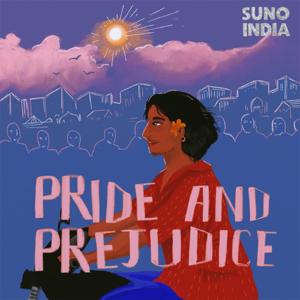


Garima Greh is the Central government’s pilot program for trans people. In collaboration with Community Based Organisations (CBOs), the Ministry of Social Justice and Empowerment has opened thirteen Garima Greh shelters across the country. Trans people can stay at a Garima Greh shelter for up to a year, during which they undergo studies and training so they can get a work placement at the end of their stay.
In this episode of Pride & Prejudice, reporter Suryatapa Mukherjee and contributing editor Menaka Rao visit Kolkata’s Gokhale Road Bandhan and Delhi’s Mitr Trust, to find out how the Garima Greh scheme is run and how its policies affect residents. This is part of a two-part series on Garima Greh. In our previous episode, you can find out how this new scheme has given some trans people a second chance at life.
Show notes:
Extend Garima Greh scheme to entire LGBTQIA+ community: HC - The Hindu
Many refusals later, finally a safe home for trans people | Kolkata News - Times of India
GUIDELINES FOR GARIMA GREH
See sunoindia.in/privacy-policy for privacy information.
Transgender persons are often on the run or are forced out of home. They are often unable to get stable formal jobs. The Garima Greh programme run by the Government of India under the Ministry of Social Justice and Empowerment wants to change the circumstances for transgender persons.
Suno India’s Menaka Rao and Suryatapa Mukherjee went to two shelter homes, one in Delhi run by Mitr Trust and one in Kolkata called Bandhan to report on the programme.
This is a two-part series. This episode will focus on the stories of people who have ended up in the Garima Greh Programme and their aspirations.
Show notes:
GUIDELINES FOR GARIMA GREH
National Portal For Transgender Persons
See sunoindia.in/privacy-policy for privacy information.
On this musical episode of Pride and Prejudice, reporter Suryatapa Mukherjee speaks to musician Ruhan Ali. Despite their popularity online, Ruhan says they are shunned from Qawwali spaces for being queer.
Qawwali is Sufi Islamic devotional music. As we discuss the discrimination in such spaces right now, we also go back in time to trace the queer roots of Qawwali and Sufi culture in India with the book 'Same-Sex Love In India: Readings from Literature and History.'
You will hear several of Ruhaan’s songs, Qawwali and others, on this episode. Tune in!
Show notes
Nusrat Fateh Ali Khan - Main To Piya Se Naina | Kalam Hazrat Ameer Khusro
Shree Dheeraj Bawra - Main To Piya Se Naina Laga Aayi Re
See sunoindia.in/privacy-policy for privacy information.
On the third anniversary of decriminalisation of same sex relations on 6 September, Axis Bank announced new policies for employees and customers from the LGBTQIA+ community. This included a provision for queer couples to open a joint account. But when Anisha Sharma and Bhakti Chachada went to do just that almost two months later, nobody at the bank knew what they were talking about.
Around that same time, Dabur released a Karwa Chauth ad for their Fem Gold bleach cream featuring two women fasting for each other. It was ultimately taken down after objections from Madhya Pradesh Home Minister Narottam Mishra. But the queer community was not happy with the advertisement either.
On this episode of Pride & Prejudice, reporter Suryatapa Mukherjee speaks to Anisha, Bhakti, and Gaysi Family editor Tejaswi, to find out how brands get things wrong when marketing to the queer community. Tune in.
Show notes:
The Lure Of The Pink Rupee | Forbes
Axis Bank’s Harish Iyer speaks to journalist Faye DSouza
Transphobic show provokes protest, Netflix employees storm out of office | WION News
Spotify CEO Defends Keeping Transphobic Joe Rogan Podcasts Online | Vice
See sunoindia.in/privacy-policy for privacy information.
The Centre has moved a Cabinet note to include transgender persons in the central list of Other Backward Classes or OBCs. This is so that trans people can access the 27% reservation for OBCs in educational institutions and government jobs.
But trans people have been protesting this move and demanding horizontal reservation, across different caste categories. On this episode of Pride and Prejudice, host Suryatapa Mukherjee speaks with Dalit transgender activist Grace Banu to understand what horizontal reservation is and how it would benefit transgender people. Grace Banu is the founder of Trans Rights Now Collective and India’s first openly transgender engineer.
For the full picture of our reservation policy, please listen to The Suno India Show episodes, OBC Bill: A history of reservation and how we got here and Caste Census: Why it stopped and why it must start again.
Additional reading:
Grace Banu Ganesan v. State of Tamil Nadu
Global Freedom of Expression | NALSA Judgment: Critique of the Indian Perspective Beyond the Adams-And-Eves Worldview
Grace Banu on Discrimination in Workplaces & Universities | India Culture Lab
Transgender population 2011 census
THE TRANSGENDER PERSONS (PROTECTION OF RIGHTS) ACT, 2019
See sunoindia.in/privacy-policy for privacy information.
Queer historian Saleem Kidwai passed away on 30th August, a week before the anniversary of Sec 377 being read down on 6th September. On this episode of Pride & Prejudice, our reporter Suryatapa Mukherjee speaks to Arif Zafar, an activist with the Naz Foundation International, about his passing.
On one hand, Arif is mourning Saleem’s loss, his friend since the 80s. On the other hand, he is celebrating decriminalisation as he was jailed under sec 377 in 2001. The legal battle by the Naz Foundation was a result of this arrest.
We read Saleem’s magnum opus with Ruth Vanita, ‘Same-Sex Love in India: Readings from Literature and History’ which was presented as evidence in the case against sec 377. We also reflect on his lesser-known contributions to the community, as well as Saleem’s own arrest in Canada at a gay bar in 1977 in a massive state crackdown.
Additional reading:
Project Bolo - Saleem Kidwai
Aliens In Lucknow
THE NIGHT CONRAD BLACK VISITED MONTREAL GAY LEATHER BAR TRUXX
Pride and Prejudice - How HIV intervention is failing LGBTQ youth
Sarapa | Abida Parveen | Official Music Video | Sufiscore
See sunoindia.in/privacy-policy for privacy information.
In 1998, India had its first intersex MLA, Shabnam Bano. In 1999, we had our first transgender mayor, Kamla Jaan but she was ousted from her post by the courts as it was reserved for women. In 2020, India’s first LGBT cell was started by the Nationalist Congress Party. It is headed by Priya Patil, a trans woman.
In this episode of Pride & Prejudice, host Suryatapa Mukherjee explores the growth of Queer politics in India, in conversation with Priya Patil. Priya joined the NCP in 2019. She had earlier contested civic body elections in Mumbai.
Pride & Prejudice is our series on all things LGBTQIA. LGBTQIA stands for lesbian, gay, bisexual, transgender, queer, intersex and asexual. We use ‘Queer’ as an umbrella term for all these identities.
Additional reading:
India's Had More Transgender Mayors Than We Originally Thought
See sunoindia.in/privacy-policy for privacy information.
Queer sexualities have been decriminalised and Pride parades are ceremoniously covered by the news media. But can everyone really march with pride? In this episode of Pride & Prejudice, we trace the evolution of Pride from Stonewall Riots in the United States, to NRC-CAA protests in India. Our reporter Suryatapa Mukherjee speaks to Pride organisers from Visakhapatnam, Guwahati, Hyderabad and Kolkata.
Shivakumar is the co-founder of Nestam and has been trying to organise Pride in Visakhapatnam for years. Nuzhat Nasreen Islam is the co-founder of Xomonnoy and she organises Pride in Guwahati. Rudra Kishore Mandal was part of the organising meeting for the first ever Pride walk in India which happened in Kolkata in 1999, and they still organise Pride in Kolkata. Dr. Karthik Bittu has helped organise Pride in various cities like Hyderabad, Bangalore and Delhi.
They speak about their experiences with the police, differences in politics within the community and what Pride really is about.
Additional reading:
Mumbai Pride: Over 50 People Charged With Sedition for Slogans Supporting Sharjeel Imam
Assam NRC: What next for 1.9 million ‘stateless’ Indians?
Citizenship Rights are LGBTQ rights: Thousands gather for Mumbai Pride
Sylvia Rivera’s “Y’all Better Quiet Down" Speech 1973
See sunoindia.in/privacy-policy for privacy information.
Two years since the abrogation of article 370, the Indian government is making moves to hold elections in the union territories of J&K and Ladakh. But in a region known for conflict, what is it like to be queer? Dr Aijaz says that not only is it difficult to build safe spaces for queer people in Kashmir, access to these spaces are impeded by curfews, communication blackouts and violence.
In this episode of ‘Pride & Prejudice,’ our reporter Suryatapa Mukherjee speaks to Dr Aijaz, the founder of Sonzal Welfare Trust. Sonzal is an NGO for LGBTQIA+ people in Kashmir that provides a range of legal support, mental health programs, crisis intervention and vocational training. Aijaz speaks about the history of queer culture in Kashmir, the daily realities of queers in Kashmir, as well as the impact of queerphobia, Islamophobia and regional conflict on his life.
Additional reading:
Prohibit Attempts To Medically ‘Cure’ Or Change Sexual Orientation Of LGBTQIA+ People : Madras High Court
Best of Chinki Minki ( Kashmiri Singers )
See sunoindia.in/privacy-policy for privacy information.
We have come a long way since the AIDS epidemic of the 80’s and 90’s. Some of the groups that the HIV intervention programs focused on are men having sex with men and transgender women. In fact that is how the fight against Section 377 of the Indian Penal Code that criminalises “unnatural sexual” relationships began as liberation is key to queer people’s health. Despite the advancements since, queer people are still bullied in schools and rejected by their families, resulting in them turning to high-risk activities for relief and escape. On the other hand, the intervention programs have not caught up with technological changes posed by dating apps.
We are embarking on an LGBTQ miniseries about all things queer in India today. For our first episode, reporter Suryatapa Mukherjee spoke to policy researcher Avinaba, HIV activist Firoz Khan, and a young person living with HIV, Vishwas*. Avinaba is a genderqueer person and a research fellow at the University of California, Los Angeles, and the co-founder of Pleqsus India foundation. Firoz Khan is a gay man who works with Alliance India on HIV outreach. Vishwas* is an alias for a 22-year-old bisexual man who contracted HIV as a young teen. We spoke to them about the need for a more comprehensive HIV intervention plan.
See sunoindia.in/privacy-policy for privacy information.
From the publisher's feed
Pride & Prejudice is our show on all things LGBTQIA+. Here we catch things missed by the mainstream, like queer history, loopholes in law and our everyday lives. This series is made by, of and…
6 Listeners
13 Listeners
0 Listeners

9 Listeners
0 Listeners

3 Listeners

10 Listeners
0 Listeners

2 Listeners
1 Listeners
3 Listeners
0 Listeners
5 Listeners
0 Listeners
0 Listeners
1 Listeners

0 Listeners