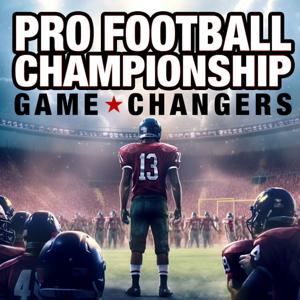
Pro Football Championship - Game Changers

Pro Football Championship - Game Changers

By Inception Point AISportsHistoryFootball
Download on the App Store

Pro Football Championship - Game Changers episodes

  • Pro Football Championship 17 - Redskins - Dolphins
    Welcome to our podcast on Super Bowl 17, a game that marked a significant moment in NFL history and showcased the triumph of one of the league's most storied franchises. This matchup between the Washington Redskins and the Miami Dolphins took place on January 30, 1983, at the Rose Bowl in Pasadena, California. As we delve into the details of this historic game, we'll explore the lead-up, the key players, the dramatic moments, and the lasting impact of what would become the Redskins' first Super Bowl victory. The 1982 NFL season was unlike any other in league history. A 57-day player strike reduced the regular season from 16 games to just 9, creating a unique and compressed schedule. Despite this unusual circumstance, both the Washington Redskins and the Miami Dolphins managed to navigate the shortened season and make their way to the Super Bowl. The Washington Redskins, led by head coach Joe Gibbs, had finished the regular season with an 8 and 1 record, the best in the NFC. Gibbs, in just his second year as head coach, had quickly turned the Redskins into a powerhouse. The team's success was built on a powerful running game and a stout defense, a formula that would become Gibbs' trademark in the years to come. At the heart of the Redskins' offense was "The Hogs," their nickname for their dominant offensive line. This group, featuring tackles Joe Jacoby and George Starke, guards Russ Grimm and Mark May, and center Jeff Bostic, was one of the best in the league. They paved the way for the Redskins' potent rushing attack, led by John Riggins. Riggins, at 33 years old, was having a career renaissance. Known as "The Diesel," Riggins was a bruising fullback who wore down defenses with his punishing running style. In the shortened season, he rushed for five hundred fifty three yards and 3 touchdowns, but it was in the playoffs where he truly shined, rushing for over 100 yards in each of Washington's three playoff games leading up to the Super Bowl. The Redskins' passing game was led by quarterback Joe Theismann, who had thrown for two thousand thirty three yards and 13 touchdowns during the regular season. His primary targets were wide receivers Charlie Brown and Art Monk, along with tight end Don Warren. On defense, the Redskins were anchored by their defensive line, nicknamed The Pearl Harbor Crew, because they were infamous and a day that will live in infamy,  for opposing offenses. This unit was led by defensive tackle Dave Butz and defensive ends Dexter Manley and Tony McGee. The secondary was headlined by safety Mark Murphy, who led the team with 6 interceptions. The Miami Dolphins, coached by the legendary Don Shula, had also finished the regular season with an 8 and 1 record. The Dolphins were looking to recapture the glory of their early nineteen seventies dynasty and win their first Super Bowl since 1974. The Dolphins' offense was led by young quarterback David Woodley, who had thrown for one thousand eighty yards and 5 touchdowns during the r
    This content was created in partnership and with the help of Artificial Intelligence AI.
    12 min
  • Pro Football Championship 16 - 49ers - Bengals
    Welcome to our podcast on Super Bowl 16, a game that marked a significant moment in NFL history and launched one of the greatest dynasties the sport has ever seen. This matchup between the San Francisco Forty Niners and the Cincinnati Bengals took place on January 24, 1982, at the Pontiac Silverdome in Pontiac, Michigan. As we delve into the details of this historic game, we'll explore the lead-up, the key players, the dramatic moments, and the lasting impact of what would become the 49ers' first Super Bowl victory. The 1981 NFL season was a year of transformation for both the San Francisco Forty Niners and the Cincinnati Bengals. The 49ers, led by third-year head coach Bill Walsh, had undergone a remarkable turnaround. Just two years prior, they had finished with a dismal 2-14 record. Now, they found themselves in the Super Bowl after a 13-3 regular season and two thrilling playoff victories, including the now-famous NFC Championship game against the Dallas Cowboys that ended with "The Catch" by Dwight Clark. At the helm of the Forty Niners offense was quarterback Joe Montana, a third-year player out of Notre Dame who was quickly establishing himself as one of the most promising young quarterbacks in the league. Montana's cool demeanor under pressure and his ability to read defenses were key factors in the Forty Niners success. His primary targets were wide receivers Dwight Clark and Freddie Solomon, along with tight end Charle Young. The Forty Niners running game was led by fullback Earl Cooper and running back Ricky Patton. While not the most prolific rushing attack in the league, their ability to gain tough yards and catch passes out of the backfield was crucial to Walsh's innovative "West Coast Offense. "On defense, the Forty Niners boasted a unit that had improved dramatically over the course of the season. Led by rookie cornerback Ronnie Lott, who would go on to have a Hall of Fame career, the 49ers' defense was known for its aggressive style and ability to create turnovers. Other key players included linebacker Jack "Hacksaw" Reynolds and defensive end Fred Dean. The Cincinnati Bengals, coached by Forrest Gregg, had also experienced a significant turnaround. After finishing 6-10 the previous year, they posted a 12-4 record in 1981 and made it to their first Super Bowl in franchise history. The Bengals were led by quarterback Ken Anderson, who had been in the league for a decade but was having the best season of his career. Anderson’s favorite targets were wide receivers Cris Collinsworth, a rookie who had quickly become one of the most dangerous receivers in the league, and Isaac Curtis. The Bengals' running game was anchored by Pete Johnson, a powerful fullback known for his ability to gain tough yards in short-yardage situations. On defense, the Bengals were led by defensive end Ross Browner and linebacker Reggie Williams. While not as highly regarded as the Forty Niners defense, the Bengals' unit had played well throughout the season a
    This content was created in partnership and with the help of Artificial Intelligence AI.
    11 min
  • Pro Football Championship 15 - Raiders - Eagles
    Welcome to our podcast on Super Bowl 15, a game that marked a significant moment in NFL history and solidified the Oakland Raiders' place as one of the league's most iconic franchises. This matchup between the Oakland Raiders and the Philadelphia Eagles took place on January 25, 1981, at the Louisiana Superdome in New Orleans, Louisiana. As we delve into the details of this historic game, we'll explore the lead-up, the key players, the dramatic moments, and the lasting impact of what would become the Raiders' second Super Bowl victory. The 1980 NFL season was a year of redemption and triumph for both the Oakland Raiders and the Philadelphia Eagles. The Raiders, led by head coach Tom Flores, had overcome significant adversity to reach the Super Bowl. They finished the regular season with an 11-5 record, earning a wild card spot in the playoffs. Their journey to the Super Bowl was marked by three road victories, including a memorable win over the Cleveland Browns in freezing temperatures, earning them the moniker "Road Warriors. “At the helm of the Raiders' offense was quarterback Jim Plunkett, whose career resurrection was one of the most compelling storylines of the season. Plunkett, a former Heisman Trophy winner and first overall draft pick, had been considered a bust after disappointing stints with the New England Patriots and San Francisco Forty Niners. He began the 1980 season as the Raiders' backup but was thrust into the starting role after an injury to starter Dan Pastorini. Plunkett seized the opportunity, leading the Raiders to nine wins in eleven starts and through their improbable playoff run. Plunkett’s primary targets were wide receivers Cliff Branch and Bob Chandler, along with tight end Raymond Chester. The Raiders' running game was anchored by Mark van Eeghen and Kenny King, providing a balanced attack that kept defenses off-balance. On defense, the Raiders boasted a unit known for its toughness and intimidation. The defensive line was led by John Matuszak and Lyle Alzaydo, while the secondary featured the hard-hitting Jack Tatum and Lester Hayes, who had an incredible 13 interceptions during the regular season. The Philadelphia Eagles, meanwhile, were making their first Super Bowl appearance in franchise history. Led by head coach Dick Vermeil, the Eagles had been building towards this moment for several years. They finished the regular season with a 12 and 4 record, winning the NFC East division. The Eagles' offense was led by quarterback Ron Jaworski, nicknamed "The Polish Rifle" for his strong arm. Jaworski's favorite targets were wide receivers Harold Carmichael and Charlie Smith. The running game was spearheaded by Wilbert Montgomery, who had rushed for over 1,000 yards during the regular season. On defense, the Eagles boasted one of the best units in the league. They were led by nose tackle Charlie Johnson, linebacker Bill Bergey, and a secondary featuring Herman Edwards and Roynell Young. This unit had allowed the fewest
    This content was created in partnership and with the help of Artificial Intelligence AI.
    12 min
  • Pro Football Championship 14 - Steelers - Rams
    Welcome to our podcast on Super Bowl 14, a game that showcased the culmination of one of the greatest dynasties in NFL history. This matchup between the Pittsburgh Steelers and the Los Angeles Rams took place on January 20, 1980, at the Rose Bowl in Pasadena, California. As we delve into the details of this historic game, we'll explore the lead-up, the key players, the dramatic moments, and the lasting impact of what would become the Steelers' fourth Super Bowl victory in six years. The 1979 NFL season was a year of contrasts for the two teams that would eventually meet in Super Bowl 14. The Pittsburgh Steelers, led by head coach Chuck Noll, were the defending Super Bowl champions and had established themselves as the team of the decade. They finished the regular season with a 12 and 4 record, dominating the AFC Central division. The Steelers were seeking their fourth Super Bowl title, which would cement their status as one of the greatest dynasties in NFL history. On the other side, the Los Angeles Rams had a tumultuous season. Despite finishing with a 9 and 7 record, barely winning the NFC West, they managed to make it to the Super Bowl. The Rams were led by head coach Ray Malavasi, who had taken over the team in 1978 after the controversial firing of George Allen. The Rams had been perennial contenders throughout the 1970s but had never reached the Super Bowl until this year. The Steelers' offense was a well-oiled machine, featuring a balanced attack that could beat opponents through the air or on the ground. At the helm was quarterback Terry Bradshaw, who was having one of the best seasons of his career. Bradshaw had thraown for 3,724 yards and 26 touchdowns during the regular season, establishing himself as one of the league's premier passers. Bradshaw’s primary targets were wide receivers Lynn Swann and John Stallworth, both of whom were having stellar seasons. Swann had caught 41 passes for 808 yards and 5 touchdowns, while Stallworth had 70 receptions for 1,183 yards and 8 touchdowns. The Steelers' running game was anchored by Franco Harris, who had rushed for 1,186 yards and 11 touchdowns, marking his eighth consecutive season as the team's leading rusher. On defense, the Steelers boasted their famous "Steel Curtain" defense, although it was beginning to show signs of age. Led by defensive tackle Mean" Joe Greene, linebackers Jack Ham and Jack Lambert, and defensive back Mel Blount, this unit was still one of the most formidable in the league. However, they had allowed more points during the regular season than in previous years, a sign that the dynasty might be nearing its end. The Los Angeles Rams, meanwhile, had faced significant challenges during the season. Their starting quarterback, Pat Haden, had been injured mid-season and was replaced by Vince Ferragamo, a second-year player who had thrown only five passes in his NFL career before taking over as the starter. Despite his inexperience, Ferragamo led the Rams to victory in six of
    This content was created in partnership and with the help of Artificial Intelligence AI.
    13 min
  • Pro Football Championship 13 - Steelers - Cowboys
    Welcome to our podcast on Super Bowl 13, a game that would go down in history as one of the most thrilling and star-studded championship matchups in NFL history. This contest between the Pittsburgh Steelers and the Dallas Cowboys took place on January 21, 1979, at the Orange Bowl in Miami, Florida. As we delve into the details of this historic game, we'll explore the lead-up, the key players, the dramatic moments, and the lasting impact of what many consider to be one of the greatest Super Bowls ever played. The 1978 NFL season was a year of dominance for both the Pittsburgh Steelers and the Dallas Cowboys. These two teams had established themselves as the premier franchises of the 1970s, and their meeting in Super Bowl 13 was seen as a clash of titans. The Steelers, led by head coach Chuck Noll, were seeking their third Super Bowl title in five years, while the Cowboys, under the guidance of legendary coach Tom Landry, were the defending champions and looking to cement their status as "America's Team. “The Steelers finished the regular season with a 14 and 2 record, the best in the NFL. Their offense was a well-oiled machine, featuring a balanced attack that could beat opponents through the air or on the ground. At the helm was quarterback Terry Bradshaw, who was having the best season of his career. Bradshaw had thrown for 2,915 yards and 28 touchdowns during the regular season, establishing himself as one of the league's premier passers. Bradshaw’s primary targets were wide receivers Lynn Swann and John Stallworth, both of whom would go on to have Hall of Fame careers. The Steelers' running game was anchored by Franco Harris, another future Hall of Famer, who had rushed for 1,082 yards and 8 touchdowns during the regular season. Harris was complemented by Rocky Bleier, a reliable back known for his toughness and clutch performances. On defense, the Steelers boasted their famous "Steel Curtain" defense, led by defensive tackle "Mean" Joe Greene. The linebacking corps featured Jack Ham and Jack Lambert, while the secondary was anchored by Mel Blount. This unit had allowed only 195 points during the regular season, the fewest in the NFL. The Dallas Cowboys, meanwhile, had finished the regular season with a 12 and 4 record and were the defending Super Bowl champions. Their offense was led by quarterback Roger Staubach, known as "Captain Comeback" for his ability to lead late-game rallies. Staubach's favorite target was Drew Pearson, while the running game was spearheaded by Tony Dorsett, who had rushed for 1,325 yards and 8 touchdowns during the regular season. The Cowboys' defense, nicknamed the "Doomsday Defense," was equally formidable. It featured players like Randy White, Harvey Martin, and Ed "Too Tall" Jones on the defensive line, with Thomas "Hollywood" Henderson at linebacker and Cliff Harris in the secondary. As game day approached, the stage was set for what promised to be an epic battle between two of the NFL's best teams. The Steelers
    This content was created in partnership and with the help of Artificial Intelligence AI.

    13 min
  • Pro Football Championship 12 - Cowboys - Broncos
    Welcome to our podcast on Super Bowl 12, a game that showcased the dominance of one of the most iconic teams in NFL history. This matchup between the Dallas Cowboys and the Denver Broncos took place on January 15, 1978, at the Louisiana Superdome in New Orleans, Louisiana. As we delve into the details of this historic game, we'll explore the lead-up, the key players, the dramatic moments, and the lasting impact of what would become the Cowboys' second Super Bowl victory. The 1977 NFL season was a year of redemption for the Dallas Cowboys. After losing Super Bowl 10 to the Pittsburgh Steelers two years earlier, the Cowboys were determined to reclaim their place at the top of the NFL. Led by head coach Tom Landry, the Cowboys had built a team that combined veteran leadership with young talent, creating a formidable force on both sides of the ball. The Cowboys finished the regular season with an impressive 12 and 2 record, the best in the NFC. Their offense was a well-oiled machine, featuring a balanced attack that could beat opponents through the air or on the ground. At the helm was quarterback Roger Staubach, known as "Captain America" for his leadership and clutch performances. Staubach had a stellar season, throwing for 2,620 yards and 18 touchdowns. Staubach’s primary targets were wide receivers Drew Pearson and Tony Hill, along with tight end Billy Joe DuPree Pearson, in particular, was known for his ability to make crucial catches in big moments, earning him the nickname "Mr. Clutch." The Cowboys' running game was anchored by Tony Dorsett, a rookie sensation who rushed for 1,007 yards and 12 touchdowns in his debut season. On defense, the Cowboys boasted the famous "Doomsday Defense," led by defensive tackle Randy White and defensive end Harvey Martin. The linebacking corps featured Thomas "Hollywood" Henderson, while the secondary was anchored by safety Charlie Waters. This unit was known for its aggressive play and ability to create turnovers. The Denver Broncos, representing the AFC, were making their first Super Bowl appearance in franchise history. Led by head coach Red Miller, the Broncos had surprised many by finishing the regular season with a 12 and 2 record and defeating the defending champion Oakland Raiders in the AFC Championship game. The Broncos' offense was led by quarterback Craig Morton, who had previously played for the Cowboys and was now facing his former team in the biggest game of his career. Morton's primary targets were wide receivers Haven Moses and Jack Dolbin. The Broncos' running game was a committee approach, with Otis Armstrong and Rob Lytle sharing the workload. On defense, the Broncos boasted the "Orange Crush Defense," nicknamed for their orange uniforms and crushing style of play. This unit was led by linebacker Randy Gradishar and defensive end Lyle Alzaydough, the Broncos' defense had been crucial to their success throughout the season, often winning games despite a sometimes inconsistent offense. As game
    This content was created in partnership and with the help of Artificial Intelligence AI.
    12 min
  • Pro Football Championship 11 - Raiders - Vikings
    Welcome to our podcast on Super Bowl 11, a game that marked a significant moment in NFL history and solidified the Oakland Raiders' place as one of the league's dominant teams of the nineteen seventies. This matchup between the Oakland Raiders and the Minnesota Vikings took place on January 9, 1977, at the Rose Bowl in Pasadena, California. As we delve into the details of this historic game, we'll explore the lead-up, the key players, the dramatic moments, and the lasting impact of what would become the Raiders' first Super Bowl victory. The 1976 NFL season was a year of redemption for the Oakland Raiders. After years of playoff disappointments, the Raiders had finally broken through to reach the Super Bowl. Led by head coach John Madden, the Raiders had built a team that combined veteran leadership with young talent, creating a formidable force on both sides of the ball. The Raiders finished the regular season with an impressive 13 and 1 record, the best in the NFL. Their offense was a well-oiled machine, featuring a balanced attack that could beat opponents through the air or on the ground. At the helm was quarterback Ken Stabler, known as "The Snake" for his ability to slither out of trouble and make plays. Stabler had a stellar season, throwing for 2,737 yards and 27 touchdowns. Stabler’s primary targets were wide receivers Cliff Branch and Fred Biletnikoff. Branch was a speed demon who could stretch the field, while Biletnikoff was a master of precise route-running and sure hands. Tight end Dave Casper, nicknamed "The Ghost" after the cartoon character Casper the Friendly Ghost, was another key weapon in the passing game. The Raiders' running game was anchored by the powerful Mark VanEeghen and the versatile Clarence Davis. This duo provided a perfect complement to the passing attack, keeping defenses honest and allowing Stabler to use play-action passes effectively. On defense, the Raiders boasted a unit known for its toughness and intimidation. The defensive line was led by John Matuszak and Otis Sistrunk, while the linebacking corps featured Phil Villapiano. The secondary, nicknamed "The Soul Patrol," was one of the best in the league, featuring Willie Brown, Skip Thomas, George Atkinson, and Jack Tatum. The Minnesota Vikings, meanwhile, were making their fourth Super Bowl appearance in eight years. Led by head coach Bud Grant, the Vikings had been one of the most consistent teams of the nineteen seventies, but had yet to capture a Super Bowl title. They finished the regular season with an 11, 2 and 1 record and were looking to finally break through and win the big game. The Vikings' offense was led by quarterback Fran Tarkenton, a future Hall of Famer known for his scrambling ability and improvisational skills. At 36 years old, Tarkenton was nearing the end of his career but still playing at a high level. His favorite targets were wide receivers Sammy White and Ahmad Rashad. The Vikings' running game was anchored by Chuck Foreman, one of
    This content was created in partnership and with the help of Artificial Intelligence AI.
    13 min
  • Pro Football Championship 10 - Steelers - Cowboys
    Welcome to our podcast on Super Bowl 10, a game that would go down in history as one of the most thrilling and dramatic championship matchups in NFL history. This contest between the Pittsburgh Steelers and the Dallas Cowboys took place on January 18, 1976, at the Miami Orange Bowl in Miami, Florida. As we delve into the details of this historic game, we'll explore the lead-up, the key players, the dramatic moments, and the lasting impact of what would become a classic Super Bowl showdown. The 1975 NFL season was a year of redemption for both the Pittsburgh Steelers and the Dallas Cowboys. The Steelers were the defending Super Bowl champions, having won their first title the previous year. They were looking to prove that their success was not a fluke and to establish themselves as a dynasty. The Cowboys, on the other hand, were seeking to reclaim their place at the top of the NFL after a few years of playoff disappointments. The Steelers, led by head coach Chuck Noll, had built a powerhouse team through shrewd drafting and player development. Their defense, known as the "Steel Curtain," was one of the most dominant units in NFL history. Led by defensive tackle "Mean" Joe Greene, the Steelers' defense was nearly impenetrable. The linebacking corps was equally impressive, featuring Jack Lambert, a fierce competitor known for his intensity on the field. On offense, the Steelers were led by quarterback Terry Bradshaw. While Bradshaw had struggled with consistency early in his career, he was now coming into his own as a leader and playmaker. His primary targets were wide receivers Lynn Swann and John Stallworth, both of whom were emerging as star players. The Steelers' running game was anchored by Franco Harris, a powerful back who had rushed for over 1,000 yards during the regular season. Harris was complemented by Rocky Bleier, who provided a change of pace and was an excellent blocker. The Dallas Cowboys, meanwhile, were looking to return to the Super Bowl after a few years of falling short in the playoffs. Led by innovative head coach Tom Landry, the Cowboys had earned the nickname "America's Team" due to their popularity and success throughout the Nineteen seventies. The Cowboys' offense was led by quarterback Roger Staubach, known for his ability to scramble and make plays under pressure. Staubach's favorite target was Drew Pearson, a sure-handed receiver who had a knack for making big plays in crucial moments. The Cowboys also had a strong running game, featuring fullback Robert Newhouse and the versatile Preston Pearson. On defense, the Cowboys boasted their famous "Doomsday Defense," featuring players like defensive tackle Randy White and safety Cliff Harris. This unit had been the backbone of the Cowboys' success for years, known for their ability to create turnovers and shut down opposing offenses. As game day approached, there was significant drama surrounding the Steelers' star receiver, Lynn Swann. Two weeks before the Super Bowl, Swann
    This content was created in partnership and with the help of Artificial Intelligence AI.

    12 min
  • Pro Football Championship 9 - Steelers - Vikings
    Welcome to our podcast on Super Bowl 9, a game that marked a significant moment in NFL history and solidified the Pittsburgh Steelers' place as one of the league's emerging powerhouses. This matchup between the Pittsburgh Steelers and the Minnesota Vikings took place on January 12, 1975, at Tulane Stadium in New Orleans, Louisiana. As we delve into the details of this historic game, we'll explore the lead-up, the key players, the dramatic moments, and the lasting impact of what would become the first of four Super Bowl victories for the Steelers in the Nineteen Seventies . The 1974 NFL season was a breakthrough year for the Pittsburgh Steelers. After decades of mediocrity, the Steelers had finally become contenders under head coach Chuck Noll. Noll, who had taken over the team in 1969, had methodically built a powerhouse through shrewd drafting and player development. The Steelers finished the regular season with a 10, 3 and 1 record, winning the AFC Central division and earning a spot in the playoffs. The Steelers' success was built on a foundation of exceptional talent, particularly on the defensive side of the ball. Their defense, which would come to be known as the "Steel Curtain," was one of the most dominant units in NFL history. Led by defensive tackle "Mean" Joe Greene, the Steelers' front four was nearly impenetrable. Alongside Greene were L C Greenwood, Ernie Holmes, and Dwight White, forming a fearsome defensive line that struck terror into opposing offenses. The linebacking corps was equally impressive, featuring Jack Ham and Andy Russell. In the secondary, Mel Blount was emerging as one of the best cornerbacks in the league. This defense had allowed only 189 points during the regular season, the second-fewest in the NFL. On offense, the Steelers were led by quarterback Terry Bradshaw. While Bradshaw had struggled with consistency early in his career, he was beginning to come into his own as a leader and playmaker. His primary targets were wide receivers Lynn Swann and John Stallworth, both rookies who would go on to have Hall of Fame careers. The Steelers' running game was anchored by Franco Harris, a powerful back who had rushed for over 1,000 yards during the regular season. Harris was complemented by Rocky Bleier, who provided a change of pace and was an excellent blocker. The Minnesota Vikings, meanwhile, were making their third Super Bowl appearance in six years. Led by head coach Bud Grant, the Vikings had dominated the NFC, finishing the regular season with a 10 and 4 record. They were looking to shake off the disappointment of their previous Super Bowl losses and finally claim the championship that had eluded them. The Vikings' offense was led by quarterback Fran Tarkenton, a future Hall of Famer known for his scrambling ability and improvisational skills. Tarkenton's favorite targets were wide receivers John Gilliam and Jim Lash. The Vikings' running game was anchored by Chuck Foreman, who had emerged as one of the best all-
    This content was created in partnership and with the help of Artificial Intelligence AI.

    11 min
  • Pro Football Championship 8 - Dolphins - Vikings
    Welcome to our podcast on Super Bowl 8, a game that showcased the dominance of one of the greatest teams in NFL history. This matchup between the Miami Dolphins and the Minnesota Vikings took place on January 13, 1974, at Rice Stadium in Houston, Texas. As we delve into the details of this historic game, we'll explore the lead-up, the key players, the dramatic moments, and the lasting impact of what would become known as the Dolphins' second consecutive Super Bowl victory. The 1973 NFL season was a year of redemption for the Miami Dolphins. After achieving perfection in 1972 with an undefeated season and a Super Bowl victory, many wondered if the Dolphins could maintain their level of excellence. Led by head coach Don Shula, the Dolphins proved that their success was no fluke, finishing the regular season with a 12 and 2 record and powering through the playoffs to reach their third consecutive Super Bowl. The Dolphins' journey to Super Bowl 8 was built on the foundation of their exceptional running game and stifling defense. Their offense was a well-oiled machine, featuring a balanced attack that could beat opponents on the ground or through the air. The team's success was built on a foundation of exceptional talent and coaching, with several future Hall of Famers playing key roles. At quarterback, the Dolphins had Bob Greasy, a precise passer who excelled in Shula's ball-control offense. Greasy‘s ability to manage the game and make smart decisions was crucial to the Dolphins' success. However, the true strength of the Dolphins' offense was their running game. The backfield trio of Larry Zonka, Jim Kiick, and Mercury Morris, nicknamed "The Perfect Backfield," continued to be a force to be reckoned with Larry Zonka, a bruising fullback and future Hall of Famer, was the centerpiece of the Dolphins' offense. His punishing running style and ability to gain tough yards made him one of the most feared runners in the league. Jim Kiick was a versatile back who could run and catch passes out of the backfield, while Mercury Morris provided speed and big-play ability. The Dolphins' offensive line, anchored by future Hall of Famers Jim Langer at center and Larry Little at guard, was one of the best in the league. They consistently opened holes for the running backs and provided excellent protection for Greasy. On defense, the Dolphins were equally formidable. Known as the "No-Name Defense" due to their perceived lack of star power, this unit was nonetheless one of the best in the NFL. Led by middle linebacker Nick Buoniconti, another future Hall of Famer, the Dolphins' defense had shut down opponents all season long. Safety Jake Scott, the MVP of the previous year's Super Bowl, and defensive end Bill Stanfill were other key contributors to this stingy unit. On the other side of the field were the Minnesota Vikings, representing the NFC. Led by head coach Bud Grant, the Vikings had finished the regular season with a 12 and 2 record and had defeated the Dallas
    This content was created in partnership and with the help of Artificial Intelligence AI.
    12 min

About Pro Football Championship - Game Changers

From the publisher's feed

Welcome to our podcast that takes you on an unforgettable journey through every Super Bowl ever played! From the very first championship game to the latest showdown, we break down each Super Bowl's most iconic moments, key players, unforgettable performances, and historic milestones. Whether you're a die-hard fan or a casual viewer, this podcast offers an in-depth look at the most exciting and pivotal games in NFL history. Tune in for an insightful exploration of the Super Bowl’s evolution, the changing landscape of football, and the legends who helped shape the game.