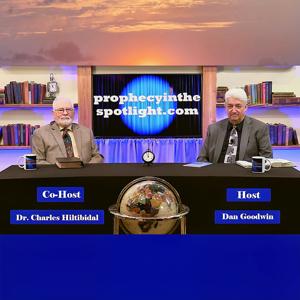
Prophecy In The Spotlight with Daniel Goodwin
The Rapture Timeline: A Scriptural Framework for the End Times
A comprehensive scriptural roadmap from the Church Age to the New Jerusalem.
In this theological discussion, Brother Goodwin and "Doc" outline the chronological sequence of biblical prophecy, focusing on the timing of the Rapture and the Tribulation. They present a "Pre-Tribulation" perspective, utilizing biblical types, the agricultural harvest model, and the structural layout of the Book of Revelation to argue for a secret "catching away" of the Church prior to God's wrath.
The "Shadow" of the Two-Stage Coming
Brother Goodwin introduces the "Shadow of His Coming," a concept suggesting that Christ’s first coming serves as a blueprint for His second. Just as the first coming involved a secret stage (the birth in Bethlehem known to few) and a public stage (Palm Sunday and the presentation of the Messiah), the second coming is divided into the secret Rapture and the public Second Coming at the Battle of Armageddon. This pattern suggests that the Rapture must be a distinct, "thief in the night" event for believers, separate from the visible return where "every eye shall see Him."
The Resurrection Harvest Model
The speakers explain that resurrection follows the three-phase agricultural harvest of ancient Israel. First Fruits represents Christ’s own resurrection; the Main Harvest represents the Rapture of the Church; and the Gleanings represent those saved and martyred during the Tribulation who are resurrected at the end of the period. This model accounts for the "two men in the field" mentioned in Matthew 24, which the speakers place in the context of the Tribulation gleanings rather than the Church-age Rapture.
Theological Foundations: Security and Wrath
A central argument for the Pre-Tribulation view is that the Church is not appointed to the "wrath of God," which they define as encompassing the entire Tribulation period starting from the first seal in Revelation 6. Furthermore, they assert that all born-again Christians—including "backsliders"—will be taken in the Rapture. This is based on the doctrine of "imputed righteousness," where salvation is a gift of eternal life that cannot be lost, rather than a reward for personal holiness or "looking for" the event.
The Mid-Tribulation Transition
The speakers identify the middle of the seven-year period as a critical turning point. At this juncture, the Two Witnesses (Moses and Elijah) ascend, the 144,000 Jewish witnesses are saved as "first fruits" of the Tribulation, and the Antichrist breaks his covenant to enforce the Mark of the Beast. They argue that those who confuse the Rapture with mid-tribulation events are mistakenly applying Jewish-specific prophecies to the Church.
The discussion concludes that a Pre-Tribulation Rapture is the only interpretation that maintains biblical consistency without contradiction. By distinguishing between God's plan for the Church and His plan for Israel during the Tribulation, the speakers argue that believers can have total assurance of their removal before the "great and terrible day of the Lord."



 View all episodes
