
Sign up to save your podcasts
Or

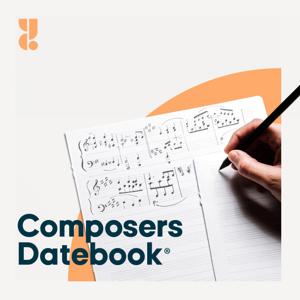

On today’s date in 1900, Tosca, a new opera by Giacomo Puccini had its premiere at the Teatro Costanzi in Rome. Rome was, in fact, the opera’s setting and those in the audience would have instantly recognized the real-life landmarks depicted on stage.
Puccini composed Tosca at the height of the “verismo” or “realism” craze in opera. It might seem downright silly that a theatrical form as unreal and stylized as opera could ever be described as “realistic” – but the idea was to depict “a slice of real life” – even if that slice includes melodramatic characters like a sadistic, lecherous police chief and a beautiful opera diva he lusts for.
To be as realistic as possible, Puccini visited Rome to listen to the early morning church bells from the ramparts of the Castel Sant’Angelo, the setting of his opera’s third act and to consult with a Roman priest on the details of the liturgy for the “Te Deum” that concludes Act I.
Some early audiences for Tosca thought Puccini had taken this realism thing way too far. One proper British reviewer wrote: “Those who were present were little prepared for the revolting effects produced by musically illustrating torture ... or the dying kicks of a murdered scoundrel.”
Giacomo Puccini (1858-1924): Tosca; Soloists and Philharmonia Orchestra; Giuseppe Sinopoli, conductor; DG 431 775
 View all episodes
 By American Public Media

4.7
176176 ratings
On today’s date in 1900, Tosca, a new opera by Giacomo Puccini had its premiere at the Teatro Costanzi in Rome. Rome was, in fact, the opera’s setting and those in the audience would have instantly recognized the real-life landmarks depicted on stage.
Puccini composed Tosca at the height of the “verismo” or “realism” craze in opera. It might seem downright silly that a theatrical form as unreal and stylized as opera could ever be described as “realistic” – but the idea was to depict “a slice of real life” – even if that slice includes melodramatic characters like a sadistic, lecherous police chief and a beautiful opera diva he lusts for.
To be as realistic as possible, Puccini visited Rome to listen to the early morning church bells from the ramparts of the Castel Sant’Angelo, the setting of his opera’s third act and to consult with a Roman priest on the details of the liturgy for the “Te Deum” that concludes Act I.
Some early audiences for Tosca thought Puccini had taken this realism thing way too far. One proper British reviewer wrote: “Those who were present were little prepared for the revolting effects produced by musically illustrating torture ... or the dying kicks of a murdered scoundrel.”
Giacomo Puccini (1858-1924): Tosca; Soloists and Philharmonia Orchestra; Giuseppe Sinopoli, conductor; DG 431 775

6,773 Listeners

38,915 Listeners

8,771 Listeners

9,202 Listeners

5,780 Listeners

927 Listeners

1,388 Listeners

1,287 Listeners
3,161 Listeners

1,975 Listeners
523 Listeners
183 Listeners

13,767 Listeners

3,083 Listeners

248 Listeners
28,135 Listeners

430 Listeners

5,470 Listeners
2,194 Listeners

14,142 Listeners

6,423 Listeners
2,515 Listeners
4,836 Listeners

574 Listeners
244 Listeners