
Sign up to save your podcasts
Or



This is a common question I get from people. What's more important, being mentally tough or physically tough? While both are super important, I do believe one should be given priority over the other.
Listen to this episode to learn which one and why!
In an era where we've grown accustomed to thinking our feelings should be taken into account when achieving results, it's become increasingly common to see people say they want to "become fitter" without doing something that makes them uncomfortable.
Regardless of how you define fitness, saying "I don't want to diet/ lift heavy", "I don't like eating protein/ going to bed early" or "I don't want to give up my sweets or alcohol" is exactly what keeps you from seeing progress. That's because Fitness doesn't give a sh*t about your feelings.
I recently attended a seminar with judo icon Neil Adams, and it reminded me how valuable it is to learn from people who’ve done the work, faced the challenges, and delivered under pressure. In this episode, I reflect on the lessons I took from him and why those lessons matter for anyone trying to grow—in sport, business, or health.
Fear is the root of all the reasons why we avoid putting in the work toward something. Fear of inadequacy, fear of failure, fear of loneliness, fear of embarrassment. But doing something extraordinary requires courage.
Can you name one thing that is worth doing that doesn't require courage? And courage is not the absence of fear, rather it's doing something DESPITE of fear.
In ancient Japan, misogi was a ritual of purification—standing beneath a freezing waterfall, chanting prayers, and cleansing the spirit through discomfort. They understood that doing something challenging, physically and mentally, would make you stronger on the other side. Now, I'm doing my own version of Misogi. Every month a new challenge. Some will be done in one day, some will be cumulative for the month. Some will test your body, some will test your mind and spirit. I hope that you all join me in these challenges. Go find them in my Substack!
My first appearance as a guest in a Podcast was in my friend's and client's podcast, Rise Health Podcast by Jana Renner. We discussed Purposeful coaching and my story as a coach. Go support her as she grows her content as a nutrition coach!
We often think of someone who has a more strict schedule as being farther along the process than we are. Waking up at a certain time, working out at a certain time, eating precise amounts of food, setting boundaries to certain activities, going to sleep at a precise time, are all things that are promoted by influencers and coaches.
But I argue that being precise should precede being intuitive, sometimes even being the first thing you do, not the last thing you achieve. At the end of the day we would like to take AWAY things that crowd your schedule, not add. That allows you to live a fuller life.
Recently I came across a podcast that discussed how the idea of Self-Love can be opposing to acts of Self-Betterment. "How can you love yourself if you are actively working on changing yourself?", "If you fail at achieving something you worked for, how do you avoid feeling like a failure?" and "Does loving yourself mean you should accept and be grateful for who you are?" were questions the host asked the guest.
I had a hard time even contemplating this question because to me, they are not opposites of each other, but rather one and the same.
I often talk about the difference between Minimum Effective Dose and Maximum Recoverable Rate when it comes to training. And that I often prefer to stay closer to MED since it allows for more time outside the gym, while still working toward your goals. But there is a certain time and place for MRR training. Here's how to find out when:
NEAT, which stands for Non-Exercise Activity Thermogenesis, is possibly the biggest, and most underutilized, tool in your arsenal for overall health, body recomposition and fitness.
Unlike exercise, it's not an overall stressor and therefore doesn't require you to make time for recovery. It helps you become nimble and remain active throughout the day.
And the best part is that it can help you outwork a bad diet. While changing nutrition and adding training routines to your week can be stressful and a challenge to most, adding NEAT activities will actually replenish your energy, your mood and your life.
From the publisher's feed
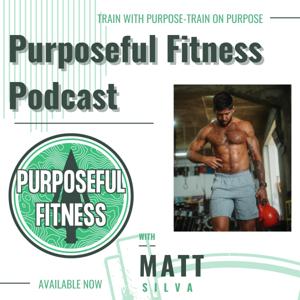
Purposeful Fitness is about the idea that the training, nutrition and habits you partake in should be guided toward your Purpose in life. Fitness has always been a means to an end. There's nothing that won't benefit form you being fit, but, at the same time, we want to make sure that your effort is well aligned with what you really want out of your life, your PURPOSE. Follow to learn more!