
Sign up to save your podcasts
Or



If you don’t know where you want to go, it’s fine not to know where you’re going.
Not all journeys have a destination– at least, not in the beginning. In the beginning you’re opening to options, surveying the landscape, getting a feel for who you are in the territory. It's the Open part of “Open, Close, Pivot.”
Rick Gold, one of the founders of the Pacific College of Oriental Medicine did not start out to found an acupuncture school. He started out aiming at being a hermit in backwoods Kentucky. But as with most things in life, where we start and we end up– it can be surprising.
Listen into this discussion of inquisitiveness, and how following something you find interesting will take you to places you didn’t know existed. And you just might help a lot of other people along the way.
Li Shi Zhen and Sun Si Miao, they shared an interest in alchemy. Often enough in our clinical work, patients will describe what happened with them as being magical, but as practitioners we know its not magic, its medicine. But it’s a medicine that works outside the parameters of Western thought, and the consensus of settled science.
In this conversation with Peter Firebrace we explore being a Zhen Ren, a True Human, and internal alchemical practice. The journey to Emptiness through the three Dan Tian, and the process of returning to source, unity and simplicity.
Listen into this conversation on the cultivation of Authenticity that goes from simple to complex and back again to simple.
Chinese medicine looks to the perspectives of the past to understand the unfolding present. And for sure, there are threads of connection and perspective that come down to us through the curious tides of history. At the same time, there is this unique moment.
What we hold, what we discover, these are yin yang aspects of how to make sense of a medicine patinated with history and lore.
In this conversation with Volker Scheid we discuss continuity and change in Chinese medicine. And the starting point is not the deconstructivism so popular in our present moment, but rather the inquiry of Chinese poets in the 12th century.
Listen into this discussion of living and dead traditions, the influence of Tang poetry, and the position of Chinese medicine in the modern world.
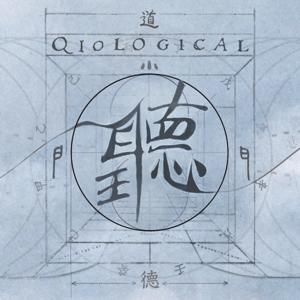
I still remember the moment when I realized that the character for Listen in traditional written Chinese was composed of the characters for Ears, Eyes, and Heart. Twenty two little strokes that unambiguously describe what is required to genuinely listen.
Deborah Woolf has spent the past year teaching a course on basic Chinese for East Asian medicine practitioners. And while the content of her course is of interest to me, in this conversation what I’m more focused on is what it is that she’s learned in the past year from teaching this material.
Listen into this conversation on the challenges of translation, the multidimensional nature of Chinese medicine, and key learnings and questions from the past year.
If you’ve studied Traditional East Asian Medicine in English, you no doubt have benefited from the work of today’s guest.
Dan Bensky has translated, written, published and taught for more years than most students entering an acupuncture school now have been alive.
He set off for Taiwan in the early 70’s to follow his interest in learning Chinese. Taiwan was still under martial law and the mainland… the mainland was going through the horrors of the Cultural Revolution. Chinese medicine, not even on the radar for him, but something happened in Taiwan.
Listen into this conversation on language, cultural, and learning medicine street smart style.
The book we used for studying acupuncture points at the Seattle Institute of Oriental Medicine was Foundations of Chinese Acupuncture. That along with Grasping the Wind were my entry into the study of channels and points. Both of those books had the handiwork of today’s guest, Andy Ellis.
Beyond those early translations, Andy has his fingerprints on a wide swath of books on herbal medicine and acupuncture.
Andy wandered his way into most of his learning. And he’s been generous with what he’s found.
Listen into this conversation on learning, finding teachers, and how putting yourself in front of what you’re curious about will open 緣分 Yuan Fen like opportunities, you can’t get any other way.
Often enough at the beginning of a sea change, you don’t know what’s coming next. You’re already part of a current, a flow, and while you can steer within current, you’re caught up in a flow that is beyond your capacity to fully understand.
In this conversation with Malvin Finkelstein we take a trip in the Wayback Machine to 197xx and his first encounter with acupressure, acupuncture and the potency of nutrition. We visit the early years of acupuncture education, the challenges of making a living when most states did not offer licenses to practice acupuncture, and crafting of standards and valid testing that would become the foundation for licensure.
Listen into this discussion of serendipity, passion, persistence and contribution.
What you grow up with, that’s what becomes normal. You could be smack dab in the middle of something extraordinary, but it’s simply everyday life for you.
In this conversation with Yvonne Lau we reflect on her experience of growing up as the daughter of immigrants from Southern China who ran an herb store in San Francisco’s Chinatown. It was a time when a few dedicated young people from the mainstream culture began to show a respectful and insatiable interest in Chinese medicine.
The interest of those young people was part of what would become a growing acceptance of Chinese medicine in the west. And the herb store; it too has grown through the years.
Listen into this conversation of playing hide and seek behind bags of uncut herbs, some of the characters who made up the Asian Chinese medicine community, how her parents herb store has become a major supplier of medicinals, and some of the challenges we face in this moment of time.
What do you do if you’re interested in learning and practicing acupuncture, but there are no schools, standards or licensure?
You built it yourself; with help of other spirited colleagues.
In this conversation with John Myerson we go back to the days when acupuncture was just coming into the mainstream of American life. It wasn’t there yet— but it was close enough to intuit.
John was there in the early days of the New England School of Acupuncture. And he helped to create the academic structures required to give our profession legitimacy in mainstream culture.
It was a grand experiment, gutsy when you think about it. And those early influential pioneers, they created the foundation we stand on today.
Listen into this discussion of vision, steadfastness and risk taking as we take a trip in the Wayback Machine to a moment when acupuncture and East Asian medicine was just beginning to emerge into mainstream culture.
The transport points are rich in story, function, connection and seem to have a capacity for engaging qi in profound ways as it flows from the tips of the fingers and toes, up to the elbows and knees. Lou points are particularly interesting as they both connect yin and yang channels.
In this conversation with Sean Tuten we investigate the capacity of the luo channels to act as a first defense against overwhelming experiences that come from the outside. How they both protect against and can storage pathogenic influences. More importantly, the kind of treatment that removes these obstructive influences.
Listen into this conversation on time streams, channel dynamics and understanding pathology as a useful response by the body.
From the publisher's feed