
Sign up to save your podcasts
Or



Cain built a city, and his descendants filled it with instruments, metalwork, and the first polygamy in human history.
Then Lamech killed a young man and composed a song about it for his two wives. Murder of that order does not arrive on its own. Smaller things clear the road for it, and Cain had shown anger and contempt for God long before his line reached that point.
Running alongside it is Seth’s line, which built nothing much and stayed near the cherubim. The second part of the series, preached on Resurrection Sunday.
Scripture: Genesis 3:21-24; Genesis 4:17-24; Jude 12-16
Read the full recap: radiantdew.org/messages/recaps/cities-without-god-2
One bite, fig leaves, exile, and then the first brick.
Adam’s family was put out of the garden but not out of Eden. They settled between the cherubim on one side and the turning sword on the other, so that they could see the throne and see what access to sin now cost, at the same time. Living in that position was itself a kind of worship.
Cain lost it, and the city he built afterward was what he chose instead. The message asks how much of what we have built we have quietly started depending on.
Scripture: Genesis 1:26-29; Genesis 2:18-25; Genesis 3:21-24
Read the full recap: radiantdew.org/messages/recaps/cities-without-god-1
Fasting appears in Scripture long before anyone gives it that name. Eden was a fast, and Adam broke it.
Cain was told to abstain from his anger and ate with it instead. Moses fasted forty days on three occasions and was carried through each one. Four captive boys turned down the royal diet for three years and finished ten times better than every specialist trained to advise the king.
Third in the Economy of Bread series. Isaiah 58 and Zechariah 7 put the question that decides the matter: when you fasted, was it for Me?
Scripture: Genesis 2:15-17; Genesis 4:3-7; Deuteronomy 9:9-29; Daniel 1; Daniel 9:1-23; Isaiah 58; Zechariah 7
Read the full recap: radiantdew.org/messages/recaps/economy-of-bread-3
In this powerful message, Dr. Oheneba Boadum unveils a fresh and thought-provoking perspective on fasting. Discover how economies function as the operating systems through which kingdoms and nations distribute life and how humanity’s first failure was a dietary one.
This sermon is a call to remain faithful to God’s prescriptions, to guard our consecration, and to resist the “bread” this world offers. Learn how fasting goes beyond food—abstaining from jealousy, anger, and worldly knowledge and how responding to divine promptings to fast can usher you into deeper, higher intimacy with God.
Listen, reflect, and step into a greater dimension of consecration.
Every life is fed by an economy. The question is not whether you are eating—but what is feeding you. In this message, The Economy of the Bread, we explore how hunger governs life, shapes allegiance, and reveals the systems sustaining us. From Eden’s fig leaves to Egypt’s food, from manna in the wilderness to Jesus as the Bread of Life, Scripture reveals two competing economies: one that sustains life apart from God, and one that restores life through union with Him. This sermon exposes how false bread manages hunger without healing it, while Christ offers true sustenance that ends striving, restores alignment, and forms a new way of living. Ultimately, whoever feeds you rules you—and freedom begins when we leave every other table and learn to live fed by Christ alone.
Access to God is not casual — it is constructed.
Be blessed as you listen.
Experiencing the fringes of the power of God through the gifts of the Spirit leads us to quantify the totality of God’s power based on our mere experiences. God’s omnipotence goes beyond that; the creation of the universe and the Earth, in terms of size, matter, and the time taken, might also not suffice in quantifying it. He can make dead things come back to life and calls those things that be not as if they were.
His omnipotence sets the basis of our trust in His ability and promises.
This message reveals God’s divine framework for sustained victory and visible deliverance. In The Four Pillars of Encounter, we explore how God establishes His people through Power, the Spirit, the Word, and the Blood of the Eternal Covenant.
Each pillar represents a stream of divine encounter—breaking cycles, releasing life, establishing truth, and securing covenant victory. Together, they form God’s revised itinerary for this season, calling believers to align early with what Heaven has already planned. This teaching invites listeners into intentional encounters that produce transformation, testimony, and endurance.
This message explores what it truly means to be a people set apart by God, not just polished churchgoers with programs. Drawing the patriarchs and the early church, Dr. Boadum teaches that biblical distinction is a process of separation, obedience, and sustained alignment with God’s presence that produces visible outcomes in real life—excellence, unusual wisdom, productivity, and solutions that society cannot ignore. Listeners will be challenged to reject a “presence-less” Christianity, to stop confusing emotions and church culture for God’s nearness, and to embrace the demands of holiness, consecration, and obedience as the pathway to carrying God’s distinguishing presence at home, at work, in business, and in nation-shaping spaces.
From the publisher's feed
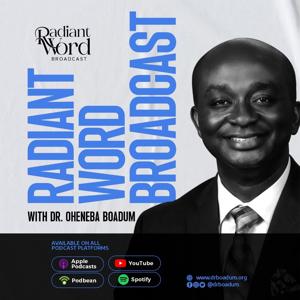
Sound biblical teaching with Rev. Dr. Oheneba Boadum, calling believers into deeper dimensions with God and away from superficial Christianity. A Word-centered teaching and healing ministry, gathered from many nations around one Table and one Word. Our home is Houston, Texas; the congregation reaches wherever you are. New messages weekly.
Log on to radiantdew.org for more resources.
Spirit → Light → Wisdom
Host: Dr. Oheneba Boadum