
Sign up to save your podcasts
Or

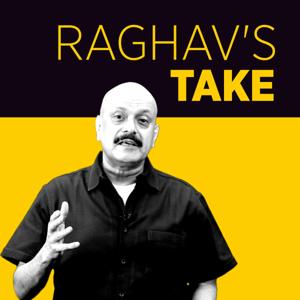


I am still reeling from Prime Minister Modi’s iconic, monumental (no, HE is not going to be happy with only two bombastic adjectives, so here goes a third), and “path-breaking” interview to Twinkle’s hubby. While everybody is scratching their heads over the “big why”, I think I’ve got it figured out. It was a clever (synonymously also desperate) ploy to wrest the initiative back from the hotheads in his party.
But if the prime minister had read Mary Shelley’s 18th century masterpiece, Frankenstein; or, The Modern Prometheus (“I used to read so many books at the village library”, Modi told the star struck Twinkle-hubby), he need not have done this embarrassing cameo. As per Wikipedia, it’s “the story of Victor Frankenstein, a young scientist who creates a hideous, sapient creature in an unorthodox scientific experiment”; but the monster murders Victor’s wife Elizabeth and brother William. Ever since then, “Frankenstein” has become a noun in English, describing a creature that turns violently upon its own creator.
Now to the billion-vote question: when and how did Modi lose the narrative to his political Frankenstein(s)? Let’s begin at the beginning…
Listen to the full podcast!
Learn more about your ad choices. Visit megaphone.fm/adchoices
Why is Prime Minister Narendra Modi castigating Rahul Gandhi for “running away from majority-dominated areas” to “take refuge in areas where the majority is in minority” (read Wayanad in Kerala)?
The naked implication was that Gandhi had somehow demeaned himself, committed blasphemy, by espousing the cause of minorities.
In this podcast the Quint’s Editor-in-Chief talks about how this one angry speech one angry speech,resurrected the binary of “separate electorates” – that Hindus should elect only Hindus, while Muslims do the same for Muslims – that ultimately led to the bloody partition of India in 1947. Tune in!
Learn more about your ad choices. Visit megaphone.fm/adchoices
The prequel to this podcast analyses the four economic reforms that this writer is willing to acknowledge under Modi 1.0; towards the end, the article lists three other data points – on FDI, bond and equity issuances – that Prime Minister Narendra Modi has been spinning at business summits to fortify his “economic dynamism.”
In this sequel, The Quint’s Editor-in-Chief Raghav Bahl highlights Modi’s big economic missteps with stats and a barrage of data points - just the way Modiji likes it. Tune in!
Learn more about your ad choices. Visit megaphone.fm/adchoices
Congress President Rahul Gandhi's NYAY (Nyuntam Aay Yojana, or Minimum Income Plan), which involves giving Rs 72,000 each to five crore poor families, is a big political idea for the 2019 polls that sent BJP political heavyweights into a panic mode.
Is the NYAY scheme actually feasible? The Quint's Editor-in-Chief Raghav Bahl explains how it can be done. Tune in!
Learn more about your ad choices. Visit megaphone.fm/adchoices
Prime Minister Narendra Modi 1.0 is done. With the Model Code of Conduct for the general elections now in force, his first innings has effectively ended. As he pitches to get re-elected, we should call in his report card. Tune in to Raghav's Take!
Learn more about your ad choices. Visit megaphone.fm/adchoices
In the late 1940s, India and China won independence from colonial rule. While the trajectories of their respective freedom movements were quite different, there was one remarkable similarity. Both broke up into two enemy nations apiece, China/Taiwan and India/Pakistan. For seven decades now, these pairs of estranged siblings have stayed implacable foes.
But as China closed in on Superpower status, it de-hyphenated from Taiwan without lessening its hostility. China is now America’s global rival, not Taiwan’s principal adversary.
Unfortunately, India has remained fixated on Pakistan, even as our economic heft has multiplied manifold. Yet we continue to invest almost all our diplomatic capital in an India-Pakistan binary. This must change. A country’s standing in world affairs is defined by who its primary competitors are. India must raise its gaze from Pakistan, without lessening its chokehold, yet diminishing the high-pitched/overt importance we give it in our foreign policy narrative.
Tune in to this podcast, where The Quint’s Editor-in-Chief Raghav Bahl talks about why India should get away from Pakistan crossfire and give primacy to China instead.
Learn more about your ad choices. Visit megaphone.fm/adchoices
Never waste a good crisis! Because what we weathered this week was a blood-curdling dogfight between India and Pakistan that could have nuked half the global population in and around South Asia.
I concede there is an element of exaggeration here, but big wars often get triggered by tiny accidents of judgement. So better to exaggerate than get tortured in a nuclear winter.
Yet a crisis of such proportions is also an opportunity to grow up, become a wiser person/country. So, will India and Pakistan seize upon this dangerous wrinkle to become mature, moderate nuclear neighbours?
Listen to the full podcast now!
Learn more about your ad choices. Visit megaphone.fm/adchoices
For those who haven’t heard, a political debate is raging on whether the 2019 elections will be modelled on 1971, when Indira Gandhi trounced a hasty, ill-matched Opposition alliance, or on 2004, when the “invincible” Vajpayee crumbled before a seemingly weak, incoherent patchwork of parties.
As with Modi in 2019, both elections were fought by towering incumbents against a bevy of disparate, but united, opponents. Arithmetically, it was a one-on-one contest in most Lok Sabha constituencies. But the two outcomes were like chalk and cheese.
What will be Modi’s fate? Before you can answer that question, you need to know the “how, what, why” of the landmark general elections of 1971 and 2004. Tune in to Raghav’s Take for more.
Learn more about your ad choices. Visit megaphone.fm/adchoices
On this episode of Raghav’s Take, The Quint’s Editor-in-Chief, Raghav Bahl explains how SP chief Akhilesh Yadav can unite Mayawati, Priyanka Gandhi and Rahul Gandhi, to pose a formidable threat to the Modi-led BJP in the 2019 General elections.
Learn more about your ad choices. Visit megaphone.fm/adchoices
Prime Minister Narendra Modi loves to talk up all his “pioneering firsts”. Well, he’s now added a truly lethal one to that arsenal – India’s first post-truth Budget!
Exactly 18 hours before the Budget was presented in Parliament, India dramatically upped its previous two years’ GDP numbers. Ironically, the most brazen “upgrade” was reserved for 2016-17 when demonetisation had clearly ravaged the economy.
How did this happen? Well, it was simply a matter of tweaking a few numbers and changing the “denominator” against which all key figures and metrics are calculated against. Listen, as Raghav Bahl explains, on this episode of Raghav’s Take.
Learn more about your ad choices. Visit megaphone.fm/adchoices
From the publisher's feed

3 Listeners

0 Listeners

17 Listeners
2 Listeners

65 Listeners

0 Listeners
0 Listeners

1 Listeners

0 Listeners