
Sign up to save your podcasts
Or

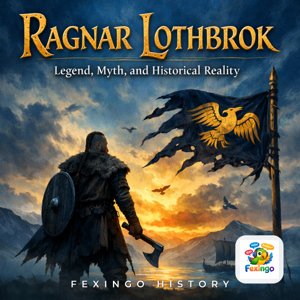


In this episode of Fexingo History, Lucas and Luna explore the vast Viking trade network that connected Scandinavia to the Islamic Caliphate and beyond. Drawing on archaeological finds from Birka, Hedeby, and the Russian river routes, they discuss how Viking merchants traded furs, slaves, and walrus ivory for silver dirhams and luxury goods. The conversation covers the role of the Rus Khaganate, the Volga trade route, and the account of Ibn Fadlan. They also touch on the controversial theory that Ragnar Lothbrok's legend may have been shaped by his sons' involvement in these eastern trade networks. No prior knowledge required—just a curiosity about the economic forces behind the Viking Age.
#VikingTrade #Birka #Hedeby #Dirham #IbnFadlan #Rus #VolgaTradeRoute #Silver #WalrusIvory #Slavery #Khaganate #Scandinavia #Caliphate #Archaeology #VikingAge #History #FexingoHistory #RagnarLothbrok
Keep every episode free: buymeacoffee.com/fexingo
This episode cuts through the sagas to examine the only near-contemporary source for a Viking leader named Ragnar Lothbrok: the Frankish Annals of St. Bertin. We explore the 845 siege of Paris, the figure Reginherus, and how later legends embroidered his story. Featuring the Frankish perspective, the role of Charles the Bald, and the Danegeld payment that may have sparked the myth. Also: how the chronicles differ from the sagas and what they reveal about early Viking warfare in West Francia.
#RagnarLothbrok #SiegeOfParis845 #AnnalesBertiniani #Reginherus #CharlesTheBald #FrankishChronicles #Danegeld #VikingAge #WestFrankia #Seine #VikingWarfare #MedievalHistory #LegendVsHistory #SaxoGrammaticus #GestaDanorum #PrimarySources #FexingoHistory #History
Keep every episode free: buymeacoffee.com/fexingo
In this episode, Lucas and Luna explore the serpent pit story that defines Ragnar Lothbrok's legendary death. They examine the earliest written accounts in Saxo Grammaticus's Gesta Danorum and the later Ragnars saga loðbrókar, comparing details like the type of snakes, Ragnar's reported last words, and how the tale evolved as a Christian allegory. The conversation also looks at the historical King Ælla of Northumbria, the archaeological evidence (or lack thereof) for snake pits in Viking-age England, and how the serpent pit became a central symbol in later literature and pop culture, from the Volsunga saga to the TV show Vikings. The hosts also consider whether the story borrows from earlier Germanic and Roman myths, and what it tells us about Viking concepts of honor, fate, and posthumous fame.
#RagnarLothbrok #SerpentPit #GestaDanorum #RagnarsSaga #VikingMythology #KingAella #Northumbria #SaxoGrammaticus #VolsungaSaga #NorseLegend #DeathOfRagnar #Ormr #SnakePit #VikingHistory #NorseMyth #FexingoHistory #History #MedievalLegend
Keep every episode free: buymeacoffee.com/fexingo
We all know the story: Ragnar Lothbrok, captured by King Ælla of Northumbria, thrown into a pit of vipers, and dying with a curse on his lips. But did it actually happen? In this episode, Lucas and Luna untangle the legendary snake pit from the fragmentary historical evidence. They explore the earliest written accounts—the Anglo-Saxon Chronicle's terse mention of a 'raiding king' and the later elaborations in the Gesta Danorum and Ragnars saga loðbrókar. How did a dying curse become the rallying cry for the Great Heathen Army's invasion of England? They'll discuss the political usefulness of martyrdom narratives, the archaeological traces of the conflict in Northumbria, and the enduring power of a myth that shaped Viking Age history. Along the way, they examine the role of Anglo-Saxon king Ælla, the contested site of the snake pit, and how later chroniclers Saxo Grammaticus and the anonymous saga author embellished the tale for dramatic effect. This is history as it was remembered, rewritten, and weaponized.
#RagnarLothbrok #SnakePit #AngloSaxonChronicle #GestaDanorum #RagnarsSaga #KingAella #Northumbria #VikingAge #GreatHeathenArmy #IvarTheBoneless #SaxoGrammaticus #LegendVsHistory #MedievalMyth #VikingHistory #NorthernEurope #FexingoHistory #History #Podcast
Keep every episode free: buymeacoffee.com/fexingo
In this episode, Lucas and Luna explore the legal and social world behind the Ragnar Lothbrok sagas. They discuss the Thing, the Norse assembly that governed Viking communities, and how blood feuds operated alongside early legal codes. Drawing on the Grágás law codes from Iceland and the Gulathing Law from Norway, they examine how disputes were resolved, how outlawry worked, and what the sagas reveal about justice in the Viking Age. The episode also touches on the role of chieftains, the concept of wergild, and how the famous 'blood eagle' punishment fits into this legal framework. A fresh angle on a familiar figure.
#VikingLaw #Thing #BloodFeud #Grágás #Gulathing #RagnarLothbrok #NorseSociety #Wergild #Outlawry #VikingAge #Iceland #Norway #NorseLaw #BloodEagle #Chieftains #FexingoHistory #History #NorthernEurope
Keep every episode free: buymeacoffee.com/fexingo
In this episode of Fexingo History, Lucas and Luna explore the tangled legacy of Ragnar Lothbrok's sons in East Anglia, focusing on the historical figure of King Edmund the Martyr and his conflict with the Great Heathen Army. Drawing from the Anglo-Saxon Chronicle, the Passio Sancti Eadmundi, and archaeological evidence from sites like Hoxne and Sutton Hoo, they disentangle legend from fact. Did Ivar the Boneless really martyr Edmund in a blood eagle ritual, or was that a later hagiographic invention? They examine the political landscape of 9th-century East Anglia, the role of King Edmund as a ruler under Viking pressure, and the subsequent cult of St. Edmund that shaped English identity. The episode also touches on coin hoards, the Viking overwintering at Thetford, and the enduring question of whether Ragnar's sons sought revenge or conquest. A nuanced look at how one Anglo-Saxon kingdom became the crucible for some of the most enduring Viking myths.
#RagnarLothbrok #EastAnglia #EdmundTheMartyr #GreatHeathenArmy #IvarTheBoneless #AngloSaxonChronicle #VikingHistory #MedievalEngland #BloodEagle #HoxneHoard #SuttonHoo #PassioSanctiEadmundi #Thetford #Danelaw #VikingMythology #History #FexingoHistory #NorthernEurope
Keep every episode free: buymeacoffee.com/fexingo
In 873, the Great Heathen Army wintered at Repton, Derbyshire, a site already sacred to the Anglo-Saxon Saint Wigstan. Decades later, a mass grave was discovered there, filled with the hacked bones of nearly 300 men. For years, archaeologists assumed it was the burial of the Viking army itself — perhaps even the final resting place of Ragnar Lothbrok's son Ivar the Boneless. But a re-examination of the bones, led by Cat Jarman, revealed something far darker: the victims were mostly young men, killed not in battle but in a single, brutal execution. Their bodies were dumped into a pit beneath a simple stone cairn. This episode unpacks the evidence: the carbon dating that rewrote the timeline, the weapon trauma that contradicts Viking funerary practice, and the unsettling possibility that the grave represents an Anglo-Saxon massacre of Viking prisoners. We explore what the site tells us about the real costs of the Viking wars — and why the myth of a warrior's grave took hold so stubbornly.
#RagnarLothbrok #Repton #VikingAge #GreatHeathenArmy #IvarTheBoneless #CatJarman #AngloSaxonEngland #MassGrave #Archaeology #VikingBurial #SaintWigstan #Derbyshire #CarbonDating #VikingWarfare #History #FexingoHistory #NorthernEurope #MedievalHistory
Keep every episode free: buymeacoffee.com/fexingo
In this episode, Lucas and Luna explore a little-known chapter of Viking expansion: the 844 raid on Santiago de Compostela in Galicia. While many know of the Viking attack on Seville the same year, fewer are aware that a Norse fleet also struck the emerging Christian pilgrimage center of Santiago. Lucas walks through the account in the Annales Bertiniani and later sources like the Historia Silense, discussing King Ramiro I of Asturias, the battle at Farum Brecantium (modern La Coruña), and the Norse fleet's advance on Santiago. They unpack how the raid fits into the larger pattern of Viking activity in Iberia, from the Guadalquivir to the Galician estuaries, and how the shrine of Saint James escaped destruction. Luna asks about the political context of Ramiro's reign and the nascent Reconquista, and they consider whether the Viking presence in Iberia influenced Carolingian defenses or Al-Andalus diplomacy. The conversation ends with a reflection on how peripheral this raid was to Norse sagas but how deeply it echoed in local Spanish chronicles. A vivid, specific look at a raid that could have changed Christian pilgrimage history.
#Viking #SantiagoDeCompostela #RamiroI #Galicia #Iberia #AnnalesBertiniani #HistoriaSilense #FarumBrecantium #LaCoruña #Reconquista #Pilgrimage #VikingRaid #844 #Norse #AlAndalus #Asturias #History #FexingoHistory
Keep every episode free: buymeacoffee.com/fexingo
In this episode of Fexingo History, Lucas and Luna explore the pivotal role of Ragnar Lothbrok's sons — Ivar the Boneless, Halfdan, and Ubba — in the conquest of the Anglo-Saxon kingdom of Mercia during the late 860s. Drawing on the Anglo-Saxon Chronicle, the Burghal Hidage, and archaeological evidence from Repton, they examine how the Great Heathen Army shifted from hit-and-run raids to territorial conquest, culminating in the capture of Nottingham and the wintering at Repton. The discussion also delves into the controversial figure of King Burgred of Mercia, his alliance with Wessex, and the political fragmentation that allowed the Vikings to establish the Danelaw. Special attention is given to the siege of Nottingham in 868 and the subsequent Treaty of Nottingham, which left Mercia crippled. Lucas and Luna unpack the military strategies, the role of fortified burhs, and the long-term consequences for Anglo-Saxon England.
#RagnarLothbrok #GreatHeathenArmy #Mercia #IvarTheBoneless #HalfdanRagnarsson #Ubba #Nottingham #Repton #Danelaw #AngloSaxonChronicle #VikingAge #History #FexingoHistory #KingBurgred #BurghalHidage #VikingConquest #SiegeOfNottingham #TreatyOfNottingham
Keep every episode free: buymeacoffee.com/fexingo
In this episode, Lucas and Luna dig into the Anglo-Saxon Chronicle's account of the Great Heathen Army and the sons of Ragnar Lothbrok. They explore how the chronicle, written from a Christian English perspective, frames the Viking invaders as instruments of divine punishment. The hosts compare the chronicle's entries with later saga traditions, examining contradictions around Ivar the Boneless, Halfdan, and Ubba. They discuss the Battle of Ashdown, the wintering at Repton, and the mysterious death of King Edmund. The conversation also touches on the chronicle's silences—what it leaves out about Viking leadership and motivation. A nuanced look at how history was shaped by the people who wrote it.
#AngloSaxonChronicle #GreatHeathenArmy #RagnarLothbrok #IvarTheBoneless #HalfdanRagnarsson #Ubba #Repton #BattleOfAshdown #KingEdmund #VikingAge #Northumbria #Mercia #Danelaw #BloodEagle #Fornaldarsögur #MedievalSource #History #FexingoHistory
Keep every episode free: buymeacoffee.com/fexingo
From the publisher's feed