
Sign up to save your podcasts
Or

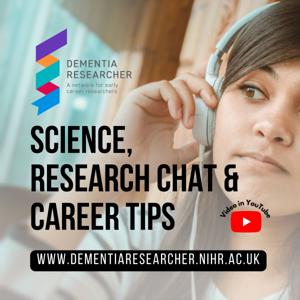

In this episode, Professor Louise Serpell is joined by 2026 Rainwater Prize winners Professor Dennis Dickson, Professor Melissa Murray and Dr Marc Busche.
They talk about their work and the science that led to them earning this much deserved award, reflecting on decades of research into tau and its role in neurodegenerative disease. The conversation explores how tau functions in the healthy brain, how it becomes harmful in conditions such as Alzheimer’s disease and progressive supranuclear palsy, and why certain brain regions are especially vulnerable.
The discussion covers different forms of tau, including soluble species that may disrupt how neurons fire before visible tangles appear. Brain banking, imaging and fluid biomarkers are highlighted as key tools for understanding disease differences and improving diagnosis. The importance of rare MAPT mutations and what they can teach us about future treatments is also explored.
Alongside the science, there are thoughtful reflections on mentorship, risk taking and the value of asking ambitious questions in dementia research.
Key Takeaways
Find out more about the Rainwater Foundation:
https://rainwatercharitablefoundation.org/
A transcript of this show, links and show notes and profile on all our guests are available on our website at https://www.dementiaresearcher.nihr.ac.uk.
If you prefer to watch rather than listen, you will find a video version of this podcast on YouTube, on our website, and in selected podcast platforms.
Leave us a tip:
https://dementia-researcher.captivate.fm/support
Follow us on social media:
Download and Register with our Community App:
https://www.onelink.to/dementiaresearcher
We gratefully acknowledge the support of our funders: Alzheimer’s Association, Race Against Dementia, Alzheimer’s Research UK, Alzheimer’s Society, and the National Institute for Health and Care Research.
The views and opinions expressed by guests in this podcast are their own and do not necessarily reflect those of the producers, funders, or sponsors.
Subscribe to our sister show 'Dementia Researcher The Blogs':
https://podfollow.com/dementia-researcher-blogs
 View all episodes
 By Dementia Researcher
5
22 ratings
In this episode, Professor Louise Serpell is joined by 2026 Rainwater Prize winners Professor Dennis Dickson, Professor Melissa Murray and Dr Marc Busche.
They talk about their work and the science that led to them earning this much deserved award, reflecting on decades of research into tau and its role in neurodegenerative disease. The conversation explores how tau functions in the healthy brain, how it becomes harmful in conditions such as Alzheimer’s disease and progressive supranuclear palsy, and why certain brain regions are especially vulnerable.
The discussion covers different forms of tau, including soluble species that may disrupt how neurons fire before visible tangles appear. Brain banking, imaging and fluid biomarkers are highlighted as key tools for understanding disease differences and improving diagnosis. The importance of rare MAPT mutations and what they can teach us about future treatments is also explored.
Alongside the science, there are thoughtful reflections on mentorship, risk taking and the value of asking ambitious questions in dementia research.
Key Takeaways
Find out more about the Rainwater Foundation:
https://rainwatercharitablefoundation.org/
A transcript of this show, links and show notes and profile on all our guests are available on our website at https://www.dementiaresearcher.nihr.ac.uk.
If you prefer to watch rather than listen, you will find a video version of this podcast on YouTube, on our website, and in selected podcast platforms.
Leave us a tip:
https://dementia-researcher.captivate.fm/support
Follow us on social media:
Download and Register with our Community App:
https://www.onelink.to/dementiaresearcher
We gratefully acknowledge the support of our funders: Alzheimer’s Association, Race Against Dementia, Alzheimer’s Research UK, Alzheimer’s Society, and the National Institute for Health and Care Research.
The views and opinions expressed by guests in this podcast are their own and do not necessarily reflect those of the producers, funders, or sponsors.
Subscribe to our sister show 'Dementia Researcher The Blogs':
https://podfollow.com/dementia-researcher-blogs

112,309 Listeners
146 Listeners

586 Listeners

4,903 Listeners

1,011 Listeners
327 Listeners
806 Listeners