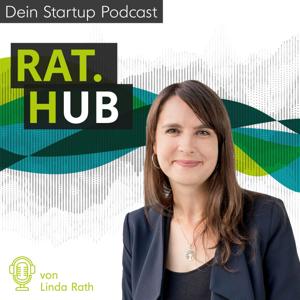
RAT.HUB | Dein Startup Podcast

RAT.HUB | Dein Startup Podcast

Download on the App Store

RAT.HUB | Dein Startup Podcast episodes

  • S3 Ep1: Wiebke Wetschera | karla Magazin
    Meine heutige Gästin ist Wiebke Wetschera. Sie ist Journalistin, hat u.a. beim Südkurier, bei der Stuttgarter Zeitung und bei der dpa ihre Erfahrungen sammeln können, bevor sie Co-Redaktionsleiterin beim karla Magazin wurde. Sie selbst bezeichnet sich als Lokaljournalistin aus Leidenschaft und ich freue mich, dass wir heute über die Notwendigkeit von Lokaljournalismus auf Augenhöhe sprechen können, was es bedeutet, eine Redaktion aufzubauen und damit neue Wege  zu gehen. 

    Falls ihr Fragen oder Anregungen habt, schreibt mir einfach via Twitter. Mein Handle ist @Lynda420. Ich bin Linda Rath und wir hören uns in der nächsten Folge wieder. 

    Der Podcast wird vom Media Tech Hub Potsdam unterstützt. Der MediaTech Hub Potsdam bündelt die lokale Expertise von Spezialisten und Visionären und umfasst ein Lab, einen Accelerator und eine jährliche Konferenz. Wir haben mit unserem Startup Vragments Büroräume im Lab in der Medienstadt Babelsberg gemietet und ich kann auch hier ihre Angebote weiterempfehlen. Weitere Informationen findet ihr unter https://www.mth-potsdam.de/. 

    Credits:
    • Produziert von Linda Rath
    • Foto Wiebke Wetschera: Mit freundlicher Erlaubnis von Wiebke Wetschera
    • Foto Linda Rath: Stefan Walter für Causalux Fotos 
    • Podcast Cover: Nicole Koppe
    • Musik/Jingles: Mara Niese
    • 48 min
    • S2 Ep12: Frederik Fischer | Neulandia
      Mein heutiger Gast ist Frederik Fischer. Er ist Gründer und Geschäftsführer von Neulandia, einem Wohn- und Arbeitsmodell für den ländlichen Raum. 2014 gehörte er zu den Gründungsredakteur*innen von Krautreporter,  er war Chefredakteur und Product Owner der großartigen Plattform piqd und war Lehrbeauftragter u.a. bei der Hamburg Media School und an der UdK in Berlin und unterrichtete in Seminaren wie Digitaler Journalismus, Social Journalism und Audience Engagement.

      Some key takeaways:
      • Neulandia umfasst zwei Produkte für eine nachhaltige Zukunft
        • Ko-Dörfer - Quartiere in ländlichen Räumen neu bauen (für u.a. Co-Working Space, Veranstaltungsräumen, Hofläden)
        • Summer of Pioneers - Sechs Monate in ländlichen Räumen wohnen - gemeinwohlorientierte Projekte werden umgesetzt - Zusammenarbeit mit Kommunen vor Ort
        • Problem auf kommunaler Ebene: geringe Budgets, viel wird/muss über Fördermittel finanziert 
        • Neulandia ist für alle, die Lust auf ländliche Räume haben v.a. auch Lust auf Anpacken
        • Storytelling/Inspirierende Geschichten als Vision und Ankerpunkt für Projektstart
        • Newsletter ist der wichtigste Vertriebskanal
        • Soziale Innovation wichtiger als technologische Innovation

        • More links:

          • Ko-Dorf in Wiesenburg
          • Country Golf Club in Wiesenburg
          • Summer of Pioneers in Mittweida
          • Summer of Pioneers in Wittenberge
          • Coconat
          • elblandwerker
          • Safari Laden
          • Imagined Communities

          • Falls ihr Fragen oder Anregungen habt, schreibt mir einfach via Twitter. Mein Handle ist @Lynda420. Ich bin Linda Rath und wir hören uns in der nächsten Folge wieder. 

            Der Podcast wird vom Media Tech Hub Potsdam unterstützt. Der MediaTech Hub Potsdam bündelt die lokale Expertise von Spezialisten und Visionären und umfasst ein Lab, einen Accelerator und eine jährliche Konferenz. Wir haben mit unserem Startup Vragments Büroräume im Lab in der Medienstadt Babelsberg gemietet und ich kann auch hier ihre Angebote weiterempfehlen. Weitere Informationen findet ihr unter https://www.mth-potsdam.de/. 

            Credits:
            • Produziert von Linda Rath
            • Foto Frederik Fischer: Mit freundlicher Erlaubnis von Frederik (Credit: https://manuelaclemens.de/)
            • Foto Linda Rath: Stefan Walter (Credit: Causalux Fotos)
            • Podcast Cover: Nicole Koppe
            • Episode Cover Art: Stephan Gensch
            • Musik/Jingles: Mara Niese
            • 51 min
            • S2 Ep11: Mirko Lorenz | Datawrapper
              Ich freue mich heute über einen ganz besonderen Gast. Die Rede ist von Mirko Lorenz, Innovationsmanager bei der Deutschen Welle und einer der  Mitgründer des Datenjournalismus-Tools Datawrapper.

              Some key takeaways:
              • Datawrapper als Beispiel, dass ein journalistisches Tool als Produkt funktionieren kann
              • Zu den Meilensteinen gehören u.a.: 
                • "Bau dein Chart und geh wieder raus" - Bereitstellung eines Werkzeuges, das zu einer Verhaltensänderung bei Nutzerinnen geführt hat
                • Immer gute Nutzung verzeichnet, selbst in der Beta-Phase, dabei nie Marketing getrieben (die starke Nutzung hat immer Mut gemacht)
                • Einzelne Poweruser haben Daten mit Datawrapper veröffentlicht - das hat geholfen!
                • Fokus auf Team mit diversen Skills, u.a. Gregor Aisch als CTO, David Kokkelink als CEO und Lisa Charlotte Muth für die Kommunikation
                • Die DDJ-Community seit der ersten Stunde
                  • Nicolas Kayser-Bril
                  • Lorenz Matzat
                  • Gregor Aisch
                  • Simon Rogers, damals beim Guardian Data Blog
                  • Daten sollten nicht für einen "Vermutungsjournalismus" instrumentalisiert werden
                  • Stattdessen sollten Daten für einen konstruktiven Journalismus genutzt werden, bspw. beim Thema Wasser, Verkehr, andere Formen des Wohnens, etc. - hier braucht es Erzähler, die sagen, wie Zukunftsszenarien aussehen könnten
                  • Mit der Interpretation vorhandener Daten gibt es Nischen, mit denen auch Geld zu verdienen ist, auch lokal
                  • Über das Datawrapper-Team sagt Mirko u.a.: Das hier ist keine Family. Das ist hier ne Firma. Aber Spass daran haben und große Begeisterung und Freude an der Arbeit ist schon wichtig
                  • Dem Team wird geboten: Budget für Ausbildung, zu Seminaren gehen, Konferenzen besuchen, ...

                  • More links:

                    • Whisper von OpenAI
                    • Javascript Library Svelte
                    • Newsletter von Hanna Ritchie
                    • Apocalypse Never

                    • Falls ihr Fragen oder Anregungen habt, schreibt mir einfach via Twitter. Mein Handle ist @Lynda420. Ich bin Linda Rath und wir hören uns in der nächsten Folge wieder. 

                      Der Podcast wird vom Media Tech Hub Potsdam unterstützt. Der MediaTech Hub Potsdam bündelt die lokale Expertise von Spezialisten und Visionären und umfasst ein Lab, einen Accelerator und eine jährliche Konferenz. Wir haben mit unserem Startup Vragments Büroräume im Lab in der Medienstadt Babelsberg gemietet und ich kann auch hier ihre Angebote weiterempfehlen. Weitere Informationen findet ihr unter https://www.mth-potsdam.de/. 

                      Credits:
                      • Produziert von Linda Rath
                      • Foto Mirko Lorenz: Mit freundlicher Erlaubnis von Mirko
                      • Foto Linda Rath: Stefan Walter für Causalux Fotos 
                      • Podcast Cover: Nicole Koppe
                      • Episode Cover Art: Stephan Gensch
                      • Musik/Jingles: Mara Niese
                      • 54 min
                      • S2 Ep10: Astrid Csuraji | Tactile News
                        Meine heutige Gästin ist Astrid Csuraji. Sie gründete 2018 gemeinsam mit Jacob Vicari das Innovationslabor Tactile News, um ursprünglich Kindernachrichten auf vernetzte Spielzeuge zu bringen. Mittlerweile arbeitet Tactile News an vielen weiteren spannenden Produkten, unter anderem an einer Dialog-Software, 100eyes, die Newsrooms mit der Zielgruppe auf eine einmalige Weise verbindet und zu mehr Dialog anregt.

                        Some key takeaways:
                        • Was macht einen gelungenen Pitch aus
                          • im Fokus sollte immer stehen: Was ist meine Idee, was ist mein Produkt
                          • Mit Überzeugung zum Produkt/Projekt kommt der Enthusiasmus, das ist wichtig 
                          • Viel wichtiger als Slides – Dynamik in der Präsentation - Team kann sich abwechseln, dabei klare Rollenverteilung einhalten
                          • Immer was in der Hand haben, kann vereinfachen
                          • Interaktion mit dem Publikum suchen
                          • Spektakel erzeugen, ohne albern zu sein
                          • Vorbereitung: Vorher durchspielen!
                          • Wenn man selbst nicht gut präsentieren kann, such dir jemanden im Team, das präsentieren kann
                          • 100eyes, eine browserbasierte Software mit Dashboard. Es verbindet verschiedene Messenger und die Newsrooms können plattformübergreifend z.B. nachrichten verschicken, fragen stellen und den input einsammeln und nutzen.
                          • Generell probiert Tactile News innovative Produkte/Services aus, um Redaktionen besser beraten zu können
                          • Dabei sind Technologien nur Hilfsmittel im Journalismus
                          • Das Unternehmen lebt New Work. Man kann zwar nicht alles nach Zoom verlagern, aber es gibt viele Freiheiten für das Team, z.B. tägliche Freiräume für kreative Nachdenkzeit, flexible Arbeitszeiten (manche beginnen um 8 Uhr, damit es familienkompatibel ist, andere starten deutlich später in den Tag)
                          • es gibt tägliche "Team dailys", Developer standups etc.
                          • Auch die Konfliktkultur ist entspannt ausgeprägt: "wir streiten sehr offen"
                          • Sie haben es angewöhnt, mit einem Coach zu arbeiten – sehr hilfreich
                          • Über Innovationen wird so gedacht: "die technologischen Möglichkeiten muss man zum einen umarmen, aber auch kritisch betrachten"

                          • More links:

                            • Interessante Ressourcen für angehende Journalist*innen:
                            • Nieman Lab
                            • Reuters Institute for the studies of journalism
                            • Hamburg Media School
                            • LSE Media
                            • Blaupause Newsletter

                            • Falls ihr Fragen oder Anregungen habt, schreibt mir einfach via Twitter. Mein Handle ist @Lynda420. Ich bin Linda Rath und wir hören uns in der nächsten Folge wieder. 

                              Der Podcast wird vom Media Tech Hub Potsdam unterstützt. Der MediaTech Hub Potsdam bündelt die lokale Expertise von Spezialisten und Visionären und umfasst ein Lab, einen Accelerator und eine jährliche Konferenz. Wir haben mit unserem Startup Vragments Büroräume im Lab in der Medienstadt Babelsberg gemietet und ich kann auch hier ihre Angebote weiterempfehlen. Weitere Informationen findet ihr unter https://www.mth-potsdam.de/. 

                              Credits:
                              • Produziert von Linda Rath
                              • Foto Astrid Csuraji: Mit freundlicher Erlaubnis von Astrid, Credit: Andreas Tamme 
                              • Foto Linda Rath: Stefan Walter für Causalux Fotos 
                              • Podcast Cover: Nicole Koppe
                              • Episode Cover Art: Stephan Gensch
                              • Musik/Jingles: Mara Niese
                              • 48 min
                              • S2 Ep9: David Schraven | CORRECTIV
                                Heute spreche ich mit David Schraven: Journalist, Gründer und Verleger von CORRECTIV, Mitgründer der Online-Journalistenschule Reporterfabrik, Vorstandsmitglied des Netzwerks Recherche, Entrepreneur und gefühlt mindestens einmal täglich sehr präsent in mindestens einen meiner Social Media Feeds. 
                                Wir sprechen über die Zeit der Aufklärung und die wichtigen Aufgaben des Journalismus in einer demokratischen Gesellschaft. Die gute Nachricht: Journalismus kann jeder. Und trotzdem braucht es technische Systeme, Weiterbildungsmöglichkeiten und Gründungs-Know How. Alles, was CORRECTIV im Portfolio hat. David spricht auch über die Erfolge mit Wolf Schneider/Reporterfabrik auf Tiktok (> 450K Follower), die Rolle der Sozialen Medien und welche Skills angehende Journalist:innen mitbringen sollten. Also für alle was dabei. Viel Spaß beim Hören.

                                Some key takeaways:
                                • Die Zeit der Aufklärung als Katalysator unserer heutigen gesellschaftlichen Strukturen. 
                                • Journalismus als eine der wichtigsten Aufgaben in einer demokratischen Gesellschaft.
                                • Die Blogosphäre war zwar der erste Versuch echter digitaler Partizipation, es hakte aber oft daran, dass es häufig "nur" um Finanzierung ging, ggfs. noch um die Technik und das "Wie", im Endeffekt aber keiner was zu sagen hatte. 
                                • Journalismus kann jeder.
                                • Man muss den Leuten Werkzeuge in die Hand geben - Ausbildung, Tools, Gründungswissen, um eine "Redaktionelle Gesellschaft" etablieren zu können.
                                • Community-Journalismus heißt zu fragen: Was ist vor Ort wirklich relevant? - Da fängt Journalismus nicht an mit dem Schreiben, sondern mit dem Reden.
                                • Das Reden fängt an im Sinne der Europäischen Stadt - Marktplatz mit Bars/Cafés, Wohnungen, ... ein Ort, an dem die Menschen zusammen kommen und gemeinsam handeln - dieser Kerngedanke muss wieder gewonnen werden. Und der Journalist muss zurück zu diesem Markt, um erstmal zu erfahren, wovon die Menschen vor Ort überhaupt reden.
                                • Ich muss mich auf den Marktplatz stellen, nicht reden, sondern zuhören.
                                • Journalismus - ich muss mich um Events/Veranstaltungen kümmern, um Geschichten zu hören. 
                                • Schlecht, wenn man Journalismus nur so versteht: 
                                  • Termin-Journalimus - ich fahre hin und schreibe auf.
                                  • Beobachtung - ich habe einen Gedanken und frage dazu.
                                  • Viel eher sollte Journalismus so verstanden werden: Was erzählen die Anderen? 
                                  • CORRECTIV: viel Netzwerkarbeit mit Zuhörkultur. Events werden veranstaltet. Mittlerweile sechs Standorte, Türen sind auf!
                                  • Kultur des Anpackens. Nahbar sein.
                                  • "Ich halte nichts von der Akademisierung des Journalismus." Du brauchst Menschen, die mit Menschen können. 
                                  • Reporterfabrik Ort der Ausbildung.
                                  • Skills, die mitgebracht werden müssen: für die offene Gesellschaft sein, leistungsbereit sein, Niederlagen einstecken können, aus Fehlern lernen, innere Resilienz, ...
                                  • Wir müssen eigene Reichweiten aufbauen. Reichweiten, die wir kontrollieren können. Der Fokus auf die großen Social Media Plattformen ist falsch.
                                  • Gründerwelle kann antizipiert werden. 
                                  • Mit technischem System, Ausbildungsmöglichkeiten und Gründerdenken.

                                  • More links:

                                    • CORRECTIV wurde mit einer Theodor Heuss Medaille ausgezeichnet
                                    • Davids Buch: Was wir wollen
                                    • Wer mit David auf dem Marktplatz in Bottropp schnacken möchte
                                    • Reporterfabrik
                                    • Mehr Informationen über beabee
                                    • Wolf Schneider auf Tiktok
                                    • CORRECTIVS Starthub

                                    • Falls ihr Fragen oder Anregungen habt, schreibt mir einfach via Twitter. Mein Handle ist @Lynda420. Ich bin Linda Rath und wir hören uns in der nächsten Folge wieder. 

                                      Der Podcast wird vom Media Tech Hub Potsdam unterstützt. Der MediaTech Hub Potsdam bündelt die lokale Expertise von Spezialisten und Visionären und umfasst ein Lab, einen Accelerator und eine jährliche Konferenz. Wir haben mit unserem Startup Vragments Büroräume im Lab in der Medienstadt Babelsberg gemietet und ich kann auch hier ihre Angebote weiterempfehlen. Weitere Informationen findet ihr unter https://www.mth-potsdam.de/. 

                                      Credits:
                                      • Produziert von Linda Rath
                                      • Foto David Schraven: Mit freundlicher Erlaubnis von Correctiv.  
                                      • Foto Linda Rath: Stefan Walter für Causalux Fotos 
                                      • Podcast Cover: Nicole Koppe
                                      • Episode Cover Art: Stephan Gensch
                                      • Musik/Jingles: Mara Niese
                                      • 47 min
                                      • S2 Ep8: Markus Beckedahl | Netzpolitik.org
                                        Mein heutiger Gast braucht keine Einführung und trotzdem gibt es hier ein paar Highlights: Ich spreche mit dem Mitgründer der re:publica-Konferenz und dem Gründer von netzpolitik.org. Er hat das Buch Die Digitale Gesellschaft geschrieben, ist Mitglied im Medienrat der Landesmedienanstalt Berlin-Brandenburg und war von 2010-2013 Mitglied in der Enquete-Kommission "Internet und digitale Gesellschaft" im Deutschen Bundestag. Die Rede ist natürlich von Markus Beckedahl. 
                                        Ich freue mich sehr, dass er sich die Zeit für mich genommen hat und über seinen Sommer 2022 spricht - darüber, was es bedeutet, Verantwortung abzugeben und offen für neue Abenteuer zu sein.
                                        Some key takeaways:
                                        • 20 Jahre lang hat Markus 60-80h pro Woche gearbeitet - da fällt es erstmal schwer, weniger zu machen. Und trotzdem wagte er diesen Schritt Anfang des Jahres.
                                        • Er geht der Frage nach: Was möchte ich jetzt eigentlich?
                                        • Markus spricht über das Netzpolitik-Team und darüber, wie so ein Team zusammengestellt wird - Diversität immer noch eine Herausforderung, aber sie haben auch vieles sehr richtig gemacht.
                                        • Der Organisationsentwicklungsprozess bei Netzpolitik ist on-going. Es wird gefragt: Wie wollen wir Netzpolitik.org weiter entwickeln; Strukturen schaffen, die alle einbinden, den Laden aber nicht lahm legen; wofür steht Netzpolitik eigentlich in 2022? Fragen, die in diesem Prozess beantwortet werden sollen.
                                        • Wir hören mehr Ideen zur Finanzierung und welche Schritte Netzpolitik.org durchlaufen musste, bevor es dann mit dem spendenbasierten Modell geklappt hat. Markus verrät auch, welche Werkzeuge für spendenbasierte Finanzierung wichtig sind, wie u.a. Transparenz und stetige Kommunikation
                                        • Wir diskutieren auch über politische Partizipation und darüber, was sich alles in den letzten 15 Jahren verändert hat. Wie Obama damals einen Standard setzte, der sich bis heute in der asynchronen Kommunikation der Parteien durchzieht. 
                                        • Markus macht uns Hoffnung, dass sich die digitalen Transformationsprozesse in der Gesellschaft in eine richtige Richtung bewegen. Er nimmt das auch zum Anlass, Ausdauer/Resilienz und Motivation in seiner alltäglichen Arbeit zu finden.
                                        • An seiner Work-Life-Balance arbeitet er gerade. Wenn er nicht Joggen/Schwimmen/Yoga-aktiv ist, trifft er sich mit Freunden, liest gute Bücher und schaut spannende Serien.

                                        • More links:
                                          • Fünf Jahre #Landesverrat
                                          • re:publica Konferenz
                                          • Netzpolitik.org

                                          • Falls ihr Fragen oder Anregungen habt, schreibt mir einfach via Twitter. Mein Handle ist @Lynda420. Ich bin Linda Rath und wir hören uns in der nächsten Folge wieder. 
                                            Der Podcast wird vom Media Tech Hub Potsdam unterstützt. Der MediaTech Hub Potsdam bündelt die lokale Expertise von Spezialisten und Visionären und umfasst ein Lab, einen Accelerator und eine jährliche Konferenz. Wir haben mit unserem Startup Vragments Büroräume im Lab in der Medienstadt Babelsberg gemietet und ich kann auch hier ihre Angebote weiterempfehlen. Weitere Informationen findet ihr unter https://www.mth-potsdam.de/. 
                                            Credits:
                                            • Produziert von Linda Rath
                                            • Foto Markus Beckedahl: Mit freundlicher Erlaubnis von Markus.  
                                            • Foto Linda Rath: Stefan Walter für Causalux Fotos 
                                            • Podcast Cover: Nicole Koppe
                                            • Episode Cover Art: Stephan Gensch
                                            • Musik/Jingles: Mara Niese
                                            • 49 min
                                            • S2 Ep7: Ellen Heinrichs | Bonn Institute
                                              Today, I am joined by journalist and entrepreneur Ellen Heinrichs. She is the founder and CEO of the Bonn Institute for Journalism and constructive dialog which supports solutions-oriented journalism by working with media companies and research institutes to analyze the impact of constructive approaches. I met Ellen more than a decade ago when we both worked for Deutsche Welle. She helped found the internal network DW Minds and the DW Innovation Lab. She was the first German to be a fellow at the Constructive Institute at Aarhus University in Denmark.
                                              Some key takeaways:
                                              • constructive journalism has three components:
                                                • it is solution-oriented which means that throughout the journalistic process, a critical look at solutions is taken 
                                                • it enriches journalism with more perspectives - it is supposed to be more nuanced and therefore less polarizing
                                                • journalism contributes to constructive debates in society by e.g. asking different questions that trigger vivid dialog
                                                • we need to add more skills into our journalistic toolbox
                                                  • critical thinking doesn't always mean negative thinking
                                                  • potential solutions can activate resources that are already there - solutions-focus can be more helpful for the future whereas negative talk can create only problems
                                                  • systemic thinking - typical storytelling of focusing on conflict and having a hero need to be questioned
                                                  • we need to tell different stories that do not stress people but resonate with their resources. journalism should activate them and help them think about what they can actually do
                                                  • journalism should be a service profession - providing public with information they need
                                                  • journalism is not just about telling stories but also listening to what's relevant
                                                  • Bonn Institute offers workshops, conduct studies and brings attention to the topic of constructive journalism at conferences and events

                                                  • More links:
                                                    • Bonn Institute

                                                    Welcome to the international edition of my podcast Rath Up. I am your host Linda Rath and I interview entrepreneurs who I admire and look up to. I want to know more about their business AND .... What drives them? What inspires them? I believe you need so much more than just talent and skills to be successful in business. So, let's find out what secrets our entrepreneurs will reveal to us. 
                                                    If you have any questions or want to share some thoughts, feel free to contact me via Twitter @Lynda420. I am your host Linda Rath and I am looking forward to connecting with you in my next episode.
                                                    This episode is brought to you by Media Tech Hub Potsdam. It is one of 12 digital hubs in Germany, initiated by the Federal Ministry of Economics and Energy – and the only one with a focus on MediaTech. it encompasses a working space, an accelerator and an annual conference and i highly recommend you check it out if you want to start a business and look for networking opportunities. I am an entrepreneur myself and our startup Vragments used to be located at the media tech lab in Potsdam.
                                                    Credits:
                                                    • Produced by Linda Rath
                                                    • Photo by Ellen Heinrichs
                                                    • Photo Linda Rath by Stefan Walter for Causalux Fotos 
                                                    • Podcast Cover by Nicole Koppe
                                                    • Episode Cover Art by Stephan Gensch
                                                    • Music/Jingles by Mara Niese
                                                    • 58 min
                                                    • S2 Ep6: Binoy Prabhakar | Moneycontrol
                                                      Today, I am joined by Binoy Prabhakar. He is the executive editor at Moneycontrol, one of India's largest business news platform. Binoy is also a former Senior Editor at the The Economic Times and was a fellow at the Tow-Knight Center for Entrepreneurial Journalism in New York. Currently, he runs an efficient newsroom, working with interdisciplinary teams, building successful journalism products for the Indian market and finding innovative business solutions. I met Binoy during our fellowship at CUNY and it was so good to catch up. We discussed monetization plans for media platforms, how to build a great work environment and the myth of work-life-balance.
                                                      Some key takeaways:
                                                      • Moneycontrol is the flagship but there are other products Binoy is working on
                                                      • he is working on a live streaming service which is highly challenging,
                                                      • Binoy leads a team of 100 journalist and is planning on hiring more journalists
                                                      • editorial team works very closely with the tech and product team (how to monetize products and how to do events) as well as the audience engagement team (they do so to understand consumer complaints)
                                                      • very agile understanding of a continuous innovation process, always looking for ways to develop new products
                                                      • diversifying revenue streams is key. you can monetize e.g. through
                                                        • ads
                                                        • branded content
                                                        • subscription
                                                        • newsletter is a lucrative product - new experiments with what time to send it out is very helpful
                                                        • the collaboration process is very transparent and structured - easy to use tools (Slack, Zoom etc.), 
                                                        • journalists should be good human beings
                                                        • Binoy tries to always create a lot of warmth in the newsroom (focusing on little things, helping each other out)
                                                        • empathy is very important
                                                        • leaders should be hands-on and obsessed about their product
                                                        • while building the team, Binoy started with people having financial skills and then included skilled journalists

                                                        • More links:
                                                          • Moneycontrol
                                                          • The Reboot
                                                          • Monocle
                                                          • Axios Media Trends
                                                          • Jeremy Caplan's newsletter
                                                          • Beautiful AI
                                                          • Instapaper
                                                          • Welcome to the international edition of my podcast Rath Up. I am your host Linda Rath and I interview entrepreneurs who I admire and look up to. I want to know more about their business AND .... What drives them? What inspires them? I believe you need so much more than just talent and skills to be successful in business. So, let's find out what secrets our entrepreneurs will reveal to us. 
                                                            If you have any questions or want to share some thoughts, feel free to contact me via Twitter @Lynda420. I am your host Linda Rath and I am looking forward to connecting with you in my next episode.
                                                            This episode is brought to you by Media Tech Hub Potsdam. It is one of 12 digital hubs in Germany, initiated by the Federal Ministry of Economics and Energy – and the only one with a focus on MediaTech. it encompasses a working space, an accelerator and an annual conference and i highly recommend you check it out if you want to start a business and look for networking opportunities. I am an entrepreneur myself and our startup Vragments used to be located at the media tech lab in Potsdam.
                                                            Credits:
                                                            • Produced by Linda Rath
                                                            • Photo by Binoy Prabhakar
                                                            • Photo Linda Rath by Stefan Walter for Causalux Fotos 
                                                            • Podcast Cover by Nicole Koppe
                                                            • Episode Cover Art by Stephan Gensch
                                                            • Music/Jingles by Mara Niese

                                                            • 55 min
                                                            • S2 Ep5: Julia Hildebrand | beabee
                                                              Today, I am joined by Julia Hildebrand. As part of the award-winning Correctiv team, Julia leads a project called beabee. It is a tool that helps newsrooms turn audiences into engaged communities. Before that, Julia had worked for the social startup ChangeX in Dublin where she developed community-software that allows people to start their own local projects. I met Julia while we both worked for Germany's international broadcaster Deutsche Welle. During that time, she was developing new social media strategies, guidelines and workflows for more user participation. 
                                                              Julia's expectations of community-journalism is high: “There is so much more potential for civic participation. Community-Journalism for me is a way, to unleash that potential and empower people to improve their own environment.”
                                                              I am very happy that she agreed to do this interview. We discussed civic participation and in how far journalism can or should foster that.
                                                              Some key takeaways:
                                                              • beabee is about allowing more people to start local organizations that have journalistic practices and organizing communities at their focus
                                                              • it is all about supporting the smallest newsrooms
                                                              • building a community means having to have patience.
                                                              • building a community is hard and hands-on work: it goes beyond just providing stories. It encompasses working together, organizing workshops and being open to co-creation
                                                              • journalism can help increase engagement in local communities and tracking impact can be done by looking at voting turnouts
                                                              • it is about creating safe public digital spaces and owning the infrastructure, owning the data
                                                              • we need more players that are not driven by profit
                                                              • team-building and motivation techniques include
                                                                • taking time - it is imperative that everyone knows what the goals are - making sure that everyone know what's going on
                                                                • stand-ups in the morning - having that little connection in the morning including a ritual "reasons to be cheerful" - sharing sth more personal, sth positive
                                                                • invest in bringing people together

                                                                • More links:BeabeCorrectivBristol Cable Rheinhausen Community ProjectCampfire FestivalBarcamp Bottropp
                                                                  Welcome to the international edition of my podcast Rath Up. I am your host Linda Rath and I interview entrepreneurs who I admire and look up to. I want to know more about their business AND .... What drives them? What inspires them? I believe you need so much more than just talent and skills to be successful in business. So, let's find out what secrets our entrepreneurs will reveal to us. 
                                                                  If you have any questions or want to share some thoughts, feel free to contact me via Twitter @Lynda420. I am your host Linda Rath and I am looking forward to connecting with you in my next episode.
                                                                  This episode is brought to you by Media Tech Hub Potsdam. It is one of 12 digital hubs in Germany, initiated by the Federal Ministry of Economics and Energy – and the only one with a focus on MediaTech. it encompasses a working space, an accelerator and an annual conference and i highly recommend you check it out if you want to start a business and look for networking opportunities. I am an entrepreneur myself and our startup Vragments used to be located at the media tech lab in Potsdam.
                                                                  Credits:
                                                                  • Produced by Linda Rath
                                                                  • Photo by Julia Hildebrand
                                                                  • Photo Linda Rath by Stefan Walter for Causalux Fotos 
                                                                  • Podcast Cover by Nicole Koppe
                                                                  • Episode Cover Art by Stephan Gensch
                                                                  • Music/Jingles by Mara Niese

                                                                  • 1 hr
                                                                  • S2 Ep4: Mariana Santos | Chicas Poderosas
                                                                    Today, I am joined by Mariana Santos. She is a journalist and founder of Chicas Poderosas, a non-profit organization that aims to empower women, journalists and the leadership of women in media. Chicas provides training to have more leadership skills, to navigate better and to come up with one's own story ideas. Also, LGBTQ+ and other minorities whose voices have been marginalized in media orgs are supported by Chicas Poderosas. 
                                                                    Mariana started this community in 2013 while she was an ICFJ fellow. Today she runs it full-time with her team and a board of directors and experts in the different areas of journalism, entrepreneurship, business, innovation and design thinking. Mariana was also a JSK Knight fellow at Stanford in 2015 and a Knight International Journalism Fellow back in 2013-14 working all across Latin America in major newsrooms and with independent journalists. 
                                                                    I met her many moons ago at Stanford where she organized a week-long workshop/conference evolving around entrepreneuship and innovation in journalism. Years later, she invited me to Lisbon to talk about immersive journalism and again, she was able to bring together people from all over the world creating a save space to experiment and innovate. She says about herself that she is a "Portuguese girl who wants to change the world, and is working on it right now."
                                                                    Some key takeaways:
                                                                    • The drive of chicas is the magic of being together, feeling the energy of each other ... so the pandemic has been extremely challenging. 
                                                                    • Being a chica means believing in yourself. it is a mindset
                                                                    • "We need to find role models. We should be listened to."
                                                                    • "We've been very passionate about changing the reality for women."
                                                                    • "I thought about quitting."
                                                                    • "I wanna be there for my team, I wanna hug them."
                                                                    • "My energy became my currency."
                                                                    •  "We want to bring more women into technology."
                                                                    • Great team exercise: Try to do the tasks of your colleagues. We need to see each other as team mates and understand what we each of us are doing. 
                                                                    • Important question: How do you establish a culture of trust?
                                                                    • To do projects, you need: talent, time, and money.
                                                                    • Mariana is living in Portugal, running a business in the US that has actions in Latin America.
                                                                    • i am not a business woman naturally, but i became one.
                                                                    • No toxic people, no toxic environments. 

                                                                    • Mariana's book recommendations:
                                                                      • Lead together

                                                                      Welcome to the international edition of my podcast Rath Up. I am your host Linda Rath and I interview entrepreneurs who I admire and look up to. I want to know more about their business AND .... What drives them? What inspires them? I believe you need so much more than just talent and skills to be successful in business. So, let's find out what secrets our entrepreneurs will reveal to us. 
                                                                      If you have any questions or want to share some thoughts, feel free to contact me via Twitter @Lynda420. I am your host Linda Rath and I am looking forward to connecting with you in my next episode.
                                                                      This episode is brought to you by Media Tech Hub Potsdam. It is one of 12 digital hubs in Germany, initiated by the Federal Ministry of Economics and Energy – and the only one with a focus on MediaTech. it encompasses a working space, an accelerator and an annual conference and i highly recommend you check it out if you want to start a business and look for networking opportunities. I am an entrepreneur myself and our startup Vragments used to be located at the media tech lab in Potsdam.

                                                                      Credits:
                                                                      • Produced by Linda Rath
                                                                      • Photo Mariana Santos
                                                                      • Photo Linda Rath by Stefan Walter for Causalux Fotos 
                                                                      • Podcast Cover by Nicole Koppe
                                                                      • Episode Cover Art by Stephan Gensch
                                                                      • Music/Jingles by Mara Niese
                                                                      • 46 min

                                                                      About RAT.HUB | Dein Startup Podcast

                                                                      From the publisher's feed

                                                                      Ich bin Linda Rath und ich interviewe Startup-Gründer*innen um zu verstehen, wie sie ticken, was sie ausmacht und was wir von ihnen lernen können. Zum Gründen braucht man Mut, Fleiß und Glück … und was man sonst noch braucht, das finden wir hier gemeinsam heraus.