
Sign up to save your podcasts
Or

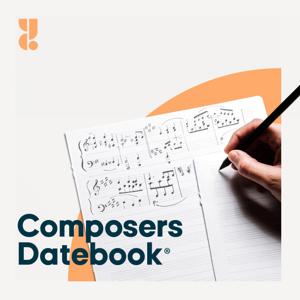

La Valse — one of the most popular orchestral works by Maurice Ravel — was performed for the first time this day in 1920 by the Lamoureux Orchestra in Paris, conducted by Camille Chevillard. Ravel’s score was subtitled a “choreographic poem for orchestra in the tempo of the Viennese waltz.”
La Valse is a far more Impressionistic work than any of the waltzes by the Strauss Family. It is certainly darker. Ravel said, “I had intended this work to be a kind of apotheosis of the Viennese waltz, with which was associated in my imagination an impression of a fantastic and fatal kind of Dervish’s dance.”
La Valse was written for the great ballet impresario Serge Diagalev, who apparently found it undanceable, and his failure to stage La Valse caused a serious rift in his friendship with Ravel.
Contemporary composer Judith Lang Zaimont is an unabashed Ravel enthusiast — ”Ravel’s music defines ‘gorgeous,’” she said. “It’s beguiling to the ear, and sensuous. His textures are built in thin layers, like a Napoleon pastry, and his intricate surfaces — beautifully worked-out — shine and fascinate.”
Zaimont should know. For many years she taught composition at the University of Minnesota, and her own solo piano, chamber and orchestra works are increasingly finding their way into concert halls and onto compact disc.
Maurice Ravel (1875-1937): La Valse; Boston Symphony; Charles Munch, conductor; RCA 6522
Judith Lang Zaimont (b. 1945): Symphony No. 1; Czech Radio Symphony; Leos Svarovsky, conductor; Arabesque 6742
 View all episodes
 By American Public Media

4.7
176176 ratings
La Valse — one of the most popular orchestral works by Maurice Ravel — was performed for the first time this day in 1920 by the Lamoureux Orchestra in Paris, conducted by Camille Chevillard. Ravel’s score was subtitled a “choreographic poem for orchestra in the tempo of the Viennese waltz.”
La Valse is a far more Impressionistic work than any of the waltzes by the Strauss Family. It is certainly darker. Ravel said, “I had intended this work to be a kind of apotheosis of the Viennese waltz, with which was associated in my imagination an impression of a fantastic and fatal kind of Dervish’s dance.”
La Valse was written for the great ballet impresario Serge Diagalev, who apparently found it undanceable, and his failure to stage La Valse caused a serious rift in his friendship with Ravel.
Contemporary composer Judith Lang Zaimont is an unabashed Ravel enthusiast — ”Ravel’s music defines ‘gorgeous,’” she said. “It’s beguiling to the ear, and sensuous. His textures are built in thin layers, like a Napoleon pastry, and his intricate surfaces — beautifully worked-out — shine and fascinate.”
Zaimont should know. For many years she taught composition at the University of Minnesota, and her own solo piano, chamber and orchestra works are increasingly finding their way into concert halls and onto compact disc.
Maurice Ravel (1875-1937): La Valse; Boston Symphony; Charles Munch, conductor; RCA 6522
Judith Lang Zaimont (b. 1945): Symphony No. 1; Czech Radio Symphony; Leos Svarovsky, conductor; Arabesque 6742

6,752 Listeners

38,872 Listeners

8,770 Listeners

9,196 Listeners

5,780 Listeners

927 Listeners

1,389 Listeners

1,287 Listeners

3,160 Listeners

1,975 Listeners

523 Listeners
183 Listeners

13,768 Listeners

3,082 Listeners

248 Listeners

28,131 Listeners

430 Listeners

5,470 Listeners
2,195 Listeners

14,142 Listeners

6,420 Listeners
2,515 Listeners

4,836 Listeners

575 Listeners

244 Listeners