
Sign up to save your podcasts
Or

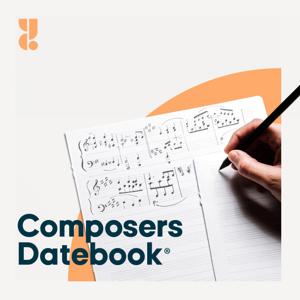

On today's date in 1911, the Independent Music Society of Paris sponsored “An Anonymous Concert” at which the audience was invited to guess the composers of a number of pieces presented without attribution.
Professional music critics were also in attendance, although they prudently refused to reveal their guesses, fearing their professional reputations might suffer as a result. In the audience was the French composer Maurice Ravel, who had agreed to let some of his new piano pieces be performed as part of the experiment.
“The title Valses nobles et sentimentales is a sufficient indication that my intention was to compose a chain of waltzes following the example of Schubert,” Ravel wrote. “They were performed for the first time, amidst protests and booing, at this concert.” Even more droll, recalled Ravel, were the reactions of some his most ardent admirers, who didn't know any of his own music would be played. They jeered at his waltzes, calling them “ridiculous” and ventured the guess the composer must be either Satie or Kodaly. Ravel accepted their comments in stoic silence.
The audience proved more astute than Ravel's friends, however. “The paternity of the Waltzes was correctly attributed to me,” recalled Ravel, “but by a weak majority.”
Maurice Ravel Valses nobles et sentimentales Minnesota Orchestra; Stanislaw Skrowaczewski, conductor. Analogue 007
 View all episodes
 By American Public Media

4.7
176176 ratings
On today's date in 1911, the Independent Music Society of Paris sponsored “An Anonymous Concert” at which the audience was invited to guess the composers of a number of pieces presented without attribution.
Professional music critics were also in attendance, although they prudently refused to reveal their guesses, fearing their professional reputations might suffer as a result. In the audience was the French composer Maurice Ravel, who had agreed to let some of his new piano pieces be performed as part of the experiment.
“The title Valses nobles et sentimentales is a sufficient indication that my intention was to compose a chain of waltzes following the example of Schubert,” Ravel wrote. “They were performed for the first time, amidst protests and booing, at this concert.” Even more droll, recalled Ravel, were the reactions of some his most ardent admirers, who didn't know any of his own music would be played. They jeered at his waltzes, calling them “ridiculous” and ventured the guess the composer must be either Satie or Kodaly. Ravel accepted their comments in stoic silence.
The audience proved more astute than Ravel's friends, however. “The paternity of the Waltzes was correctly attributed to me,” recalled Ravel, “but by a weak majority.”
Maurice Ravel Valses nobles et sentimentales Minnesota Orchestra; Stanislaw Skrowaczewski, conductor. Analogue 007

6,916 Listeners

38,782 Listeners

8,789 Listeners

9,224 Listeners

5,797 Listeners

931 Listeners

1,388 Listeners

1,293 Listeners
3,150 Listeners

1,976 Listeners

525 Listeners

182 Listeners

13,761 Listeners

3,074 Listeners

246 Listeners

28,168 Listeners

434 Listeners

5,488 Listeners

2,187 Listeners

14,132 Listeners

6,423 Listeners
2,517 Listeners

4,836 Listeners

578 Listeners

250 Listeners