
Sign up to save your podcasts
Or

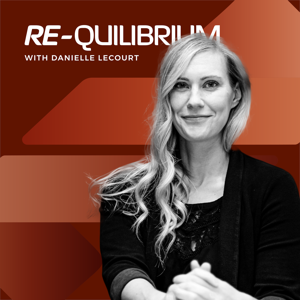


"We've got this dormant capacity-building resource in the skills and talents of corporate employees that, when deployed effectively, provides benefits to the community, nonprofits, and to the professionals themselves. It's there, and it's just a matter of waking it up and connecting it with the right organization." - Danielle Holly
The nonprofit sector is charged with saving the world, yet it pursues this mission facing constant limits to resources and capacity. While corporate companies often spend 20-35% of their budget on infrastructure--talent and leadership development, technology, innovation--nonprofits have an average of 2-5% to spend on those infrastructure-building functions. Yet the resource disparity between these two paths can be closed through an innovative approach to CSR: skills-based volunteering. Common Impact CEO Danielle Holly explains on this episode of Re-Quilibrium.
"Marketing is obsessed by being consumer-centric. I think the opportunity is for it to become more decision-centric... There's a lot of noise in being consumer-centric that may not be relevant to the choice. Start with the choice and work from there." -Matthew Willcox
How much do you really understand how people choose? The past decade has brought to light a flood of research from behavioral science, neuroscience, and everything relating to the mind. Yet, the scope of the literature is both empowering and paralyzing. And while I won't go so far as to say that marketers and scientists speak a different language, there is a notable difference in creed that drives how they view science and research. And as guest Matthew Willcox, author of The Business of Choice: Marketing to Consumers' Instincts, notes, marketers would do well to think of the research as inspiration, not proof.
So how can we use research on decision making as inspiration for behavior change strategies? In this episode, Matthew Wilcox discusses how to better influence people's choices by working with human nature, not against it.
"Fundamental to science is a process and a worldview. It's a way to confront reality. It's how you establish what's real and what's not real; what's true and what's false. It's how we understand what is. Having a strong background in science and a basic amount of science literacy is really important for being a civic participant." -Cara Santa Maria
Science communicator Cara Santa Maria knows what she's up against. A culture driven by the 24-hour political news cycle. Fake news. Entrenched sexism and racism. An ever-lurking wedge between the scientific community and the public. Yet to her, the roadblocks are exactly what necessitates a warmer embrace of science as an approach.
It's a struggle in many respects for science communicators to stay the course and help develop the public's scientific literacy. Yet the payoff is equally as great, helping grow people's abilities to spot bad sources and utilize alternative media to model a more diverse, adaptive world. Science communication, and really communication in general, has become the first-touch for adult education and shaping new normative behavior.
In this conversation, the host of Talk Nerdy with Cara Santa Maria, co-host of the Skeptics Guide to the Universe, and founding member of the Nerd Brigade, discusses how science communication and science literacy work to affect change on a global scale. Don't let the conversation end here. Discuss this episode on social media using #ReQPod19.
"Rather than having someone burn the finger and think "I'm not going to do that again", can we actually bring about an emotional response in a young person's mind using all of the tools of media?" - Paul Irwin
Think back to your youth, to some memorable choices you made. If you're like the majority of people, your teen years were notably ripe with tricky situations. Situations in which the stakes were high, emotions were high, and tough decisions came at you from all sides. Yet what if there was a way to make youthful mistakes without risking such serious consequences? That question lies at the heart of TryLife, and interactive drama that blends the power of media, game theory, and the principles of behavior change.
TryLife was designed by some of the best people from the creative, youth, education and health care industries in which the story is molded and shaped by the user. Like the Choose Your Own Adventure books popular in the '80s and '90s, Trylife places users at the center of the story and relies on their decisions to chart the course of the narrative. Authentic and hard-hitting, the plot routes are based on probability using real stats and data.
In this episode, TryLife creator Paul Irwin discusses TryLife's approach to behavior change and its wild success since its inception. Don't let the conversation end here. Discuss this episode on social media using #ReQPod18.
"If we do the science right and we're really understanding what works, whether it's what we expect or not, it will be the truth... All we want to know is the truth." - Dan White
Facts, the final frontier.
We live in a weird time. While a major percentage of the world population carries access to the most sophisticated information technologies and scientific applications that have ever existed, we find ourselves constantly debating the truth. Terms like "facts" and "truth" have become battleground concepts for subjective experience, leaving both tension and confusion high. Yet the pursuit of the truth always has an ally in the scientific method and good academic research, a creed that drives Dan White, co-founder and CEO of The Behaviouralist.
Driven by a desire to bridge the gap between the cutting edge of science and its application in society, Dan White and his co-founder Dr. Robert Metcalfe were responsible for some of the UK’s earliest applied behavioral economics research–-no easy feat. The roadblocks between good research and societal application are myriad, leaving much good research to sit on the shelf for years before benefiting society.
Yet in the spirit of being both creative and scientific, The Behaviouralist utilizes technology and data to bring a science-based voice to conversations with governments and organizations worldwide. And when tackling some of the world's most pressing issues, it isn't enough to get the message through. We must get it through quickly. Dan White discusses his process in this episode of Re-Quilibrium.
Don’t let the conversation end here. Discuss this episode on social media using #ReQPod17.
"We don't just dive into a country with predetermined solutions. We sit and talk to people about what the issues are."
Gael O'Sullivan joins the podcast to discuss the challenges that come with confronting assumptions related to global health issues and the benefits of adopting a mixed-method research approach for behavior change.
"The problems are complex, but the process is relatively simple. The trick is to get politicians to endorse the application of that process and practitioners to help deliver it."
Professor Jeff French joins the podcast to discuss his recent work defining and advocating for strategic social marketing. Through the idea of strategic social marketing, Professor French challenges social marketers and policy makers alike to embrace social marketing techniques and theories when planning at the policy level.
"Ultimately, if we think about the people we're working with, they know their context best. They know the ultimate outcomes and goals they want to see in their communities."
Alexandra Jabs, Training Director at Rare, and Claudia Quintanilla, Traning Director at Rare Brazil, join the podcast to discuss Rare’s approach to conservation through community partnership and capacity building. Through this model, Rare is able to create highly localized solutions to global conservation issues.
"What does our future look like? We can't plan for the past anymore, we have to plan for our future climate." Dr. Danya Rumore joins the podcast to discuss how she and other planners are helping communities take action in response to our changing climate. Particularly, we focus a lot on her work helping coastal cities in the United States plan for and adjust to such challenges as flooding and rising sea levels.
"Marketing is both a powerful and positive tool for shaping our perceptions, actions, and social norms. I encourage anyone who's working in any cause-based mission to embrace social marketing as an important tool, especially those working in conservation." Brooke Sadowsky and Kevin Green from Rare join the podcast to discuss how working in conservation informs their social marketing and behavior change approach.
From the publisher's feed