
Sign up to save your podcasts
Or

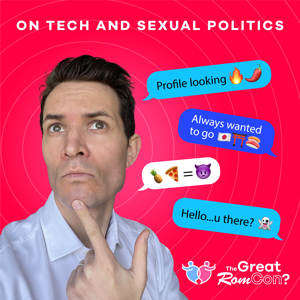

Communication has been going through a revolution. Originally, humans evolved over hundreds of thousands of years to communicate face-to-face: tone of voice, eye contact, body language, nervous laughter, pheromones: all the cues and signals that will be read by our subconscious to help us understand one another. Then, within the past twenty years, we collectively decided to move large parts of our social and romantic lives onto glowing rectangles in our hands: the original iPhone was launched in January 2007.
Now we flirt through text messages, argue via WhatsApp, dump each other over email and fall in love through curated online profiles. Entire relationships can rise and collapse because of misunderstanding caused by punctuation - is that passive-aggressive full stop?
So what exactly is technology doing to the way we communicate? Are dating apps and social media helping us express ourselves better to more people, or flattening human interaction into something more performative and transactional? To discuss this, I speak to Prof Sophie Scott, a Professor of Cognitive Neuroscience at UCL. Sophie studies the neurobiology of speech perception: how our brains process the information in speech and voices, and how our brains control the production of our voice.
Produced by the Bloomsbury Institute London.
 View all episodes
 By Jim Clark
Communication has been going through a revolution. Originally, humans evolved over hundreds of thousands of years to communicate face-to-face: tone of voice, eye contact, body language, nervous laughter, pheromones: all the cues and signals that will be read by our subconscious to help us understand one another. Then, within the past twenty years, we collectively decided to move large parts of our social and romantic lives onto glowing rectangles in our hands: the original iPhone was launched in January 2007.
Now we flirt through text messages, argue via WhatsApp, dump each other over email and fall in love through curated online profiles. Entire relationships can rise and collapse because of misunderstanding caused by punctuation - is that passive-aggressive full stop?
So what exactly is technology doing to the way we communicate? Are dating apps and social media helping us express ourselves better to more people, or flattening human interaction into something more performative and transactional? To discuss this, I speak to Prof Sophie Scott, a Professor of Cognitive Neuroscience at UCL. Sophie studies the neurobiology of speech perception: how our brains process the information in speech and voices, and how our brains control the production of our voice.
Produced by the Bloomsbury Institute London.