
Sign up to save your podcasts
Or


Ever wonder why we wave the flag on July 4th? As America approaches its 250th birthday in 2026, understanding the true foundations of our liberty has never been more critical.
The evidence is hiding in plain sight, yet rarely taught. When America's founding fathers first gathered in 1774, they didn't immediately dive into politics—they spent two hours in prayer and Bible study. By the revolution's end, the Continental Congress had called for national prayer 15 times. Even the Peace Treaty of Paris that secured our independence begins with "In the name of the most holy and undivided Trinity."
George Washington himself witnessed so many miraculous interventions during the Revolution that he joked he'd "seen enough miracles to become a preacher." In his Farewell Address, he declared religion and morality "indispensable supports" to America's success, while John Adams insisted our Constitution "was made only for a moral and religious people."
This episode of "Rebuilding Liberty" featuring Tim Barton reveals the forgotten Christian foundations of American independence through primary sources and historical documents. You'll discover how the biblical principles that unified our founders remain essential for preserving freedom today. The founding fathers understood that liberty requires virtue, and virtue flows from faith—a truth as relevant now as it was in 1776.
As we approach America's semiquincentennial, join us in rediscovering the atmosphere of Christianity that breathed life into our nation's birth. Share this eye-opening perspective with others who need to understand why America's flag is worthy of being waved—not just on July 4th, but every day we cherish freedom.
Listen to the full "Rebuilding Liberty" course at wallbuilders.com or sign up as a host at patriotacademy.com to share these essential truths with your community.
Support the show
 View all episodes
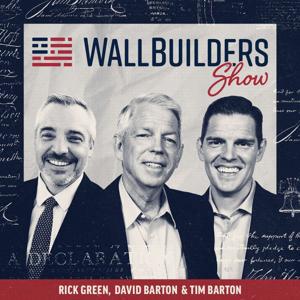
 By Tim Barton, David Barton & Rick Green

4.8
21322,132 ratings
Ever wonder why we wave the flag on July 4th? As America approaches its 250th birthday in 2026, understanding the true foundations of our liberty has never been more critical.
The evidence is hiding in plain sight, yet rarely taught. When America's founding fathers first gathered in 1774, they didn't immediately dive into politics—they spent two hours in prayer and Bible study. By the revolution's end, the Continental Congress had called for national prayer 15 times. Even the Peace Treaty of Paris that secured our independence begins with "In the name of the most holy and undivided Trinity."
George Washington himself witnessed so many miraculous interventions during the Revolution that he joked he'd "seen enough miracles to become a preacher." In his Farewell Address, he declared religion and morality "indispensable supports" to America's success, while John Adams insisted our Constitution "was made only for a moral and religious people."
This episode of "Rebuilding Liberty" featuring Tim Barton reveals the forgotten Christian foundations of American independence through primary sources and historical documents. You'll discover how the biblical principles that unified our founders remain essential for preserving freedom today. The founding fathers understood that liberty requires virtue, and virtue flows from faith—a truth as relevant now as it was in 1776.
As we approach America's semiquincentennial, join us in rediscovering the atmosphere of Christianity that breathed life into our nation's birth. Share this eye-opening perspective with others who need to understand why America's flag is worthy of being waved—not just on July 4th, but every day we cherish freedom.
Listen to the full "Rebuilding Liberty" course at wallbuilders.com or sign up as a host at patriotacademy.com to share these essential truths with your community.
Support the show
1,404 Listeners
2,568 Listeners
26,060 Listeners

173 Listeners
1,044 Listeners
5,429 Listeners

2,202 Listeners
65,586 Listeners

1,573 Listeners
1,553 Listeners

2,461 Listeners

691 Listeners
388 Listeners
13,190 Listeners
897 Listeners