
Sign up to save your podcasts
Or

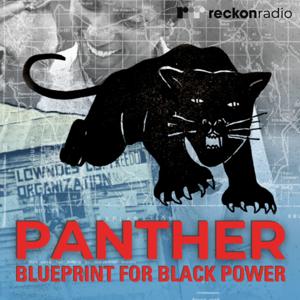


In the final episode, Woke Vote founder and Birmingham Civil Rights Institute President, DeJuana Thompson, and Tennessee State Rep Justin J. Pearson sit down with hosts Eunice Elliott and Roy S. Johnson. The four discuss the status of the movement for Black Power today—what's changed, what hasn’t and how the strategies of the Lowndes County Freedom Organization (LFCO) hold up today. To Pearson and Thompson, the past isn’t the past. It’s our toolkit for tomorrow.
Learn more about your ad choices. Visit megaphone.fm/adchoices
Election Day for the Lowndes County Freedom Organization’s candidates didn’t go the way they wanted. But their party’s work - and its mascot the Black Panther - has rippled down through the years and across the country. To show what the Lowndes County Freedom Organization means today, journalists Eunice Elliott and Roy S. Johnson go back to the very origins of the Voting Rights Act, and the ways its opponents have tried to tear it down.
Learn more about your ad choices. Visit megaphone.fm/adchoices
How will the first election with an all-Black party end? It’s Election Day, 1966, and the Voting Rights Act is being put to the test. The Lowndes County Freedom Organization’s candidates have canvassed, campaigned and called on Black voters to show up to the polls for the Black Panther - at no small danger to themselves.
Learn more about your ad choices. Visit megaphone.fm/adchoices
What did the Lowndes County movement look like? Everything Black folks did was an act of rebellion—it wasn’t just door knocking and registering to vote. Plus the story of how the Black Panther symbol was born.
Learn more about your ad choices. Visit megaphone.fm/adchoices
How did a county known as “Bloody Lowndes” become the birthplace of the Black Panther? Because the people of Lowndes met vicious, racist violence with a powerful response.
Learn more about your ad choices. Visit megaphone.fm/adchoices
It’s a story we think we know well. It’s 1965, and the Civil Rights Movement is in full swing. Thousands are marching on Montgomery, protesting the treatment of Black Americans. But what about the people who lived alongside that road? The people who remained after the national cameras and big names left town were the lifeblood of the movement for Black Power.
Learn more about your ad choices. Visit megaphone.fm/adchoices
This is the story of the surprising roots of the Black Panther and the election when America truly became a democracy.
Learn more about your ad choices. Visit megaphone.fm/adchoices
The killing of Bonita Carter in 1979 changed Birmingham, and its leadership. Protests following her death forced the city to reshape its police department, four decades before Black Lives Matter made its greatest impact. It was a decade after Black civil rights leaders had gathered in Birmingham to make 14 points to their white peers in Birmingham, to demand acknowledgement that Black people were still treated as second class citizens.
They pointed out longstanding police violence against Black residents, that Black people consistently were given less courtesy and respect from police. That white people got a benefit of the doubt as Black people got a bullet. Today, conversations across the country are almost the same. On the final episode of Unjustifiable, John Archibald and Roy S. Johnson discuss what has changed, and what Bonita Carter still has to teach us.
Show Notes:
Guests: Uche Bean, Brian Burghart, Catherine Conner, Shelley Stewart, Jasmyn Story, Randall Woodfin
Creator: John Archibald
Hosts: John Archibald & Roy S. Johnson
Executive Producer: John Hammontree
Producer & Audio Engineer: Alexander Richey
Producers: Amy Yurkanin and Marsha Oglesby
Score: Thad Saajid, Austin Motlow, David Marsh, and Danny Ray Wilkerson, Jr. Additional music contributed by Jeremy Smith.
Music: “Jackson” by The Pollies; Single Lock Studios; “Tension” by Todd Snider
Voice Acting: R.L. Nave, Barnett Wright
See acast.com/privacy for privacy and opt-out information.
Learn more about your ad choices. Visit megaphone.fm/adchoices
Who is Officer George Sands? The Birmingham police officer had amassed more than a dozen complaints before fatally shooting Bonita Carter. He’d been seen as a problem by some city leaders, while others protected him – saying he was just a symptom of a poorly trained police department rather than a rogue bad apple?
Before being elected mayor, Richard Arrington had been shocked to learn Sands was Bonita Carter’s killer, for he had been in so much trouble before. But Sands was protected by the powerful police union, and county rules that restricted the authority of the mayor.
Arrington set out to integrate and reshape the police department, to change the shooting policy that had left so many Black men dead. But would it be possible to remove Sands?
And, given all that’s happened since, how does Sands feel about that night in 1979?
Show Notes:
Guests: George Sands, T.K. Thorne, Nathaniel Bagley, Richard Arrington, Uche Bean
Creator: John Archibald
Hosts: John Archibald & Roy S. Johnson
Executive Producer: John Hammontree
Producer & Audio Engineer: Alexander Richey
Producers: Amy Yurkanin and Marsha Oglesby
Score: Thad Saajid, Austin Motlow, David Marsh, and Danny Ray Wilkerson, Jr. Additional music contributed by Jeremy Smith.
Music: “Call on Me” by Cedric Burnside; Single Lock Studios
Voice Acting: Ike Morgan, Jeremy Smith
See acast.com/privacy for privacy and opt-out information.
Learn more about your ad choices. Visit megaphone.fm/adchoices
The status quo was broken in Birmingham, Alabama, in the weeks after the Bonita Carter killing. The city once known as Bombingham, as the Johannesburg of the South, reeled from protests, and counter-protests from the Ku Klux Klan. A scientist, a former college dean named Richard Arrington who had long been aligned with that white progressive mayor, David Vann, broke away from the mayor to launch his own campaign. A committee formed by Vann to take testimony from witnesses to the shooting – one of the main reasons we can reconstruct the events of the crime – found Officer George Sands had no cause to shoot Carter. Yet Sands remained on the force.
Just sixteen years after Dr. Martin Luther King Jr. marched through the city, the election of 1979 would prove pivotal for Black residents exercising their voting power. How would voters decide?
Show Notes:
Guests: Richard Arrington Jr., Richard Mauk, Scott Douglas, Solomon Crenshaw
Creator: John Archibald
Hosts: John Archibald & Roy S. Johnson
Executive Producer: John Hammontree
Producer & Audio Engineer: Alexander Richey
Producers: Amy Yurkanin and Marsha Oglesby
Score: Thad Saajid, Austin Motlow, David Marsh, and Danny Ray Wilkerson, Jr. Additional music contributed by Jeremy Smith.
Music: “Haverford Impromptu #2” by Sun-Ra; and “Lay it Down” by Donnie Fritts
See acast.com/privacy for privacy and opt-out information.
Learn more about your ad choices. Visit megaphone.fm/adchoices
From the publisher's feed