
Sign up to save your podcasts
Or

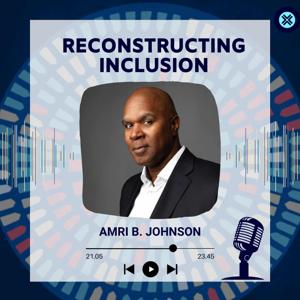


In this episode, host Amri Johnson challenges us to examine how we put ourselves and others into boxes—especially in the context of identity and inclusion within DEI work. Amri explores the shortcomings of both extreme pro-DEI and anti-DEI positions, revealing how both ends of the spectrum ultimately restrict true inclusion.
Key Discussion Points:
- Three types of boxes that shape our identities
- Why binary thinking in DEI work leads to ineffective outcomes
- The "anti-racist" versus "not racist" framework
- How today's anti-DEI backlash mirrors the problematic dynamics of extreme DEI approaches from 2020
- Creating organizational cultures based on universal principles like dignity, respect, and interdependence
- Why intellectual honesty matters more than superficial niceness
🔥 Standout Quotes:
"Many home runs in the DEI space, in the anti-racist space, in the social justice space that were hit since 2020 did not win games. In fact, they're creating the opposite effect where others are trying to win a similar game in a very different direction."
Resources Mentioned:
- Reconstructing Inclusion S1E6: What is Race Abolition?: Illuminating Racialization’s Complexity with Dr. Subrena Smith and Dr. David Livingstone Smith
"Stamped: Racism, Antiracism, and You" - Book co-authored by Jason Reynolds and Ibram X. Kendi that explores the history of racist ideas in America.
Peter Senge's Definition of Leadership - "Leadership is the capacity for a human community to shape its future."
Join our free EMERGENT Inclusion Framework virtual event. This isn't another discussion about group identities, allyship, and injustice. While those things have their place, the focus on symptoms rather than diving into the complexity of systems have not unlocked organizational value as practitioners and supporters have hoped for them to. Whether you're a skeptic or champion, your voice matters in this conversation.
Time Stamps:
01:00 - The concept of boxes in identity and inclusion
02:00 - The three types of boxes that define our identity
04:00 - How the dynamics between DEI proponents and opponents mirror each other
06:30 - The baseball analogy: anti-racist vs. not racist
08:30 - Strategic approaches to inclusion vs. binary thinking
10:50 - The current political climate and its impact on DEI
13:30 - Self-censoring across different contexts
15:00 - Creating organizational culture beyond superficial niceness
17:10 - The danger of overcorrection in DEI discourse
18:00 - Final reflections on transcending boxes
➡️ Subscribe to Reconstructing Inclusion for more unfiltered conversations about the future of DEI.
In this episode, Fred Falker challenges everything we think we know about DEI. Using the famous nine-dot puzzle as a metaphor, Fred explains why our current approach to inclusion might be holding us back – and offers a revolutionary new way forward.
Key Discussion Points:
- The nine-dot puzzle and invisible limitations
- Difference vs. Distance paradigm
- Why nature doesn't draw lines?
- The problem with current DEI approaches
- Moving beyond categories to connection
- Measuring real impact in DEI work
🔥 Standout Quote:
"The drawing of the line is what divides. And when we divide, it brings in appraisal and judgment. It brings in the idea that something could be less than or more than. All of our bias is created by drawing lines." - Fred
About Our Guest:
Fred Falker is the President of Falker Consulting Group, Inc., an organizational development consulting and training firm. Over the past twenty-five years, he has developed and introduced a fundamentally new and better approach to diversity, equity, and inclusion. This approach goes beyond today's anti-racism and unconscious/implicit bias training.
Resources Mentioned:
- Falker Consulting Group
- From Difference to Distance: Rethinking Diversity and Inclusion | Fred Falker | TEDxClayton
- Ralph Ellison's "Invisible Man"
- Dr. Robert L. Williams - Founder of Black Psychology
Time Stamps:
[00:01:00] - Introduction to Fred Falker and his unique perspective on DEI
[00:07:00] - Why Fred initially refused to do diversity training [00:15:00] - The fundamental flaw in how we think about differences
[00:19:00] - "Nature does not draw lines" – Understanding constructed divisions
[00:34:00] - Why understanding groups doesn't mean understanding individuals
[00:37:00] - The distance paradigm: What really separates us? [00:49:00] - Why we need to focus on outcomes, not activities?[00:54:00] - The importance of abandoning old paradigms completely
➡️ Subscribe to Reconstructing Inclusion for more unfiltered conversations about the future of DEI.
Reconstructing Inclusion with Amri B. Johnson
Season 2, Episode 6: Moving Beyond the DEI (and Anti-DEI) Bandwagon in 2025
📝 Episode Description:
In this episode, Amri explores why traditional DEI approaches are failing organizations and introduces the Emergent Inclusion Framework - a new paradigm for creating sustainable, inclusive cultures. Learn how to move beyond bandwagon solutions and build organizations that generate "thick value" and thrive through change.
⏱️ Time Stamps:
[00:00:00] - Introduction and context of DEI's evolution since 2021
[00:01:00] - The transition of DEI consultants and practitioners
[00:02:00] - Understanding historical challenges in DEI
[00:03:00] - The bandwagon effect explained
[00:05:00] - Introduction to "thick value" concept
[00:07:00] - The Emergent Inclusion Framework explained
[00:09:00] - Relational fitness and organizational change
[00:11:00] - Building trust through transparency
[00:12:00] - New initiatives and resources announcement
[00:13:00] - Special announcement about upcoming project
🔑 Key Concepts Discussed:
- The bandwagon effect in DEI initiatives
- Thick value and its role in organizational culture
- Anti-fragility in organizational development
- Relational fitness
- The Emergent Inclusion Framework
- Building trust through transparency
- Future-fit organizations
📚 Resources Mentioned:
Book: "Reconstructing Inclusion" by Amri B. Johnson
Book: "Diversity and Complexity" by Scott E. Page
Systemic Inclusion Survey™ - A free diagnostic tool to assess your organization's current inclusion practices and identify areas for improvement.
>> Subscribe to Reconstructing Inclusion on Substack here
In this explosive episode, former legal compliance expert turned DEI strategist Ashanti Bentil-Dhue drops truth bombs about the uncomfortable reality of DEI practice. She reveals why lived experience isn't enough, challenges the notion of "social justice in the workplace," and explains why the $30 billion DEI industry needs serious reform.
Key Discussion Points:
- Why 90% of self-taught DEI practitioners are a red flag
- The controversial truth about "lived experience" as qualification
- Why charging more for being Black is undermining the profession
- The problem with "changing hearts and minds"
- What health & safety regulations can teach us about DEI's future
- The 13 core competencies every DEI professional needs
🔥 Standout Quote:
"If you're saying I, me, my when you're consulting, advising, training, then you're not leading with neutrality." - Ashanti
About Our Guest:
Ashanti Bentil-Dhue is the founder of the Competence Centre for Workplace Equity. With a background in legal and financial compliance, she's leading the charge for professional standards in DEI practice.
Resources Mentioned:
- The Competence Centre for Workplace Equity
- "Be Your Future Self Now" by Dr. Benjamin Hardy
Time Stamps:
04:00 - Ashanti's background in compliance
12:00 - The competency crisis in DEI
15:45 - Debunking 'lived experience'
24:30 - Future of DEI regulation
33:20 - Ethical pricing in DEI
37:00 - Business transformation vs social justice
➡️ Subscribe to Reconstructing Inclusion for more unfiltered conversations about the future of DEI.
Welcome to the Reconstructing Inclusion Podcast!
Today, I’m excited to dive into a timely and challenging topic: navigating the winds of political change while maintaining our commitment to diversity, equity, and inclusion (DEI). As we explore this theme, I’ll share insights on how we can view perceived setbacks as setups for meaningful comebacks.
Personal Reflections on Political Dynamics
Let me share a personal story that significantly shaped my understanding of political dynamics. In 2016, I had extensive conversations with friends from my hometown in Topeka, Kansas, who were now living in various states like Ohio, Florida, Arizona, and Georgia. What surprised me was their discomfort with Hillary Clinton—not due to her competence but rather a lack of trust in her intentions. These discussions occurred in private settings where people felt safe expressing their true feelings. This experience was so impactful that I predicted Trump would become the 45th president and ultimately left Facebook due to the backlash I faced for sharing my thoughts.
“While my perspective on Trump's character didn't change. I still viewed him as a distraction machine who thrives on creating chaos.”
Lessons from Switzerland
My perspective shifted further when I moved to Switzerland in 2019. Here, people often mentioned Trump with raised eyebrows during conversations, seemingly gauging my opinion about him. While I still viewed him as a chaotic distraction, I became more neutral politically. A profound lesson about governance came from my stepdaughter, who pointed out that certain behaviors simply don’t apply in Switzerland due to clear rules and societal expectations. This reinforced my belief that governance structures shape behavior—not through mandates but through unspoken community norms.
“In Switzerland, there's a societal expectation, an unspoken, unwritten code to adhere to the rules, which leads to smoother operations.”
The Importance of Nuance in Political Discourse
In my exploration of political discourse, I’ve been influenced by Zaid Jilani’s writing on Substack. He offers an anti-partisan perspective that encourages nuance over preachiness. Jilani emphasizes that regardless of who wins elections, we must avoid growing angrier at one another based on differing political beliefs. He quotes civil rights activist Pauli Murray, highlighting the importance of inclusivity over exclusion. This resonates deeply with me as I believe our shared identity as Americans should take precedence over divisive politics.
"I shall draw a larger circle to include them where they speak out for the privileges of a puny group." - Pauli Murray
Defining Anti-Fragile Organizations
As we navigate these complexities, I believe we need to create what I call Antifragile organizations with a set of principles that are accessible to all, unambiguously prioritized, and purpose-aligned. Through our emergent inclusion framework, antifragile organizations are characterized by four essential elements:
* Dancing with Tensions: Learning to navigate the complexities of similarities and differences.
* Fostering Agency: Encouraging individuals to contribute confidently while supporting one another.
* Co-active Boundary Stretching: Enhancing communication and understanding beyond identities.
* Cultivating Genuine Care: Recognizing our interdependence and wanting growth for ourselves and others.
"Anti-fragile organizations thrive on the complexities of similarities and differences."
Re(de)fining Diversity, Equity, and Inclusion
Let me break down how I define diversity, equity, and inclusion:
* Diversity: Any mixture of similarities and differences along with their respective tensions. (from the work of Dr. R. Roosevelt Thomas)
* Equity: Vigilantly identifying fairness gaps and learning what’s needed to close them.
* Inclusion: Creating conditions for everyone to thrive and contribute extraordinary value.
In my consulting work, I've observed that many DEI initiatives fall short because they rely on a limited toolkit. When you only have a few tools at your disposal—like a hammer—everything looks like a nail, leading to ineffective applications.
The definitions I use are reflective of the approach my firm takes. This leads to the outcomes of people thriving and organizations being generative and creating immense value through and beyond their P&L sheet.
"Diversity is any mixture of similarities and differences; equity is about identifying fairness gaps; inclusion creates conditions for everyone to thrive."
Reflections on Trump's Presidency
Reflecting on Trump's presidency reveals both positive and negative developments worth examining. While some appreciated economic growth and criminal justice reform during his first term, we cannot ignore the events of January 6th. Witnessing the chaos around the Capitol was jarring; it remains etched in my memory as a shocking moment for our nation. In discussing Project 2025 during this year's campaign, it’s essential to recognize its implications for federal representation and diversity within governance structures. Although some ideas presented may not be new, they reflect a more pronounced transparency associated with Trumpism.
Despite many in DEI being worried about our work, the incessant catastrophizing about Project 2025 and fascism, it isn’t a Trump administration that will fell DEI. If it diminishes, it will result from ineffective and dated approaches.
A second Trump administration is more of an opportunity to elevate our practice than a warning sign of its imminent demise. What do you think?
“This is not the America I love, and I refuse to fall into that mental trap.”
A Call for Vigilance in DEI Practices
Despite facing criticism from peers regarding my views on these issues, I remain steadfast in my belief that America will not become more racist or homophobic as a result of current initiatives. Catastrophizing creates unnecessary suffering—most often self-inflicted—and it’s crucial not to fall into that mental trap. The current approach to DEI work frequently relies on outdated orthodoxies that haven’t proven effective over the past 50 years. A clear pivot toward innovative strategies could significantly benefit diversity and inclusion efforts.
“For us to create a better America, considering our influence on the world, we must recognize our indivisibility and reconstruct the future together.”
Conclusion
As we look forward, it’s vital that we support one another with vigilance and diligence while embracing our similarities and differences. Hope is essential in this journey; as Dr. Seuss wisely said in my book, Reconstructing Inclusion, “It doesn’t matter what it is; what matters is what it will become.” This perspective is crucial for understanding both political changes and our ability to make DEI work effective and impactful.
In this episode of the Reconstructing Inclusion Podcast, host Amri Johnson interviews Dr. Darryl Stickel, a leading expert on trust. Dr. Stickel discusses how modern relationships have become shallow due to social media, emphasizing the importance of building deeper connections. He explores trust in organizational contexts, highlighting the role of vulnerability in leadership and team dynamics.
Timestamps
01:58 Personal Inspirations and Overcoming Challenges
03:28 The Importance of Trust in Relationships
10:59 Building Trust in Teams and Organizations
18:35 Navigating Trust in an Uncertain World
19:29 The Impact of Low Trust in Society
22:49 Building and Maintaining Trust in Modern Times
25:28 The Importance of Benevolence in Trust
28:01 Parenting and Integrity: Lessons from Fatherhood
30:30 Living with Visual Impairment: A Journey of Trust
31:59 The Strength in Vulnerability
Highlights
- Discussion of how social media has led to "mile wide, inch deep" relationships
- The importance of leaders showing vulnerability to build trust
- Trust as a combination of uncertainty and vulnerability
- The three key levers for building trust: benevolence, integrity, and ability
- How asking for help can actually strengthen relationships and trust
Resources
Book: "Building Trust: Exceptional Leadership in an Uncertain World" by Dr. Darryl Stickel
Website: trustunlimited.com | email: [email protected]
About the Guest
Darryl is one of the world’s leading experts on trust. He helps high-level and executive leaders cultivate true growth and productivity in their businesses through an action-based practice of modeling vulnerability in order to improve communication and employee investment in their business. Darryl teaches leaders how to find and use their most powerful tool that is always in their control: how to effectively build trust in their relationships.
About the Host
As CEO/Founder of Inclusion Wins, Amri B. Johnson and a virtual collective of partners converge organizational purpose to create global impact with a lens of inclusion.
His theory of change is focused on building ‘Inclusion Systems.’ Inclusion systems provide direction and momentum in the complexity of organizations that allow them to be antifragile—leaning into and engaging with resistance, stressors, disruptions, and disequilibrium and being stronger as a result of such engagement.
His book, Reconstructing Inclusion: Making DEI Accessible, Actionable, and Sustainable outlines how organizations can create inclusion-normative cultures and build approaches to DEI that are designed for and with everyone, unambiguously prioritized, and purpose aligned.
Born in Topeka, Kansas (USA), Amri has worked and lived in the U.S., Brazil, and currently lives in Basel, Switzerland, with his wife Martina and their three kids.
Reconstructing Inclusion is also on Substack. Subscribe and be part of the conversation!
Your support means a lot!
Like this episode? We'd greatly appreciate it if you could take a moment to write a review, even if it's just one sentence!
Grab a copy of Reconstructing Inclusion: Making DEI Accessible, Actionable, and Sustainable: https://amzn.to/45AYFFP
Sign up for the Reconstructing Inclusion newsletter on Substack: https://reconstructinginclusion.substack.com/
Imagine a workplace where every employee, regardless of their differences, is set up to thrive. A place where managers are charged not just with hitting targets, but with creating an environment where even those they clash with can excel. Sound like a fantasy? It's not.
This is the reality of what I call an "inclusion system," and it's the key to transforming your organization from a fragile puddle into a mighty, enduring river. Let me share a story that illustrates this powerful approach...
In a world where businesses often prioritize profit over people, Arie de Geus's book "The Living Company" offers a refreshing perspective on organizational success.
As a DEI strategist, I find his concept of "puddle companies" versus "river companies" particularly illuminating. Puddle companies, focused on short-term gains, are shallow and stagnant, eventually drying up under pressure. River companies, on the other hand, are dynamic, life-giving entities that endure through constant flow and adaptation.
The book's anecdote about creating conditions for success, even with challenging team dynamics, resonates deeply with the practice of inclusion.
As DEI practitioners, our role is to help organizations evolve into "river companies" by implementing inclusion systems. This means moving beyond short-term fixes and creating normative practices that allow for connection through tension, leveraging differences and similarities to achieve organizational purpose. It's about building a culture where managers at all levels understand their responsibility to create conditions for success across the entire human community within the organization.
Are you ready to transform your organization from a puddle into a river?
Reconstructing Inclusion is a reader-supported publication. If you find this post helpful, consider becoming a free or paid subscriber. Appreciate it!
I hope this was helpful. . . Make it a great day! ✌🏿
In this episode of the ‘Reconstructing Inclusion’ podcast, let’s revisit ten insightful questions from past podcast appearances. Let’s talk about shifting away from identity-centered approaches to foster an inclusive environment for all, and the importance of evidence-based and principle-centered approaches that are accessible to everyone and aligned with organizational goals.
In this episode, Amri B. Johnson, host of the Reconstructing Inclusion Podcast, revisits ten insightful questions from his past podcast appearances, offering a comprehensive look at his approach to Diversity, Equity, and Inclusion (DEI).
Timestamps
01:55 Amri's background and journey into DEI work
07:00 Relationship between DEI and anti-racism
10:00 Approach to deconstructing and reconstructing the DEI paradigm
15:00 Dealing with resistance to DEI initiatives
17:00 Optimism about the future of DEI efforts
20:00 Defining diversity and inclusion
22:00 Approaching DEI interventions
23:30 Applying 'systems thinking' to DEI
26:30 Perspective on meritocracy in relation to DEI
29:40 Impact of AI on DEI
Highlights
- Amri's early influences, including his father's experience with desegregation in Topeka, Kansas
- The importance of creating conditions for sustainable representation in organizations
- Fostering dialogue and learning instead of "canceling" those who resist DEI initiatives
- The need for DEI to be integrated into all aspects of organizational design
- Challenging the notion of meritocracy while recognizing the importance of merit
- The potential of AI to enhance DEI efforts when used thoughtfully
Resources
Amri Johnson’s Podcast Guesting Playlist: https://open.spotify.com/playlist/3TP80hBhFdXAkBQSjj7Ir8?si=7cb7742de6514a65
About the Host
As CEO/Founder of Inclusion Wins, Amri B. Johnson and a virtual collective of partners converge organizational purpose to create global impact with a lens of inclusion.
His theory of change is focused on building ‘Inclusion Systems.’ Inclusion systems provide direction and momentum in the complexity of organizations that allow them to be antifragile—leaning into and engaging with resistance, stressors, disruptions, and disequilibrium and being stronger as a result of such engagement.
His book, Reconstructing Inclusion: Making DEI Accessible, Actionable, and Sustainable outlines how organizations can create inclusion-normative cultures and build approaches to DEI that are designed for and with everyone, unambiguously prioritized, and purpose aligned.
Born in Topeka, Kansas (USA), Amri has worked and lived in the U.S., Brazil, and currently lives in Basel, Switzerland, with his wife Martina and their three kids.
Reconstructing Inclusion is also on Substack. Subscribe and be part of the conversation!
Your support means a lot!
Like this episode? We'd greatly appreciate it if you could take a moment to write a review, even if it's just one sentence!
Grab a copy of Reconstructing Inclusion: Making DEI Accessible, Actionable, and Sustainable: https://amzn.to/45AYFFP
Sign up for the Reconstructing Inclusion newsletter on Substack: https://reconstructinginclusion.substack.com/
In this episode, host Amri Johnson welcomes Dr. Jonathan Ashong-Lamptey, founder of The Element of Inclusion, to discuss evidence-based inclusion and its importance in creating more effective diversity, equity, and inclusion (DEI) strategies.
Timestamps
06:46 Influences and Inspirations: Personal and Professional
16:12 The Importance of Evidence-Based Decision Making
19:33 The Rhetorical Problem in Diversity and Inclusion
22:12 Evidence-Based Inclusion and Emotional Appeals
22:36 Unconscious Bias Training: Effectiveness and Critiques
23:41 The Role of Credibility in DEI
24:50 Understanding Data vs. Evidence
25:34 Current State of DEI and Pushback
27:37 Challenges in DEI Implementation
40:56 Choosing the Right DEI Practitioner
Highlights
- Dr. Jonathan explains the concept of evidence-based inclusion and its four key areas: research, stakeholder input, organizational data, and professional expertise.
- Discussion on the limitations of unconscious bias training and the need for more rigorous approaches in DEI.
- Exploration of the "rhetorical problem" in DEI, emphasizing the need for logos (logic) and ethos (credibility) alongside pathos (emotion).
- Insights on how evidence-based inclusion can help mitigate negative perceptions of DEI practitioners.
- Advice for organizations on selecting qualified DEI consultants and implementing effective strategies.
About the Guest
Dr. Jonathan Ashong-Lamptey, the world-renowned authority on Evidence-Based Inclusion in the workplace, has helped global brands like Conde Nast, Sony and Meta. With a PhD from the London School of Economics, he combines academic rigour with practical insights to deliver impactful solutions. He is also the host of The Element of Inclusion, a popular podcast that informs and educates using applied research and thought leadership.
Dr. Jonathan's expertise has been featured in prestigious media outlets like the FT, Bloomberg and the BBC. He is on a mission to help a million people make their workplaces inclusive.
Connect with Dr. Jonathan Ashong-Lamptey:
Website: https://elementofinclusion.com/
LinkedIn: https://www.linkedin.com/in/drjonathan/
Thank you for listening to the Reconstructing Inclusion Podcast. Make it a great day!
About the Host
As CEO/Founder of Inclusion Wins, Amri B. Johnson and a virtual collective of partners converge organizational purpose to create global impact with a lens of inclusion.
His theory of change is focused on building ‘Inclusion Systems.’ Inclusion systems provide direction and momentum in the complexity of organizations that allow them to be antifragile—leaning into and engaging with resistance, stressors, disruptions, and disequilibrium and being stronger as a result of such engagement.
His book, Reconstructing Inclusion: Making DEI Accessible, Actionable, and Sustainable outlines how organizations can create inclusion-normative cultures and build approaches to DEI that are designed for and with everyone, unambiguously prioritized, and purpose aligned.
Born in Topeka, Kansas (USA), Amri has worked and lived in the U.S., Brazil, and currently lives in Basel, Switzerland, with his wife Martina and their three kids.
Reconstructing Inclusion is also on Substack. Subscribe and be part of the conversation!
Your support means a lot!
Like this episode? We'd greatly appreciate it if you could take a moment to write a review, even if it's just one sentence!
Grab a copy of Reconstructing Inclusion: Making DEI Accessible, Actionable, and Sustainable: https://amzn.to/45AYFFP
Sign up for the Reconstructing Inclusion newsletter on Substack: https://reconstructinginclusion.substack.com/
Amri B. Johnson acknowledges the growing criticism of diversity, equity, and inclusion (DEI) efforts, but argues that DEI remains crucial for organizational success in creating truly inclusive cultures. He believes many current strategies treat inclusion as an add-on rather than fundamentally rethinking systems and cultures, often failing to drive deep systemic change.
Season two of the Reconstructing Inclusion podcast aims to move beyond surface-level discussions by featuring contrarian voices to challenge assumptions and re-imagine what authentic inclusion could look like. Key topics will include embracing complexity, exploring cultural intelligence, leveraging data and social capital analysis, examining nuanced identity narratives beyond race and gender, and fostering genuine community across differences.
Amri invites listeners to join this journey of deconstructing DEI shortcomings, co-creating transformative human-centered approaches, and continually examining biases for lifelong learning - all in the pursuit of making DEI efforts more accessible, actionable, and sustainable within organizations.
About the Host
As CEO/Founder of Inclusion Wins, Amri B. Johnson and a virtual collective of partners converge organizational purpose to create global impact with a lens of inclusion.
His theory of change is focused on building ‘Inclusion Systems.’ Inclusion systems provide direction and momentum in the complexity of organizations that allow them to be antifragile—leaning into and engaging with resistance, stressors, disruptions, and disequilibrium and being stronger as a result of such engagement.
His book, Reconstructing Inclusion: Making DEI Accessible, Actionable, and Sustainable outlines how organizations can create inclusion-normative cultures and build approaches to DEI that are designed for and with everyone, unambiguously prioritized, and purpose-aligned.
Born in Topeka, Kansas (USA), Amri has worked and lived in the U.S., Brazil, and currently lives in Basel, Switzerland, with his wife Martina and their three kids.
Your support means a lot!
Like this episode? We'd greatly appreciate it if you could take a moment to write a review, even if it's just one sentence!
Grab a copy of Reconstructing Inclusion: Making DEI Accessible, Actionable, and Sustainable: https://amzn.to/45AYFFP
Sign up for the Reconstructing Inclusion newsletter on Substack: https://reconstructinginclusion.substack.com/
Connect with Amri on LinkedIn: https://www.linkedin.com/in/amrijohnson/
Let's discuss where your inclusion policies are effective and how to overcome challenges by creating an Inclusion System. > https://inclusionwins.com/contact