
Sign up to save your podcasts
Or


This is free excerpt of Episode 4. To hear the entire series, join Slate Plus --> slate.com/reconstruction
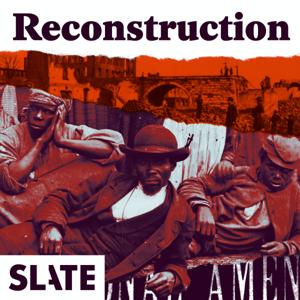
Formerly enslaved black Americans held a majority of the seats in South Carolina’s state Legislature in 1868, and no other state elected as many black Americans during the Reconstruction era. How successfully did these politicians wield their newfound power? And compared to other eras, was political corruption really as endemic as white Americans claimed?
In Episode 4 of Reconstruction: A Slate Academy, Rebecca Onion and Jamelle Bouie are joined by Kate Masur, the author of An Example for All the Land: Emancipation and the Struggle Over Equality in Washington, D.C., to explore the new political order that surfaced briefly in South Carolina and other Southern states after the Civil War.
Hosted on Acast. See acast.com/privacy for more information.
 View all episodes
 By Slate Podcasts

4.5
5252 ratings
This is free excerpt of Episode 4. To hear the entire series, join Slate Plus --> slate.com/reconstruction
Formerly enslaved black Americans held a majority of the seats in South Carolina’s state Legislature in 1868, and no other state elected as many black Americans during the Reconstruction era. How successfully did these politicians wield their newfound power? And compared to other eras, was political corruption really as endemic as white Americans claimed?
In Episode 4 of Reconstruction: A Slate Academy, Rebecca Onion and Jamelle Bouie are joined by Kate Masur, the author of An Example for All the Land: Emancipation and the Struggle Over Equality in Washington, D.C., to explore the new political order that surfaced briefly in South Carolina and other Southern states after the Civil War.
Hosted on Acast. See acast.com/privacy for more information.

8,470 Listeners

3,534 Listeners

1,022 Listeners

5,626 Listeners

2,071 Listeners
23,896 Listeners

2,127 Listeners

2,399 Listeners

444 Listeners

739 Listeners