Redefining Disability

Redefining Disability

Download on the App Store

Redefining Disability episodes

  • Army Veteran Michael Simon Still Serving Others
    Michael Simon was impacted by the events that happened on 9/11 twenty years ago this September. It moved him to join the Minnesota Army National Guard and was called up to Iraq about two years later and was deployed there for nearly two years. After returning stateside, a tumor was discovered that essentially ended his military service and affected his physical and mental health. Since then though, sports have made a difference. He skis and instructs with Courage Kenny (a Move United member) and did his first triathlon in 2011 and has been a Dare2Tri athlete. Service is still important to him and finds ways to give back to the adaptive sports community.
    24 min
  • Parafencer Terry Hayes Proves There Are No Limits
    Terry Hayes served as a heavy equipment operator in the U.S. Army. In 2011 she was diagnosed with a rare degenerative brain disease with no cure and no treatment. As someone that was used to being active, she was looking for a wheelchair sport when she learned about parafencing. At 63, she will be heading to Tokyo to compete for the U.S. in the Paralympic Games and is the oldest female category “B” parafencer in the world proving, in more ways than one, there are no limits.
    30 min
  • Paratriathon Medalist and Team Hartford Athlete Hailey Danz
    Hailey Danz is a six-time Paratriathlon World Championships medalist and won a silver medal at the 2016 Games in Rio. She is a Team Hartford athlete and has had the opportunity to be a part of presenting adaptive sports equipment through The Hartford’s Ability Equipped program in partnership with Move United over the past couple of years. Hailey will also be a special guest at Move United Junior Nationals presented by The Hartford, which takes place July 17-23 in the Metro Denver area.
    32 min
  • Para Badminton is Not Just a Backyard Sport
    You may be familiar with the game of badminton. Many schools teach the sport in physical education class. It is also often played at family reunions, on beaches, and in backyards across the country. So in 2015, as it began to look like badminton was going to become a Paralympic sport, Steve Kearney was asked to run the para badminton program for Team USA and USA Badminton. So we chat with him about the sport and the progress made here in the United States as we gear up for the Tokyo Games.
    27 min
  • Grind Leads to Glory for Jeremy Boyd
    Grind leads to glory. And Jeremy Boyd keeps on grinding. Less than five years ago, he was shot in the side, impacting his spinal cord. Just months after that incident, Jeremy was introduced to the sport of wheelchair tennis. He is a member of the University of Alabama Wheelchair Tennis Team, winning some titles and finishing #1 in Men’s B singles. Entering his senior year in college, he is now playing in the Men’s A division. He does have a goal of representing the USA at the Paralympics in the future.
    41 min
  • Shelby Jensen and the Game of Physical Chess (aka Parafencing)
    The sport of parafencing has been equated to a game of physical chess. And Shelby Jensen would know. The Move United Elite Team member has been ranked #1 in saber and #2 in epee and foil in the United States. When not competing for Team USA at the international level, she practices and competes with her local program in Salt Lake City, the Utah Swords Academy Fencing Club. A sophomore in college, she has her sights set on competing at the next three Paralympic Games.
    29 min
  • Wheelchair Rugby is all about collisions and camaraderie
    James Gumbert would describe wheelchair rugby as an incredible game, something he was missing since he’d been injured. He was first introduced to the sport in 1992 by Hall of Famer Steven Scott and helped start a club team in Austin, Texas. He played in Austin for four years and then played in Houston for four years. In 1997, he started another team back in Austin and was trying to manage, coach, and play. Then realized he needed to pick one. So Gumbert started coaching in 1998-99. Coach Gumbie, as he is called by many, would then coach for the U.S. development team in 1999 and took over the national team after the 2004 Paralympig Games in Athens. He is still blowing the whistle. So we chat with him about the contact and camaraderie the sport of wheelchair rugby is known for.
    44 min
  • Team USA Para Badminton Player Amy Burnett
    Badminton is more than a backyard sport. In fact, it is considered the 2nd largest sport in the world, although there is definitely some room for growth in the U.S. This summer, para badminton will make its Paralympic debut in Tokyo. So this week, we are chatting with Amy Burnett, a member of the U.S. Para Badminton team to discuss the sport and how to grow it.. Amy is the first wheelchair athlete on Team USA and has represented the United States in competitions across the globe, including at the Para Pan Am Games.
    34 min
  • Para Triathlete Ashley Eisenmenger
    Ashley Eisenmenger is considered the first NCAA triathlete with a disability that required some sport specific adaptation. As a blind triathlete, Ashley raced varsity women’s triathlon her junior and senior year at North Central College. She continues to compete at the highest level at various triathlons, including the Chicago Tri which is in her back yard. Ashley was recently able to get certified as a USAT coach and is connected to Dare2Tri, a Move United member organization, where she helps out at some of their camps. Outside of sports, she works for a nonprofit in Chicago called Access Living where she consults and trains on diversity, equity, and inclusion.
    39 min
  • Wheelchair Tennis is About Problem Solving for Paralympian Dana Mathewson
    Dana Mathewson was 10 years old when she contracted a rare autoimmune disease which impacted her spinal cord. After being in the hospital for about a month, her mom wanted her to give adaptive sports a try. As an athletic child, she was extremely hesitant to see what adaptive sports would be like in comparison. Like some other athletes, she never thought they would be competitive enough. But as she states, she was quickly proven wrong, and fell in love with the sport of wheelchair tennis.
    Dana would go on to attend the University of Arizona, one of the few schools in the country that had a collegiate level adaptive sports program and gave her a scholarship to compete on their wheelchair tennis team. Being able to play sports at a Division I school was a dream of hers. Now, she is pursuing a doctorate but also focused on returning to her second Paralympic Games. She is the number 1 ranked female wheelchair tennis player in the U.S. and currently ranked 9th in the world leading up to Tokyo.

    34 min

About Redefining Disability

From the publisher's feed

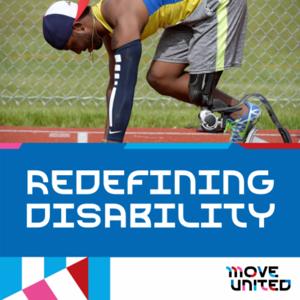
Let’s be real—people are unfamiliar with people with disabilities. At Move United, we believe sports have the power to change the world, pushing people further and bringing people closer. Through adaptive sports, we show what people with disabilities are capable of, fuel candid conversations, and incite the action it takes to build a world where everyone’s included.