
Sign up to save your podcasts
Or

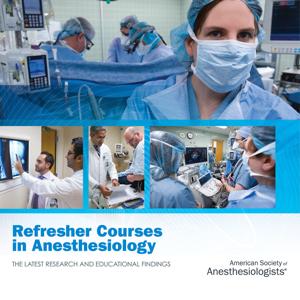


Using Game Changer article selection, the clinician will organize critical articles as they relate to their own clinical practice.
This refresher course lecture will focus on health policy and coverage changes affecting interventional pain physicians. Participants will review these changes and how they are impacting (or will impact) pain medicine physicians. New and upcoming coding changes will also be presented. Finally, various methods of reporting with HR2 (MACRA) implementation will be discussed.
This refresher course lecture will address the broad topic of perioperative stroke. The speaker will discuss the epidemiology and known risk factors for perioperative ischemic stroke as well as the identification and management of patients suspected of having a stroke in the perioperative setting.
Most routine pediatric surgical procedures are considered appropriate for ambulatory surgery. However, certain patient/procedure combinations may not be suitable for freestanding ASCs where prolonged recovery or the frequent need for overnight observation may be encountered. Examples such as the obese child with severe OSA, the very young infant with history of prematurity or the child with moderately severe asthma will be discussed. A workable preoperative screening process including education of surgeons will be presented.
Creation of an Institutional Program to optimize glucose control across the surgical experience.
This refresher course reports current findings from the Anesthesia Closed Claims Project and reviews recent papers including difficult intubation, respiratory depression associated with acute pain management, management of unexpected hemorrhage, and safety concerns in non-operating room anesthesia. Current practice guidelines and communication and systems changes to improve perioperative patient safety will also be discussed.
This refresher course lecture will provide a comprehensive overview of current research in the field of perioperative delirium. The lecture will cover assessment techniques for delirium, prevalence of perioperative delirium, and outcomes associated with perioperative delirium. Furthermore, studies of risk factors, prevention strategies, and treatment regimens will be discussed, including important limitations and ongoing questions in perioperative delirium research.
Airway management is our specialty's defining technical skill, but its practice is largely unchanged for the past 70 years. Failed direct laryngoscopy is common, often unanticipated and repeated attempts are unlikely to produce different outcomes. Can newer techniques and management strategies provide safer patient care? We will explore some of the strategies and techniques appropriate to this situation and measures appropriate to prevent a recurrence.
From the publisher's feed