
Sign up to save your podcasts
Or

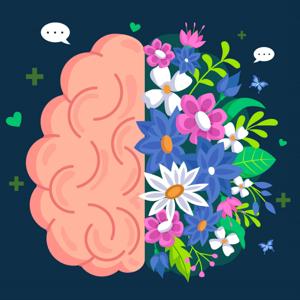


Previous episodes of this series pointed to psychology’s difficulty explaining addictions and other disease-like quirks of human behavior. The weakness of today’s psychology’s can be traced its disconnect from its mother science—biology. For it is in biology that we find the concepts that explain the normal learning of habits. And understanding normal habit development allows us to understand the abnormal habits we call addictions. As a bonus, understanding habit development casts light on the function of conscious awareness—the ultimate mystery at the heart of psychology.
In the last episode of this series, we described self-repeating, malignant behaviors – habits such as alcoholism and anorexia nervosa – as true diseases. In fact, these patterns of behavior have many of the features of viruses. Like viruses, they are simple patterns – so simple that they can get themselves repeated only by exploiting the capabilities of their hosts. They begin as normal habits, but they escape our control. They end up acting like parasites, with us as their hosts.
Today’s psychology doesn’t support the idea of parasitic habits. But it should. Psychology is a part of biology, its mother science. In biology, parasitism is everywhere you look. It would be wise, then, to expect parasitic forms in our behavior. As we struggle to understand how a habit could turn parasitic, we should consider the origin of biological viruses. Because virus-like habits come about in pretty much the same way.
In previous episodes of this series, we interpreted destructive behaviors like alcoholism and anorexia nervosa as habits that have escaped our normal means of control. Weirdly, these habits have somehow taken on a life of their own, reproducing themselves at our expense. And now they’re relating to us as parasites, using us as their hosts.
The idea of parasitic habits doesn’t fit anywhere in today’s psychology. But in biology, psychology’s mother science, parasitism is the rule—not the exception. In fact, parasitic organisms vastly outnumber non-parasites. And each animal invests a lot of energy protecting itself from them. If we look with open eyes at the details of our own malignant behaviors, we can see that parasitic forms are common there too. Our willingness to recognize them for what they are is a first step toward crafting a better psychology.
Anorexia nervosa is a dangerous eating disorder. It’s incredibly treacherous—in fact, it’s the leading cause of death in young women aged 15 to 24. The most mysterious thing about Anorexia is that the sufferer sees herself as “too fat,” even when she has starved herself to the point that she’s near death, and looks skeletal to others. How can we make sense of this bizarre and often fatal misperception? Some treatment professionals compare it to addiction. In fact, anorexia and addiction do have much in common—the most important commonality being the central role of denial.
In our culture, the enjoyment of alcoholic beverages is the norm – despite the many problems caused by drinking. Most adults use alcohol, at least occasionally. And yet, only a small percentage of drinkers – under 10 percent – develop an Alcohol Use Disorder. The conventional explanation for this disorder is that exposure to alcohol changes the brain in a way that leads to cravings. But … if most people use alcohol, most people’s brains are being exposed to alcohol. Why, then, don’t most people become alcoholics? Maybe we need a new understanding.
It’s good that we hold each other accountable for the things we do. This helps us avoid misbehavior. But common sense tells us there are limits to personal accountability. When I know you’ve got a cold, I certainly don’t blame you for sneezing. Knowing you’re sick, I realize the cold virus is making that happen. When we assign responsibility, we take disease into account. But … who do we hold accountable for a diseased behavior, one like alcoholism?
Psychology’s an intriguing science. But have you ever wondered why it’s not more helpful in dealing with the problems we face – things like addictions, compulsions, and the social ills that are wrecking our culture? Psychology's weakness lies in its disconnect from biology, its mother science. A big part of biology is awareness of DISEASE. But the very concept of disease is missing from our psychology. Why? The answer may be stranger than you think.
Change. We don't actually need to pay attention when plodding down a path we know quite well. But repeating old patterns won’t alter the direction of our lives, if that's really what we want to do. Plodding on won't help us learn anything new either. Real change means that we start down a new path. Sometimes we begin that journey with a special relationship that leaves us with a new feeling, one that's inspirational, almost spiritual, almost magical. What's this all about?
In this podcast we look at the way a transitional relationship - a healing or mentor relationship - can open the door to a change in the direction of our lives. Psychological theorist Carl Jung said the ability to enter into this special relationship is built into each one of us, and can be triggered when the need arises.
Participants. Participating in this discussion is Macy Ulbricht, a Houston henna artist and owner of HennaLove.com. With her symbolic body art Macy helps people through life transitions. Also participating is Kay Dicks, a retired elementary school teacher with a wealth of information about motivating young kids to learn.
Habits. We’ve got good ones and bad ones. Sometimes, though, our bad habits get the best of us. They seem to take on a life of their own. They can overwhelm us. Then we may find ourselves doing things we would not choose, as if we turned into some kind of zombie. Drug addictions and alcoholism are examples of this kind of malignant, out-of-control habit. The conventional wisdom is that the substances are the cause. But this explanation hasn't helped much. Addictions are more common than ever. Could it be that there’s another, better explanation – one that’s more useful?
In Part Three of this three-part podcast we look at how a normal habit can become parasitic, turning into something that uses us the way a parasite uses its host. Alcoholism is a perfect example. A drinking habit begins the same way any normal habit begins. We drink, and it brings us satisfaction. So we do it again. For most of us, our drinking habit never becomes a problem. But some of us aren’t so lucky. As those people repeat the habit, it starts to change in ways that make it hard to stop. It becomes self-sustaining and destructive.
Participants. Returning for Part Three are Joan Landers, a Texas licensed professional counselor, and Dr. Bill Whitehead, a clinical psychologist and CEO of the North Carolina based company TherapyAppointment.com.
Parasites. They’re everywhere in biology. They make their living exploiting the bodies of their hosts. Surprisingly, they routinely exploit their behavior as well. All parasites "zombify" their hosts if they can, changing their behavior to benefit the parasite. This brings their effects into the realm of psychology. The host can end up behaving and thinking in ways that go against its own interests.
In Part Two of this three-part podcast we see that viruses—the tiniest of parasites—also zombify their hosts. To the extent that they can, they transform them into living things that really aren’t the same critters anymore. It may seem odd, but understanding this transformation can clarify how we humans end up doing destructive things, things that don’t fit our image of who we are.
Participants. Returning for Part Two are Joan Landers, a Texas licensed professional counselor, and Dr. Bill Whitehead, a clinical psychologist and CEO of the North Carolina based company TherapyAppointment.com.
From the publisher's feed